Listen to this Post
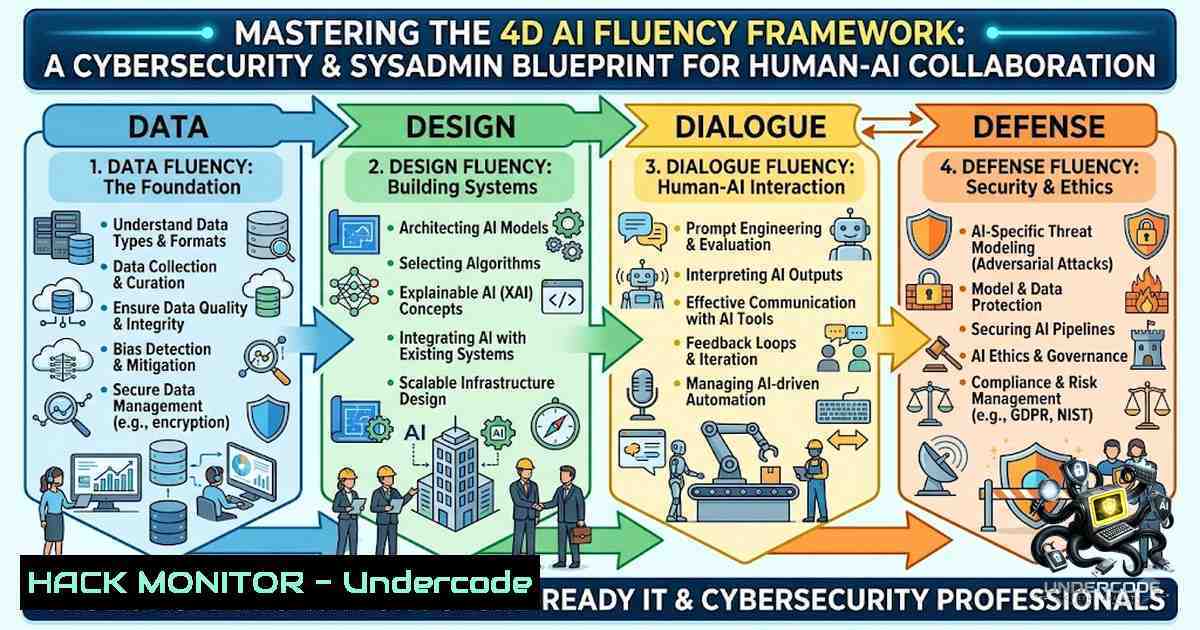
Introduction:
The integration of artificial intelligence into cybersecurity and IT operations has transitioned from an experimental novelty to an operational necessity. As organizations face an escalating volume of sophisticated threats and complex infrastructure demands, security professionals and system administrators are increasingly turning to AI to augment their capabilities. The recently launched “AI Fluency: Framework & Foundations” course by Anthropic, developed in partnership with academic experts Professors Rick Dakan and Joseph Feller, provides a structured approach to effective, efficient, ethical, and safe AI collaboration. The course’s 4D framework—comprising Delegation, Description, Discernment, and Diligence—offers a critical mental model for security practitioners to move beyond superficial prompt tricks and develop lasting competencies in working alongside AI systems.
Learning Objectives:
- Understand and apply the 4D AI Fluency Framework (Delegation, Description, Discernment, Diligence) to cybersecurity and system administration workflows.
- Develop practical skills for delegating routine security tasks to AI agents while maintaining human oversight and governance.
- Master the art of crafting precise descriptions (prompts) to elicit actionable intelligence from AI for threat detection, vulnerability assessment, and incident response.
- Cultivate discernment to critically evaluate AI-generated outputs, recognizing limitations and areas where human validation is essential.
- Implement diligent practices for secure AI integration, including prompt injection defense and compliance with security frameworks.
You Should Know:
- The 4D Framework: A Foundation for AI-Augmented Security Operations
The Anthropic AI Fluency course introduces four interconnected competencies that form the bedrock of effective human-AI collaboration. For cybersecurity and system administration professionals, understanding these principles is the first step toward building a secure and efficient AI-integrated workflow.
Delegation involves setting clear goals and deciding whether and how to engage with AI. In a SOC environment, this means determining which tasks are best suited for AI automation—such as initial alert triage, log analysis, or vulnerability scanning—and which require human judgment. AI-powered SOC systems can now automate Tier 1 and Tier 2 activities, reducing analyst triage time by 60–80% and cutting alert noise by up to 70%. However, effective delegation requires understanding AI’s strengths and limitations; it is about knowing how to work with models, not just how they work.
Description is the art of effectively describing goals to prompt useful AI behaviors and outputs. For security analysts, this translates to prompt engineering—crafting precise instructions for AI tools to perform tasks like scanning source code for vulnerabilities, generating YARA rules, or producing incident summary reports. The quality of the description directly impacts the quality of the AI’s output, making this a critical skill for any professional leveraging AI in their workflow.
Discernment requires critically evaluating AI-generated information and recognizing where human judgment must lead. AI models can produce hallucinations or plausible-sounding but incorrect security recommendations. Security professionals must maintain a skeptical mindset, cross-referencing AI outputs with established threat intelligence and organizational policies. The course highlights key areas where human validation is essential, a lesson particularly relevant when AI is used for security policy translation or compliance checks.
Diligence encompasses the ethical and safe use of AI, including understanding its limitations and potential for misuse. For system administrators, this means implementing proper governance controls when deploying AI agents for infrastructure management and being aware of AI-specific vulnerabilities like prompt injection and jailbreaking.
Step‑by‑Step Guide: Implementing the 4D Framework in a Security Context
- Audit Your Security Workflows: Identify repetitive, time-consuming tasks that consume analyst hours—such as log review, alert triage, and report generation.
- Define Delegation Boundaries: Create a clear policy outlining which tasks can be delegated to AI and which require human approval. For example, use AI for initial phishing email triage but mandate human review for any response or quarantine action.
- Develop Description Templates: Build a library of standardized prompts for common security tasks. For instance, create a prompt template for vulnerability scanning that specifies the target scope, severity thresholds, and output format.
- Establish Discernment Protocols: Implement a “human-in-the-loop” validation process for all critical AI-generated outputs. Require analysts to verify AI-generated incident timelines and threat assessments against raw data.
- Enforce Diligence in AI Integration: Before deploying any AI tool, conduct a security review. Test for prompt injection vulnerabilities using frameworks like Basilisk and ensure compliance with organizational security policies and frameworks like the ISM.
2. AI-Powered System Administration: Automating Infrastructure Management
System administration is undergoing a paradigm shift with the advent of AI-powered operations tools. From AI-driven SSH assistants to autonomous Linux security platforms, administrators can now leverage AI to automate operational tasks, enforce security, and manage infrastructure lifecycles while maintaining administrative permissions and governance controls.
Tools like Watchwolf provide an AI co-pilot for servers, enabling administrators to troubleshoot, optimize, and manage servers using natural language. Similarly, open-source projects like Chaterm allow engineers to deploy, troubleshoot, and automate services through natural language and intelligent agents. These tools translate complex administrative commands into plain language interactions, significantly lowering the barrier to advanced infrastructure management.
However, the power of these tools comes with significant security implications. AI agents with broad system access could become prime targets for attackers. The principle of least privilege must be strictly applied, and all AI-driven actions should be logged and auditable. The diligence component of the 4D framework is particularly relevant here, as administrators must ensure that AI tools are not inadvertently introducing new vulnerabilities.
Step‑by‑Step Guide: Integrating AI into System Administration Securely
- Select an Appropriate AI Tool: Evaluate AI-powered administration tools based on your specific needs. For lightweight server management, consider EasyShell for Docker one-click deployment and batch script execution. For more comprehensive Linux security automation, explore platforms like AgentX.
- Configure Secure Access: When using AI SSH assistants, ensure that authentication is properly configured. Avoid using default credentials and consider implementing multi-factor authentication.
- Define Permissions and Governance: Establish clear permissions for what the AI agent can and cannot do. For example, restrict the AI from making changes to firewall rules or user account permissions without human approval.
- Test in a Staging Environment: Before deploying any AI agent in production, test its functionality and security in a staging environment. Monitor its actions and verify that it behaves as expected.
- Implement Monitoring and Logging: Enable comprehensive logging for all AI-driven actions. Regularly review logs to detect any anomalous behavior or potential security incidents.
- Conduct Regular Security Audits: Periodically audit the AI tool’s configuration and access controls. Stay informed about known vulnerabilities in the tools you use and apply patches promptly.
3. AI-Enhanced Penetration Testing and Red Teaming
Large Language Models are transforming penetration testing by automating tasks that were previously manual and time-consuming. AI can now scan source code and configurations for potential vulnerabilities using prompt engineering and transfer learning. This capability allows ethical hackers to cover more ground and identify weaknesses that might otherwise be missed.
For red teaming, AI presents both opportunities and challenges. Attackers are beginning to use AI to expand the capabilities and sophistication of their attacks. In response, defenders must develop AI-powered tools to stay ahead. Open-source frameworks like Basilisk automate adversarial prompt testing against various LLMs, using genetic algorithms to discover novel AI vulnerabilities and jailbreaks. These tools enable security researchers to proactively identify and mitigate AI-specific threats.
The ethical use of AI in penetration testing requires diligence. Security professionals must ensure that their AI-powered testing tools are used responsibly and within the bounds of authorized testing scopes. Additionally, the discernment competency is critical when interpreting AI-generated vulnerability reports—human analysts must validate findings and prioritize remediation efforts based on organizational risk.
Step‑by‑Step Guide: Using AI for Ethical Hacking and Vulnerability Assessment
- Identify AI-Applicable Tasks: Determine which aspects of your penetration testing workflow can be augmented by AI. This may include reconnaissance, vulnerability scanning, and report generation.
- Select Appropriate AI Tools: For AI red teaming, consider using frameworks like Basilisk to automate adversarial prompt testing. For general vulnerability scanning, explore AI-powered tools that integrate with your existing security stack.
- Craft Effective Prompts: Develop precise prompts for your AI tools. For example, when scanning source code, specify the programming language, the types of vulnerabilities to look for (e.g., SQL injection, XSS), and the desired output format.
- Validate AI-Generated Findings: Do not trust AI-generated vulnerability reports blindly. Manually verify each finding to confirm its validity and assess its actual risk to the organization.
- Document and Report: Use AI to assist in generating comprehensive penetration testing reports. However, ensure that the final report is reviewed and signed off by a human analyst.
- Stay Updated on AI Security: The field of AI security is rapidly evolving. Regularly monitor for new vulnerabilities, attack techniques, and defensive tools. Participate in the AI security community to share knowledge and best practices.
-
Securing the AI Supply Chain: Protecting Against Prompt Injection and Model Attacks
As organizations increasingly integrate AI into their operations, securing the AI supply chain becomes paramount. Prompt injection, jailbreaking, and context poisoning are emerging threats that can compromise AI systems and the data they process. Security professionals must develop strategies to protect against these attacks.
Prompt injection involves crafting malicious inputs that trick an AI model into performing unintended actions or revealing sensitive information. Jailbreaking attempts to bypass the safety filters built into AI models. Context poisoning targets the retrieval-augmented generation (RAG) systems that many organizations use to provide AI with access to proprietary data.
Defending against these threats requires a multi-layered approach. Organizations should implement input validation and sanitization for all AI prompts. They should also monitor AI outputs for signs of manipulation and conduct regular red teaming exercises to identify vulnerabilities. The OWASP LLM Top 10 provides a comprehensive framework for understanding and mitigating these risks.
Step‑by‑Step Guide: Implementing AI Security Controls
- Conduct a Threat Modeling Exercise: Identify the specific AI threats relevant to your organization. Consider the types of AI models you use, the data they access, and the potential impact of a successful attack.
- Implement Input Validation: Sanitize all user inputs before they are processed by an AI model. This can help prevent prompt injection and other input-based attacks.
- Deploy Output Filtering: Implement filters to detect and block potentially malicious or sensitive outputs from AI models. This is particularly important if your AI system has access to confidential data.
- Regular Red Teaming: Use AI red teaming tools to continuously test your AI systems for vulnerabilities. Tools like Basilisk can automate this process and discover novel attack vectors.
- Monitor and Respond: Establish monitoring for AI systems to detect anomalous behavior that may indicate an attack. Develop incident response procedures specifically for AI security incidents.
- Stay Informed: The AI threat landscape is constantly changing. Stay updated on the latest vulnerabilities and attack techniques through security research and industry publications.
-
The Future of AI in Cybersecurity: Automation, Augmentation, and the Human Element
The role of AI in cybersecurity is evolving from automation to augmentation. While AI can automate routine tasks and identify patterns that humans might miss, it is not a replacement for human judgment and expertise. The most effective security operations will combine the strengths of AI with the intuition and experience of human analysts.
The “Augmented Analyst” model is gaining traction, where AI handles the heavy lifting of data processing and initial analysis, allowing human analysts to focus on strategic decision-making and complex investigations. This approach not only improves efficiency but also enhances job satisfaction by freeing analysts from mundane tasks.
However, the integration of AI also presents challenges. Organizations must invest in training their workforce to work effectively with AI, developing the fluency that the Anthropic course aims to cultivate. Additionally, they must address ethical concerns around AI bias, privacy, and accountability. The diligence component of the 4D framework provides a guide for navigating these challenges responsibly.
What Undercode Say:
- Key Takeaway 1: AI fluency is not about knowing how AI models work internally; it is about knowing how to work with them effectively, efficiently, ethically, and safely. The 4D framework (Delegation, Description, Discernment, Diligence) provides a structured approach to developing this competency.
-
Key Takeaway 2: The integration of AI into cybersecurity and system administration is not a futuristic concept—it is happening now. From AI-powered SOC automation to AI-driven infrastructure management, professionals who embrace AI fluency will be better positioned to defend against increasingly sophisticated threats and manage complex IT environments.
Analysis:
The completion of Anthropic’s “AI Fluency: Framework & Foundations” course marks a significant step for any cybersecurity or IT professional. The course goes beyond superficial prompt engineering to instill a deep understanding of how to collaborate with AI systems. For system administrators, this means learning to delegate routine tasks to AI agents while maintaining governance and oversight. For security analysts, it means developing the discernment to critically evaluate AI-generated threat intelligence and the diligence to use AI tools responsibly. As the cybersecurity landscape becomes more complex and AI-powered attacks become more sophisticated, professionals with AI fluency will have a distinct advantage. They will be able to leverage AI to automate defense mechanisms, identify vulnerabilities, and respond to incidents more effectively. However, they will also be aware of the limitations and risks associated with AI, ensuring that human judgment remains at the center of security operations.
Prediction:
- +1 AI fluency will become a mandatory competency for cybersecurity and IT roles within the next three to five years, similar to how cloud computing skills are now essential. Organizations will prioritize hiring professionals who can demonstrate effective human-AI collaboration.
-
+1 The 4D framework (Delegation, Description, Discernment, Diligence) will be adopted as a standard training model for AI integration across industries, moving beyond the technology sector to become a core component of professional development in fields ranging from healthcare to finance.
-
-1 The proliferation of AI-powered administrative tools will introduce new attack surfaces, as attackers target AI agents with prompt injection and jailbreaking techniques. Organizations that fail to implement robust AI security controls will face increased risk of data breaches and system compromise.
-
+1 AI-driven SOC automation will significantly reduce alert fatigue and improve threat detection accuracy, allowing human analysts to focus on high-value investigations and strategic threat hunting. This will lead to faster incident response times and more effective defense against advanced persistent threats.
-
-1 The reliance on AI for security decision-making could create a skills gap, as junior analysts may not develop the foundational knowledge and intuition needed to validate AI-generated outputs. Organizations must balance AI automation with ongoing training and development for their security teams.
-
+1 Open-source AI red teaming frameworks like Basilisk will drive innovation in AI security, enabling researchers to discover and mitigate vulnerabilities before they can be exploited by malicious actors. This collaborative approach will strengthen the overall security posture of the AI ecosystem.
-
-1 Without proper diligence and governance, AI systems could inadvertently perpetuate biases or make decisions that violate privacy regulations. Organizations must establish clear ethical guidelines and oversight mechanisms for AI use to mitigate these risks.
▶️ Related Video (78% Match):
https://www.youtube.com/watch?v=-UN9sNqQ0t4
🎯Let’s Practice For Free:
🎓 Live Courses & Certifications:
Join Undercode Academy for Verified Certifications
🚀 Request a Custom Project:
Secure, high-velocity infrastructure and disruptive technological engineering. Contact our engineering team for high-tier development and proprietary systems:
[email protected]
💎 Smart Architecture | 🛡️ Secure by Design | ⭐ Trusted by Thousands
IT/Security Reporter URL:
Reported By: https://lnkd.in/p/e8Wx8JvY – Hackers Feeds
Extra Hub: Undercode MoN
Basic Verification: Pass ✅


