
Listen to this Post
Introduction:
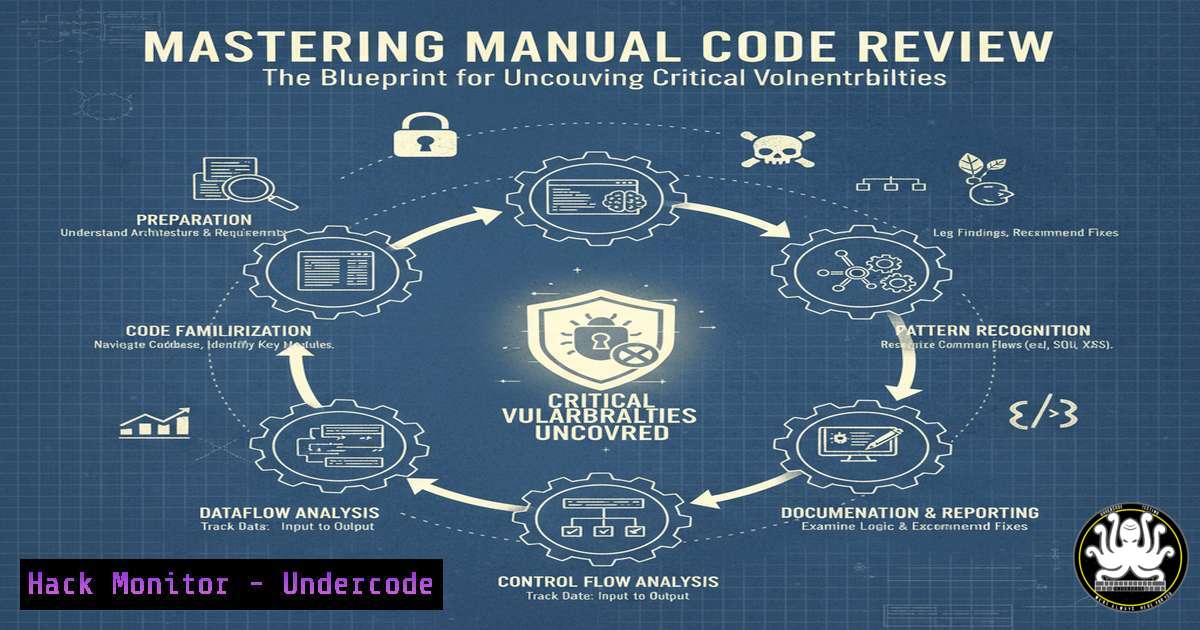
In an era of automated scanners and AI-powered tools, the art of manual code review remains the definitive skill for uncovering complex, business-logic vulnerabilities that automated tools consistently miss. This deep-dive exploration into real-world vulnerability patterns, from Server-Side Request Forgery (SSRF) to Cross-Site Request Forgery (CSRF), provides the tactical blueprint for security engineers and developers to systematically deconstruct and harden modern applications. By mastering the techniques demonstrated in the LegionHunters publication, security professionals can transition from merely identifying vulnerabilities to fundamentally understanding the attacker’s mindset and the root causes of security flaws.
Learning Objectives:
- Decode the methodology for identifying and exploiting SSRF vulnerabilities in cloud-native environments.
- Master static and dynamic analysis techniques for uncovering DOM-based and reflected XSS flaws.
- Implement robust authorization and CSRF mitigation controls across traditional and AJAX-based endpoints.
You Should Know:
1. SSRF Vulnerability Identification and Exploitation
 Python SSRF Vulnerable Code Snippet
import requests
def proxy_request(url):
user_input = request.args.get('url')
return requests.get(user_input).content

Secure Alternative with Allowlist
ALLOWED_DOMAINS = ['api.trusted.com', 'internal.service']
from urllib.parse import urlparse
def secure_proxy_request(url):
parsed_url = urlparse(url)
if parsed_url.hostname not in ALLOWED_DOMAINS:
raise ValueError("Domain not allowed")
return requests.get(url, timeout=5).content
Step-by-step guide:
The vulnerable code directly passes user-controlled input to the requests library without validation. Attackers can exploit this to make the server request internal resources (169.254.169.254 for cloud metadata), internal services, or bypass firewall controls. The secure implementation first parses the URL to extract the hostname, checks it against a strict allowlist of permitted domains, implements a timeout to prevent denial-of-service attacks, and uses proper error handling to avoid information leakage.
2. DOM XSS Static Analysis and POC Crafting
// Vulnerable DOM XSS Code
let search = document.location.hash.substring(1);
document.write("Search results for: " + search);

// Secure DOM XSS Prevention
let search = new URLSearchParams(window.location.hash.substring(1));
let query = search.get('q') || '';
document.getElementById('results').textContent = query;
Step-by-step guide:
The vulnerable code uses `document.write()` with unsanitized user input from the URL fragment, allowing attackers to inject malicious scripts. The secure version uses `URLSearchParams` for proper parameter parsing, accesses specific parameters rather than raw input, and employs `textContent` instead of `innerHTML` or `document.write()` to ensure all data is treated as text rather than executable markup.
3. Grafana Plugin SSRF Exploitation Technique
 Crafting SSRF payloads for internal network scanning
curl -X POST http://vulnerable-grafana/plugin/api \
-d '{"url":"http://169.254.169.254/latest/meta-data/"}' \
-H "Content-Type: application/json"

Network reconnaissance with SSRF
curl -X POST http://vulnerable-grafana/plugin/api \
-d '{"url":"http://192.168.1.1:8080/admin"}' \
-H "Content-Type: application/json"
Step-by-step guide:
Grafana plugins often make internal requests based on user configuration. These commands demonstrate how to test for SSRF by attempting to access cloud metadata services and internal network resources. The first command targets the AWS metadata endpoint, while the second probes internal network ranges. Defensive measures include implementing strict egress filtering, validating all outbound requests, and using URL parsing libraries that prevent internal IP address access.
4. Authorization Bypass Identification (Part 1-3)
// Vulnerable Authorization Check
@GetMapping("/admin/users")
public List<User> getUsers(@RequestParam String userId) {
return userService.findUsers(userId);
}

// Secure Role-Based Authorization
@GetMapping("/admin/users")
@PreAuthorize("hasRole('ADMIN')")
public List<User> getUsers(@RequestParam String userId) {
// Additional user context validation
if (!SecurityContext.getUser().isAdmin()) {
throw new AccessDeniedException();
}
return userService.findUsers(userId);
}
Step-by-step guide:
The vulnerable endpoint lacks proper authorization decorators and relies on implicit trust. The secure implementation uses Spring Security’s `@PreAuthorize` annotation to enforce role-based access control at the method level, implements additional context validation to ensure the authenticated user has appropriate privileges, and throws standardized security exceptions that don’t leak implementation details.
5. CSRF Vulnerable Code Analysis and Mitigation
// Vulnerable CSRF Implementation

<form method="POST" action="/transfer">
<input type="text" name="amount">
<input type="text" name="toAccount">
</form>

// Secure CSRF Protection

<form method="POST" action="/transfer">
<input type="hidden" name="csrf_token"
value="<?php echo $_SESSION['csrf_token']; ?>">
<input type="text" name="amount">
<input type="text" name="toAccount">
</form>

// Server-Side Validation
if ($_POST['csrf_token'] !== $_SESSION['csrf_token']) {
die("CSRF token validation failed");
}
Step-by-step guide:
The vulnerable form lacks any anti-CSRF tokens, making it susceptible to cross-site request forgery attacks. The secure implementation generates a unique token per session, embeds it as a hidden field in all state-changing forms, validates the token on the server-side before processing the request, and uses cryptographically secure random generators for token creation.
6. AJAX CSRF Protection Implementation
// Vulnerable AJAX Call
$.ajax({
type: "POST",
url: "/api/transfer",
data: JSON.stringify({amount: 1000, toAccount: "attacker"}),
contentType: "application/json"
});

// Secure AJAX with CSRF Token
function getCSRFToken() {
return document.querySelector('meta[name="csrf-token"]').getAttribute('content');
}

$.ajax({
type: "POST",
url: "/api/transfer",
data: JSON.stringify({amount: 1000, toAccount: "valid"}),
contentType: "application/json",
headers: {
'X-CSRF-TOKEN': getCSRFToken()
}
});
Step-by-step guide:
Traditional AJAX calls might bypass form-based CSRF protections if not properly configured. This implementation demonstrates extracting CSRF tokens from meta tags (commonly set by server-side templates), including the token in custom headers for all state-changing AJAX requests, ensuring the server validates both form-encoded and JSON payloads, and implementing same-origin policy checks.
7. Advanced SSRF Defense with Network Segmentation
 Docker container network segmentation to limit SSRF impact
docker network create --internal ssrf_isolated
docker run --network ssrf_isolated -d app_server

iptables rules to block metadata service access
iptables -A OUTPUT -d 169.254.169.254 -j DROP
iptables -A OUTPUT -d 192.168.0.0/16 -j DROP

Egress filtering with proxy
iptables -A OUTPUT -p tcp --dport 80 -j ACCEPT
iptables -A OUTPUT -p tcp --dport 443 -j ACCEPT
iptables -A OUTPUT -p tcp -j DROP
Step-by-step guide:
These system-level controls create defense in depth against SSRF exploitation. The Docker commands create an isolated internal network preventing containerized applications from reaching host resources. The iptables rules explicitly block access to cloud metadata services and internal network ranges, while the egress filtering limits outbound connections to only HTTP and HTTPS ports, significantly reducing the attack surface.
What Undercode Say:
- Manual code review transcends vulnerability scanning by uncovering business logic flaws and architectural weaknesses that automated tools cannot detect.
- The most critical security vulnerabilities often stem from missing authorization checks rather than complex exploitation techniques, making systematic validation of access controls paramount.
The LegionHunters methodology demonstrates that effective security code review requires understanding both the technical implementation and the attacker’s perspective. While automated tools excel at finding known patterns, manual review uncovers context-specific vulnerabilities that arise from business logic and architectural decisions. The repeated emphasis on authorization flaws across multiple examples highlights a critical industry blindspot: organizations often focus on input validation while neglecting comprehensive access control verification. This collection proves that sustainable application security requires embedding security considerations throughout the development lifecycle rather than relying on post-hoc vulnerability assessment.
Prediction:
As applications increasingly leverage AI-generated code and microservices architectures, manual code review will evolve from line-by-line analysis to architectural security assessment, focusing on AI hallucination-induced vulnerabilities and service mesh security configurations. The proliferation of AI-assisted development will initially increase logic flaws and authorization bypass vulnerabilities, creating a temporary window of increased exploitability before AI-powered security tools mature to counter these emerging threats. Organizations that institutionalize manual review practices as part of their AI adoption strategy will significantly outperform those relying solely on automated security testing.
🎯Let’s Practice For Free:
IT/Security Reporter URL:
Reported By: Abhirup Konwar – Hackers Feeds
Extra Hub: Undercode MoN
Basic Verification: Pass ✅


