
Listen to this Post
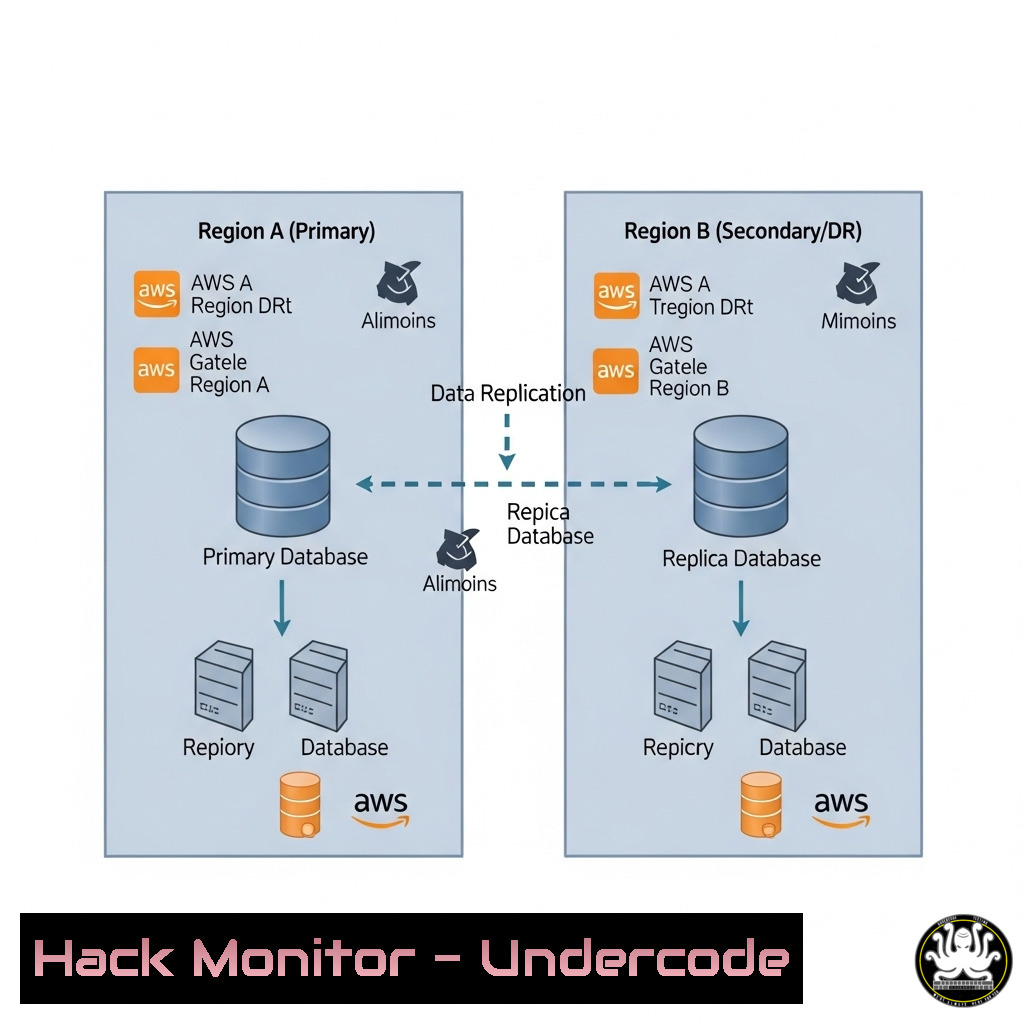
Introduction:
Disaster Recovery (DR) in AWS is a critical component of modern cloud cybersecurity and resilience strategy. By leveraging a multi-region architecture, organizations can ensure business continuity, protect against regional outages, and mitigate catastrophic data loss, transforming their operational resilience in the face of increasing cyber threats.
Learning Objectives:
- Understand the core AWS services and network components that form a multi-region DR architecture.
- Learn the essential commands and configurations to implement data replication, automated failover, and secure connectivity.
- Develop the skills to establish and test Recovery Time (RTO) and Recovery Point (RPO) objectives effectively.
You Should Know:
1. Automated S3 Cross-Region Replication for Data Resilience
`aws s3api put-bucket-replication –bucket primary-bucket-name –replication-configuration file://replication-config.json`
Step‑by‑step guide:
This command configures automatic, asynchronous replication of objects from one S3 bucket to another in a different AWS region. This is the bedrock of data-level DR.
1. Create a replication IAM role with permissions for S3 to replicate objects on your behalf.
2. Create a JSON file (replication-config.json) specifying the destination bucket and region.
3. Execute the AWS CLI command to enable replication on your source bucket. All new objects uploaded will now be automatically copied to the standby DR region.
- Orchestrating Failover with AWS Route 53 DNS Routing
`aws route53 change-resource-record-sets –hosted-zone-id Z1PA6795UKMFR9 –change-batch file://failover-config.json`
Step‑by‑step guide:
DNS failover is a primary method for redirecting user traffic from a primary to a secondary region.
1. Create a Route 53 hosted zone for your domain.
2. Create primary and secondary record sets (e.g., for your application load balancers in us-east-1 and us-west-2).
3. Configure health checks against the primary endpoint. The JSON file defines the failover policy, automatically shifting traffic to the secondary record if the health check fails.
3. Replicating On-Premises Data with AWS DataSync
`sudo ./aws-datasync-agent/aws-datasync-agent –key `
Step‑by‑step guide:
DataSync is for efficiently moving large datasets from on-premises storage into AWS for DR purposes.
1. Deploy the DataSync agent as a virtual machine in your on-premises environment.
2. Activate the agent via the AWS CLI using the key provided in the AWS Console.
3. Use the console to create tasks that define what data to copy (NFS, SMB) and which Amazon S3 bucket or EFS file system in AWS to copy it to on a scheduled basis.
- Building the DR Network: Establishing a VPC Peering Connection
`aws ec2 create-vpc-peering-connection –vpc-id vpc-1a2b3c4d –peer-vpc-id vpc-5e6f7g8h –peer-region us-west-2`
Step‑by‑step guide:
For applications that require low-latency, private communication between resources in primary and secondary VPCs.
1. Identify the VPC IDs in both your primary and DR regions.
2. Execute the CLI command to send a peering connection request.
3. Accept the request from the peer VPC owner and update both VPCs’ route tables to direct traffic to the peer VPC over the connection.
5. Securing Hybrid Connectivity with AWS Site-to-Site VPN
`aws ec2 create-vpn-connection –type ipsec.1 –customer-gateway-id cgw-123abc –vpn-gateway-id vgw-456def`
Step‑by‑step guide:
A secure VPN connection is essential for replicating data from an on-premises data center to AWS.
1. Create a customer gateway resource in AWS, representing your on-premises VPN device.
2. Create a virtual private gateway and attach it to your VPC.
3. Use this command to create the VPN connection. AWS will provide the configuration file which must be applied to your on-premises firewall/VPN device.
6. Implementing Application Resilience with Auto Scaling
`aws autoscaling create-auto-scaling-group –auto-scaling-group-name my-dr-asg –launch-template LaunchTemplateId=lt-123…,min-size=2 –max-size=10 –availability-zones us-west-2a us-west-2b`
Step‑by‑step guide:
In the DR region, an Auto Scaling group ensures compute capacity is maintained and can scale with demand during a failover event.
1. Create an AMI of your application server in the primary region and copy it to the DR region.
2. Create a launch template referencing this AMI.
- Create the Auto Scaling group in the DR region, setting the minimum desired capacity. If an instance fails, it is automatically replaced.
-
Centralizing Logs for Forensic Analysis with CloudWatch Logs
`aws logs create-export-task –task-name “DR-Failover-Logs” –log-group-name “/my/application” –from 1640995200000 –to 1641081600000 –destination my-s3-dr-bucket`
Step‑by‑step guide:
Logs are critical for understanding the failover event and conducting post-incident analysis.
1. Ensure your applications and AWS services are streaming logs to Amazon CloudWatch Logs.
2. To analyze logs from the time of the incident, use this CLI command to export a specific log group from a given time range to an S3 bucket in your secure audit account for preservation and analysis.
What Undercode Say:
- Automation is Non-Negotiable: Manual DR procedures are error-prone and too slow to meet modern RTOs. Every step, from data replication to DNS failover, must be fully automated and regularly tested using infrastructure-as-code (IaC) tools like AWS CloudFormation or Terraform.
- DR is a Security Control: A robust multi-region DR plan is a direct mitigation against ransomware and destructive cyber-attacks. It allows an organization to isolate compromised environments and fail over to clean, immutable backups in an unaffected region.
The shift towards multi-region architectures is fundamentally changing how organizations approach cyber resilience. It’s no longer a luxury for large enterprises but a necessary evolution for all. The complexity, however, lies not in the individual services but in their integration, security, and automation. The future of DR is inextricably linked to cybersecurity, acting as the last line of defense against catastrophic data loss. Tools that provide pre-visualization, like AI-powered architecture generators, will become critical for planning and validating these complex environments before an actual disaster strikes.
Prediction:
The convergence of AI-driven operations (AIOps) and cybersecurity will redefine disaster recovery. We will see the emergence of fully autonomous, self-healing systems where AI models, trained on global threat intelligence and application behavior, will predict regional failures or cyber-attacks and initiate pre-emptive, fully automated failover and isolation procedures without human intervention. This will shrink RTO and RPO to near zero, creating truly resilient systems that can proactively defend against and recover from disruptions.
🎯Let’s Practice For Free:
IT/Security Reporter URL:
Reported By: Chandreshdesai Cloudcomputing – Hackers Feeds
Extra Hub: Undercode MoN
Basic Verification: Pass ✅


