Listen to this Post
Introduction:
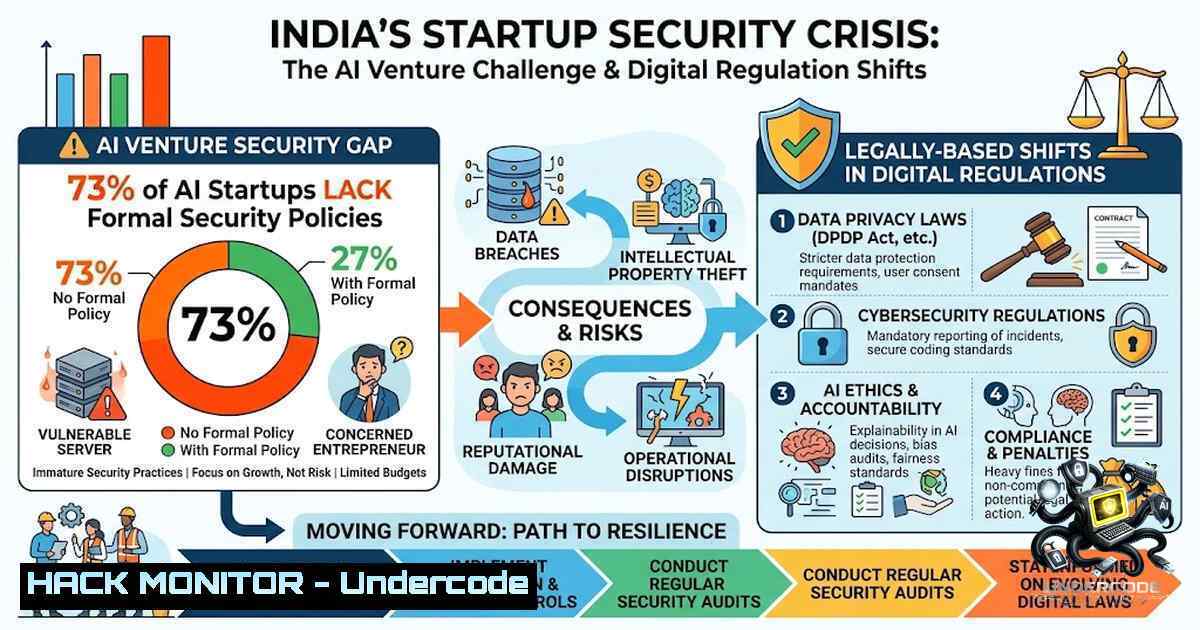
India’s startup ecosystem, now home to over 2.23 lakh ventures, is navigating a perfect storm of rapid AI adoption, tightening digital regulations, and escalating cyber threats. As the era of easy capital and brute-force growth hacking fades, founders across EV charging, agritech, edtech, fintech, and healthtech are discovering that copy-pasting Silicon Valley playbooks no longer works—particularly when it comes to cybersecurity. With 88% of Indian startups reporting operational constraints from digital regulations and 58% increasing spending on compliance and cybersecurity expertise, the message is clear: security is no longer optional; it is the foundation upon which sustainable ventures must be built.
Learning Objectives:
- Understand the cybersecurity vulnerabilities embedded across India’s key startup sectors, from EV charging infrastructure to digital health records
- Master regulatory compliance requirements under the DPDP Act, CERT-In mandates, and RBI cybersecurity frameworks
- Implement practical security hardening techniques across cloud infrastructure, APIs, and AI systems using verified Linux/Windows commands
You Should Know:
1. EV Charging Infrastructure: The Unseen Attack Surface
Electric vehicle charging stations are rapidly proliferating across India, but their cybersecurity posture often lags dangerously behind deployment. EV chargers integrate components governed by distinct security postures—traditional power grid systems emphasize availability, while EV devices undergo rapid development cycles with less robust security controls.
The attack surfaces are extensive. Vulnerabilities include hardcoded credentials, lack of secure boot or firmware signing, open debug interfaces, and outdated software. Communication links using protocols such as ISO 15118 and OCPP are susceptible to spoofing, man-in-the-middle (MitM) attacks, replay attacks, and denial of service. Researchers have successfully demonstrated MitM attacks targeting AC charging points, covertly controlling the vehicle’s charging process without detection by either the charging station or the vehicle. A configuration weakness in XCharge’s remote management service even allows authenticated sessions over channels intended solely for vehicle-charger signaling, accepting default administrative credentials.
Step-by-Step Guide: Securing EV Charging Infrastructure
- Audit default credentials: Change all default administrative passwords on EVSE devices immediately. Use `openssl rand -base64 32` (Linux) to generate strong passwords.
- Enable firmware signing: Verify that EVSE firmware updates are cryptographically signed. On Linux-based systems, use
gpg --verify firmware.sig firmware.bin. - Implement network segmentation: Isolate EV charging networks from corporate IT systems using VLANs. On Cisco devices: `vlan 100` then
name EV-Charging-1etwork. - Monitor OCPP traffic: Deploy intrusion detection for OCPP communications. Use Wireshark filters: `tcp.port == 8080 && ocpp` to capture and analyze charging session messages.
- Conduct regular VAPT: Schedule vulnerability assessments and penetration testing for all charging infrastructure components, focusing on API endpoints and cloud management systems.
-
Agritech: Protecting India’s Food Supply Chain from Cyber Threats
India’s agricultural supply chain has become a prime target for both state-sponsored espionage and ransomware syndicates. The Lazarus Group has been systematically targeting Indian agricultural infrastructure through sophisticated spear-phishing campaigns, compromising seed genetic information and disrupting food distribution algorithms. Meanwhile, the Black Basta ransomware group has strategically targeted agricultural cooperatives in Maharashtra and Punjab, encrypting seed inventory databases and transportation management systems. Estimated losses range between $3-7 million per targeted organization.
Smallholder farmers remain highly vulnerable due to low digital literacy and inadequate infrastructure. Ransomware, phishing, denial-of-service (DoS), and IoT-based attacks are the most prevalent threats, with documented cases causing operational disruptions, financial fraud, and supply chain paralysis.
Step-by-Step Guide: Hardening Agritech Systems
- Deploy endpoint protection: Install and configure antivirus and EDR solutions on all agricultural management systems. Windows: `Set-MpPreference -DisableRealtimeMonitoring $false` to ensure real-time protection.
- Implement email filtering: Configure DMARC, DKIM, and SPF records to prevent spear-phishing. Linux:
postconf -e "smtpd_recipient_restrictions = reject_unauth_pipelining, permit_mynetworks, reject_unauth_destination". - Secure IoT sensors: Change default passwords on all IoT agricultural sensors. Use `nmap -sV 192.168.1.0/24` to discover and inventory all connected devices.
- Backup critical data: Implement the 3-2-1 backup strategy. Windows:
wbadmin start backup -backupTarget:E: -include:C: -allVersions -quiet. - Segment OT and IT networks: Use firewalls to separate operational technology (irrigation controls, harvest management) from IT systems. Linux iptables: `iptables -A INPUT -i eth1 -j DROP` to block unauthorized OT network access.
3. EdTech: Securing AI-Powered Learning Platforms
As edtech platforms move toward hybrid models and localized adaptive AI, the security requirements extend beyond protecting data to maintaining academic integrity and complying with strict student privacy regulations. Adaptive learning platforms introduce unique attack surfaces: homework assistants can enable academic dishonesty, personalized curriculum systems are vulnerable to assessment manipulation and progress falsification. Studies show that secure frameworks like SLICED can prevent approximately 97% of programmed breaches.
Indian edtech startups face the additional challenge of complying with the DPDP Act while scaling AI capabilities. The security requirements include secure coding, data protection principles, and awareness of real-world vulnerabilities.
Step-by-Step Guide: EdTech AI Security Hardening
- Implement strong authentication: Enforce multi-factor authentication for all users. Linux (using Google Authenticator): `apt-get install libpam-google-authenticator` then configure PAM.
- Encrypt student data at rest and in transit: Use AES-256 encryption. Linux:
openssl enc -aes-256-cbc -salt -in student_data.csv -out student_data.enc. Windows PowerShell:Protect-CmsMessage -To "[email protected]" -Content "Sensitive Data". - Conduct API security testing: Scan for OWASP API Top 10 vulnerabilities. Use
zap-api-scan.py -t https://api.edtech.com -f openapi. - Monitor for academic integrity violations: Deploy plagiarism detection and anomaly detection systems. Use `grep -r “model_answer” /var/www/` to check for unauthorized access to answer keys.
- Regular security training: Include cybersecurity modules in developer onboarding covering secure coding, data protection, and real-world vulnerabilities.
4. FinTech: Turning Regulatory Compliance into Competitive Advantage
The Reserve Bank of India mandates a robust cybersecurity framework that fintechs must follow to ensure resilience, trust, and compliance. Cyberattacks on the BFSI sector are rising by nearly 25% year over year, with potential losses reaching ₹50,000 crore annually. The RBI cybersecurity framework outlines essential controls across governance, risk management, and technical security.
Key requirements include VAPT processes, Zero Trust frameworks, and defenses against ransomware and deepfake-driven attacks. NBFCs and payment fintechs must meet layered cyber resilience obligations—not suggestions, but binding Master Directions. Organizations must demonstrate that cybersecurity policies are formally approved by the board and regularly updated. CISOs must operate independently of the IT function, reporting directly to risk leadership.
Step-by-Step Guide: RBI Cybersecurity Compliance
- Implement VAPT processes: Conduct quarterly vulnerability assessments. Linux: `nmap -sV -O 192.168.1.0/24` for network discovery. Windows: `Test-1etConnection -ComputerName target -Port 443` for service validation.
- Deploy Zero Trust Architecture: Implement identity-based micro-segmentation. Use `iptables -A FORWARD -m state –state ESTABLISHED,RELATED -j ACCEPT` followed by granular allow rules.
- Enable comprehensive logging: Configure audit trails for all financial transactions. Linux:
auditctl -w /var/log/finance/ -p wa -k finance_audit. Windows:auditpol /set /subcategory:"Detailed Tracking" /success:enable /failure:enable. - Establish incident response plan: Document and test the 6-hour CERT-In breach notification procedure. Create runbooks for different attack scenarios.
- Board-level cybersecurity reporting: Schedule quarterly security reviews with the board, including risk metrics and compliance status.
5. HealthTech: Securing Digital Health Records Under ABDM
The Ayushman Bharat Digital Mission (ABDM) is transforming India’s healthcare landscape, but it also introduces significant cybersecurity challenges. Health data exchange is permitted only after patient consent, and digital health applications must undergo security audits such as WASA (Web Application Security Audit) in a sandbox environment before integration. The Health Information Exchange and Consent Manager (HIECM) gateway enables interoperability of health records between different providers.
Blockchain-based solutions are emerging to address security challenges, with IIT Madras developing ‘BlockTrack’ for secure medical data exchange. The DPDP Act introduces new compliance requirements, though India still lacks a comprehensive healthcare-specific data protection law. The urgency of integrating emerging technologies like blockchain for patient-controlled data sharing is increasingly recognized.
Step-by-Step Guide: HealthTech Security Implementation
- Conduct WASA audits: Perform web application security audits before ABDM integration. Use OWASP ZAP:
zap-full-scan.py -t https://healthapp.com -r report.html. - Implement consent management: Ensure patient consent is obtained and logged for all data exchanges. Use `openssl dgst -sha256 -sign private.pem -out consent.sig consent.txt` for digital signatures.
- Encrypt health records: Implement end-to-end encryption for EHRs. Linux:
gpg -c --cipher-algo AES256 health_record.pdf. Windows:cipher /e health_record.pdf. - Deploy blockchain verification: For immutable audit trails, implement blockchain-based verification of data access logs.
- Regular security audits: Schedule external security audits and penetration testing at least annually, with findings reported to the board.
What Undercode Say:
- Security as a Strategic Enabler: Indian startups must treat cybersecurity not as a compliance burden but as a competitive differentiator. With 73% of AI startups lacking formal security policies and 89% unaware of DPDP Act requirements, those who prioritize security from day one will build lasting trust and market advantage.
- The Compliance-Innovation Balance: While 72% of startups report resources diverted from innovation to compliance, the data shows that 42% report increased customer trust due to digital regulations. The challenge is not whether to regulate, but how to design frameworks that build trust while enabling innovation.
The digital regulatory landscape in India is at an inflection point. Oxford Economics estimates that a restrictive regulatory environment could lead to 2,130 fewer startups annually, representing a loss of approximately ₹91,500 crore in VC investment each year. Conversely, an enabling approach could boost startup formation by 7% and support an additional 80,000 jobs by 2035.
For founders and security leaders, the path forward requires: embedding security into product development from day one; investing in specialized compliance and cybersecurity expertise; and viewing regulatory frameworks as opportunities to build trust rather than obstacles to overcome. The startups that will thrive in India’s next growth phase will be those that do the hard, grounded work of building secure, compliant, and resilient systems—rolling up their sleeves to protect the digital infrastructure upon which India’s future depends.
Prediction:
- +1 Indian AI and cybersecurity training programs will expand rapidly, with institutions like IIT Kanpur, IIT Madras, and ISB offering specialized certifications, creating a new generation of security-aware founders and engineers.
- +1 The convergence of AI and cybersecurity will drive innovation in automated threat detection, with Indian startups leading the development of AI-powered security solutions tailored to emerging market challenges.
- -1 The complexity of overlapping regulations across AI, data governance, and cybersecurity will increase compliance costs, potentially slowing innovation for early-stage startups without dedicated legal and security resources.
- -1 Open-source AI models with capabilities comparable to advanced AI systems could become widely available within the next six to nine months, significantly increasing cybersecurity risks for under-defended Indian startups.
- +1 The RBI’s strengthened cybersecurity framework, effective 2026, will drive adoption of Zero Trust architectures and VAPT processes across the fintech sector, ultimately making India’s financial infrastructure more resilient.
- -1 State-sponsored cyber espionage targeting critical sectors like agriculture and healthtech will intensify, with potential disruptions to food supply chains and healthcare delivery systems.
▶️ Related Video (70% Match):
🎯Let’s Practice For Free:
🎓 Live Courses & Certifications:
Join Undercode Academy for Verified Certifications
🚀 Request a Custom Project:
Secure, high-velocity infrastructure and disruptive technological engineering. Contact our engineering team for high-tier development and proprietary systems:
[email protected]
💎 Smart Architecture | 🛡️ Secure by Design | ⭐ Trusted by Thousands
IT/Security Reporter URL:
Reported By: https://lnkd.in/p/e5gsFv3a – Hackers Feeds
Extra Hub: Undercode MoN
Basic Verification: Pass ✅


