
Listen to this Post
Introduction:
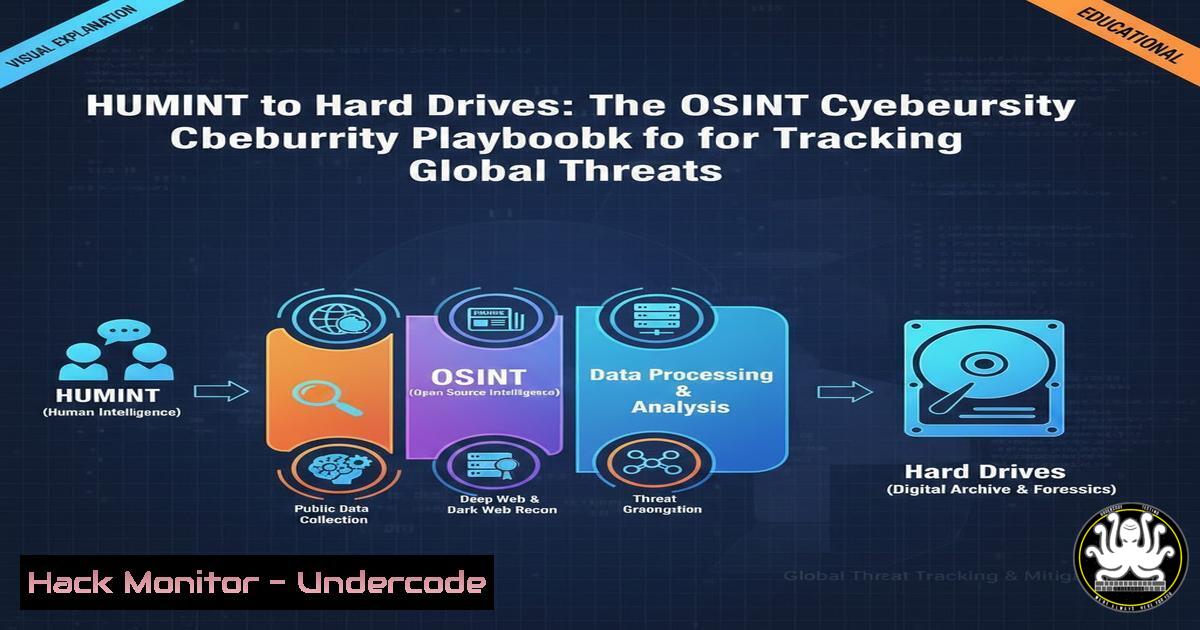
In an era where geopolitical shifts manifest in digital traces, the reported movement of high-value targets like Al-Qaeda’s leader from Tehran to Kandahar isn’t just intelligence chatter—it’s a cybersecurity and open-source intelligence (OSINT) trigger event. Modern threat actors, including terrorist networks, leverage encrypted communications, digital financial networks, and propaganda channels, making their tracking a discipline that fuses traditional HUMINT (Human Intelligence) with advanced technical collection. This article transforms a singular intelligence update into a actionable cybersecurity framework, detailing how security professionals can architect OSINT collection, analyze digital footprints, and harden systems against the ancillary cyber threats such movements often precipitate.
Learning Objectives:
- Construct and automate a compliant OSINT collection pipeline for monitoring threat actor associated digital ecosystems.
- Apply cybersecurity hardening techniques to protect intelligence data and operational security (OPSEC) during investigations.
- Analyze the digital infrastructure and TTPs (Tactics, Techniques, and Procedures) potentially linked to geopolitical threat actor movements.
You Should Know:
1. Architecting an Automated OSINT Collection Engine
The initial LinkedIn post references a URL (`https://lnkd.in/dHD3GG95`), likely leading to a detailed report. Manually checking such sources is inefficient. An automated OSINT pipeline can monitor URLs, social media, and clear/dark web sources for keywords like “Saif al-Adel,” “Kandahar,” and related entities.
Step-by-step guide explaining what this does and how to use it.
This setup uses Linux-based tools to create a simple monitoring system.
– Step 1: Set Up a Secure Environment. Use a virtual machine or isolated container (e.g., Docker) to prevent contamination or attribution.
 Create a new Docker container for OSINT work
docker run -it --name osint_collector ubuntu:22.04 /bin/bash
– Step 2: Install Core Tools. Install curl, wget, git, and Python for scraping and automation.
apt update && apt install -y curl wget git python3 python3-pip
– Step 3: Deploy a Simple Scraper. Use Python with libraries like `requests` and `BeautifulSoup` to monitor the target URL for changes, indicating report updates.
import requests
from bs4 import BeautifulSoup
import hashlib
import time

url = "https://lnkd.in/dHD3GG95"  Target URL - USE CAUTION
old_hash = ""

while True:
try:
response = requests.get(url, headers={'User-Agent': 'Mozilla/5.0'})
soup = BeautifulSoup(response.content, 'html.parser')
content_hash = hashlib.md5(str(soup).encode()).hexdigest()
if old_hash != content_hash:
print(f"[!] Change detected at {time.ctime()}")
 Alert logic: Send email or Slack notification
old_hash = content_hash
except Exception as e:
print(f"[bash] Error: {e}")
time.sleep(3600)  Check every hour
2. Securing Your Intelligence Data: Encryption & OPSEC
Collecting data on adversarial entities makes you a target. Hardening your data storage and communication is critical.
Step-by-step guide explaining what this does and how to use it.
– Step 1: Encrypt Data at Rest. Use VeraCrypt (cross-platform) or LUKS (Linux) to create encrypted volumes.
 Linux LUKS encryption example
sudo cryptsetup luksFormat /dev/sdX  Replace sdX with your device
sudo cryptsetup open /dev/sdX secure_volume
sudo mkfs.ext4 /dev/mapper/secure_volume
sudo mount /dev/mapper/secure_volume /mnt/secure
– Step 2: Use Secure Communication. For sharing findings, use PGP-encrypted emails. Generate a key pair:
gpg --full-generate-key  Follow prompts, use RSA 4096
gpg --export --armor [email protected] > public_key.asc
– Step 3: Implement Network Security. Use a VPN and consider TOR for sensitive queries. Configure `iptables` firewall rules to restrict outbound traffic from your OSINT VM.
 Basic iptables rule to allow only HTTPS/DNS outbound from the container
iptables -A OUTPUT -p tcp --dport 443 -j ACCEPT
iptables -A OUTPUT -p udp --dport 53 -j ACCEPT
iptables -A OUTPUT -j DROP
- Mapping Digital Infrastructure: Passive DNS & Certificate Analysis
The movement of personnel often coincides with changes in supporting digital infrastructure—new domain registrations, VPN endpoints, or communication apps.
Step-by-step guide explaining what this does and how to use it.
– Step 1: Passive DNS Querying. Use tools like `passivedns-client` or online services (SecurityTrails, RiskIQ) to find historical DNS records associated with known threat actor IPs or domains.
 Using passivedns-client (must be installed)
passivedns --interface eth0 --pcap pcap_file.pcap
– Step 2: SSL/TLS Certificate Analysis. Tools like `crt.sh` or `Censys` can find certificates for domains used by actors. Use the `censys` Python library to search.
import censys.certificates
c = censys.certificates.CensysCertificates(api_id="YOUR_API_ID", api_secret="YOUR_SECRET")
query = c.search("parsed.names: telegram.org AND tags: raw", fields=['parsed.names'])
for result in query:
print(result['parsed.names'])
– Step 3: Geolocation & Proxy Detection. If an IP is found, use `whois` and `traceroute` to map its path, potentially identifying hosting providers in regions of interest.
whois 8.8.8.8 | grep -i "country|netname"
traceroute -T 8.8.8.8
4. Cloud Hardening for Intelligence Platforms
If scaling this analysis to a team, cloud platforms like AWS or Azure are used. They must be hardened against compromise and data exfiltration.
Step-by-step guide explaining what this does and how to use it.
– Step 1: Implement Zero-Trust Network Access (ZTNA). Replace VPNs with identity-aware proxies. In AWS, use AWS Client VPN with SAML-based authentication.
– Step 2: Encrypt S3 Buckets & Enable Logging. All data stores must be encrypted, and all access logged for audit trails.
 AWS CLI to enable default encryption on an S3 bucket
aws s3api put-bucket-encryption \
--bucket your-osint-bucket \
--server-side-encryption-configuration '{"Rules": [{"ApplyServerSideEncryptionByDefault": {"SSEAlgorithm": "AES256"}}]}'
– Step 3: Use CloudTrail and GuardDuty. Enable AWS CloudTrail for governance and AWS GuardDuty for intelligent threat detection.
aws cloudtrail create-trail --name global-trail --s3-bucket-name your-log-bucket --is-multi-region-trail
- Mitigating Associated Cyber Threats: Exploit Kits and Phishing Campaigns
Geopolitical events are often used as lures in phishing emails (e.g., “Report on Al-Qaeda Movement”) to deliver malware.
Step-by-step guide explaining what this does and how to use it.
– Step 1: Email Security Hardening. Implement DMARC, DKIM, and SPF records. For email gateways, use rules to flag emails with subject lines containing high-confidence keywords and attached `.lnk` or `.html` files.
– Step 2: Endpoint Detection & Response (EDR). Deploy EDR agents and create custom IoA (Indicator of Attack) rules to detect suspicious PowerShell execution or fileless malware.
 Example Windows Command to query Windows Defender logs for PowerShell events (Admin)
Get-WinEvent -FilterHashtable @{LogName='Microsoft-Windows-PowerShell/Operational'; ID=4104} | Select-Object -First 20
– Step 3: User Awareness Training. Conduct simulated phishing exercises using templates based on current events, teaching users to identify sophisticated lures.
What Undercode Say:
- The Threat Intelligence Feedback Loop is Critical. A single HUMINT snippet must instantly translate into technical indicator collection (domains, IPs, malware hashes), which then feeds back into defensive cybersecurity postures, creating a proactive shield.
- OPSEC is Your First and Last Line of Defense. When engaging in adversarial intelligence collection, you become part of the battlefield. Failure to encrypt communications, mask your digital footprint, and segment your networks can lead to counter-intelligence operations against your own infrastructure.
The fusion of HUMINT and technical collection represents the future of cybersecurity threat intelligence. The reported movement of a high-value individual is not an isolated data point but a node in a dynamic network of digital activity. By treating such intelligence as the initial trigger for a standardized, automated, and secure OSINT and defensive cybersecurity protocol, organizations can transition from reactive observers to proactive predictors of threat actor behavior. The technical frameworks outlined—from automated scraping to cloud hardening—provide the necessary scaffolding to build this capability.
Prediction:
Within the next 2-3 years, we will see AI-powered threat intelligence platforms that automatically ingest geopolitical and HUMINT reports (like the one cited) and instantly correlate them with real-time technical data feeds—dark web forum sentiment, domain registration spikes in specific TLDs, encrypted messaging app metadata traffic patterns. This will enable the prediction of cyber-attack campaigns (phishing, DDoS, misinformation) with high confidence before the first malicious email is sent. Consequently, the role of the cybersecurity professional will evolve further towards managing and interpreting these AI-driven systems, requiring a deep understanding of both geopolitical narratives and machine learning model biases. The line between cybersecurity analyst and intelligence analyst will dissolve entirely.
▶️ Related Video (84% Match):
🎯Let’s Practice For Free:
IT/Security Reporter URL:
Reported By: Frank Engelsman – Hackers Feeds
Extra Hub: Undercode MoN
Basic Verification: Pass ✅


