
Listen to this Post
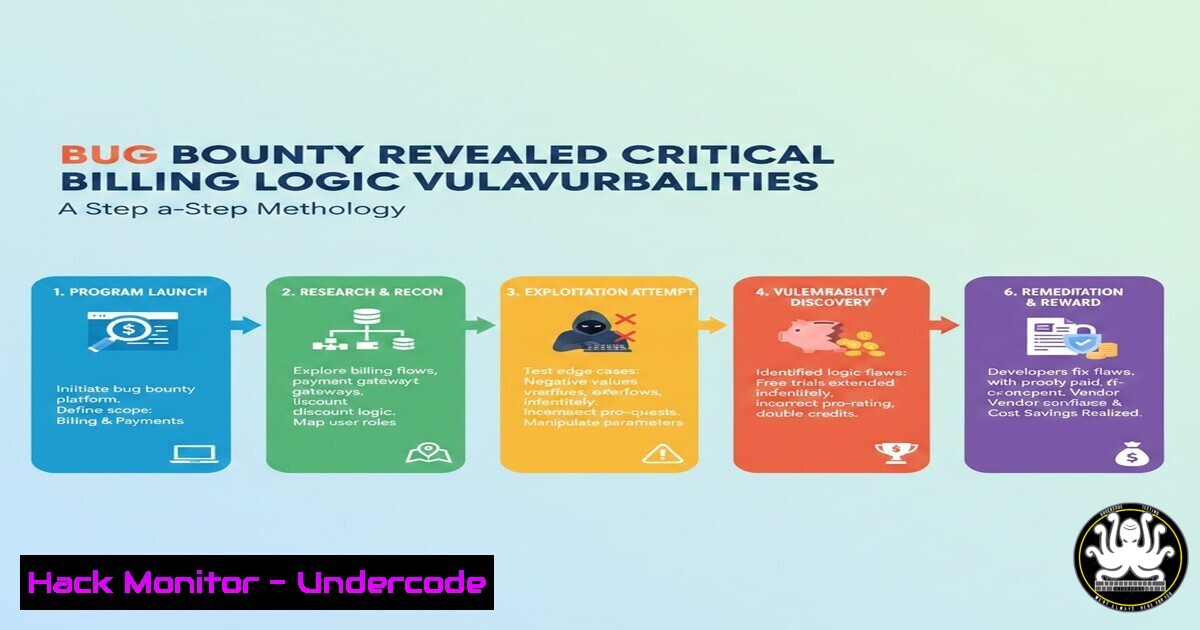
Introduction:
In the world of cybersecurity, specifically within bug bounty hunting, business logic flaws represent a high-value, often overlooked attack surface. Unlike technical vulnerabilities such as SQL injection, logic flaws exploit the legitimate functions of an application. Omar Mokhtar’s recent success on the Intigriti platform highlights a crucial, counter-intuitive tactic: spending money to find vulnerabilities. By simulating real user behavior involving payments, hunters can uncover flaws in billing systems that automated scanners miss entirely.
Learning Objectives:
- Understand the methodology behind hunting for Billing Logic Vulnerabilities.
- Learn how to set up a testing environment and use proxy tools to intercept and manipulate payment transactions.
- Explore mitigation strategies and secure coding practices to prevent business logic flaws in financial operations.
You Should Know:
1. The Art of Payment Logic Manipulation
Omar’s tip emphasizes that many hackers avoid testing payment flows because they require actual financial outlay. However, the logic governing how a system handles money is often complex and prone to developer oversight. When you make a legitimate payment during a test, you are validating the “happy path.” The vulnerability lies in the “sad path”—what happens when you manipulate the request after the payment gateway confirms success.
To uncover these flaws, you must move beyond automated tools and adopt a manual testing mindset. This involves treating the application as a state machine and analyzing how it handles financial transactions from initiation to completion.
2. Step-by-Step Guide to Testing Billing Logic
To replicate Omar’s methodology, follow this structured approach using industry-standard tools like Burp Suite or OWASP ZAP.
Step 1: Reconnaissance and Mapping
Before spending money, map out the entire payment workflow. This includes:
– Adding items to a cart.
– Applying coupons or discounts.
– Initiating checkout.
– Selecting payment methods.
– The post-payment confirmation and resource allocation (e.g., upgrading an account).
Step 2: The Interception Setup (Burp Suite)
Configure your browser to route traffic through Burp Suite. Navigate to the payment confirmation page. Ensure Intercept is on.
Step 3: The Parameter Manipulation
Make a legitimate purchase using a test card (if the program provides one) or a small amount of real money. Once you click “Pay,” Burp Suite will capture the request.
Common Attack Vectors to Test:
- Price Manipulation: Look for parameters like
price,total,amount, or `currency` within the POST request. Change a `100.00` value to `0.01` or `1.00` and forward the request. - Quantity Tampering: If buying one item, change the quantity to a negative number (e.g.,
-1). This can sometimes trick the system into adding credit to your account. - Currency Mismatch: If the application supports multiple currencies, intercept the request and change `USD` to a weaker currency while leaving the numeric value the same (exploiting conversion rate logic).
Example Linux Command (cURL for replay attacks):
After capturing a valid request in Burp, you can export it as a cURL command to replay and automate tests from your terminal.
 Example of replaying a manipulated payment confirmation
curl -i -s -k -X $'POST' \
-H $'Host: target-app.com' -H $'Content-Type: application/json' \
-H $'Authorization: Bearer VULNERABLE_TOKEN' \
--data-binary $'{\"product_id\":\"1234\",\"price\":0.01,\"currency\":\"USD\"}' \
$'https://target-app.com/api/confirm-payment'
Step 4: Race Condition Testing (Turbo Intruder)
Sometimes, you can spend money once but apply the benefit multiple times. This is a race condition.
1. Capture the request that applies the purchased credit to your account.
2. Send this request to Turbo Intruder in Burp Suite.
3. Use a Python script snippet within Turbo Intruder to fire the request hundreds of times simultaneously.
def queueRequests(target):
engine = RequestEngine(endpoint=target.endpoint,
concurrentConnections=30,
requestsPerConnection=100,
pipeline=True
)
for i in range(100):
engine.queue(target.req)
If the server processes multiple requests before deducting the balance, you have found a concurrency flaw.
3. Cloud and API Security in Billing
Modern billing systems rely heavily on cloud-based APIs (e.g., Stripe, PayPal APIs). Vulnerabilities often arise from how the frontend talks to these APIs.
Insecure Direct Object References (IDOR) in Invoices:
After a purchase, you receive an invoice link like https://target.com/invoice/ORDER-500`. Change the ID toORDER-499`. If you can view another user’s invoice, you have an IDOR vulnerability.
Testing Webhooks:
Payment gateways use webhooks to notify the application of successful payments.
1. Make a payment and capture the webhook notification (e.g., POST /webhook/payment-success).
2. Analyze the payload.
- Attempt to replay that exact webhook request using a tool like `curl` or Postman.
- If the application does not check for duplicate `transaction_id` values, you can trigger the “success” action multiple times without paying again.
 Replaying a webhook (Hypothetical Example)
curl -X POST https://target-app.com/webhook/stripe \
-H "Content-Type: application/json" \
-d '{
"id": "evt_OLD_WEBHOOK_ID",
"object": "event",
"type": "checkout.session.completed",
"data": {
"object": {
"id": "cs_test_ORIGINAL_SESSION_ID",
"amount_total": 1000
}
}
}'
What Undercode Say:
- The ROI of Investment: Omar’s approach validates that spending money is a strategic investment. The bounties for logic flaws (often classified as Critical/High severity due to direct financial impact) far outweigh the testing costs.
- Human Logic vs. Machine Logic: Automated scanners cannot deduce that a user shouldn’t be able to buy a $100 item for $1. This requires a human tester to understand the business context and then use tools to manipulate the technical implementation.
Omar Mokhtar’s success underscores a fundamental truth in modern application security: the perimeter is no longer just the firewall, but the business logic itself. As applications become more complex with microservices handling payments, the attack surface expands exponentially. Developers often secure the API keys but forget to secure the workflow. This method of “spending to find” forces testers to think like fraudsters rather than just hackers. It highlights a shift from finding technical exploits to finding accounting anomalies—a field where a simple integer change can lead to a massive payday.
Prediction:
As AI-driven code generation becomes more prevalent, standard code syntax errors will decrease. However, AI models trained on “correct” code will likely replicate common business logic mistakes without understanding the business context. Therefore, the next wave of high-severity vulnerabilities will be predominantly logic-based. We predict a rise in “Logic Security Engineers”—specialists who combine financial auditing skills with penetration testing to hunt these flaws, forcing bug bounty platforms to create specialized categories for payment manipulation.
▶️ Related Video (76% Match):
🎯Let’s Practice For Free:
IT/Security Reporter URL:
Reported By: Omar Mokhtar – Hackers Feeds
Extra Hub: Undercode MoN
Basic Verification: Pass ✅


