Listen to this Post
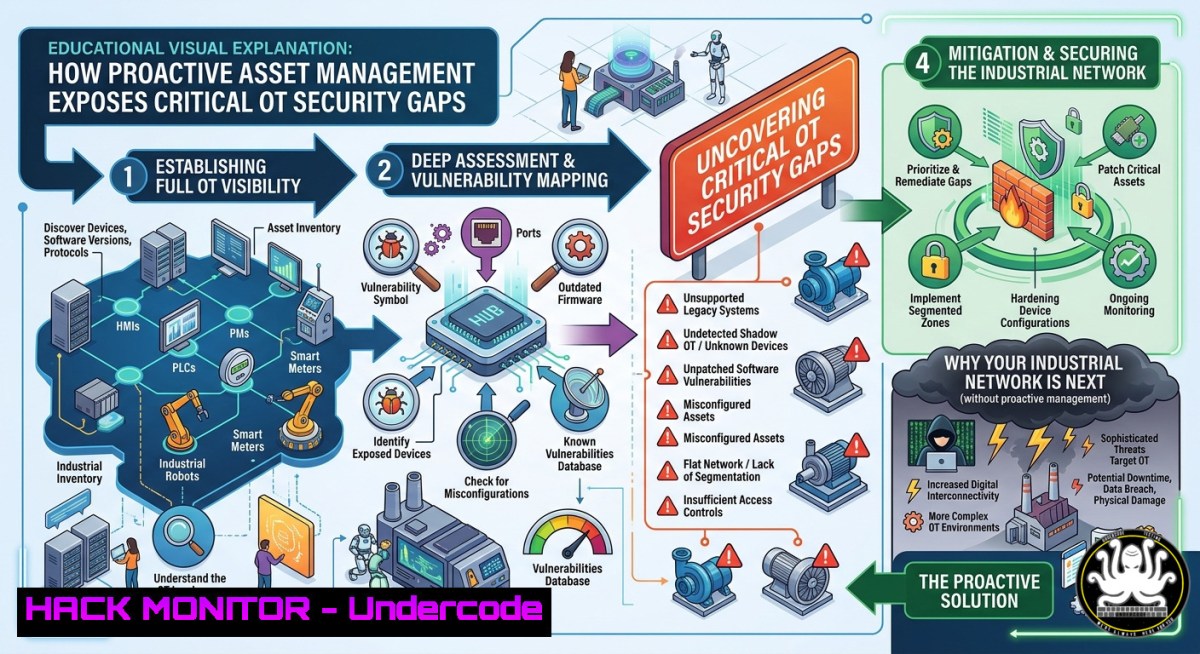
Introduction:
Predictive maintenance and real-time asset tracking promise dramatic uptime gains, but every connected sensor, digital work order, and cloud-synced inventory database expands your attack surface. Without embedding cybersecurity into your asset management framework, the same “smart data” that powers operational efficiency can become a blueprint for attackers to manipulate equipment, exfiltrate intellectual property, or trigger catastrophic unplanned downtime.
Learning Objectives:
- Implement API security controls for industrial asset management platforms to prevent unauthorized work order injections.
- Harden Windows and Linux endpoints used in predictive maintenance workflows against lateral movement.
- Apply cloud hardening techniques to protect real-time asset visibility dashboards from data poisoning and DDoS attacks.
You Should Know:
- Securing Real‑Time Asset Tracking APIs – From Visibility to Access Control
Most IIoT platforms expose REST APIs for field teams and dashboards. If these APIs lack proper authentication or rate limiting, attackers can flood them with fake asset states, hide failures, or issue malicious commands.
Step‑by‑step API hardening:
- Identify API endpoints used by your asset management solution (e.g.,
GET /api/v1/assets/{id}/status,POST /api/v1/workorders). Use a proxy like Burp Suite or OWASP ZAP to map them. - Enforce JWT with short expiry and rotate secrets every 24 hours. Example Python middleware:
Validate JWT before processing any asset update def verify_token(request): token = request.headers.get('Authorization') try: payload = jwt.decode(token, SECRET_KEY, algorithms=['HS256']) return payload except jwt.ExpiredSignatureError: return None - Implement rate limiting via Redis or cloud WAF (e.g., AWS WAF rate‑based rules) to block scraping or credential stuffing.
- Validate input schemas against expected asset fields (JSON schema validation) to prevent NoSQL/SQL injection through asset names or maintenance logs.
- Log all API mutations to a SIEM (Splunk, Sentinel) and trigger alerts on anomalous patterns (e.g., 10+ work orders from one IP in 5 minutes).
- Hardening Windows & Linux Hosts in Predictive Maintenance Environments
Asset tracking often runs on field tablets, edge gateways, or central servers. These systems are prime ransomware targets.
Windows (PowerShell as Admin):
 Disable SMBv1 and enforce SMB signing
Set-SmbServerConfiguration -EnableSMB1Protocol $false -RequireSecuritySignature $true
 Block PowerShell execution for non‑admins
Set-ExecutionPolicy Restricted -Scope LocalMachine
 Enable Windows Defender ATP real‑time monitoring
Set-MpPreference -DisableRealtimeMonitoring $false
Linux (Ubuntu/CentOS) for edge gateways:
 Harden SSH with key‑only auth and fail2ban
sudo sed -i 's/PasswordAuthentication yes/PasswordAuthentication no/' /etc/ssh/sshd_config
sudo systemctl restart sshd
sudo apt install fail2ban -y
sudo systemctl enable fail2ban
 Restrict cron jobs for predictive maintenance scripts – only root and specific user
sudo chmod 700 /etc/crontab
 Audit open ports with netstat and close unnecessary ones (e.g., 5353)
sudo netstat -tulpn | grep LISTEN
– Deploy EDR on all asset management endpoints and schedule weekly vulnerability scans (OpenVAS, Nessus).
- Mitigating Man‑in‑the‑Middle Attacks on Modbus/OPC UA in Smart Maintenance
Many asset tracking systems still use legacy OT protocols (Modbus TCP, OPC UA) without encryption. An attacker on the same network can intercept “predictive failure” alerts and replace them with “asset healthy” messages, delaying maintenance until breakdown.
Test for plaintext exposure:
 Linux: capture Modbus traffic on port 502
sudo tcpdump -i eth0 port 502 -w modbus_traffic.pcap
 Analyze with Wireshark – look for function codes 0x03 (read holding registers)
Mitigation steps:
- Wrap Modbus inside a VPN (WireGuard or IPsec) even for internal networks.
- Upgrade to Modbus Secure (Modbus/TCP with TLS) where hardware supports it.
- For OPC UA, enforce TLS encryption and certificate validation. Example OPC UA client config (C):
var config = new ApplicationConfiguration(); config.SecurityConfiguration.ApplicationCertificate = new CertificateIdentifier("myclient.der"); config.SecurityConfiguration.SendCertificateChain = true; - Deploy network segmentation: place asset management servers in a separate VLAN with strict ACLs; allow only pre‑authorized PLCs to communicate.
4. Cloud Hardening for Predictive Maintenance Dashboards (AWS/Azure)
When asset performance data flows to the cloud, misconfigured storage buckets or overprivileged IAM roles can leak maintenance schedules, spare part inventory, and even plant layouts.
AWS specific:
- Enable S3 Block Public Access and use bucket policies with `Deny` for
Principal "". - Require MFA for any IAM user with `ec2:StartInstances` (attackers could shut down asset tracking VMs).
- Use AWS Config rules to detect unrestricted security groups (port 22/3389 open to 0.0.0.0/0).
Azure specific:
- Enforce Azure Defender for IoT to monitor asset management data pipelines.
- Rotate storage account access keys every 90 days and use Shared Access Signatures (SAS) with expiry for field APIs.
- Enable diagnostic logs for all key vaults and set alerts on `SecretGet` events (potential data exfiltration).
- Vulnerability Exploitation & Patching Workflow for Asset Management Servers
Attackers often exploit unpatched CVEs in maintenance software (e.g., CVE‑2024‑3400 in PAN‑OS, or older Apache Log4j in asset trackers).
Simulate a patch‑gap test:
 Linux: use nmap to detect outdated service versions
nmap -sV --script vulners 192.168.1.100 -p 443,8080,5432
 Check for Log4j presence in Java asset apps
find /opt/toolkitx -name ".jar" -exec grep -l "JndiLookup.class" {} \;
Remediation steps:
- Inventory every software component in your asset platform using `syft` (Linux) or `WinGet` list (Windows).
- Subscribe to CISA KEV (Known Exploited Vulnerabilities) feed and patch any listed vulnerability within 48 hours.
- Deploy virtual patching using a WAF (ModSecurity) for web‑based asset dashboards until full patches are applied.
- Automate patching with Ansible or Azure Update Manager but exclude OT controllers from automatic reboots – use staged rollout.
-
Training Your Field Teams to Avoid Phishing & Credential Theft
Human error remains the top vector. Maintenance crews often reuse passwords across IoT dashboards and corporate email.
Simulated training exercise:
- Send a benign phishing email pretending to be “ToolKitX Daily Asset Report” with a fake login page. Track clicks.
- Require hardware tokens (YubiKey) for any access to work order systems.
- Implement conditional access policies that block login attempts from non‑corporate IPs after hours.
- Run quarterly tabletop exercises: “What if an attacker uses a stolen field tablet to issue a mass shutdown command?”
What Undercode Say:
- Key Takeaway 1: Real‑time asset visibility without real‑time security monitoring creates a false sense of safety. Every predictive maintenance data point is a potential attack command.
- Key Takeaway 2: Most industrial organizations spend 90% of their smart maintenance budget on sensors and AI, but less than 10% on API security, network segmentation, and patch management – that ratio must invert.
Expected Output:
- Introduction: A 2‑sentence cybersecurity‑focused hook linking proactive asset management to OT risk.
- What Undercode Say: Two clear, actionable takeaways emphasizing the gap between data collection and security enforcement.
- Prediction: By 2027, cyber‑induced unplanned downtime will exceed mechanical failures in smart factories – asset management platforms without built‑in zero‑trust architectures will become primary targets for ransomware gangs demanding operational payouts.
▶️ Related Video (74% Match):
🎯Let’s Practice For Free:
IT/Security Reporter URL:
Reported By: J%C3%B6rg M – Hackers Feeds
Extra Hub: Undercode MoN
Basic Verification: Pass ✅
🎓 Live Courses & Certifications:
Join Undercode Academy for Verified Certifications
🚀 Request a Custom Project:
Secure, high-velocity infrastructure and disruptive technological engineering. Contact our engineering team for high-tier development and proprietary systems:
[email protected]


