Listen to this Post
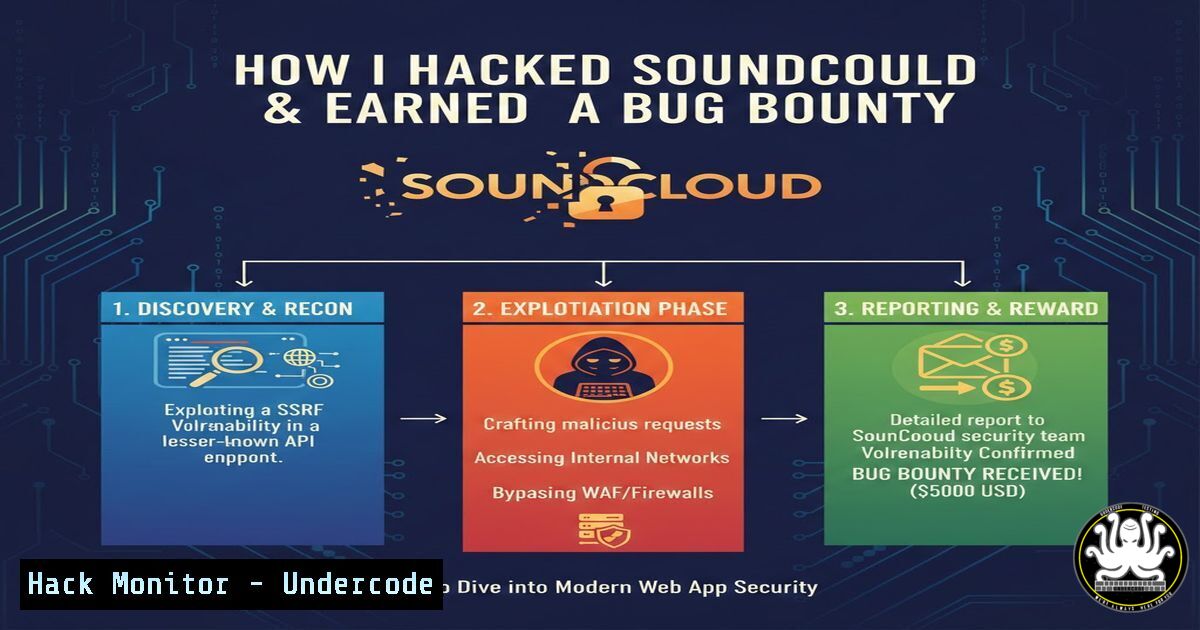
Introduction:
Bug bounty hunting has become a critical component of cybersecurity, allowing ethical hackers to identify vulnerabilities in platforms like SoundCloud. This article explores the methodologies and tools used to secure such web applications, focusing on practical steps for aspiring security researchers to replicate success in bug bounty programs.
Learning Objectives:
- Understand the key stages of a bug bounty hunt from reconnaissance to disclosure.
- Learn how to use common tools for vulnerability scanning and exploitation in web and API environments.
- Gain insights into cloud hardening and mitigation strategies to protect against similar attacks.
You Should Know:
1. Reconnaissance and Information Gathering
Effective reconnaissance is the foundation of any security assessment. Start by enumerating subdomains, IP ranges, and services associated with the target. Use open-source intelligence (OSINT) tools to gather data that could reveal attack surfaces. For instance, on Linux, combine subdomain enumeration with port scanning to map SoundCloud’s infrastructure.
Step‑by‑step guide:
- Install tools like subfinder, Amass, and Nmap on Kali Linux:
sudo apt update && sudo apt install subfinder amass nmap
- Run subdomain enumeration:
subfinder -d soundcloud.com -o subdomains.txt
amass enum -d soundcloud.com -o amass_output.txt
- Merge results and resolve IPs:
cat subdomains.txt amass_output.txt | sort -u > targets.txt
for domain in $(cat targets.txt); do dig +short $domain; done > ips.txt
- Perform port scanning with Nmap:
nmap -sV -iL ips.txt -oN scan_results.txt
This process identifies live hosts and services, such as web servers or APIs, which are prime targets for testing.
2. Vulnerability Scanning and Analysis
Automated scanners help identify common vulnerabilities like SQL injection, cross-site scripting (XSS), and misconfigurations. Configure Burp Suite as a proxy to intercept and analyze HTTP requests from SoundCloud’s web interface, then use its scanner module for deep inspection.
Step‑by‑step guide:
- Launch Burp Suite and configure your browser to proxy through localhost:8080.
- Navigate to SoundCloud’s login or user profile pages while Burp captures traffic.
- Use the “Active Scan” feature on interesting endpoints:
- Right-click a request in the Proxy tab and select “Do active scan.”
- Analyze results in the “Scanner” tab for issues like insecure cookies or XSS.
- For broader network scanning, use OpenVAS on Linux:
gvm-setup  Follow prompts to set up Greenbone Vulnerability Manager
gvm-start  Start the service and access via https://localhost:9392
Create a scan target pointing to SoundCloud’s IP ranges and run a full audit.
3. Exploiting Common Web Vulnerabilities
If scanners flag issues, manual exploitation validates severity. For example, a SQL injection in a search parameter might allow database access. Use sqlmap to automate exploitation and extract data, ensuring you operate within bug bounty scope.
Step‑by‑step guide:
- Test a parameter like `https://soundcloud.com/search?q=test` with sqlmap:
sqlmap -u "https://soundcloud.com/search?q=test" --batch --dbs
- If vulnerable, list tables and columns:
sqlmap -u "https://soundcloud.com/search?q=test" -D database_name --tables
- For XSS, craft a payload and test in browser consoles:
<script>alert(document.domain)</script>
- Use Burp’s Repeater tool to send malicious payloads and observe responses.
4. API Security Testing
SoundCloud relies on APIs for functionality, making them lucrative targets. Test endpoints for authentication bypass, excessive data exposure, and rate-limiting flaws. Tools like Postman and OWASP ZAP automate API security assessments.
Step‑by‑step guide:
- Identify API endpoints via browser developer tools or prior reconnaissance (e.g.,
api.soundcloud.com). - In Postman, create a collection to test endpoints:
- Send GET/POST requests with missing or weak authentication tokens.
- Fuzz parameters with random data using the “Runner” feature.
- Use OWASP ZAP for automated API scanning:
zap.sh -cmd -quickurl https://api.soundcloud.com -quickprogress
- Check for common issues like JWT weaknesses or insecure direct object references (IDOR) by manipulating resource IDs in requests.
5. Cloud Infrastructure Hardening
SoundCloud likely uses cloud services like AWS or Google Cloud. Misconfigurations in S3 buckets, IAM roles, or storage accounts can lead to data leaks. Use cloud CLI tools to audit configurations and enforce least-privilege principles.
Step‑by‑step guide:
- For AWS, install AWS CLI and configure credentials:
aws configure Enter access keys for a read-only role
- List S3 buckets and check permissions:
aws s3 ls
aws s3api get-bucket-acl --bucket bucket-name
- Scan for public buckets using tools like CloudMapper:
git clone https://github.com/duo-labs/cloudmapper.git
python cloudmapper.py collect --account soundcloud
python cloudmapper.py audit --account soundcloud
- On Windows, use PowerShell for Azure hardening:
Connect-AzAccount
Get-AzStorageAccount | ForEach-Object { Test-AzStorageContainerAcl -StorageAccountName $_.StorageAccountName }
6. Reporting and Disclosure Ethics
After confirming a vulnerability, document it thoroughly for responsible disclosure. Include proof-of-concept steps, impact assessment, and remediation advice. Submit reports via platforms like HackerOne or directly to SoundCloud’s security team.
Step‑by‑step guide:
- Create a report template with sections: Summary, Vulnerability Details, Steps to Reproduce, Impact, and Recommendations.
- Provide screenshots or videos using tools like OBS Studio for clarity.
- Example remediation for an XSS flaw:
<!-- Input sanitization in PHP -->
<?php echo htmlspecialchars($user_input, ENT_QUOTES, 'UTF-8'); ?>
- Wait for acknowledgment and follow up politely, adhering to disclosure timelines.
7. Mitigation and Patch Management
Organizations must implement continuous security monitoring and patching to prevent exploits. Use vulnerability management tools to automate scans and enforce policies across Linux and Windows environments.
Step‑by‑step guide:
- On Linux, schedule regular updates with cron:
sudo apt update && sudo apt upgrade -y For Debian-based systems
- Use Nessus for vulnerability management:
Install Nessus and access via web interface
sudo systemctl start nessusd
- On Windows, enforce updates via Group Policy:
Open Group Policy Editor (gpedit.msc) and navigate to Computer Configuration > Administrative Templates > Windows Components > Windows Update
- Implement web application firewalls (WAF) like ModSecurity to block common attacks:
Apache configuration
SecRuleEngine On
SecRule ARGS "@rx malicious_pattern" "deny,status:403"
What Undercode Say:
- Key Takeaway 1: Bug bounty programs are essential for crowdsourcing security and protecting user data, as demonstrated by SoundCloud’s engagement with researchers.
- Key Takeaway 2: A systematic approach combining automated tools and manual testing is crucial for effective security assessment, especially in complex web and API environments.
Analysis: The success in securing Soundcloud highlights the importance of ethical hacking in today’s digital landscape. As web applications grow in complexity, continuous security testing becomes non-negotiable. Organizations must foster collaboration with security researchers to stay ahead of threats, leveraging tools from reconnaissance to cloud hardening. This case shows how proactive measures can prevent potential breaches, safeguarding both company assets and user trust. However, it also underscores the need for clear scope and ethics in bug hunting to avoid legal pitfalls.
Prediction: The future of cybersecurity will see an increase in bug bounty programs and automated security testing integrated into DevOps pipelines. AI-driven tools will assist in vulnerability detection, but human expertise will remain vital for nuanced attacks like logic flaws. Incidents like these will push for stricter regulatory requirements on data protection, emphasizing the need for robust security frameworks. Additionally, cloud and API security will become focal points, with more organizations adopting zero-trust models to mitigate risks from escalating web threats.
▶️ Related Video (74% Match):
🎯Let’s Practice For Free:
IT/Security Reporter URL:
Reported By: Abdallah Ehab – Hackers Feeds
Extra Hub: Undercode MoN
Basic Verification: Pass ✅


