Listen to this Post
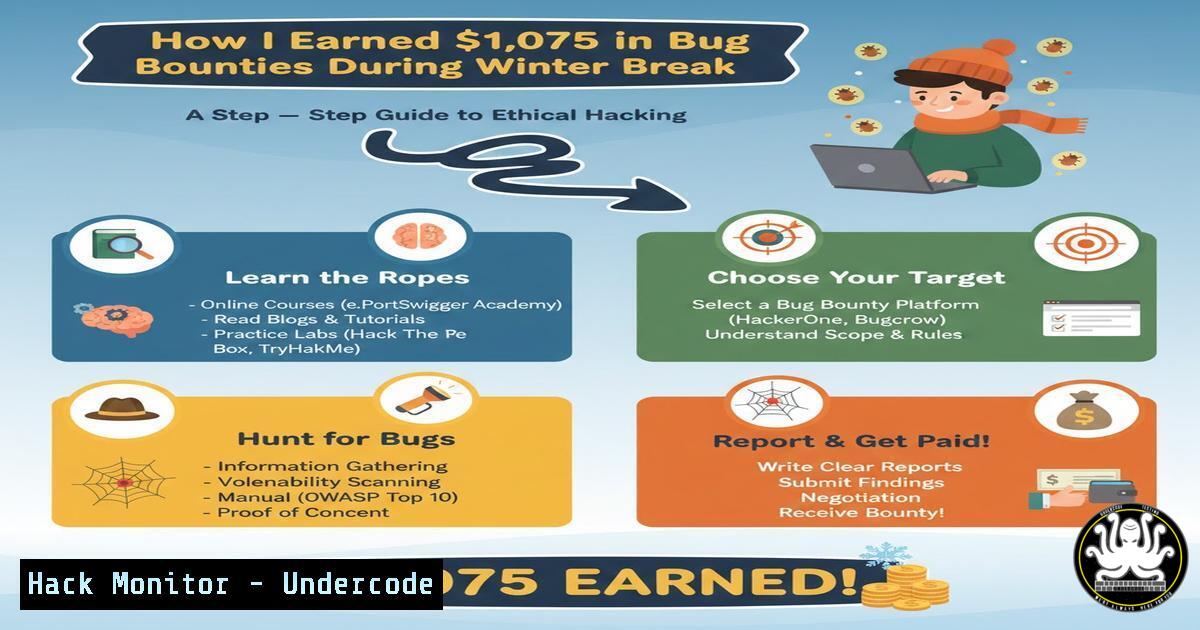
Introduction:
Bug bounty programs enable ethical hackers to identify and responsibly disclose vulnerabilities for financial rewards, enhancing organizational security. This article delves into the practical steps, tools, and techniques that led to a successful $1,075 earning during a winter break, covering everything from lab setup to report submission. By mastering these skills, you can contribute to cybersecurity while potentially generating income through platforms like HackerOne, Bugcrowd, or open programs.
Learning Objectives:
- Understand the bug bounty ecosystem, including platforms, scope, and legal considerations.
- Learn key methodologies for reconnaissance, vulnerability identification, and exploitation in safe environments.
- Master the process of responsible disclosure, including report writing and communication with security teams.
You Should Know:
1. Setting Up Your Ethical Hacking Lab
A controlled lab environment is essential for practicing without causing harm. Start by installing Kali Linux on a virtual machine using VirtualBox or VMware. Update the system and install essential tools for web application testing and network analysis.
Step-by-step guide explaining what this does and how to use it:
– Download Kali Linux from the official website and create a VM with at least 4GB RAM and 20GB storage.
– Update the package list: sudo apt update && sudo apt upgrade -y.
– Install core tools: sudo apt install burpsuite nmap sqlmap dirb gobuster -y.
– Configure Burp Suite as a proxy in your browser (127.0.0.1:8080) to intercept traffic for manual testing.
– Set up vulnerable practice environments like OWASP WebGoat or DVWA (Damn Vulnerable Web Application) using Docker: docker run -d -p 8080:80 citizenstig/dvwa.
This lab simulates real-world targets, allowing you to hone skills in a legal, safe manner.
2. Reconnaissance: The Art of Information Gathering
Reconnaissance involves collecting data about targets to identify attack surfaces. Use passive and active techniques to discover subdomains, open ports, and technologies.
Step-by-step guide explaining what this does and how to use it:
– For subdomain enumeration, use Sublist3r: sublist3r -d example.com -o subdomains.txt.
– Scan for open ports with Nmap: nmap -sV -sC -p- -T4 target.com -oN scan.txt. This reveals services like HTTP, SSH, and databases.
– Leverage Shodan for internet-facing devices: Use the CLI `shodan host target.com` after setting up an API key.
– Gather employee information from LinkedIn or GitHub using tools like theHarvester: theharvester -d example.com -l 100 -b linkedin.
– Analyze SSL certificates with SSL Labs or openssl s_client -connect target.com:443. This phase helps prioritize targets based on exposed assets.
3. Identifying SQL Injection Vulnerabilities
SQL injection (SQLi) allows attackers to manipulate database queries, leading to data theft or system compromise. Test input fields and URLs for improper sanitization.
Step-by-step guide explaining what this does and how to use it:
– Manually test by adding a single quote (‘) to parameters: http://target.com/page?id=1'. Look for error messages indicating SQL issues.
– Use SQLmap for automation: `sqlmap -u “http://target.com/page?id=1” –dbs` to enumerate databases.
– For blind SQLi, use time-based payloads: sqlmap -u "http://target.com/page?id=1" --technique=T --time-sec=10.
– Mitigate SQLi by using parameterized queries in code. In PHP, for example: $stmt = $pdo->prepare("SELECT FROM users WHERE id = ?"); $stmt->execute([$id]);.
– Practice on DVWA: Set security to low and exploit SQLi to extract user credentials.
4. Cross-Site Scripting (XSS) Exploitation and Prevention
XSS enables attackers to inject malicious scripts into web pages, potentially stealing cookies or redirecting users. Test for reflected, stored, and DOM-based XSS.
Step-by-step guide explaining what this does and how to use it:
– Inject basic payloads into search forms: `` and observe if it executes.
– Use BeEF (Browser Exploitation Framework) for advanced attacks: Start BeEF with `sudo beef-xss` and hook browsers via crafted payloads.
– For DOM-based XSS, analyze JavaScript sources with browser developer tools (F12) and test URL fragments.
– Prevent XSS by implementing Content Security Policy (CSP) headers and escaping user input. In Node.js, use `helmet` middleware: app.use(helmet());.
– Tools like XSStrike can automate detection: python3 xsstrike.py -u "http://target.com/search?q=test".
5. API Security Testing
APIs are common targets due to weak authentication, excessive data exposure, or misconfigurations. Test endpoints for flaws using manual and automated methods.
Step-by-step guide explaining what this does and how to use it:
– Identify API endpoints via source code analysis or tools like Burp Suite’s proxy. Look for `/api/v1/` paths.
– Test for broken object level authorization (BOLA) by manipulating IDs: Change `GET /api/user/123` to `124` without proper tokens.
– Use Postman to send requests and inspect responses for sensitive data leaks. Script tests with Newman for automation.
– Check for rate limiting bypass by sending multiple requests: for i in {1..100}; do curl -X POST http://api.target.com/login; done.
– Secure APIs with JWT validation and OAuth 2.0. In cloud environments, use AWS API Gateway with WAF rules.
6. Cloud Infrastructure Misconfigurations
Cloud services like AWS S3 buckets or Azure blobs are often misconfigured, leading to data breaches. Audit configurations using automated tools.
Step-by-step guide explaining what this does and how to use it:
– For AWS, install and configure AWS CLI: `aws configure` with limited IAM credentials.
– Scan S3 buckets for public access: `aws s3 ls` and aws s3api get-bucket-acl --bucket name. Use `s3scanner` to find open buckets.
– Use CloudSploit for comprehensive audits: `npm install -g cloudsploit` and run cloudsploit --config config.json.
– In Azure, check storage accounts with Az PowerShell: Get-AzStorageAccount | Select-Object StorageAccountName, PrimaryEndpoints.
– Harden cloud setups by enabling encryption, logging via CloudTrail, and using IAM policies least privilege principles.
7. Writing a Winning Bug Bounty Report
A clear, detailed report ensures vendors understand and fix vulnerabilities. Include proof of concept, impact, and remediation steps.
Step-by-step guide explaining what this does and how to use it:
– Structure the report with titles: Summary, Vulnerability Details, Steps to Reproduce, Impact, and References.
– For steps to reproduce, provide screenshots or videos using OBS Studio, and include curl commands: curl -X POST http://target.com/vuln -d "param=payload".
– Quantify impact using CVSS scores (e.g., CVSS 3.1 Calculator) and mention affected assets.
– Suggest fixes, such as input validation or patch links. Example: “Implement CORS headers to restrict origins.”
– Submit via platform portals, follow up politely, and avoid disclosure until patched. Certifications like CEH or CompTIA Security+ can bolster credibility in reports.
What Undercode Say:
- Key Takeaway 1: Bug bounty success hinges on meticulous reconnaissance and understanding common vulnerabilities like SQLi and XSS, which remain prevalent despite known mitigations.
- Key Takeaway 2: Ethical hacking requires a balance of technical skill and soft skills, including persuasive report writing and adherence to responsible disclosure ethics.
- Analysis: The rise of bug bounty programs reflects a strategic shift towards crowd-sourced security, with platforms investing in AI for triage. However, human creativity in exploiting logic flaws and chaining vulnerabilities remains irreplaceable. As seen in the winter break earnings, persistence and continuous learning—through courses like CEH or hands-on labs—are critical. The integration of cloud and API security expands the attack surface, demanding broader skill sets from hunters.
Prediction:
As digital transformation accelerates, bug bounty programs will grow in scope and reward amounts, with more companies adopting them as cost-effective security measures. AI-driven tools will automate vulnerability scanning, but sophisticated attacks, especially in IoT and AI systems, will require human expertise. Regulations may mandate responsible disclosure, further legitimizing ethical hacking as a career path. In the next five years, we predict a 50% increase in bug bounty platforms, with emphasis on cloud and API security, creating opportunities for trained professionals.
▶️ Related Video (76% Match):
🎯Let’s Practice For Free:
IT/Security Reporter URL:
Reported By: Aniket Bhatti – Hackers Feeds
Extra Hub: Undercode MoN
Basic Verification: Pass ✅


