
Listen to this Post
Introduction:
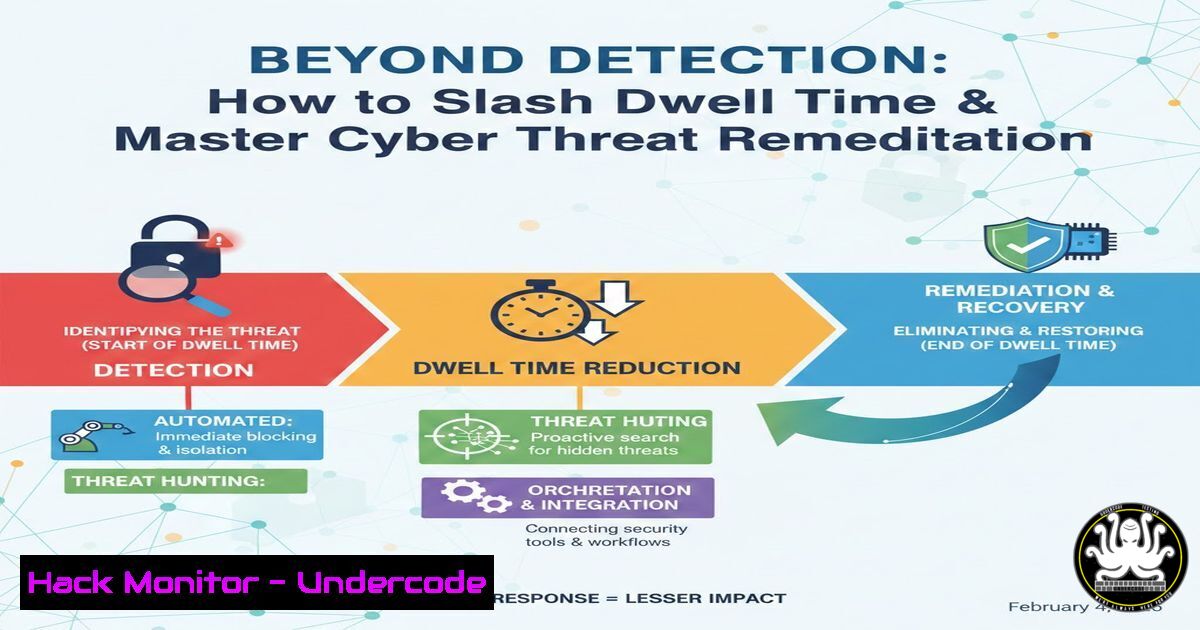
In modern cybersecurity, detection tools have become proficient at identifying threats, but the real challenge lies in the remediation gap where alert fatigue, takedown bottlenecks, and dwell time lead to significant financial impact. This article delves into moving beyond mere alerts to coordinated actions like takedowns, UDRP filings, and automated responses that actively remove attacker infrastructure. By integrating threat intelligence with operational workflows, organizations can transform their security posture from reactive to proactive.
Learning Objectives:
- Integrate dark web and OSINT tools into continuous monitoring pipelines for early threat detection.
- Implement automated remediation and legal processes to execute takedowns and reduce dwell time.
- Harden SOC workflows and leverage training to combat alert fatigue and improve incident response.
You Should Know:
- Setting Up Dark Web Monitoring with OSINT Tools
Dark web monitoring involves scanning hidden forums, marketplaces, and paste sites for leaked data, impersonation domains, and rogue assets. OSINT (Open-Source Intelligence) tools automate this collection, providing actionable insights. This step-by-step guide uses Linux commands and Python scripts to set up a basic monitoring system.
Step‑by‑step guide:
- Install essential OSINT tools on Linux:
`sudo apt update && sudo apt install whois dnsutils theharvester recon-ng -y`
These tools help query domain records, harvest emails, and conduct reconnaissance. - Use `theHarvester` to gather data from public sources:
`theHarvester -d example.com -b all -l 500 -f output.html`
This command searches for domains, emails, and hosts related to “example.com” across search engines and PGP key servers. - Set up a Python script with the `requests` library to monitor paste sites like Pastebin via RSS feeds (note: API access may require registration). Example snippet:
import requests feed_url = "https://pastebin.com/feed" response = requests.get(feed_url) if "your_keyword" in response.text: print("Potential leak detected!") - Schedule regular scans with cron:
`crontab -e` and add `0 /6 /usr/bin/python3 /path/to/your_script.py` to run every 6 hours.
2. Automating Alert Triage with SOAR Platforms
SOAR (Security Orchestration, Automation, and Response) platforms reduce alert fatigue by automating triage, enrichment, and response. They integrate with EDR, SIEM, and threat intelligence feeds to prioritize incidents. This guide configures a playbook in a SOAR tool like Splunk Phantom or Cortex XSOAR.
Step‑by‑step guide:
- In your SOAR platform, create a new playbook triggered by high-severity alerts from your SIEM (e.g., Splunk or Elasticsearch).
- Add an action to enrich alerts with threat intelligence: Use APIs like VirusTotal or AbuseIPDB. For example, in Cortex XSOAR, use the `!ip` command to check an IP:
`!ip reputation ip=8.8.8.8`
- Automate containment: If an IP is malicious, trigger a firewall block. On Linux, integrate with `iptables` via a script:
`sudo iptables -A INPUT -s -j DROP`
In Windows, use PowerShell:
`New-NetFirewallRule -DisplayName “Block Malicious IP” -Direction Inbound -RemoteAddress
– Test the playbook in a sandbox environment and deploy it to production with monitoring.
3. Step-by-Step Guide to Domain Takedowns via UDRP
UDRP (Uniform Domain-Name Dispute-Resolution Policy) is a legal process to take down cybersquatting domains. It involves proving bad faith registration and use. This guide outlines the steps for filing a UDRP complaint to remove impersonation domains.
Step‑by‑step guide:
- Gather evidence: Use `whois` and `dig` to document domain registration details:
`whois malicious-domain.com` and `dig A malicious-domain.com`
Save outputs showing registrant info and IP addresses.
- Prove trademark ownership: Collect trademark certificates and screenshots of fraudulent content.
- Draft the complaint: Follow ICANN’s UDRP guidelines, including sections on identity confusion, bad faith, and legal claims. Templates are available from providers like WIPO or NAF.
- Submit to an accredited dispute resolution provider (e.g., WIPO) and pay the fee (typically $1,000-$2,000). Monitor the case online and respond to any counter-arguments within deadlines.
4. Using APIs for Coordinated Threat Remediation
APIs enable automation of threat remediation by connecting threat intelligence platforms with security tools. This reduces manual effort and speeds up takedowns. This guide uses Python to call APIs for automated actions.
Step‑by‑step guide:
- Choose APIs from threat intelligence providers like Recorded Future, Shodan, or brand protection services. Register for API keys.
- Write a Python script to fetch alerts and trigger takedowns. Example using `requests` to query a mock threat feed:
import requests api_key = "your_api_key" url = "https://api.threatfeed.com/alerts" headers = {"Authorization": f"Bearer {api_key}"} response = requests.get(url, headers=headers) alerts = response.json() for alert in alerts: if alert['type'] == 'rogue_domain': takedown_url = f"https://api.takedownprovider.com/request" data = {"domain": alert['domain'], "reason": "phishing"} requests.post(takedown_url, json=data, headers=headers) - Integrate with cloud services: For AWS, use Boto3 to isolate compromised instances:
import boto3 ec2 = boto3.client('ec2') ec2.stop_instances(InstanceIds=['i-1234567890']) - Schedule the script as a daemon or use serverless functions (e.g., AWS Lambda) for real-time execution.
5. Hardening SOC Workflows to Minimize Dwell Time
Dwell time—the period a threat remains undetected—can be reduced by streamlining SOC workflows with automated log analysis and response protocols. This guide implements Linux and Windows commands for rapid investigation.
Step‑by‑step guide:
- Centralize logs with a SIEM: Use Elasticsearch or Splunk to aggregate data. On Linux, forward syslog with
rsyslog:
Edit `/etc/rsyslog.conf` to add `. @siem_ip:514`.
- Analyze logs for anomalies: On Linux, use `grep` and `awk` to search for failed logins:
`grep “Failed password” /var/log/auth.log | awk ‘{print $9}’ | sort | uniq -c`
On Windows, use PowerShell to query event logs:
`Get-WinEvent -FilterHashtable @{LogName=’Security’; ID=4625} | Select-Object -First 10`
- Create SIEM correlation rules: For example, in Splunk, set a rule to alert on multiple failed logins from a single IP within 5 minutes.
- Implement an incident response playbook that includes isolation steps: On Windows, use `netstat` to find malicious connections:
`netstat -ano | findstr ESTABLISHED`
Then terminate processes with `taskkill /PID /F`.
6. Proactive Brand Protection and Fraud Prevention
Proactive brand protection involves monitoring for impersonation domains, rogue mobile apps, and fraud campaigns. This guide uses tools to scan and mitigate these risks.
Step‑by‑step guide:
- Monitor domain registrations: Use `whois` bulk queries or services like DomainTools. Set up alerts for domains similar to your brand via Python:
import whois domain = "fakebrand.com" try: w = whois.whois(domain) if "your_brand" in w.domain_name: print("Potential impersonation domain detected.") except Exception as e: print(e) - Scan for rogue apps on app stores: Use Google Play Store and Apple App Store APIs to search for your brand name. Report fraudulent apps through official dispute channels.
- Conduct SSL/TLS checks for phishing sites: Use `sslyze` on Linux:
`sslyze –regular example.com` to verify certificates.
- Engage in dark web surveillance: Deploy tools like `OnionScan` for Tor network monitoring (requires Tor routing):
`onionscan –scanalldir output/ .onion_url`
- Essential Training Courses for Cyber Threat Intelligence Teams
Training ensures teams stay updated on threats, tools, and legal aspects. This guide recommends courses and hands-on labs for skill development.
Step‑by‑step guide:
- Enroll in certifications: SANS SEC511 (Continuous Monitoring and Security Operations) or GIAC GCTI (Cyber Threat Intelligence) for threat intel fundamentals. For remediation, consider legal courses like Cyber Law and Policy.
- Set up a lab environment: Use VirtualBox or VMware to create a sandbox with Kali Linux for penetration testing. Practice with tools like `Metasploit` and
Maltego. - Participate in CTF challenges: Platforms like Hack The Box or TryHackMe offer scenarios on dark web investigation and incident response. For example, use `nmap` to scan a target:
`nmap -sV -p 1-1000 target_ip`
- Develop internal workshops: Simulate takedown procedures using mock domains and legal templates. Review case studies from organizations like APWG (Anti-Phishing Working Group).
What Undercode Say:
- Key Takeaway 1: Remediation is the new frontline in cybersecurity; without coordinated actions like takedowns and automation, detection alone fails to reduce financial impact.
- Key Takeaway 2: Integrating legal, technical, and operational processes—through APIs, SOAR, and training—is essential to close the remediation gap and combat alert fatigue.
Analysis: The post highlights a critical shift from detection-centric to outcome-driven security. As threats evolve, organizations must invest in automated remediation workflows and cross-functional teams that include legal experts. The emphasis on dwell time underscores the need for real-time response capabilities, which can be achieved through cloud-native tools and continuous monitoring. Ultimately, reducing exposure requires a holistic approach that blends threat intelligence with proactive brand protection.
Prediction:
In the future, cyber threat remediation will become increasingly automated with AI-driven playbooks that predict attacker behavior and execute takedowns within minutes. Legal frameworks like UDRP will adapt to faster dispute resolutions, while regulatory pressures will mandate shorter dwell times. As dark web activities grow more sophisticated, integrated platforms combining OSINT, EDR, and XDR will dominate, pushing cybersecurity toward a more proactive, intelligence-led model. Training will focus on interdisciplinary skills, blending technical prowess with legal acumen to manage the complex threat landscape.
▶️ Related Video (84% Match):
🎯Let’s Practice For Free:
IT/Security Reporter URL:
Reported By: David Sehyeon – Hackers Feeds
Extra Hub: Undercode MoN
Basic Verification: Pass ✅


