Listen to this Post
Introduction:
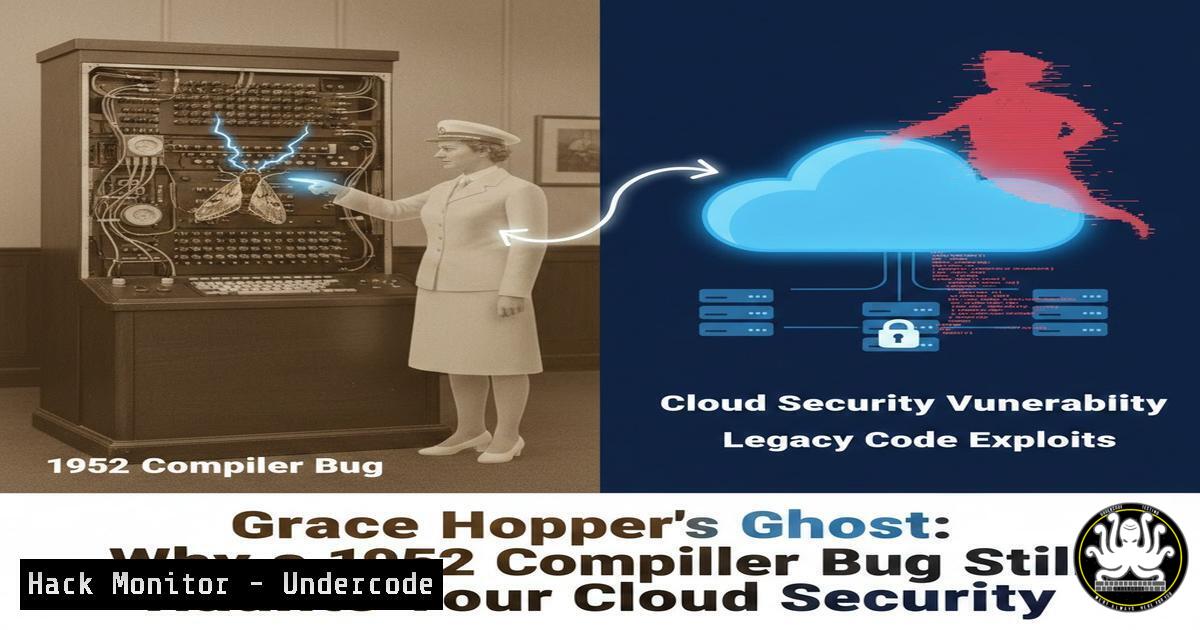
The debugging techniques we use to chase down memory leaks and zero-day exploits owe their existence to a rear admiral who once pulled a dead moth from a relay. While Grace Hopper is celebrated for creating the first compiler and co-inventing COBOL, her greatest legacy for modern cybersecurity is the foundational principle that code—whether COBOL or Kubernetes manifests—must be translated, audited, and hardened before it runs. In an era of AI-generated scripts and Infrastructure as Code, Hopper’s philosophy of “dare to try, but verify” is more relevant than ever.
Learning Objectives:
- Analyze the security implications of legacy code and language compilers in modern attack surfaces.
- Apply debugging and hardening techniques derived from historical computing principles to contemporary cloud and AI environments.
- Implement secure coding practices for Infrastructure as Code (IaC) and containerized applications using command-line tools.
You Should Know:
1. The Compiler as the First Security Gate
Grace Hopper’s revolutionary idea was the compiler: a program that translates human-readable instructions into machine code. In cybersecurity, this translation layer is the first—and often most overlooked—attack vector. Supply chain attacks, such as the SolarWinds breach, exploit the trust placed in build tools and compilers.
Step‑by‑step guide: Auditing Compiler Integrity on Linux and Windows
To ensure your compilation toolchain hasn’t been tampered with, verify checksums and use deterministic builds.
Linux (using `sha256sum` and `gpg`):
 Download the source code of a tool (e.g., Nmap)
wget https://nmap.org/dist/nmap-7.95.tar.bz2
wget https://nmap.org/dist/sigs/nmap-7.95.tar.bz2.asc

Import the developer's GPG key and verify signature
gpg --import nmap-dev-key.asc
gpg --verify nmap-7.95.tar.bz2.asc nmap-7.95.tar.bz2

Check the SHA256 hash against the official published one
sha256sum nmap-7.95.tar.bz2
Windows (using PowerShell):
 Verify file hash
Get-FileHash -Algorithm SHA256 .\nmap-7.95-setup.exe
 Compare the output with the hash listed on the official download page
- The “First Actual Case of Bug Being Found” – Debugging Methodologies
The famous moth removed from the Harvard Mark II computer in 1947 gave us the term “debugging.” Today, debugging is a core cybersecurity skill, from reverse engineering malware to fixing logic flaws in smart contracts.
Step‑by‑step guide: Static and Dynamic Analysis of a Suspicious Binary
We’ll use a simple C program with a vulnerability to demonstrate debugging with `gdb` (Linux) and WinDbg (Windows).
Linux – Finding a Buffer Overflow:
// vuln.c
include <stdio.h>
include <string.h>
void vulnerable() {
char buffer[bash];
gets(buffer); // DANGEROUS: No bounds checking
}
int main() {
vulnerable();
return 0;
}
Compile and debug:
gcc -g -fno-stack-protector -z execstack -o vuln vuln.c
gdb ./vuln
(gdb) disassemble vulnerable
(gdb) break vulnerable+15
(gdb) run
(gdb) info registers
(gdb) x/100x $rsp  Examine the stack after input
Windows – Attaching to a Process with WinDbg:
 Launch WinDbg as Administrator
 File -> Attach to a Process (select suspicious.exe)
 In the command window, analyze loaded modules
lm
 Set breakpoints on critical API calls like VirtualAlloc
bp kernel32!VirtualAlloc
g
3. COBOL’s Undead Legacy: Securing Critical Infrastructure
Hopper co-created COBOL, a language that still runs 80% of in-person financial transactions and vast amounts of government back-end systems. These legacy systems are a prime target for attackers because they are poorly understood by new security engineers and often lack modern authentication controls.
Step‑by‑step guide: Hardening Legacy System Interfaces
Modern access to COBOL systems is often gated through middleware (CICS, IMS). Hardening these interfaces is critical.
Linux (for mainframe-adjacent middleware):
- Use `iptables` or `nftables` to restrict access to legacy ports (e.g., TCP 5000 for DB2).
sudo iptables -A INPUT -p tcp --dport 5000 -s 192.168.1.0/24 -j ACCEPT
sudo iptables -A INPUT -p tcp --dport 5000 -j DROP
Windows (for Host Integration Server):
- Use `netsh` to secure ports and restrict admin access.
netsh advfirewall firewall add rule name="Block_COBOL_Access" dir=in action=block protocol=TCP localport=5000 remoteip=any
netsh advfirewall firewall add rule name="Allow_Internal_COBOL" dir=in action=allow protocol=TCP localport=5000 remoteip=192.168.1.0/24
- The Permission Philosophy: DevSecOps and Infrastructure as Code
Hopper’s famous quote, “It’s easier to ask for forgiveness than permission,” is the unofficial motto of DevOps. However, in cybersecurity, we must balance this with guardrails. We can use policy-as-code tools to allow innovation while preventing disaster.
Step‑by‑step guide: Implementing Security Guardrails with Terraform and Checkov
This demonstrates how to automatically scan infrastructure code for misconfigurations before deployment (asking for forgiveness is harder after a data breach).
 main.tf - An S3 bucket that is initially insecure
resource "aws_s3_bucket" "example" {
bucket = "my-company-data-bucket"
acl = "public-read"  VIOLATION: Bucket should not be public
}
Scan the code using Checkov (a static code analysis tool for IaC):
 Install Checkov
pip install checkov

Run scan against the Terraform directory
checkov -d . --framework terraform

Output will highlight the public ACL as a CKV_AWS_20 violation
 Fix by changing acl to "private" or removing the line
- API Security: Translating Human Intent to Machine Action
Just as Hopper’s compiler translated human language to machine code, APIs translate user actions into system commands. Insecure APIs are the top attack vector for modern web applications and AI models.
Step‑by‑step guide: Testing API Endpoint Hardening with cURL and OWASP ZAP
We’ll test for Broken Object Level Authorization (BOLA).
Linux/macOS (Manual test with cURL):
 Authenticate and get a token
curl -X POST https://api.target.com/login -d '{"user":"test","pass":"test"}' -H "Content-Type: application/json" -c cookies.txt

Attempt to access another user's data by changing the ID in the URL
curl -X GET https://api.target.com/user/12345/profile -b cookies.txt
curl -X GET https://api.target.com/user/12346/profile -b cookies.txt
 If the second request returns data, the API is vulnerable.
Windows (Automated scan with OWASP ZAP CLI):
 Assuming ZAP is installed
& "C:\Program Files\OWASP\Zed Attack Proxy\zap-cli.exe" quick-scan --self-contained --spider -r https://api.target.com
What Undercode Say:
- Legacy is a Liability: The foundations we build on (COBOL, old compilers) are invisible attack surfaces. Security audits must extend into the build chain and historical code.
- Innovation Needs Guardrails: Hopper’s “forgiveness” mindset drives agility, but modern DevSecOps shows that automated, pre-deployment guardrails (Checkov, ZAP) are better than post-incident apologies.
- Debugging is Reverse Engineering: The core skill of extracting a moth from a relay is the same as extracting a rootkit from memory—a meticulous, systematic search for anomalies. This skill is irreplaceable by AI.
Prediction:
As AI-generated code proliferates, the “compiler” will evolve into an AI security gate. We will see the rise of AI-powered “compiler firewalls” that, inspired by Hopper’s translation layer, will not only translate code but also vet it for security flaws and behavioral anomalies before it is ever executed, effectively debugging AI’s hallucinations before they become zero-day exploits.
▶️ Related Video (82% Match):
🎯Let’s Practice For Free:
IT/Security Reporter URL:
Reported By: Marc Andre – Hackers Feeds
Extra Hub: Undercode MoN
Basic Verification: Pass ✅


