Listen to this Post
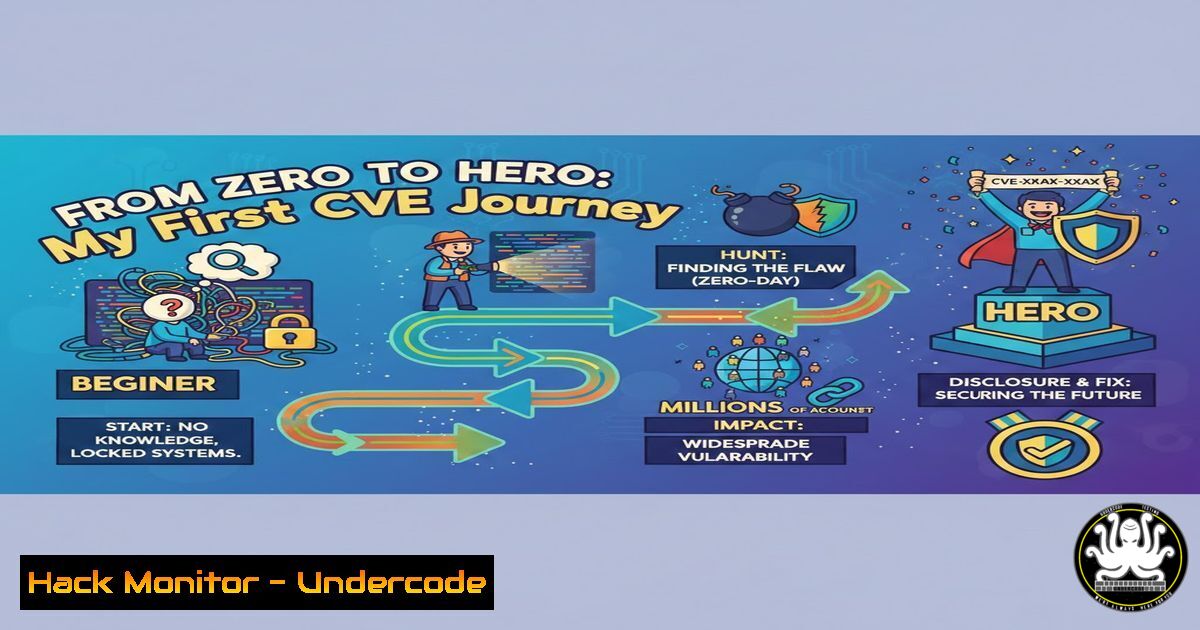
Introduction:
Achieving a first Common Vulnerabilities and Exposures (CVE) ID is a monumental rite of passage in the cybersecurity community, marking the transition from learner to legitimate contributor. Security researcher Sharma Vinay’s recent publication of CVE-2025-61148, a vulnerability impacting hundreds of thousands of accounts, exemplifies the rigorous process of ethical bug hunting. This article deconstructs that journey, providing a roadmap for aspiring researchers on the technical and procedural steps from discovery to public advisory.
Learning Objectives:
- Understand the end-to-end workflow of responsible vulnerability disclosure, from initial discovery to CVE assignment.
- Learn the critical importance of meticulous documentation, proof-of-concept creation, and clear communication in bug reporting.
- Identify the tools and mindset shifts required to move from theoretical practice to real-world, impactful security research.
You Should Know:
1. The Foundation: Reconnaissance and Target Selection
The hunt begins not with random testing, but with a strategic scope. Researchers often focus on widely used applications, open-source projects, or specific technologies. The goal is impact. For web applications, this starts with mapping the attack surface.
Step‑by‑step guide explaining what this does and how to use it.
Step 1: Subdomain Enumeration. Use tools like subfinder, amass, or `assetfinder` to discover all associated subdomains of your target organization.
subfinder -d target.com -o subdomains.txt
amass enum -d target.com -o amass_subs.txt
Step 2: Service Discovery & Port Scanning. Identify live hosts and running services using nmap. This reveals potential entry points (web servers, APIs, databases).
nmap -sV -sC -iL subdomains.txt -oA target_scan
Step 3: Web Endpoint Discovery. Use `gobuster` or `ffuf` to brute-force directories and files on discovered web servers, uncovering hidden panels, APIs, or administrative interfaces.
gobuster dir -u https://target.com -w /usr/share/wordlists/dirb/common.txt -o directories.txt
- The Art of the Hunt: Vulnerability Discovery Techniques
This phase shifts from mapping to testing. It combines automated scanning with manual, creative exploitation to find flaws automated tools miss.
Step‑by‑step guide explaining what this does and how to use it.
Step 1: Automated Scanning (The First Pass). Run tools like `nuclei` or `nikto` to catch low-hanging fruit and common misconfigurations.
nuclei -u https://target.com -t ~/nuclei-templates/ -o nuclei_scan.txt
Step 2: Manual Web Testing. This is where skill shines. Test for logic flaws, insecure direct object references (IDOR), broken access control, and business logic errors. Intercept requests with Burp Suite or OWASP ZAP and manipulate parameters.
Step 3: Code Analysis (If Possible). For open-source targets, static application security testing (SAST) tools like `semgrep` or manual code review can uncover vulnerabilities in the source.
semgrep --config "p/security-audit" /path/to/source/code/
3. Proof is Everything: Reliable Reproduction & Documentation
Finding a bug is only 20% of the work. A vendor will ignore an unreproducible report. Your documentation must be a standalone guide.
Step‑by‑step guide explaining what this does and how to use it.
Step 1: Isolate the Conditions. Determine the exact steps, user roles, and system state needed to trigger the vulnerability every single time.
Step 2: Create a Visual Proof of Concept (PoC). Record a clear, concise screen capture using `asciinema` (for CLI) or simple screen recording software. Annotate key steps.
asciinema rec poc.cast
 Perform your exploit steps in the terminal
 Ctrl+D to stop recording
Step 3: Write the Report. Structure it with: Executive Summary, Technical Details (HTTP request/response cycles with `curl` examples), Step-by-Step Reproduction, Impact Assessment, and Suggested Remediation.
 Example of documenting a vulnerable API call
curl -X POST 'https://target.com/api/v1/resetPassword' -H 'Content-Type: application/json' --data-raw '{"user_id": 12345}'
 This request resets the password for user 12345 without authentication.
4. The Reporting Maze: Navigating Vendor Communication
Finding the correct security contact is a challenge. Persistence and professionalism are key.
Step‑by‑step guide explaining what this does and how to use it.
Step 1: Locate the Security Policy. Look for /security.txt, /.well-known/security.txt, or a “Security” page on the vendor’s website. The `security.txt` file should contain contact information.
curl -s https://target.com/.well-known/security.txt | head -20
Step 2: Craft the Initial Contact. Use a clear subject line (e.g., “Security Vulnerability Report – [Brief Description]”). Attach your full report as a PDF. Avoid inflammatory language.
Step 3: Practice Patience and Follow-up. Vendors can take weeks or months to respond. Send a polite follow-up email after 7-10 business days if you receive no acknowledgement.
- The Waiting Game: From Submission to CVE Assignment
After acceptance, the vulnerability enters a pipeline involving analysis, patch development, and CVE ID reservation via a CVE Numbering Authority (CNA).
Step‑by‑step guide explaining what this does and how to use it.
Step 1: Track Communication. Maintain a log of all interactions with the vendor, including dates and key decisions.
Step 2: Coordinate Disclosure. Agree on an embargo period (typically 90 days) for the vendor to develop and deploy a fix. Discuss public disclosure timelines.
Step 3: CVE Request. The vendor (acting as a CNA) or you (via programs like MITRE’s) will request a CVE ID. You will be asked to provide a draft description for the public record.
6. Post-Publication: Analysis and Continuous Learning
Once the advisory is live, analyze the public details of your own and similar CVEs to deepen your knowledge.
Step‑by‑step guide explaining what this does and how to use it.
Step 1: Study the Public Advisory. Compare the vendor’s public description to your original report. Note how they characterized the risk and solution.
Step 2: Search for Similar Patterns. Use the CVE’s details to hunt for similar flaws in other products. The underlying vulnerability class (e.g., JWT mishandling, SQLi) is often not unique.
Step 3: Update Your Toolkit. If new tools or techniques were relevant, integrate them. For instance, if your CVE was a server-side request forgery (SSRF), deepen your skills with tools like `ffuf` for parameter fuzzing in SSRF contexts.
ffuf -u https://target.com/api/fetch?url=FUZZ -w ssrf-payloads.txt -fr "error"
What Undercode Say:
- Process Trumps Flash: The glamorous “find” is worthless without the unglamorous work of perfect reproduction, clear documentation, and professional communication. This methodology is what transforms a hacker into a respected security researcher.
- Impact is a Choice: Targeting software with a large user base inherently increases the potential impact of your findings, making the lengthy disclosure process more meaningful and more likely to be taken seriously by vendors and the community.
This journey underscores a critical industry shift: the systematic professionalization of bug hunting. A first CVE is no longer just about technical skill but demonstrates project management, communication, and relentless follow-through. The months-long timeline from report to publication, as seen in CVE-2025-61148, is the new normal, testing a researcher’s patience and dedication as much as their hacking prowess.
Prediction:
The process exemplified by this first CVE journey will become increasingly formalized and integrated into cybersecurity career paths. We will see more educational platforms and corporate training programs incorporating full-cycle “CVE simulation” modules, teaching the soft skills and procedures alongside exploitation techniques. Furthermore, as the volume of researchers grows, AI-assisted tools will emerge not just for vulnerability discovery, but for automating parts of the documentation and vendor communication workflow, helping researchers manage multiple concurrent responsible disclosure processes efficiently. The researcher of the future will be judged not on a single brilliant exploit, but on their consistent ability to navigate the entire lifecycle of vulnerability remediation.
🎯Let’s Practice For Free:
IT/Security Reporter URL:
Reported By: Vinay19d Cve – Hackers Feeds
Extra Hub: Undercode MoN
Basic Verification: Pass ✅


