Listen to this Post
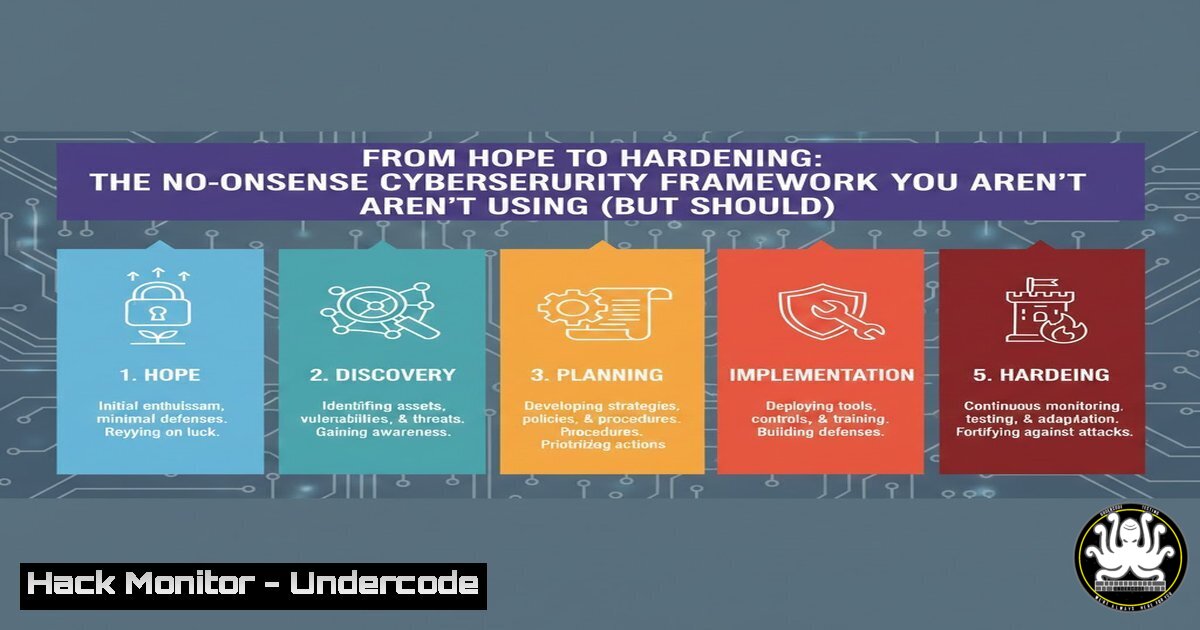
Introduction:
In an era where data breaches are commonplace, relying on hope is a strategic failure. Modern cybersecurity demands a proactive, ownership-driven mindset, shifting from reactive compliance to active control. This article deconstructs the core principles of effective defense—data protection, infosec, and privacy—into actionable technical controls you can implement today, moving beyond posters and platitudes to practical hardening.
Learning Objectives:
- Implement foundational access and inventory controls across Linux and Windows environments.
- Harden cloud configurations, specifically focusing on AWS IAM and S3.
- Deploy and configure basic threat detection using open-source SIEM tools.
- Understand and mitigate common web application vulnerabilities like insecure APIs.
- Establish a continuous vulnerability management process.
You Should Know:
1. Ownership Starts with Inventory and Least Privilege
The principle of “Ownership Matters” begins with knowing your assets and who can access them. Unmanaged users, stale credentials, and excessive permissions are the primary attack vectors.
Step‑by‑step guide:
Linux (Debian/Ubuntu): Audit user accounts and sudo privileges.
 List all users
cut -d: -f1 /etc/passwd
 Review sudoers entries
sudo cat /etc/sudoers | grep -v '^|^$'
 Check for users with UID 0 (root)
awk -F: '($3 == 0) {print $1}' /etc/passwd
 Force password change on next login for a user
sudo chage -d 0 <username>
Windows (PowerShell): Enumerate local admins and user sessions.
 Get members of the local Administrators group
Get-LocalGroupMember -Group "Administrators"
 Get active user sessions (requires admin)
query user /server:$SERVER
 Audit user account status
Get-LocalUser | Select Name, Enabled, LastLogon
Action: Create a documented inventory and implement a quarterly review process.
2. Control Cloud Storage or Get Breached
“WhoIsInControl” is starkly evident in cloud misconfigurations. Publicly accessible S3 buckets or Azure Blobs are a data leak epidemic.
Step‑by‑step guide:
AWS S3 Hardening:
 Use AWS CLI to check bucket policies
aws s3api get-bucket-policy --bucket YOUR-BUCKET-NAME
 Apply a block public access setting at the account level (RECOMMENDED)
aws s3control put-public-access-block \
--public-access-block-configuration BlockPublicAcls=true,IgnorePublicAcls=true,BlockPublicPolicy=true,RestrictPublicBuckets=true \
--account-id YOUR-ACCOUNT-ID
 Enable server-side encryption by default
aws s3api put-bucket-encryption \
--bucket YOUR-BUCKET-NAME \
--server-side-encryption-configuration '{"Rules": [{"ApplyServerSideEncryptionByDefault": {"SSEAlgorithm": "AES256"}}]}'
Action: Use tools like `prowler` or `ScoutSuite` for automated cloud security audits.
3. Detect Threats with Open-Source SIEM
Hope is not a detection strategy. A basic Security Information and Event Management (SIEM) setup is critical for visibility.
Step‑by‑step guide:
Deploy Wazuh (OSSEC + ELK Stack):
 On a Linux server, deploy via Docker (simplified)
git clone https://github.com/wazuh/wazuh-docker.git -b v4.7.2
cd wazuh-docker/single-node
docker-compose -f generate-indexer-certs.yml run --rm generator
docker-compose up -d
Access the Wazuh dashboard at https://<server_ip>.
Add your first agent: On a target Linux host, download and run the agent install script provided by the Wazuh server.
Key Rules to Enable: SSH brute force detection, file integrity monitoring (/etc, /usr/bin, /usr/sbin), and Windows Event ID 4625 (failed logon).
4. Harden Your API Gateways
Insecure APIs are the new front door for attackers. Implement strict authentication, rate limiting, and input validation.
Step‑by‑step guide:
NGINX as a Simple API Gateway with Rate Limiting:
 Inside an nginx configuration file (e.g., /etc/nginx/conf.d/api_gateway.conf)
http {
limit_req_zone $binary_remote_addr zone=api_limit:10m rate=10r/s;

server {
listen 443 ssl;
server_name api.yourcompany.com;

location /v1/ {
limit_req zone=api_limit burst=20 nodelay;
 Forward to your actual API backend
proxy_pass http://backend_api;
 Validate JWT (example using auth_request or lua)
auth_request /_validate_jwt;
proxy_set_header X-API-Key $http_authorization;
}

location = /_validate_jwt {
internal;
proxy_pass http://auth_service/validate;
proxy_pass_request_body off;
proxy_set_header Content-Length "";
proxy_set_header X-Original-URI $request_uri;
}
}
}
Test with: `curl -H “Authorization: Bearer
5. Patch Management is Non-Negotiable
Vulnerability exploitation thrives on unpatched systems. Automate where possible.
Step‑by‑step guide:
Linux (Automated Security Updates):
 For Ubuntu/Debian, install unattended-upgrades
sudo apt update && sudo apt install unattended-upgrades apt-listchanges
sudo dpkg-reconfigure --priority=low unattended-upgrades
 Enable for security updates only
sudo nano /etc/apt/apt.conf.d/50unattended-upgrades
 Ensure these lines are present/uncommented:
Unattended-Upgrade::Allowed-Origins {
"${distro_id}:${distro_codename}-security";
};
Windows (Via PowerShell):
 Install all available updates (interactive)
Install-Module PSWindowsUpdate -Force
Get-WindowsUpdate -AcceptAll -Install -AutoReboot
 For WSUS or automated schedules, configure via Group Policy:
 Computer Configuration -> Administrative Templates -> Windows Components -> Windows Update
What Undercode Say:
- Philosophy Over Products: Effective security is a mindset of relentless ownership and verification, not a stack of vendor tools. The core mottos highlight a deficit in strategic thinking that no tool can fix.
- Actionable Control is the Metric: Your security posture is measured by the controls you actively manage—inventory, least privilege, logging, and patching. If you aren’t actively commanding these, you are not in control.
Prediction:
The convergence of AI-driven attacks and an expanding attack surface (IoT, hybrid cloud) will render passive, compliance-checkbox security utterly obsolete by 2026. Organizations that internalize the “HopeIsNotAPlan” and “OwnershipMatters” ethos—translating it into automated, immutable infrastructure hardening and continuous threat exposure management—will survive. Those clinging to annual audits and static policies will become the headline-making breach statistics, as human-scale response will be too slow for AI-accelerated exploitation. The gap between defenders and attackers will widen, defined by the level of genuine operational control.
🎯Let’s Practice For Free:
IT/Security Reporter URL:
Reported By: Piatesdorf Hopeisnotaplan – Hackers Feeds
Extra Hub: Undercode MoN
Basic Verification: Pass ✅


