Listen to this Post
Introduction:
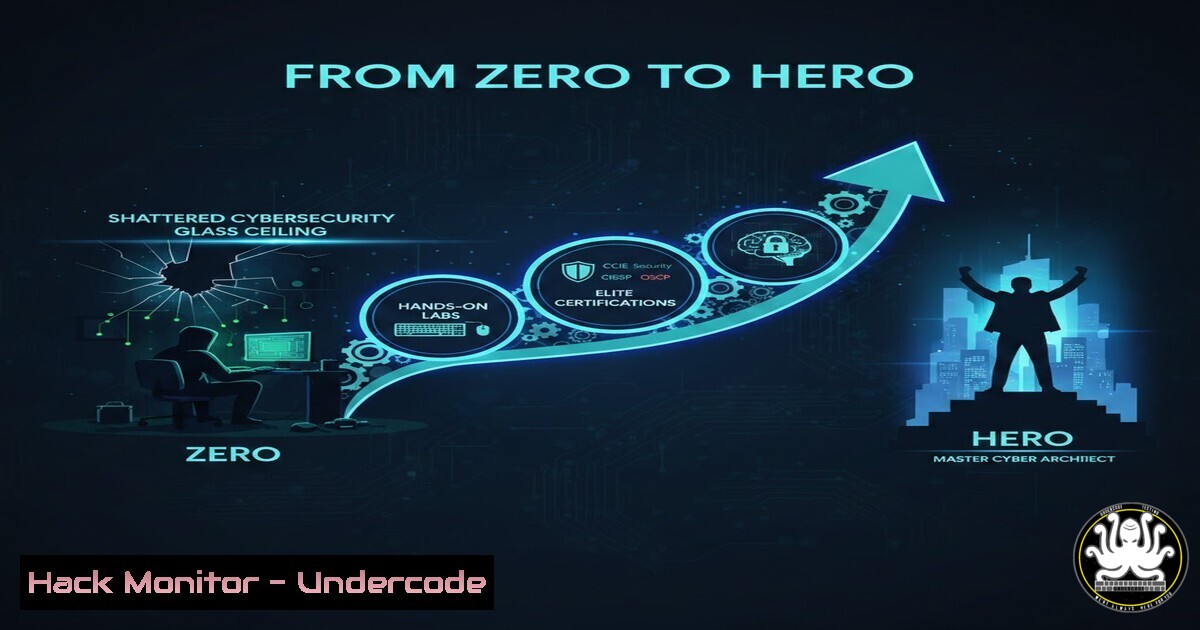
The cybersecurity industry often presents a daunting “glass ceiling” for aspiring professionals without formal degrees, valuing credentials and proven expertise. This narrative chronicles a journey from self-taught Hack The Box enthusiast to a validated Offensive Security Specialist, highlighting the strategic blend of hands-on practice, mentorship, and elite certifications that forged a successful path. The core lesson is that structured, practical training and community support can effectively replace traditional academic routes in this field.
Learning Objectives:
- Understand the critical role of hands-on penetration testing platforms like Hack The Box (HTB) in building practical skills.
- Identify key offensive security certifications (e.g., CRTE, CRTO, CPTS) that validate real-world abilities and boost career credibility.
- Learn how to leverage mentorship and shared resources, such as the “Zero-Point” materials, to accelerate professional growth.
You Should Know:
- Building a Foundation with Hands-On Labs and HTB
The journey began with “countless hours spent breaking machines on HTB.” Platforms like Hack The Box, TryHackMe, and Proving Grounds provide a sandboxed environment to practice real-world vulnerabilities without legal risk. This practical experience is irreplaceable for understanding attack vectors, tool usage, and problem-solving under constraints.
Step-by-Step Guide: Getting Started with HTB
- Sign Up: Navigate to the Hack The Box website and register for an account. Starting with a free account is sufficient.
- Connect via VPN: To access the lab machines, you must connect to the HTB VPN. Download your unique connection pack from the HTB dashboard.
On Linux, extract the pack and connect using OpenVPN:sudo openvpn yourusername.ovpn
On Windows, use the OpenVPN GUI application, import the `.ovpn` file, and connect.
- Start with Active Machines: In the “Machines” section, filter for “Active” and start with “Easy” rated boxes. Each machine has an IP address (like
10.10.10.100). - Methodology: Follow a standard approach: Reconnaissance (
nmap), Enumeration (gobuster,enum4linux), Exploitation, Privilege Escalation. Document everything in a notes tool like Obsidian or CherryTree. - Join a Team: Form or join a “team” on HTB, like the user’s “PwnNet,” to collaborate, share flags, and learn collectively.
2. Validating Skills with Offensive Security Certifications
After building a skill base, formal validation becomes crucial to break the “glass ceiling.” The certifications mentioned in the post (CRTE, CRTO, CPTS) are highly respected because they are 100% practical, exam-based certifications.
Step-by-Step Guide: Preparing for the CRTE (Certified Red Team Expert)
1. Understand the Exam Scope: The CRTE focuses on attacking Active Directory environments from an initial breach to full domain compromise. Key topics include Kerberos attacks, ACL abuse, lateral movement, and persistence.
2. Acquire Official Training: Enroll in the official “Red Team Ops” course or source comprehensive lab guides. The mentioned “Zero-Point resources” likely refer to such shared, structured materials.
3. Set Up a Practice Lab: Build a local lab using VMware or VirtualBox. A typical setup includes:
A Windows Server Domain Controller (e.g., Windows Server 2019).
Multiple Windows 10/11 client machines joined to the domain.
A Kali Linux attacker machine.
Use tools like `vagrant` or `AutomatedLab` for scripted deployment.
4. Practice Core Attacks: Methodically work through each attack vector. Example commands to master:
 Kerberoasting with Impacket
GetUserSPNs.py -request -dc-ip 10.10.10.1 'domain.local/user:Password123'

AS-REP Roasting
GetNPUsers.py 'domain.local/' -usersfile users.txt -format hashcat -output hashes.asreproast

Lateral Movement via Pass-the-Hash
crackmapexec smb 10.10.10.0/24 -u 'Administrator' -H 'aad3b435b51404eeaad3b435b51404ee:579da618cfbfa85247acf1f800a280a4' -x whoami
5. Take Mock Exams: Find or create full-scenario practice exams that mimic the 48-hour, hands-on CRTE format to build stamina and strategy.
3. Leveraging Mentorship and Community (The “Zero-Point” Advantage)
Growth “was not a solo journey.” The post highlights José Francisco Flores and Vatan Singh as key supporters. In cybersecurity, mentorship provides direction, resources, and encouragement that self-study cannot.
Step-by-Step Guide: Engaging with the Cybersecurity Community
- Identify Potential Mentors: Engage with professionals on LinkedIn (like the poster did) or Discord communities (e.g., HTB, certification discords). Look for individuals who actively share knowledge.
- Engage Meaningfully: Don’t just ask for help. Share your own progress, contribute to discussions, and ask specific, well-researched questions.
- Share and Contribute: As you learn, create write-ups for machines you’ve solved or blog about techniques. This solidifies your knowledge and attracts like-minded professionals.
- Utilize Shared Resources: “Zero-Point resources” exemplify community-sourced knowledge bases. Seek out GitHub repos, curated lists of attack techniques, and shared lab guides. Always verify commands in your own lab before trusting them.
4. Mastering Essential Penetration Testing Tools
The transition from HTB to professional work requires fluency in a core toolset, often used in certification exams and real engagements.
Step-by-Step Guide: Configuring and Using a Core Tool (CrackMapExec)
1. Installation: On Kali, it’s pre-installed. For other systems, install via pip or from source:
sudo apt install crackmapexec  Kali
pipx install crackmapexec  Alternative
2. Basic Network Reconnaissance: Use it to scan a network for SMB hosts and gather OS information.
crackmapexec smb 10.10.10.0/24
3. Credential Testing: Test a list of credentials against discovered hosts.
crackmapexec smb 10.10.10.0/24 -u users.txt -p passwords.txt
4. Executing Commands: Upon successful compromise, execute commands for further enumeration.
crackmapexec smb 10.10.10.100 -u 'admin' -p 'Passw0rd!' -x 'systeminfo'
5. Pass-the-Hash: Use NTLM hashes for authentication where passwords are not available.
crackmapexec smb 10.10.10.100 -u 'Administrator' -H 'aad3b435b51404eeaad3b435b51404ee:579da618cfbfa85247acf1f800a280a4' -M mimikatz
5. Developing a Professional Growth Roadmap for 2026
The poster ends “hungrier to keep learning” and targeting “more pwned machines.” Sustainable growth requires a plan that balances breadth and depth.
Step-by-Step Guide: Creating Your Annual Skill Roadmap
- Assess & Set Goals: Identify 2-3 core areas for the year (e.g., Cloud Penetration Testing, Web App API Security, Malware Analysis).
- Map Certifications: Align certifications to these goals. For Cloud: CCSA (Certified Cloud Security Auditor) or AWS Security Specialty. For API Security: CASS (Certified API Security Specialist).
- Schedule Learning Blocks: Dedicate 5-10 hours per week. Use a tracker (Notion, Trello) to schedule: 2 hours for HTB/Proving Grounds, 3 hours for course videos/labs, 2 hours for reading (blogs, whitepapers).
- Build a Portfolio: Document all learning in a personal GitHub repo—write-ups, custom scripts, tool configurations. This becomes your verifiable “degree.”
- Seek Feedback: Regularly share your portfolio and progress with your mentor or community for constructive critique and guidance.
What Undercode Say:
- Practical Experience Trumps Theory: The industry’s glass ceiling is more effectively shattered by demonstrable, hands-on skill (proven via labs and practical certs) than by theoretical knowledge alone. Certifications like CRTE act as a universal language of competence.
- Community is a Force Multiplier: Success is not isolated. Access to mentorship and shared resources, as seen with the “Zero-Point” materials, dramatically accelerates learning curves and provides critical support during challenging certification preparations.
- The poster’s journey underscores a major shift in cybersecurity hiring: a move towards skills-based validation. While the initial barrier without a degree is real, it is permeable. The strategic sequence of immersive practice -> community engagement -> elite certification creates a powerful alternative credential. However, this path demands intense self-discipline. The “countless hours” on HTB are non-negotiable; certifications merely validate the time already invested. The future belongs to practitioners who can couple this hands-on technical rigor with the soft skills of networking and collaborative learning, turning a community of peers into a professional launchpad.
Prediction:
The trend of practical, gamified learning and performance-based certifications will intensify, further eroding traditional degree requirements in offensive security roles. We will see a rise in “micro-credentials” for niche specializations (e.g., API hacking, cloud post-exploitation). Platforms will evolve to offer more corporate-targeted, AD-like complex environments, blurring the line between training and real-world infrastructure. Mentorship networks will formalize, potentially leading to accredited, community-driven “cyber guilds” that rival university programs for producing job-ready professionals, fundamentally changing how talent enters and advances in the field.
▶️ Related Video (72% Match):
🎯Let’s Practice For Free:
IT/Security Reporter URL:
Reported By: Dcollaoa Breaking – Hackers Feeds
Extra Hub: Undercode MoN
Basic Verification: Pass ✅


