Listen to this Post
Introduction:
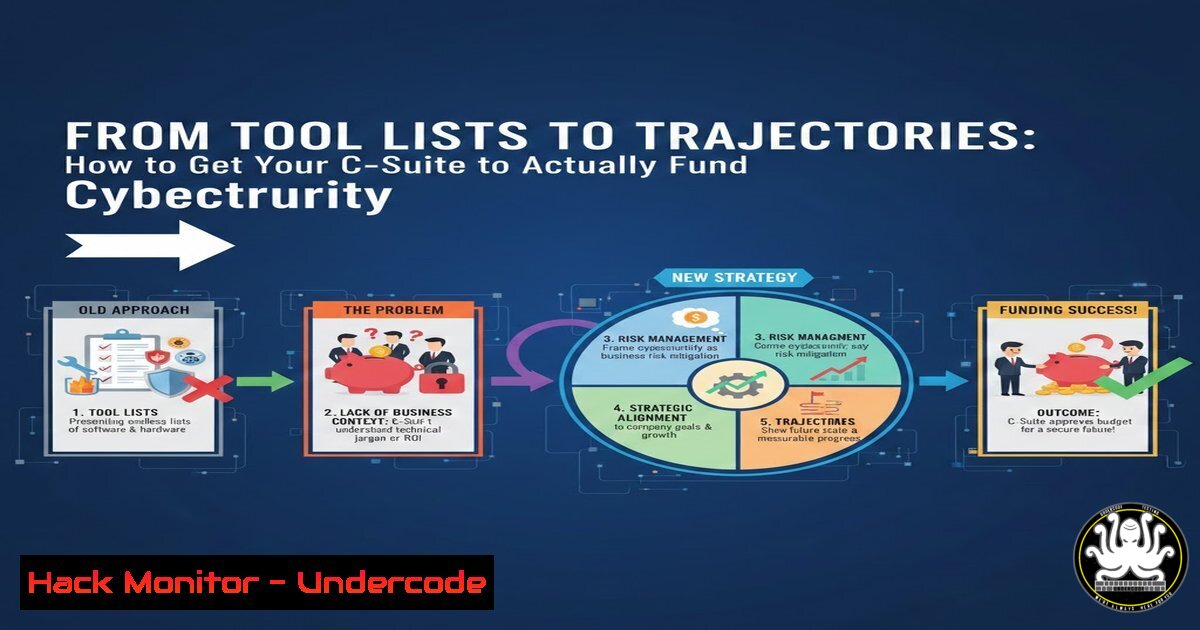
In cybersecurity, the perennial challenge has never been purely technical—it’s communicative. Technical leaders often approach executives with lists of vulnerabilities and tools, only to be met with budget resistance. This article translates a governance-focused LinkedIn post into an actionable technical and strategic blueprint, arguing that the path to funding lies in presenting a business-aligned trajectory of increasing control, not a static list of problems.
Learning Objectives:
- Reframe cybersecurity proposals from tactical tooling to a strategic, phased trajectory demonstrating measurable business control.
- Implement immediate technical actions (0-3 months) to address critical risks and demonstrate rapid value.
- Establish foundational security controls (3-12 months) across access management, backups, and third-party risk.
- Develop a sustainable model for industrializing security and maintaining compliance (12-24 months) without panic.
You Should Know:
1. Phase 1: Regaining Immediate Control (0-3 Months)
The goal is to identify and mitigate the 2-3 most visible, material risks to create instant momentum and credibility. This phase is about visibility and quick wins.
Step‑by‑step guide explaining what this does and how to use it.
Step 1: Discover Critical External Exposure. Use command-line scanners to find publicly accessible weak points without expensive tools.
Linux (using `nmap` & `curl`):
 Scan your own external IP range for open risky ports (22, 3389, 445)
nmap -p 22,3389,445,443,80 <your-public-IP-range> -oN initial_scan.txt
 Check for outdated web server headers
curl -I https://your-company-domain.com | grep "Server:|X-Powered-By"
Action: Immediately restrict RDP (3389) and SMB (445) to the VPN and ensure SSH (22) uses key-based authentication.
Step 2: Identify Unpatched Critical Systems. Focus on systems with public exploits (CVSS > 8.5).
Windows (PowerShell):
 Get a list of all hotfixes (quick inventory)
Get-HotFix | Select-Object HotFixID, InstalledOn | Sort-Object InstalledOn -Descending
Action: Prioritize patching for services like Microsoft Exchange, VPN gateways, and any software listed on CISA’s Known Exploited Vulnerabilities catalog.
Step 3: Implement Basic but Critical Monitoring. Detect lateral movement attempts.
Windows (Configure Audit Policy via Command Line):
 Enable auditing for logon events (success/failure)
auditpol /set /subcategory:"Logon" /success:enable /failure:enable
Action: Centralize these Windows Security Event Logs (4688, 4625) to a SIEM or even a secured Linux syslog server for analysis.
- Phase 2: Locking Down the Foundation (3-12 Months)
With initial risks lowered, systematically harden the core security pillars: identity, data recovery, and supply chain.
Step‑by‑step guide explaining what this does and how to use it.
Step 1: Enforce Privileged Access Management (PAM). Move beyond shared admin accounts.
Tool Configuration: Implement a jump server (bastion host) for ALL administrative access.
Linux (SSH Jump Host Configuration):
 In ~/.ssh/config on the analyst's machine
Host Production-Server
HostName 10.0.1.10
User admin
ProxyJump jumpuser@jump-server-ip
Action: Require Multi-Factor Authentication (MFA) for all cloud admin consoles and VPN access. Use Microsoft Conditional Access or similar.
Step 2: Verify & Isolate Backup Integrity. Assume backups will be targeted.
Action: Follow the 3-2-1 rule (3 copies, 2 media, 1 offline). Create an offline/immutable backup.
Linux (Example encrypted, offsite backup script using duplicity):
 Install duplicity, then run a backup to a remote server
duplicity full --encrypt-key <your-gpg-key-id> /path/to/data sftp://backupuser@backup-server//backup-path/
Test: Quarterly restoration drills for a critical server (e.g., domain controller).
Step 3: Harden Third-Party Access. Vendors are a prime attack vector.
Action: Inventory all vendor connections (VPN, direct access). Enforce network segmentation.
Tool Configuration: Create a dedicated VLAN for vendors with firewall rules allowing access ONLY to specific necessary systems, not the entire network.
- Phase 3: Industrializing Security & Compliance (12-24 Months)
Automate security hygiene and integrate compliance into the development lifecycle, making it sustainable.
Step‑by‑step guide explaining what this does and how to use it.
Step 1: Implement Infrastructure as Code (IaC) Security Scanning.
Tool: Integrate `checkov` or `tfsec` into your CI/CD pipeline to scan Terraform/CloudFormation templates for misconfigurations before deployment.
Command Example:
 Scan a Terraform directory for AWS, Azure, GCP misconfigurations
checkov -d /path/to/terraform/code
Step 2: Automate Vulnerability Management.
Tool: Use a free/open-source tool like `Trivy` to scan container images in your registry.
Command Example:
 Scan a Docker image for OS and language-specific vulnerabilities
trivy image your-company/app:latest
Action: Break the build if critical vulnerabilities are found.
Step 3: Formalize a Continuous Compliance Framework.
Action: Map security controls to standards like ISO 27001 or NIST CSF. Use tools to generate evidence automatically.
Example: Use AWS Config Rules or Azure Policy to enforce and report on encryption-at-rest requirements, providing automated compliance dashboards for auditors.
What Undercode Say:
- Key Takeaway 1: Cybersecurity is a narrative of progressive control, not a static state of defense. The C-suite invests in narratives that show a clear direction toward reduced business risk and operational continuity.
- Key Takeaway 2: Every technical action must be coupled with a simple business translation (“this protects our ability to invoice”) and a basic metric (“reduced critical external exposures from 15 to 2”), creating a feedback loop of demonstrated value.
The analysis from the original post is profound in its simplicity. It identifies the core failure of communication in cybersecurity: speaking in the language of infinite problems (the tool list) versus the language of finite, managed journeys (the trajectory). Technicians see gaps; executives see uncertainty. By structuring a 24-month plan into phases of “Control, Lockdown, Industrialization,” you provide a predictable investment path with clear milestones. This transforms cybersecurity from a cost center fighting fires into a business enabler managing a known, quantified risk portfolio. The technical steps provided here give substance to that trajectory, ensuring the narrative is backed by actionable, verifiable hardening.
Prediction:
The future of cybersecurity leadership will be dominated by those who master this trajectory model. As AI-powered attacks increase velocity and scale, the executive conversation will shift further from specific threats to organizational resilience and adaptive control cycles. The “trajectory” will evolve into a continuous cyber-risk management loop, integrated with business planning, where AI is used not just by attackers but by defenders to predict control failures and auto-remediate. Companies that fail to adopt this strategic, communicative framework will find themselves perpetually behind, unable to articulate their needs or secure the sustained investment required for modern defense, leading to a greater divide between resilient organizations and vulnerable ones.
▶️ Related Video (80% Match):
🎯Let’s Practice For Free:
IT/Security Reporter URL:
Reported By: Jeremychieppa Un – Hackers Feeds
Extra Hub: Undercode MoN
Basic Verification: Pass ✅


