Listen to this Post
Introduction:
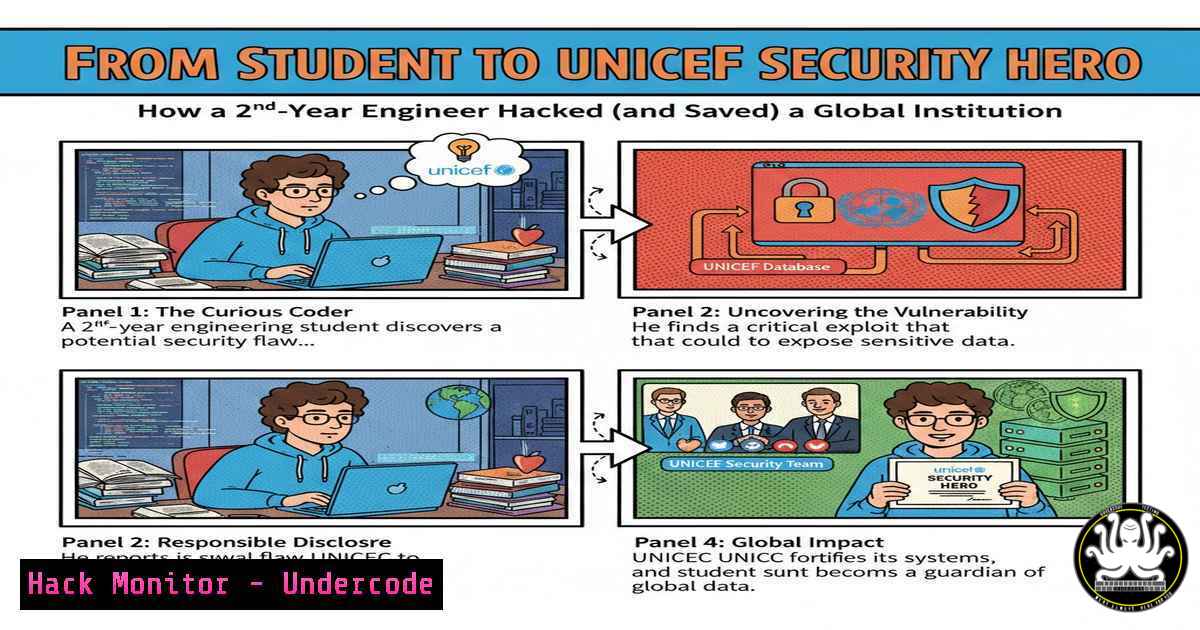
In November 2025, a second-year engineering student, ROHAN S, successfully identified and responsibly reported a security vulnerability within UNICEF’s digital infrastructure, earning an official acknowledgment and a spot in their Hall of Fame. This event underscores a critical trend in modern cybersecurity: the democratization of security research through structured bug bounty and responsible disclosure programs. It demonstrates that with the right skills and ethics, even emerging talent can significantly contribute to the security of global entities.
Learning Objectives:
- Understand the end-to-end process of ethical vulnerability disclosure and bug bounty programs.
- Learn fundamental reconnaissance and vulnerability validation techniques used by security researchers.
- Identify key defensive configurations and security headers to protect web applications.
You Should Know:
1. The Reconnaissance Phase: Mapping the Digital Surface
Before any testing begins, ethical hackers conduct passive and active reconnaissance to identify potential targets and entry points. This involves discovering subdomains, associated services, and technological stacks without triggering defensive alarms.
Step‑by‑step guide explaining what this does and how to use it:
Passive Subdomain Enumeration: Use tools like `amass` or `subfinder` to find subdomains without directly querying the target’s servers.
 Using subfinder
subfinder -d unicef.org -silent | tee subdomains.txt
 Using amass passively
amass enum -passive -d unicef.org -o subdomains_amass.txt
Service Discovery: Use `httpx` to probe for live web servers and identify technologies.
cat subdomains.txt | httpx -silent -tech-detect -title -status-code -o live_servers.txt
Analyzing Results: Review the output for less common subdomains (e.g., dev-, staging-, api-), outdated software versions, or misconfigured headers, which are often prime targets for initial testing.
2. Vulnerability Validation: Testing for Common Web Flaws
Once a target is identified, researchers test for common vulnerabilities. For web applications, this often includes testing for Injection flaws (SQLi, XSS), Broken Access Control, and Security Misconfigurations.
Step‑by‑step guide explaining what this does and how to use it:
Automated Scanning (with Caution): Use tools like `nuclei` with templates for known vulnerabilities, ensuring scanning is slow and within the program’s scope.
 Scan a single target with common web vulnerability templates
nuclei -u https://target.unicef.org -t ~/nuclei-templates/http/cves/ -rate-limit 100
Manual Testing for IDOR: Test for Insecure Direct Object References by manipulating parameters in requests. Use a proxy like Burp Suite or OWASP ZAP.
 Example of a potentially vulnerable request
GET /api/user/profile?id=12345
 Change the `id` parameter to another user's identifier (e.g., 12346) to test for access control failures.
SQL Injection Test: Use a tool like `sqlmap` cautiously and only on authorized targets, or manually test with payloads like ' OR '1'='1.
 Basic manual test in a login field
Username: ' OR 1=1--
Password: [bash]
- The Responsible Disclosure Process: From POC to Report
Finding a bug is only half the battle. Properly documenting and reporting it is crucial. This involves creating a clear, proof-of-concept (PoC) and submitting it via the organization’s designated channel.
Step‑by‑step guide explaining what this does and how to use it:
1. Document Everything: Take screenshots, save HTTP request/response cycles (using Burp Suite’s “Save Item” feature), and record video if the bug is complex.
2. Write a Clear Report:
Concise description (e.g., “IDOR on /api/v1/user allowing access to other users’ data”).
Vulnerability Type: CWE classification (e.g., CWE-639: Insecure Direct Object Reference).
Affected URL/Endpoint: The precise location.
Steps to Reproduce: A numbered, foolproof list.
Impact: What an attacker could achieve (data breach, privilege escalation).
Suggested Remediation: How to fix it (e.g., implement proper authorization checks).
3. Submit via Official Channel: Always use the organization’s vulnerability disclosure program (VDP) or bug bounty platform (e.g., HackerOne, Bugcrowd). The link in ROHAN’s post (`https://lnkd.in/gx9ZcGyP`) likely leads to UNICEF’s official acknowledgment or Hall of Fame page, which often details their disclosure policy.
4. Defensive Hardening: Security Headers and Configuration
For defenders, this incident highlights the need for robust security configurations. Implementing strong HTTP security headers is a first line of defense.
Step‑by‑step guide explaining what this does and how to use it:
Implement Content Security Policy (CSP): Mitigates XSS by defining trusted sources for scripts and resources.
 Example CSP header in Nginx or Apache config
Content-Security-Policy: default-src 'self'; script-src 'self' https://trusted.cdn.com;
Enforce HTTPS with HSTS: Instructs browsers to only use secure connections.
Strict-Transport-Security: max-age=31536000; includeSubDomains
Configure X-Frame-Options and X-Content-Type-Options: Prevent clickjacking and MIME-sniffing attacks.
X-Frame-Options: DENY
X-Content-Type-Options: nosniff
Use a Web Application Firewall (WAF): Configure rulesets in cloud services (AWS WAF, Cloudflare) or mod_security for Apache to block common attack patterns.
5. Building a Researcher Mindset: Continuous Learning
ROHAN’s profile mentions “Reverse Engineering & Web Security Enthusiast.” Building this expertise requires a structured learning path.
Step‑by‑step guide explaining what this does and how to use it:
1. Foundations: Master networking (TCP/IP, HTTP/S protocols) and a scripting language (Python/Bash).
2. Hands-On Practice:
Platforms: Use HackTheBox, TryHackMe, or PentesterLab for guided labs.
CTFs: Participate in Capture The Flag competitions to solve real-world challenges.
Bug Bounty Platforms: Start with “open bounty” programs on platforms like HackerOne, focusing on low-hanging fruit after thorough learning.
3. Stay Updated: Follow security researchers on Twitter/LinkedIn, read CVEs on `https://cve.mitre.org`, and practice on intentionally vulnerable apps like OWASP Juice Shop or DVWA.
What Undercode Say:
- The Barrier to Entry is Lowering, But the Bar for Skill is Rising: Structured VDPs have created a legitimate pathway for new talent. However, success requires deep, persistent skill development beyond running automated tools.
- Responsible Disclosure is Non-Negotiable Ethics: The true “hack” wasn’t just finding the flaw, but navigating the process with integrity, turning a potential breach into a secured asset. This builds professional reputation and trust within the ecosystem.
Analysis:
This case is a microcosm of the evolving cybersecurity landscape. Organizations are increasingly leveraging global crowdsourced security, acknowledging that diverse perspectives strengthen defenses. For aspiring researchers, it validates a career path built on public recognition and contribution. However, it also signals to organizations that their attack surface is under constant scrutiny, necessitating proactive investment in AppSec, regular penetration testing, and fostering positive relationships with the research community. The swift acknowledgment from UNICEF reflects a mature security posture that values external collaboration.
Prediction:
The success of student researchers like ROHAN will accelerate the formal integration of bug bounty training into academic cybersecurity curricula. We will see a rise in “bug bounty as a first job” narratives, shifting traditional career pipelines. Simultaneously, major NGOs and non-profits, traditionally seen as softer targets, will heavily invest in their VDPs, making them standard practice akin to the tech industry. This will lead to a more secure digital infrastructure for critical humanitarian operations worldwide, driven by a symbiotic relationship between ethical hackers and global institutions.
▶️ Related Video (76% Match):
https://www.youtube.com/watch?v=7wLkk7_QPXM
🎯Let’s Practice For Free:
IT/Security Reporter URL:
Reported By: 0xr0h4n Unicef – Hackers Feeds
Extra Hub: Undercode MoN
Basic Verification: Pass ✅


