Listen to this Post
Introduction:
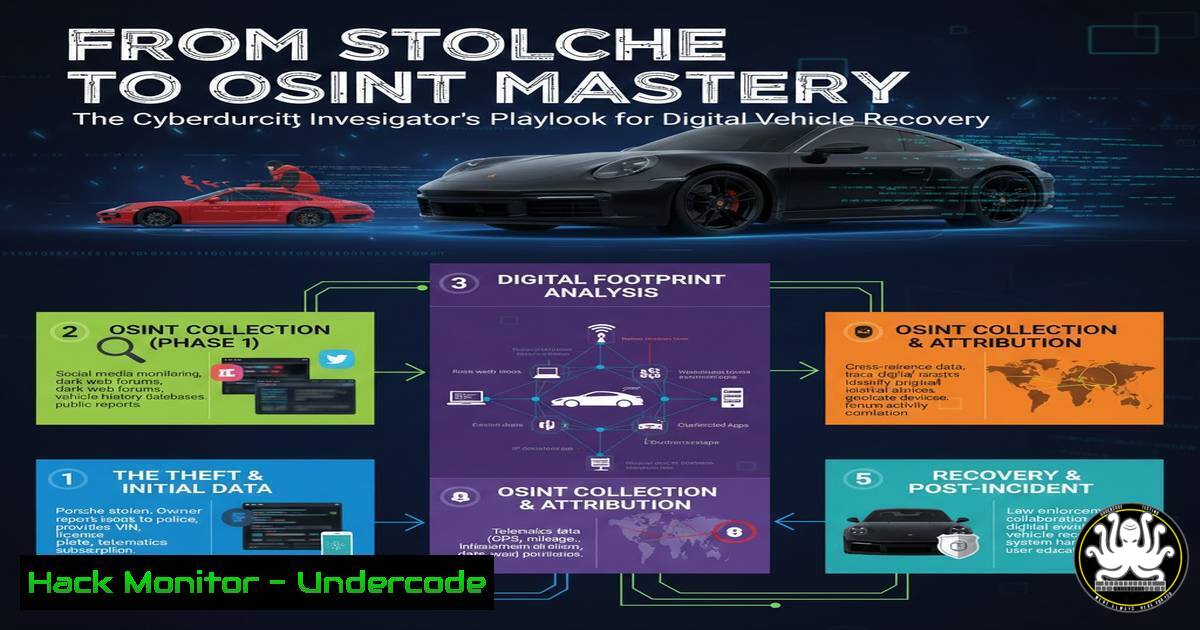
When a high-value asset like a Porsche Cayenne disappears, the traditional search hits a wall fast. This is where Open-Source Intelligence (OSINT) transforms a cybersecurity professional into a digital detective. By leveraging publicly available data—from vehicle IDs and social media to obscure online forums—investigators can trace digital footprints that physical searches miss, turning the internet into the ultimate tracking device.
Learning Objectives:
- Decode Vehicle Identification Numbers (VINs) and harness their data for cross-referencing against online registries and sales listings.
- Automate the collection of digital evidence using fundamental OSINT command-line tools and scripting techniques.
- Apply ethical frameworks to conduct dark web and social media investigations that integrate with formal law enforcement processes.
You Should Know:
- Cracking the Code: The VIN as Your Primary Key
Every modern vehicle has a unique fingerprint: its 17-character VIN. This is not a random string; it’s a structured code containing the World Manufacturer Identifier, vehicle attributes, and a unique serial number. For a stolen Porsche, this VIN becomes the anchor for all subsequent searches, from checking insurance databases to monitoring for “cloned” VINs on look-alike vehicles.
Step‑by‑step guide:
Step 1: Locate and Verify the VIN. Obtain the VIN from the owner’s documents. Physically verify it matches the car’s dashboard (visible through the windshield) and door jamb sticker. Inconsistencies here immediately suggest fraud or VIN cloning.
Step 2: Decode for Details. Use free online decoders or API services to break down the VIN. Key data points include model year, engine type, factory specifications, and place of manufacture. For our Cayenne, this confirms exact trim and options.
Step 3: Initiate Digital Sweeps. Use the pristine VIN in targeted searches.
Command-Line Web Check: Use `curl` to quickly query a vehicle history website’s public endpoint (respecting robots.txt).
curl -s "https://api.example-vin-check.com/decode?vin=WP1ZZZ9YZKLABCDEF&format=json" | jq '.data.description'
This fetches and parses basic vehicle description data.
Monitor Sales Listings: Set up automated alerts on platforms like eBay Motors, AutoTrader, and specialist forums using the VIN and model-specific keywords.
- Mapping the Digital Footprint: Social Media & Geolocation
Perpetrators or buyers often boast online. A stolen luxury SUV might appear in social media photos, marketplace listings, or even casual traffic camera footage shared online. The goal is to geolocate the vehicle by analyzing metadata and visual clues.
Step‑by‑step guide:
Step 1: Scrape Visual Platforms. Use tools to search for the vehicle’s make, model, color, and distinguishing features (dents, custom wheels, stickers).
Using `exiftool` on Downloaded Media: If you find a potential image, download it and extract its metadata.
exiftool -gpslatitude -gpslongitude -datetimeoriginal suspect_photo.jpg
This can reveal GPS coordinates and the exact time the photo was taken, if embedded.
Step 2: Analyze the Environment. If no GPS data exists, perform a manual visual investigation. Look for street signs, business logos, unique architecture, or vegetation in the background. Use Google Street View or geopositioning platforms like SunCalc (which uses shadows) to triangulate possible locations.
3. The Dark Web & Hidden Listings Dive
Stolen vehicles or their parts are often funneled through less visible channels. This includes dark web marketplaces, closed Telegram groups, or invite-only forums where transactions are shielded from standard search engines.
Step‑by‑step guide:
Step 1: Access Anonymously. Always use the Tor Browser or the `torsocks` wrapper for command-line tools to protect your identity and network.
torsocks curl --socks5-hostname localhost:9050 http://samplemarket.onion/listings
Step 2: Deploy Listening Scripts. Create a simple Python script using the `stem` library to monitor for keywords (e.g., “Cayenne,” “VIN WP1ZZZ9Y”, “no title”) on clearnet paste sites that are indexed.
import requests
from bs4 import BeautifulSoup
 Example for monitoring a clearnet paste site (ALWAYS CHECK LEGALITY)
url = 'https://pastebin.com/archive'
response = requests.get(url)
soup = BeautifulSoup(response.text, 'html.parser')
for link in soup.find_all('a', href=True):
if '/raw/' in link['href']:
paste_content = requests.get('https://pastebin.com' + link['href']).text
if 'Porsche Cayenne' in paste_content:
print(f"Potential hit: {link['href']}")
Crucial: This is for illustrative purposes. Actual dark web scraping is complex and must be conducted within strict legal and ethical boundaries, often by professionals.
4. Automating Intelligence Collection with OSINT Frameworks
Manual searches are inefficient. OSINT frameworks allow you to aggregate data from dozens of sources simultaneously.
Step‑by‑step guide:
Step 1: Leverage Existing Toolkits. Use a framework like Maigret or Sherlock to check for usernames associated with a suspect across hundreds of sites.
 Using Sherlock (for username searches)
python3 sherlock.py --timeout 5 "SuspectAlias"
Step 2: Build a Custom Watchdog Script. Combine VIN checks and keyword monitoring into a single automated report.
import schedule, time, subprocess
def daily_vin_check():
 Run your series of checks
subprocess.run(["./check_vin_apis.sh", "WP1ZZZ9YZKLABCDEF"])
subprocess.run(["python3", "./monitor_marketplaces.py"])
print(f"[{time.ctime()}] Daily check completed.")
schedule.every().day.at("09:00").do(daily_vin_check)
while True:
schedule.run_pending()
time.sleep(60)
- Legal Fusion: From Digital Evidence to Law Enforcement Action
The most critical phase is transitioning digital findings into an actionable, legally admissible format for law enforcement.
Step‑by‑step guide:
Step 1: Maintain a Chain of Custody Log. For every piece of evidence (screenshot, metadata file, URL), document:
Timestamp (UTC): `date -u +”%Y-%m-%dT%H:%M:%SZ”`
Tool Used: e.g., `exiftool v12.40`, `Chrome Browser`.
Investigator: Your name/initials.
Hash Value: Generate a cryptographic hash for verification.
sha256sum evidence_image.jpg > evidence_image.sha256
Step 2: Produce a Technical Intelligence Report. Compile findings into a clear, concise report. It must include: Executive Summary, Methodology (tools/commands used), Detailed Findings (with supporting evidence), and Raw Data Appendices. This report bridges the gap between your terminal and a detective’s desk.
What Undercode Say:
- OSINT is a Force Multiplier, Not a Replacement: The successful recovery of a stolen asset almost always requires fusion between digital intelligence and physical, legal action. Your role is to illuminate the path for the authorities.
- Ethics and Legality are Paramount: Operating in grey zones, especially involving personal data or dark web exploration, can have serious legal consequences and jeopardize cases. Always operate within defined legal frameworks, preferably alongside or at the direct request of law enforcement.
Analysis (approx. 10 lines):
This case study underscores a fundamental shift in asset recovery and investigative work. The technical barrier to entry for effective OSINT is lowering—powerful tools are free and scripts are shareable—but the professional barrier is rising. The true skill differentiator is no longer just knowing how to run a script, but in the critical thinking required to interpret disparate data points, avoid disinformation traps, and construct a coherent narrative that withstands legal scrutiny. Furthermore, the ethical application of these techniques defines the professional investigator from the amateur. As vehicles become more connected (IoT on wheels), the potential attack surface and, conversely, the digital trace they leave will only expand, making these skills increasingly vital in cybersecurity’s physical domain.
Prediction:
The convergence of IoT, AI, and OSINT will redefine vehicle security and recovery. We will see AI-driven models that automatically scrape, correlate, and predict the movement of stolen vehicles and parts in near-real-time. Simultaneously, vehicle manufacturers will embed more sophisticated digital fingerprints and blockchain-based ownership logs, creating a permanent, auditable trail. This will spark an arms race: thieves will employ more advanced jamming and identity spoofing techniques, while cybersecurity and law enforcement professionals will respond with adaptive AI hunters and decentralized tracking networks, making the digital dimension the primary battlefield for physical asset security.
▶️ Related Video (80% Match):
🎯Let’s Practice For Free:
IT/Security Reporter URL:
Reported By: Ryan Williams – Hackers Feeds
Extra Hub: Undercode MoN
Basic Verification: Pass ✅


