Listen to this Post
Introduction:
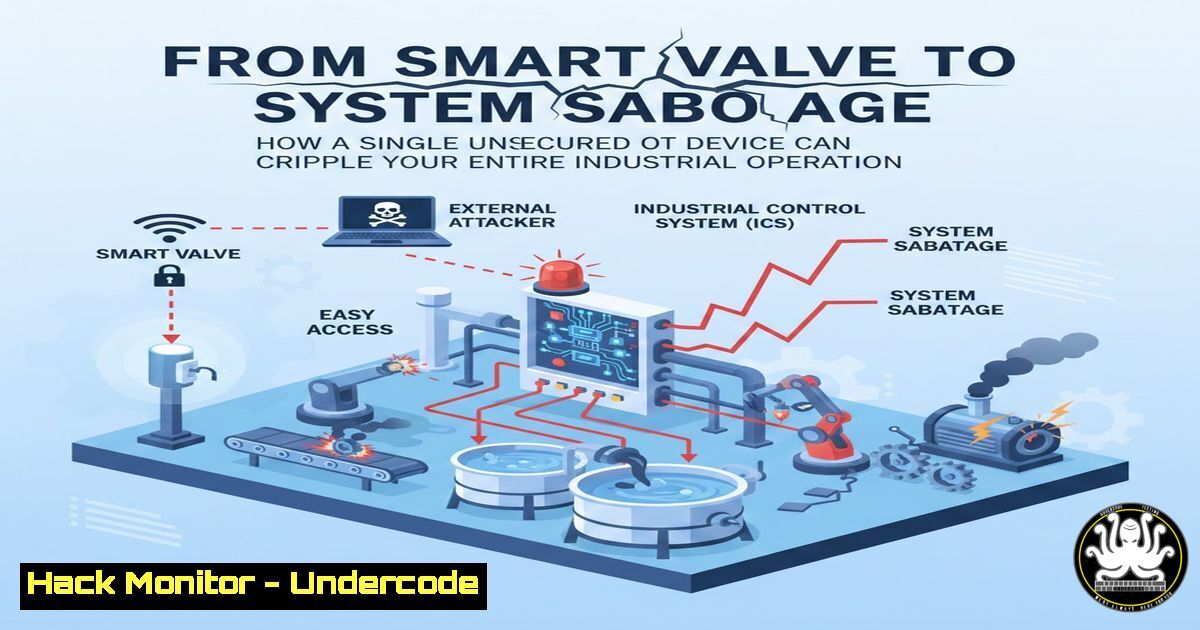
The humble control valve, a fundamental final control element in industrial automation, has evolved from a simple mechanical component to a smart, networked device. This convergence of Operational Technology (OT) and Information Technology (IT), while enabling efficiency, has opened a critical new front in cybersecurity. A compromised control valve can lead to catastrophic process deviations, safety system failures, and massive physical damage, making its security as vital as its calibration.
Learning Objectives:
- Understand the attack pathways to modern, networked control valves and their impact on industrial processes.
- Learn practical hardening steps for PLCs and smart field devices to prevent unauthorized access.
- Implement network segmentation and monitoring strategies specific to OT environments like SCADA and DCS systems.
You Should Know:
- The Expanded Attack Surface: Beyond the PLC to the Smart Valve
While traditional attacks focused on compromising the Programmable Logic Controller (PLC), modern smart valves with embedded Bluetooth, Wi-Fi, or industrial wireless (e.g., WirelessHART) present direct targets. An attacker can potentially bypass the PLC entirely to manipulate valve position, calibration, or alarm thresholds.
Step-by-Step Guide: Identifying Wireless-Enabled Devices on an OT Network
What this does: This process helps asset owners discover potentially vulnerable wireless field devices that may be unknown or improperly documented.
How to use it:
- Segment a Test Network: Isolate a section of your OT network for scanning. NEVER run aggressive scans on a live production control network.
- Use a Passive Scanner: Deploy a tool like `Wireshark` with an OT protocol dissector (e.g., for MODBUS, PROFINET, HART-IP) to listen for traffic.
- Analyze for Wireless Protocols: Filter for communication packets from known wireless gateway IPs or MAC addresses. Look for protocols like IEEE 802.15.4 (WirelessHART) or proprietary telemetry.
- Active Enumeration (If Policy Allows): On the isolated segment, use `nmap` for service discovery:
nmap -sU -p 5094,5093 --script hart-ip-enum <target_IP_range>. This scans for HART-IP devices. - Document and Assess: Create an asset inventory of all discovered wireless devices and evaluate their security posture against the IEC 62443 standard.
2. Gaining a Foothold: Exploiting PLC Vulnerabilities
Attackers often target the PLC as the central brain controlling valves. Default credentials, unpatched firmware, and unsecured engineering ports (like port 102 for Siemens S7) are common entry points.
Step-by-Step Guide: Basic PLC Hardening Commands & Configurations
What this does: This guide outlines fundamental steps to secure a PLC against trivial attacks.
How to use it:
- Change Default Credentials: Access the PLC configuration software (e.g., TIA Portal, Studio 5000). Navigate to the security/user management section and replace all factory-default usernames and passwords with complex, unique credentials.
- Dispose of Dormant Features: Disable unused communication services (FTP, Telnet, HTTP) via the administrative interface. Enable only the strict minimum required for operation.
- Restrict Network Access: Configure the PLC’s firewall rules (if available) or use an external OT firewall to restrict inbound connections to only the authorized engineering workstations and SCADA servers by IP address and MAC address.
- Segment the Network: Physically or logically separate the PLC network from the corporate IT network using a DMZ architecture with a data diode or properly configured firewall.
3. Lateral Movement and Valve Manipulation
Once inside the PLC, an attacker can manipulate ladder logic or directly write to output registers controlling the valve actuator.
Step-by-Step Guide: Simulating a Malicious Ladder Logic Injection
What this does: This demonstrates how an attacker could modify control logic. Use this only in a secure lab environment for defensive training.
How to use it:
- Gain Access: Using a tool like
python-snap7, an attacker with network access to a Siemens S7-1200/1500 (with unprotected PUT/GET) could connect: `python -c “import snap7; client = snap7.client.Client(); client.connect(‘192.168.1.10’, 0, 1)”`
2. Read Existing Logic: They might first download the current logic block for analysis:client.db_get(DB_NUMBER). - Write Malicious Logic: The attacker could upload a modified Data Block (DB) or Function Block (FB) that changes the valve’s control routine. For example, a block that intermittently sets the valve to 100% open regardless of the process variable input.
- Mitigation: Implement application whitelisting on engineering workstations to prevent unauthorized programming software. Use change detection software on the PLC to alert on unauthorized logic modifications.
-
Securing the Communication Path: API and Protocol Hardening
Smart valves may use REST APIs or proprietary protocols. Unsecured APIs are a prime target for manipulation.
Step-by-Step Guide: Hardening a REST API on a Smart Device Gateway
What this does: Secures the API interface that talks to smart valves.
How to use it:
- Enforce TLS 1.2/1.3: Disable SSL and early TLS versions. Use strong ciphers (e.g., AES256-GCM-SHA384).
- Implement Robust Authentication: Use API keys with short lifespans or OAuth 2.0. Never use credentials in URL strings. On a Linux-based gateway, use `htpasswd` to create secure credential files if using basic auth as a temporary measure.
- Input Validation: Sanitize all API inputs to prevent command injection. For example, if an API endpoint accepts valve position (
/setValve?position=75), ensure the input is a number between 0-100 and nothing else. - Rate Limiting: Use a tool like `fail2ban` or configure the web server (e.g., Nginx) to limit connection attempts and prevent brute-force attacks.
5. Continuous Monitoring for Anomalous Valve Behavior
Detection is crucial. Security teams must monitor for signs of valve manipulation that indicate a breach.
Step-by-Step Guide: Setting Up Basic OT Traffic Anomaly Detection
What this does: Creates a simple rule to detect unusual valve command patterns.
How to use it:
- Deploy an OT-Aware IDS: Install a system like Security Onion or use the open-source `Zeek` (formerly Bro) with OT protocol plugins on a network tap/SPAN port.
- Baselining: Allow the system to learn normal traffic patterns for a period (e.g., two weeks) – normal command frequency, source/destination IPs.
- Create a Detection Rule: Write a rule to flag anomalies. Example in Zeek’s policy language: Alert if a single source IP sends >50 `”VALVE_OPEN”` commands to different valve controllers within 60 seconds.
- Integrate with SIEM: Forward these alerts to a Security Information and Event Management (SIEM) system like Splunk or Wazuh for correlation with other security events.
What Undercode Say:
- The Perimeter is Dead in OT: Security can no longer stop at the firewall. Every smart field device, especially critical final control elements like valves, is a potential intrusion point requiring direct hardening.
- Process Stability is the Ultimate KPI: In OT cybersecurity, the primary goal isn’t just data confidentiality, but ensuring the availability and integrity of the physical process. A manipulated valve directly threatens that goal.
Analysis: The discussion thread correctly elevates the focus from the PLC to the device itself. The expert comments highlight a layered defense strategy: harden the PLC (the brain), secure the communication pathways (the nerves), and finally, fortify the end device (the muscle). This “cyber-physical” chain of trust is essential. The mention of IEC 62443 provides the correct framework, emphasizing risk assessments, zone/conduit models, and system integrity levels (SL). Ignoring these principles turns a simple control component into a weaponizable asset.
Prediction:
The future will see an increase in AI-powered attacks targeting OT environments, where machine learning algorithms will study normal process behavior (like valve oscillation patterns) to execute subtle, slow-burn manipulations that evade traditional threshold-based alarms. This will force the adoption of AI-driven defensive counterparts that perform continuous behavioral analytics on process control loops, not just network traffic, making “process-aware security” the standard in industrial cybersecurity. The line between a control system engineer and a cybersecurity analyst will blur further, necessitating cross-disciplinary training.
▶️ Related Video (72% Match):
🎯Let’s Practice For Free:
IT/Security Reporter URL:
Reported By: Nomanitaa Controlvalve – Hackers Feeds
Extra Hub: Undercode MoN
Basic Verification: Pass ✅


