Listen to this Post
Introduction:
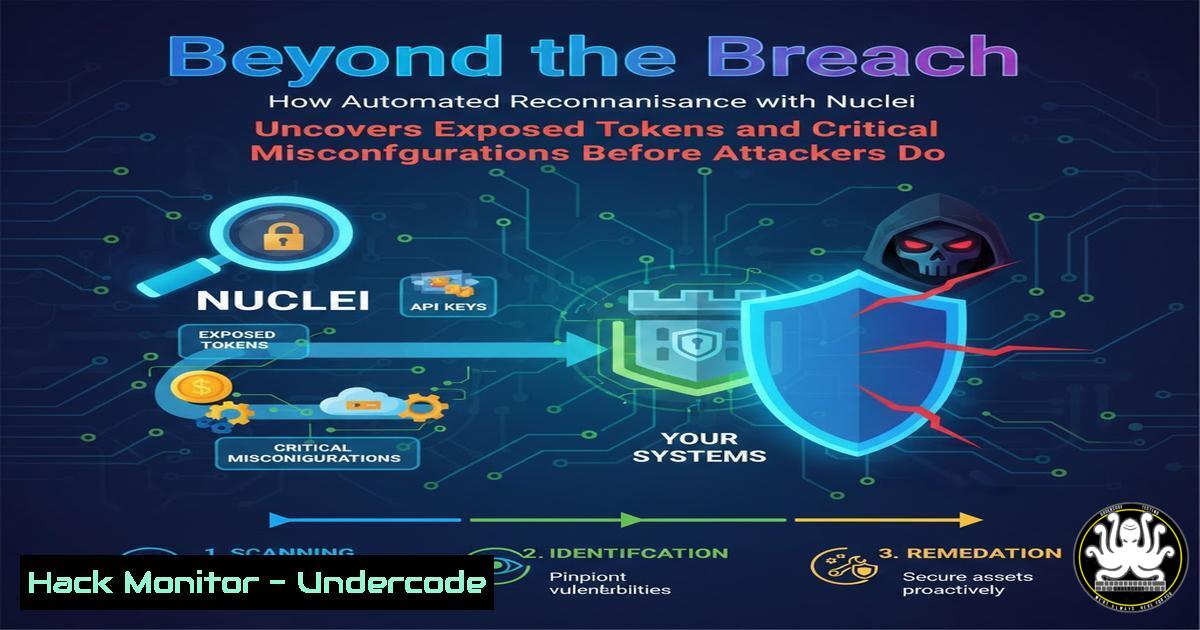
In the modern bug bounty and penetration testing landscape, reconnaissance is the cornerstone of any successful security assessment. This phase, often automated, goes beyond subdomain enumeration to actively probe for leaking secrets and systemic weaknesses. As highlighted in a recent 21DaysBugBountyChallenge update, tools like Nuclei are pivotal in transforming raw scan data into actionable findings of exposed tokens, insecure headers, and service misconfigurations that form the initial foothold for major breaches.
Learning Objectives:
- Understand the critical role of automated reconnaissance in identifying non-obvious vulnerabilities like information disclosure.
- Learn to configure and execute Nuclei templates for detecting exposed secrets, API keys, and service misconfigurations.
- Develop a methodology to correlate Nuclei findings with manual analysis for validation and exploitation chaining.
You Should Know:
1. The Power of Nuclei in Modern Reconnaissance
Reconnaissance has evolved from manual digging to high-speed, template-driven automation. Nuclei is an open-source vulnerability scanner that uses community-powered templates to probe for thousands of known vulnerabilities, misconfigurations, and exposed information. Its strength lies in its specificity and speed, allowing researchers to scan vast attack surfaces for precise issues like exposed `.env` files, debug endpoints, and default credentials.
Step‑by‑step guide explaining what this does and how to use it.
Installation: Ensure Go is installed, then run: `go install -v github.com/projectdiscovery/nuclei/v3/cmd/nuclei@latest`
Template Update: Always start with an updated template library: `nuclei -update-templates`
Basic Scan: Run a quick scan against a target: `nuclei -u https://target.com -t nuclei-templates/`
Focused Recon Scan: To specifically hunt for exposures and misconfigurations common in recon: `nuclei -u https://target.com -t nuclei-templates/exposures/ -t nuclei-templates/misconfiguration/ -severity low,medium,high -silent`
2. Hunting for Exposed Tokens and Sensitive Data
Exposed API keys, JSON Web Tokens (JWTs), and credentials in client-side code or public repositories are low-hanging fruit that can lead to full system compromise. Nuclei templates can detect patterns of common secrets (e.g., AWS keys, GitHub tokens) and check endpoints known to leak data.
Step‑by‑step guide explaining what this does and how to use it.
Use Specific Templates: `nuclei -u https://target.com -t nuclei-templates/exposures/tokens/ -t nuclei-templates/exposures/configs/`
Validate Findings Manually: Any potential token found must be validated.
For a found JWT, decode it using `jwt.io` or the command line: `echo -n ‘eyJ0eXAiOiJKV1Qi…’ | awk -F ‘.’ ‘{print $2}’ | base64 -d 2>/dev/null`
For a suspected AWS key, use the AWS CLI to check permissions (in a safe, authorized environment): `aws sts get-caller-identity –profile test-profile`
Correlate with GitHub: Use tools like `git-hound` or `truffleHog` to search for committed secrets in version history.
3. Identifying Insecure HTTP Headers and Information Leaks
HTTP response headers can inadvertently reveal sensitive information about the application stack, internal IPs, or server versions. Headers like Server, X-Powered-By, X-Debug-Token, or missing security headers like `Content-Security-Policy` are key indicators.
Step‑by‑step guide explaining what this does and how to use it.
Run Header Analysis: Use Nuclei’s misconfiguration templates for headers: `nuclei -u https://target.com -t nuclei-templates/misconfiguration/headers/`
Manual Verification with cURL: Always verify findings manually.
curl -I https://target.com/api/`Server: nginx/1.18.0 (Ubuntu)
<h2 style="color: yellow;">Analyze the output for headers like:</h2>
<h2 style="color: yellow;"></h2>X-AspNet-Version: 4.0.30319`
<h2 style="color: yellow;">
Exploitation: Version information can be cross-referenced with CVE databases. An exposed `X-Debug-Token` link might lead to a Symfony profiler page containing execution traces and sensitive variables.
- Service and Technology Detection for Attack Surface Mapping
Understanding the technology stack (e.g., WordPress, Jenkins, Kubernetes) is crucial for directing further attacks. Nuclei’s technology detection templates fingerprint services and applications, revealing potential attack vectors like default dashboards or known vulnerable components.
Step‑by‑step guide explaining what this does and how to use it.
Execute Technology Detection: `nuclei -u https://target.com -t nuclei-templates/technologies/`
Cross-Reference with Other Tools: Use the output to guide scans with tool-specific templates. If Jenkins is detected, immediately run: `nuclei -u https://target.com:8080 -t nuclei-templates/exposures/panels/jenkins/`
Windows Command Alternative (using built-in tools): For basic service detection on an internal Windows target, you can use: nmap -sV -O <target_ip> | findstr "open". This requires Nmap installed.
5. Chaining Recon Findings for Exploitation
Isolated findings gain critical mass when chained. An exposed JWT from a token scan might be used to authenticate to a Jenkins panel identified during technology detection. This systematic linking transforms low-severity info leaks into high-impact pathways.
Step‑by‑step guide explaining what this does and how to use it.
1. Document Everything: Use a note-taking app or tool like `Obsidian` to map findings (tokens, endpoints, versions).
2. Establish Relationships: Link the exposed token to the administrative API endpoint found in JavaScript files.
3. Test the Chain: Use the token in an authorization header to access the endpoint: `curl -H “Authorization: Bearer
4. Escalate: Successful access could lead to data extraction or further code execution depending on the application.
6. Automating the Reconnaissance Workflow
Efficiency in bug bounty hunting requires automating the entire pipeline—from subdomain discovery to Nuclei scanning and result processing. Tools like Subfinder, HTTPx, and Nuclei can be chained together.
Step‑by‑step guide explaining what this does and how to use it.
 A basic automated recon pipeline
subfinder -d target.com -silent | httpx -silent | nuclei -t nuclei-templates/exposures/ -t nuclei-templates/misconfiguration/ -t nuclei-templates/technologies/ -severity medium,high -o findings.txt
This one-liner finds subdomains, checks for live HTTP servers, and runs a focused Nuclei scan, outputting results to a file for review.
7. Mitigation and Hardening Recommendations
For defenders, the findings from such reconnaissance highlight critical areas for hardening. Proactive measures can significantly reduce the attack surface available to both automated scanners and dedicated attackers.
Step‑by‑step guide explaining what this does and how to use it.
Secrets Management: Never hardcode tokens. Use dedicated secrets managers (AWS Secrets Manager, HashiCorp Vault). Implement pre-commit hooks like git-secrets.
HTTP Header Hardening: Configure web servers to strip unnecessary headers.
NGINX Example: `more_set_headers ‘Server: Custom’;` and explicitly remove X-Powered-By.
Apache Example: `Header unset X-Powered-By`
Access Control: Ensure administrative interfaces (Jenkins, Kubernetes dashboard) are not publicly accessible without strong authentication and VPN/whitelisting.
Regular Proactive Scanning: Run Nuclei against your own public assets using the `-t nuclei-templates/misconfiguration/` and `-t nuclei-templates/exposures/` tags to find issues before attackers do.
What Undercode Say:
- Reconnaissance is a Continuous Goldmine: The initial reconnaissance phase is not merely a preparatory step but an ongoing source of critical vulnerabilities. Automated tools like Nuclei have made it possible to systematically uncover secrets and misconfigurations that are often more devastating than complex code exploits.
- The Human-AI Symbiosis is Non-Negotiable: While automation identifies potential issues, the human researcher’s role in validating, correlating, and ethically exploiting these findings is what transforms raw data into a valid security report. Blind trust in tool output leads to false positives; expert analysis creates exploitable chains.
Analysis: The post underscores a paradigm shift in offensive security. The barrier to entry for effective reconnaissance has plummeted due to tools like Nuclei, democratizing the ability to find low-hanging fruit. This forces a corresponding shift in defensive posture. Security teams can no longer afford to treat secrets management, header configuration, and service exposure as secondary concerns. The automation of attack necessitates the automation of defense—continuous, proactive scanning using the same tools and templates must become a standard part of the security hygiene checklist. The “quiet leaks” of today are the full-blown data breaches of tomorrow.
Prediction:
The integration of AI-powered pattern recognition with tools like Nuclei will lead to “predictive reconnaissance,” where scanners not only find known issues but infer potential misconfigurations based on partial data and technology stacks. This will further accelerate the discovery of novel attack paths, compressing the timeline between vulnerability introduction and exploitation. Defensively, this will push the industry towards universal adoption of Zero-Trust architectures and automated secret rotation, as manual security practices will be utterly overwhelmed by the scale and speed of automated offensive scanning.
▶️ Related Video (74% Match):
🎯Let’s Practice For Free:
IT/Security Reporter URL:
Reported By: Prince Roy – Hackers Feeds
Extra Hub: Undercode MoN
Basic Verification: Pass ✅


