
Listen to this Post
Introduction:
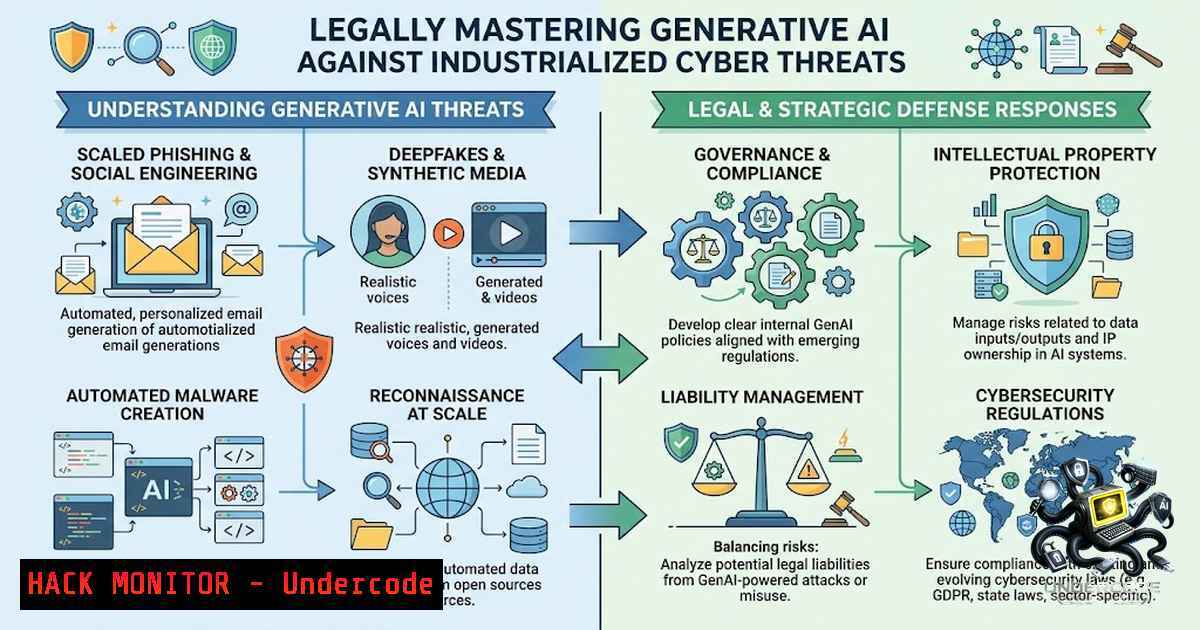
The gap between a mediocre AI response and a brilliant one often comes down to how you ask. As generative AI transitions from experimental novelty to industrial-scale deployment, prompt engineering has emerged as a core competency—not just for productivity, but for security. This article transforms the insights from a one-day generative AI workshop into a comprehensive technical guide, bridging the gap between harnessing AI’s creative potential and defending against its emerging threats.
Learning Objectives:
- Master foundational and advanced prompt engineering techniques to consistently generate high-quality, structured outputs from LLMs.
- Understand the OWASP Top 10 security risks for LLM applications, with a specific focus on prompt injection and its mitigations.
- Implement practical, production-grade defense architectures and secure development practices for AI systems.
You Should Know:
1. Prompt Engineering Fundamentals: From Zero-Shot to Chain-of-Thought
Prompt engineering is the practice of crafting inputs that guide large language models toward desired outputs. The quality of your prompts directly determines the quality of your results. Here is an extended guide to the core techniques that work across GPT-5, Claude Opus, and Gemini 3 Pro.
- Zero-Shot Prompting: The simplest approach—give the model a task with no examples. Works well for straightforward requests like classification or summarization.
Classify the following customer message as "billing", "technical", or "general":
Message: "I can't log into my account after changing my password"
Category:
-
Few-Shot Prompting: Provide 2-5 examples before your actual query. This dramatically improves accuracy for tasks where the model needs to understand your specific format or criteria.
Convert these product descriptions to JSON: Input: "Red cotton t-shirt, size L, $29.99" Output: {"color": "red", "material": "cotton", "type": "t-shirt", "size": "L", "price": 29.99} Input: "Blue denim jacket, size M, $89.00" Output: {"color": "blue", "material": "denim", "type": "jacket", "size": "M", "price": 89.00} Input: "Black leather boots, size 10, $149.50" Output: -
Chain-of-Thought (CoT): Ask the model to reason step-by-step before giving a final answer. This is essential for math, logic, and complex analysis tasks, improving accuracy on reasoning tasks by 20-40%.
A store has 150 items. 40% are electronics, and 25% of electronics are on sale. How many electronics are on sale?
Think step by step:
-
Role Prompting: Assign the model a specific persona or expertise to activate relevant knowledge patterns and adjust the response style.
You are a senior security engineer reviewing code for vulnerabilities. Analyze the following Python function and identify any security issues:
- The AI Cybersecurity Arms Race: From Vulnerability Discovery to Autonomous Malware
The integration of generative AI into cyberattacks has moved from theory to reality. Google’s Threat Intelligence Group (GTIG) has identified the first zero-day exploit believed to be developed with AI. The exploit, a Python script that bypasses two-factor authentication, contained hallucinated CVSS scores and structured textbook formatting characteristic of LLM output. This demonstrates that frontier models can perform contextual reasoning to find logic flaws that traditional scanners miss.
Furthermore, adversaries are industrializing AI for vulnerability discovery, exploit development, malware obfuscation, and autonomous device interaction. An Android backdoor called PROMPTSPY uses the Gemini API to autonomously navigate victim devices, capture biometric data, and block its own uninstallation. It serializes the device’s UI hierarchy and sends it to a model, which returns structured JSON to simulate gestures. This compression of attack timelines means patch windows that once lasted weeks may now close in hours.
- OWASP Top 10 for LLM Applications: The 2026 Threat Landscape
For the third year in a row, Prompt Injection tops the OWASP GenAI / LLM Top Ten list as the most critical security risk. The 2026 edition, influenced by real-world incidents, introduces updated rankings and expanded threat coverage. Key risks include:
- LLM01: Prompt Injection
- LLM02: Sensitive Information Disclosure (up from 6)
- LLM03: Supply Chain (broadened scope)
- LLM04: Data and Model Poisoning
- LLM05: Improper Output Handling (down from 2)
- LLM06: Excessive Agency (critical for agents)
- LLM07: System Prompt Leakage (NEW)
4. Defending Against Prompt Injection: A Layered Architecture
Prompt injection remains the LLM01 entry on the OWASP LLM Top 10 for a structural reason: mixing untrusted text with instructions in the same channel is the core LLM design pattern, and no model vendor has shipped a primitive that cleanly separates the two. Production teams in 2026 are deploying a layered defense architecture:
- Input-Side Defense: This is less about regex-style filtering and more about provenance tagging and channel isolation. Teams wrap retrieved documents with explicit trust markers and use a smaller classifier model (e.g., fine-tuned DeBERTa or distilled Llama 3.2) as a pre-filter to flag injection-shaped content.
- Dual-LLM Architectures: A privileged model never sees raw user content, only structured summaries from a quarantined model. This is the standard for agentic stacks handling sensitive actions.
- Capability Minimization: The single highest-leverage defense in 2026 is at the tool layer. An agent that can only call three read-only tools cannot exfiltrate data even if its prompt is fully compromised.
- Human-in-the-Loop: This is back as a first-class control for any tool that mutates external state.
5. NIST SP 800-218A: Operationalizing AI Secure Development
The National Institute of Standards and Technology (NIST) finalized SP 800-218A, “Secure Software Development Practices for Generative AI and Dual-Use Foundation Models,” to overlay the existing Secure Software Development Framework (SSDF) with AI-specific practices. Key additions include:
– PO: Documenting AI model risk tolerance and intended use.
– PS: Protecting training data and model artifacts with the same rigor as source code.
– PW: Threat-modeling the inference path, including prompt injection and model inversion, and testing model behavior against adversarial inputs.
– RV: Monitoring deployed models for behavior drift.
6. Practical Command-Line Tools for AI Integration
For developers integrating AI into production systems, command-line tools are essential.
- ctxkit: A command-line tool for creating AI prompts to modify code. It constructs a prompt containing files and directories, calls an API, and extracts modified files.
- Installation (macOS/Linux):
python3 -m venv $HOME/venv --upgrade-deps
. $HOME/venv/bin/activate
pip install ctxkit
- Installation (Windows):
python3 -m venv %USERPROFILE%\venv --upgrade-deps
%USERPROFILE%\venv\Scripts\activate
pip install ctxkit
- Example Usage:
export ANTHROPIC_API_KEY=<key>
ctxkit -d src -x py -m 'Please add -q argument' --api claude claude-3-5-haiku-latest --extract
This passes all Python source code in the `src` directory with a change request and extracts the modified files.
-
Prompt-Engineer-Toolkit: A production-grade framework for super-prompt engineering with an interactive CLI, cross-platform automation (PowerShell, bash, zsh), and Docker support.
- Launch Interactive CLI (Windows/PowerShell):
.\scripts\PromptOpsConsole.ps1
- Launch Interactive CLI (macOS/Linux):
./scripts/PromptOpsConsole.ps1
What Undercode Say:
- The Promise and Peril are Inseparable: The same generative AI that empowers students and professionals to innovate is being weaponized by adversaries to automate attacks at an industrial scale.
- Defense Requires a Shift in Mindset: Security for AI systems cannot rely on the model layer alone. A robust defense requires a multi-layered architecture that assumes the model will be compromised and contains the blast radius through input sanitization, capability minimization, and human oversight.
- Continuous Learning is Non-1egotiable: As the threat landscape evolves, so must our skills. Workshops like “Prompt to Power” are crucial for building the next generation of engineers who can not only use AI but also secure it. The future belongs to those who can master both the creative and defensive aspects of this transformative technology.
Prediction:
- +1 The proactive discovery and disruption of the first AI-developed zero-day exploit by Google’s Threat Intelligence Group signals a new era of AI-vs-AI cybersecurity, where defensive AI will become as critical as offensive AI.
- -1 The increasing use of AI for vulnerability discovery and autonomous malware will compress patch windows to hours, overwhelming traditional security operations centers and requiring a fundamental shift towards automated, AI-driven defense mechanisms.
- -1 The rise of indirect prompt injection and supply chain attacks targeting AI software dependencies will create a new, vast attack surface that many organizations are currently unprepared to defend.
- +1 The development and adoption of frameworks like NIST SP 800-218A and the OWASP Top 10 for LLM Applications will mature the industry, providing clear guidelines for building and procuring secure AI systems.
- -1 As AI models become more capable and integrated into critical infrastructure, the potential for catastrophic failures due to adversarial inputs or model compromise will increase, necessitating robust fail-safes and human-in-the-loop controls for high-stakes decisions.
▶️ Related Video (84% Match):
https://www.youtube.com/watch?v=4QzBdeUQ0Dc
🎯Let’s Practice For Free:
🎓 Live Courses & Certifications:
Join Undercode Academy for Verified Certifications
🚀 Request a Custom Project:
Secure, high-velocity infrastructure and disruptive technological engineering. Contact our engineering team for high-tier development and proprietary systems:
[email protected]
💎 Smart Architecture | 🛡️ Secure by Design | ⭐ Trusted by Thousands
IT/Security Reporter URL:
Reported By: Madanmohan Reyansh – Hackers Feeds
Extra Hub: Undercode MoN
Basic Verification: Pass ✅


