Listen to this Post
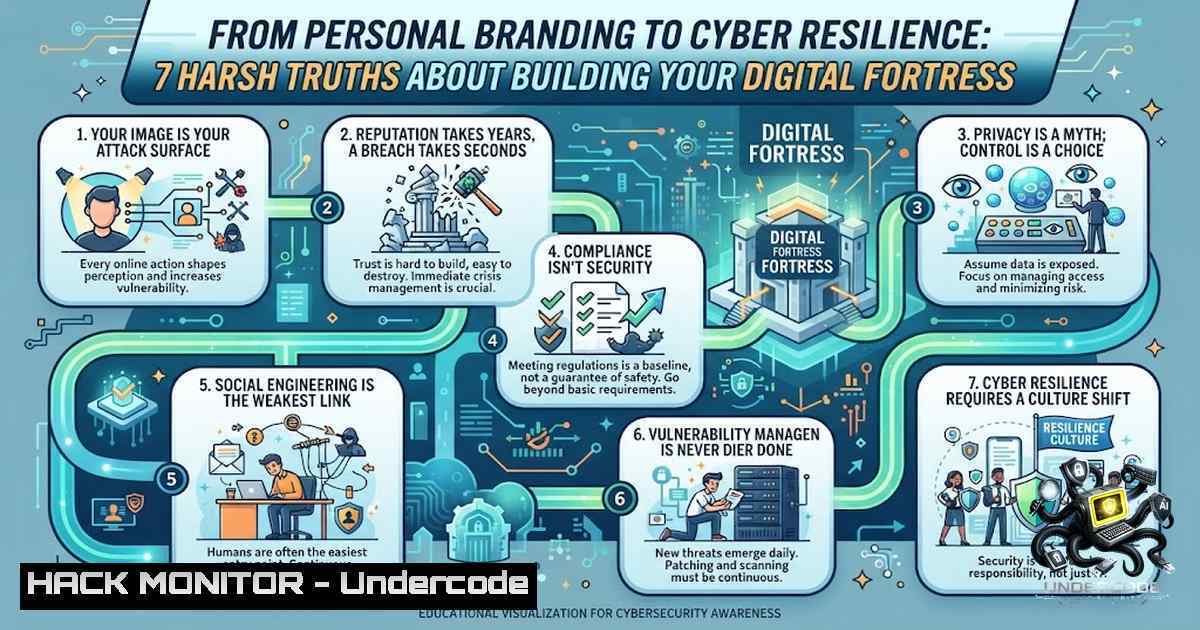
Introduction:
In the digital age, your professional reputation is your most valuable asset—but it’s also your most vulnerable attack surface. Personal branding isn’t just about visibility; it’s about building a resilient digital identity that can withstand scrutiny, competition, and increasingly sophisticated cyber threats. Just as cybersecurity professionals defend networks against relentless attacks, professionals across all industries must defend their personal brand against the pressures of comparison, burnout, and misinformation. This article explores the intersection of personal branding and cyber resilience, offering actionable strategies to build a digital presence that is both impactful and secure.
Learning Objectives:
- Understand the parallels between personal branding and cybersecurity resilience
- Learn to implement disciplined content strategies that mirror security best practices
- Master the art of engagement while protecting your digital identity from threats
- Develop a growth mindset that turns setbacks into learning opportunities
- Build a consistent, authentic brand that stands out in a crowded digital landscape
You Should Know:
- Don’t Drain Yourself Out Too Much: The Cybersecurity Principle of Resource Management
Just as a security team must avoid alert fatigue by prioritizing critical threats, your personal branding efforts require strategic energy management. Divyaa Jain emphasizes that personal branding is “a marathon, not a sprint,” and that “consistency doesn’t mean posting every day—but doing things with discipline”.
Step-by-Step Guide:
- Audit Your Digital Energy: Track where you spend your online time and identify high-impact vs. low-value activities.
- Implement a Content Schedule: Use tools like Buffer or Hootsuite to schedule posts in advance, reducing daily decision fatigue.
- Set Boundaries: Designate specific times for content creation and engagement, just as you would for security monitoring shifts.
- Automate Repetitive Tasks: Leverage AI-powered tools for content curation and social listening, similar to how SIEM tools automate threat detection.
- Take Regular Breaks: Schedule “digital detox” periods to prevent burnout and maintain creative clarity.
Linux Command for Automation:
 Schedule social media posts using cron (example with a custom script)
crontab -e
 Add line to run daily at 9 AM:
0 9    /usr/local/bin/post_scheduler.sh --platform linkedin --content daily_update.txt
Windows PowerShell for Monitoring Engagement:
 PowerShell script to check engagement metrics via API
$headers = @{ "Authorization" = "Bearer YOUR_API_TOKEN" }
$response = Invoke-RestMethod -Uri "https://api.linkedin.com/v2/socialMetrics" -Headers $headers
$response | Export-Csv -Path "engagement_report.csv" -1oTypeInformation
- Stop Comparing: The Zero-Trust Approach to Digital Perception
“Not every achievement and success story is true. People fake a lot here,” Jain warns. In cybersecurity, zero-trust means “never trust, always verify.” Apply the same principle to your professional journey.
Step-by-Step Guide:
- Verify Success Stories: Before comparing yourself to others, question the authenticity of their claims.
- Focus on Your Metrics: Track your own growth indicators—followers, engagement, leads generated—rather than others’ highlight reels.
- Implement a Personal Dashboard: Create a dashboard to visualize your progress over time.
- Practice Digital Hygiene: Unfollow accounts that trigger negative comparisons and curate a feed that inspires growth.
- Conduct Quarterly Self-Assessments: Review your achievements against your own goals, not industry benchmarks.
Command to Extract LinkedIn Metrics (Linux):
 Using curl to fetch public profile data (with proper API keys)
curl -X GET "https://api.linkedin.com/v2/people/(id:{profile_id})" \
-H "Authorization: Bearer {access_token}" \
-H "Content-Type: application/json" | jq '.profileMetrics'
- Experiment and Learn for Yourself: The Penetration Testing Mindset
“Everybody pretends to be a LinkedIn guru; you don’t need to follow them blindly. Experiment and see what works best for you”. This mirrors the ethical hacker’s approach: test, learn, and adapt.
Step-by-Step Guide:
- A/B Test Your Content: Post similar content with different headlines, images, or times to see what resonates.
- Analyze Performance Data: Use analytics tools to identify patterns in engagement.
- Iterate Based on Feedback: Treat each post as a learning opportunity, not a final product.
- Document Your Experiments: Maintain a log of what worked and what didn’t.
- Share Your Learnings: Build credibility by sharing both successes and failures with your audience.
Python Script for Content Analysis:
import pandas as pd
import matplotlib.pyplot as plt

Load engagement data
data = pd.read_csv('engagement_data.csv')
 Analyze performance by post type
performance = data.groupby('post_type')['engagement'].mean()
performance.plot(kind='bar')
plt.title('Content Performance Analysis')
plt.show()
4. Engagement Is Necessary: The Active Defense Strategy
“No excuses here. You have to engage consistently”. In cybersecurity, passive defense isn’t enough—you need active threat hunting. Similarly, personal branding requires active participation.
Step-by-Step Guide:
- Dedicate Time Daily: Set aside 15-30 minutes for engaging with others’ content.
- Add Value in Comments: Don’t just like—leave thoughtful comments that spark conversation.
- Join Relevant Communities: Participate in LinkedIn groups, subreddits, or industry forums.
- Respond Promptly: Treat comments and DMs like security alerts—respond quickly.
- Network Strategically: Connect with professionals who align with your goals and values.
AI-Powered Engagement Tool Setup:
 Install and configure a social listening tool
pip install tweepy  For Twitter/X
pip install linkedin-api  For LinkedIn
 Example script to monitor mentions
python -c "
import linkedin_api
api = linkedin_api.Linkedin('username', 'password')
mentions = api.get_mentions()
for mention in mentions:
print(f'Respond to: {mention}')
"
- You Will Figure Things Out: The Incident Response Mindset
“Everyone is as confused as you are in the beginning. Don’t stress yourself out too much”. This echoes the incident response principle: stay calm, follow your plan, and learn from every incident.
Step-by-Step Guide:
- Create a Content Calendar: Plan your posts in advance to reduce last-minute stress.
- Develop a Crisis Communication Plan: Know how to respond if a post goes viral for the wrong reasons.
- Build a Support Network: Connect with mentors and peers who can offer guidance.
- Practice Self-Compassion: Recognize that setbacks are part of the growth process.
- Review and Refine: After each campaign, conduct a post-mortem to identify improvements.
Windows Command for Backup and Recovery:
 Backup your content and data regularly
robocopy C:\Content D:\Backup\Content /MIR
 Schedule with Task Scheduler
schtasks /create /tn "ContentBackup" /tr "robocopy C:\Content D:\Backup\Content /MIR" /sc daily /st 02:00
6. Patience Is Important: The Long-Term Security Strategy
“Building your personal brand is not going to be easy. But easy things are not always worth it, are they?”. In cybersecurity, quick fixes often lead to vulnerabilities. Sustainable security requires patience and continuous improvement.
Step-by-Step Guide:
- Set Realistic Goals: Aim for incremental growth rather than overnight success.
- Celebrate Small Wins: Acknowledge each milestone, no matter how small.
- Stay Consistent: Maintain your posting schedule even when engagement is low.
- Invest in Continuous Learning: Take courses and certifications to enhance your skills.
- Build for the Long Haul: Focus on creating evergreen content that remains relevant.
AI Training for Content Optimization:
 Use AI to analyze and optimize your content
pip install openai
python -c "
import openai
openai.api_key = 'YOUR_API_KEY'
response = openai.ChatCompletion.create(
model='gpt-4',
messages=[{'role': 'user', 'content': 'Optimize this LinkedIn post for engagement: ...'}]
)
print(response.choices[bash].message.content)
"
- Be Kind to Others and Yourself: The Human Firewall
Jain concludes with a powerful reminder: “BE KIND TO OTHERS AND YOURSELF”. In cybersecurity, the human element is often the weakest link—but it’s also the strongest when properly supported.
Step-by-Step Guide:
- Practice Digital Empathy: Engage with others authentically and respectfully.
- Support Your Peers: Share others’ content and celebrate their successes.
- Maintain Work-Life Balance: Prioritize mental well-being to sustain long-term performance.
- Lead by Example: Demonstrate integrity and kindness in all your interactions.
- Create a Positive Digital Environment: Foster a community where everyone feels valued.
Linux Command for Wellness Tracking:
 Simple script to remind you to take breaks
echo "0     echo 'Take a break!' | wall" | crontab -
 Install a pomodoro timer
sudo apt-get install gnome-pomodoro
What Undercode Say:
- Consistency Over Perfection: Personal branding, like cybersecurity, thrives on disciplined, consistent effort rather than sporadic bursts of activity. Regular engagement builds trust and recognition.
- Authenticity Is Your Strongest Defense: In an era of deepfakes and misinformation, authenticity is your competitive advantage. Being genuine builds credibility that no algorithm can replicate.
- Experimentation Drives Innovation: Just as penetration testing reveals vulnerabilities, experimenting with content strategies uncovers what truly resonates with your audience.
- Community Is Your Force Multiplier: Engaging with others not only expands your reach but also creates a support network that can amplify your message and defend your reputation.
- Patience Builds Resilience: Sustainable growth requires patience. Quick wins are often fleeting, but a long-term strategy builds enduring value.
Analysis:
The principles of personal branding shared by Divyaa Jain align remarkably well with the core tenets of cybersecurity. The emphasis on consistency mirrors the need for regular security updates and monitoring. The call to avoid comparison and focus on personal growth parallels the zero-trust model’s focus on verifying claims independently. The encouragement to experiment and learn reflects the iterative nature of threat hunting and incident response. Finally, the reminder to be kind underscores the importance of the human firewall—supporting and educating users to prevent social engineering attacks. By applying these cybersecurity principles to personal branding, professionals can build digital identities that are not only visible but resilient.
Prediction:
- +1 The convergence of personal branding and cybersecurity will give rise to a new category of digital identity protection services, offering individuals the same level of threat monitoring and incident response that enterprises currently enjoy.
- +1 AI-powered personal branding assistants will become mainstream, helping professionals optimize their content while detecting and mitigating reputation risks in real-time.
- +1 Organizations will increasingly invest in “brand resilience” training for employees, recognizing that a strong personal brand enhances both individual and corporate security.
- -1 The rise of deepfake technology and AI-generated content will make authenticity verification a critical challenge, potentially eroding trust in personal brands.
- -1 Burnout and mental health issues among professionals will intensify as the pressure to maintain a constant online presence grows, necessitating more robust support systems.
- +1 Regulatory frameworks will evolve to protect digital identities, similar to GDPR and CCPA, giving individuals greater control over their online personas.
- +1 The skills gap in cybersecurity will be partially addressed by professionals who have built strong personal brands, attracting talent to the field through visible role models.
- -1 The commoditization of personal branding advice will lead to a proliferation of generic, low-quality content, making it harder for genuine expertise to stand out.
- +1 Cross-industry collaboration between branding experts and cybersecurity professionals will yield innovative solutions for digital identity protection.
- +1 The integration of blockchain technology for verifiable credentials will revolutionize how professionals prove their expertise and authenticity online.
▶️ Related Video (80% Match):
🎯Let’s Practice For Free:
🎓 Live Courses & Certifications:
Join Undercode Academy for Verified Certifications
🚀 Request a Custom Project:
Secure, high-velocity infrastructure and disruptive technological engineering. Contact our engineering team for high-tier development and proprietary systems:
[email protected]
💎 Smart Architecture | 🛡️ Secure by Design | ⭐ Trusted by Thousands
IT/Security Reporter URL:
Reported By: Divyaa Jain – Hackers Feeds
Extra Hub: Undercode MoN
Basic Verification: Pass ✅


