Listen to this Post
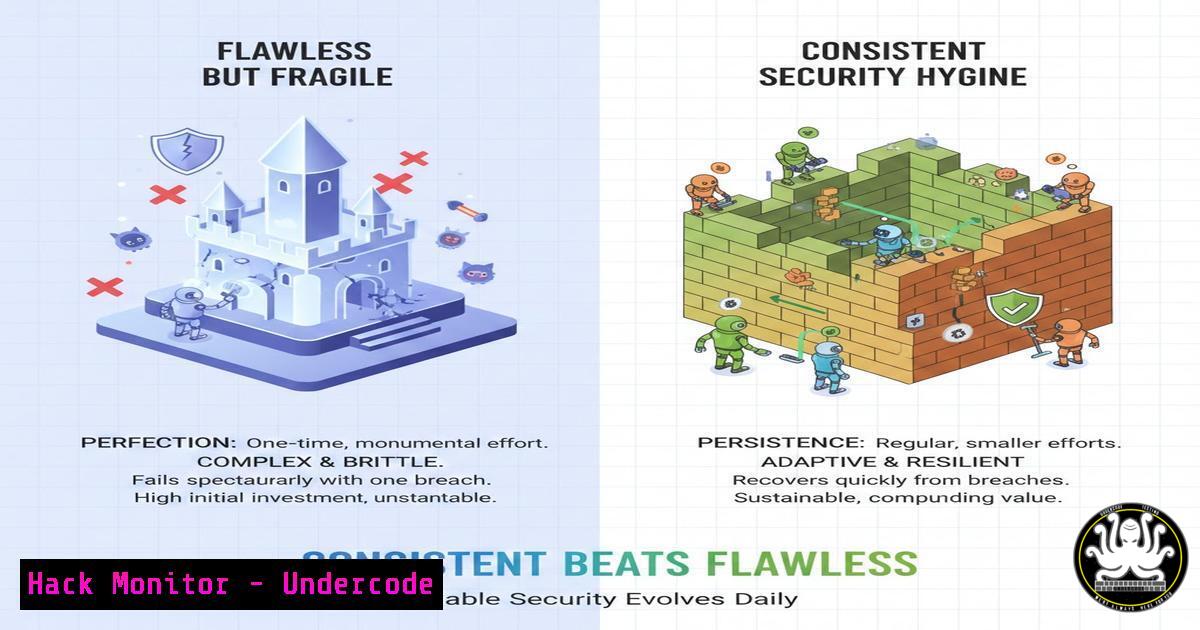
Introduction:
In cybersecurity, teams often chase perfect, impenetrable systems—zero-day patches, flawless architectures, and 100% secure code. Yet, as this professional’s lesson reveals, real-world resilience isn’t born from perfection but from relentless, regular action. This article transposes the principle of consistency into the domain of IT security, demonstrating how daily, automated routines outmatch sporadic, “perfect” audits in building genuine defense.
Learning Objectives:
- Understand why consistent security monitoring trumps periodic, in-depth audits.
- Learn to implement daily hygiene checks across Linux and Windows environments.
- Automate key vulnerability scans and log reviews to ensure persistent oversight.
You Should Know:
1. The Fallacy of the Perfect Security Posture
The quest for a perfectly hardened system often leads to “security paralysis”—delaying essential updates for fear of breaking compatibility or waiting for the ideal maintenance window. This creates extended windows of exposure.
Step‑by‑step guide explaining what this does and how to use it.
Instead, adopt a regimen of small, consistent actions. Start with daily patch checks.
On Linux (Debian-based):
sudo apt update && sudo apt list --upgradable
This command refreshes your package list and shows available updates without installing them, allowing for quick, daily review.
On Windows (PowerShell):
Get-WindowsUpdate
Run this in an administrative PowerShell session to list available updates. Schedule this as a daily task.
2. Building Unbreakable Log Review Routines
Logs are useless if never read. Perfect, complex SIEM deployments fail if alerts are ignored. Consistency beats complexity.
Step‑by‑step guide explaining what this does and how to use it.
Implement a daily 10-minute log triage. Key commands to isolate critical events:
Linux (Auth Logs):
sudo tail -100 /var/log/auth.log | grep -i "failed|invalid|user"
This scans the last 100 authentication entries for failed login attempts.
Windows (Security Log):
Get-EventLog -LogName Security -InstanceId 4625 -Newest 20
This pulls the 20 most recent failed logon events (Event ID 4625). Script this and output to a daily digest email.
3. Automated Vulnerability Scanning: The Daily Pulse Check
Waiting for quarterly penetration tests leaves gaps. Integrate lightweight, automated scans into your daily workflow.
Step‑by‑step guide explaining what this does and how to use it.
Use `nmap` for a daily port hygiene check on critical servers.
nmap -sT --top-ports 20 <your-server-IP> -oN daily_scan.txt
This scans for the top 20 TCP ports. Diff the output daily to spot unauthorized changes. For a more comprehensive weekly scan, integrate `vulners` script:
nmap -sV --script vulners <target> -oN weekly_vuln_scan.txt
4. Cloud Configuration Hygiene: A Minute a Day
Major cloud breaches stem from misconfigurations (exposed S3 buckets, open security groups). Daily checks are vital.
Step‑by‑step guide explaining what this does and how to use it.
For AWS, use the `aws-cli` for a daily security group audit:
aws ec2 describe-security-groups --query "SecurityGroups[?IpPermissions[?ToPort==`22` && IpRanges[?CidrIp==`0.0.0.0/0`]]].GroupId" --output text
This lists security groups with SSH (port 22) open to the world. Schedule this. For Azure, use Azure CLI similarly to find NSG rules with excessive access.
5. The Power of Consistent Backup Verification
A perfect backup system that is never tested will fail when needed. Regularly verify backup integrity and restoration.
Step‑by‑step guide explaining what this does and how to use it.
Don’t just schedule backups; schedule verification.
Linux (using rsync & checksum):
rsync -avc --dry-run /source/ /backup/
The `-c` (checksum) flag forces a full data integrity check. Do this weekly.
Windows (using PowerShell):
Test-Path "\backup-server\share\latest-backup\" -NewerThan (Get-Date).AddDays(-1)
This checks if backup files from the last 24 hours exist. Pair with occasional file restoration tests.
6. API Security: Consistent Key Rotation & Monitoring
Static API keys are a massive risk. Implement a rigid schedule for rotation, far more effective than a “perfect” but static key vault.
Step‑by‑step guide explaining what this does and how to use it.
Use a scripting/cron job to enforce monthly rotation for non-critical systems. Log all API calls and review for anomalies daily.
 Example to fetch recent errors from an API gateway log
grep "HTTP 4[0-9][0-9]" /var/log/api-gateway.log | tail -50
Automate key rotation using your platform’s SDK (e.g., AWS IAM, Azure Key Vault).
- User Awareness: The Phishing Test You Run Every Month
A single annual, company-wide training is less effective than monthly, targeted phishing simulations.
Step‑by‑step guide explaining what this does and how to use it.
Use open-source tools like `Gophish` to set up and schedule monthly campaigns. Consistency here builds reflexive caution. Track click rates monthly and provide 5-minute micro-trainings to those who fail.
What Undercode Say:
- Key Takeaway 1: Security is a Rhythm, Not a Sprint. The most sophisticated firewall ruleset is obsolete if it’s not reviewed and updated regularly. Resilience is built through the cumulative effect of daily log checks, weekly scans, and monthly rotations. This mirrors the post’s insight that talent (advanced tools) loses to consistency (regular practice).
- Key Takeaway 2: Automation is the Enforcer of Consistency. Human regularity falters under stress, travel, or workload—exactly when attackers strike. Automating the mundane (patch checks, backup verifications) ensures your “security routine” survives the “boring, normal days” and long workdays, guaranteeing persistent execution.
Prediction:
The future of enterprise security will not be defined by the organizations that purchase the most advanced “perfect” AI-driven threat detection platform. It will be dominated by those that best institutionalize consistency—embedding automated, granular security hygiene into the daily DevOps workflow and cultural mindset. The “less talented but more regular” adversary (like persistent low-level phishing or automated vulnerability scanning) will consistently defeat the perfectly configured but statically maintained defense. The lesson from 2024-25 is clear: in security, showing up every day is the ultimate competitive advantage.
▶️ Related Video (78% Match):
🎯Let’s Practice For Free:
IT/Security Reporter URL:
Reported By: Harshitbansal17 In – Hackers Feeds
Extra Hub: Undercode MoN
Basic Verification: Pass ✅


