Listen to this Post
Introduction:
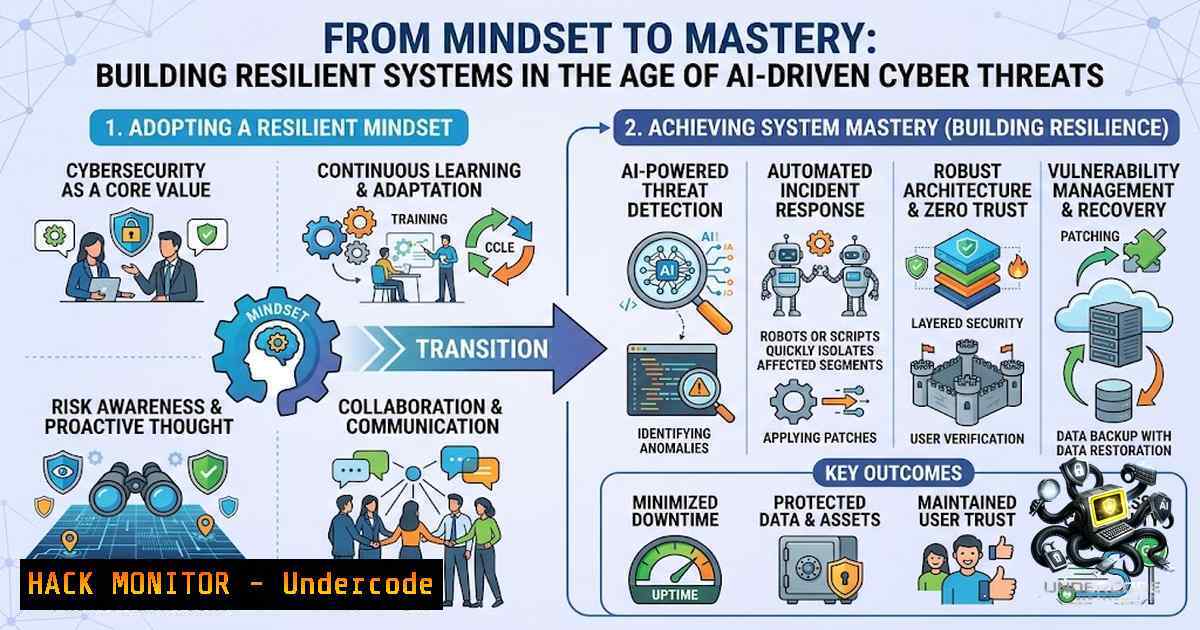
The cybersecurity industry is facing a critical talent shortage, with over 3.5 million unfilled positions globally and more than 1.5 million vacancies expected in India alone by 2025. Jayendra Polisetty, a Computer Science student and aspiring AI engineer, recently completed the “Getting Started with Cybersecurity” credential through IBM SkillsBuild. This milestone reflects a broader industry truth: building secure systems demands more than technical proficiency—it requires a fundamental shift in how developers, engineers, and architects approach technology. As Polisetty noted, “A single vulnerability can change everything. Understanding how to prevent it changes how you build.” This article explores the practical cybersecurity skills, tools, and mindsets necessary to build resilient technology in an era where AI is both a weapon and a target.
Learning Objectives & Secrets:
- Objective 1: Master the CIA Triad as Your Security Compass. The IBM SkillsBuild curriculum emphasizes evaluating data security using the CIA triad model—Confidentiality, Integrity, and Availability. Secret tip: Apply this framework not just to data, but to every system component. Ask: If this service fails, which pillar is compromised? This reframes security from a checklist to a design philosophy.
-
Objective 2: Think Like an Attacker to Build Like a Defender. Polisetty’s approach—”Think like an attacker. Build like a defender”—is the cornerstone of ethical hacking. Secret tip: Run regular vulnerability assessments using tools like Nmap (
nmap -sV -sC -O -p-</code>) and Nikto (<code>nikto -h [bash]</code>) to identify weaknesses before adversaries do. Understanding offensive techniques (SQL injection, cross-site scripting, privilege escalation) informs stronger defensive configurations.</p></li> <li><p>Objective 3: Embed Security Early in the Development Lifecycle. Security cannot be an afterthought. Secret tip: Integrate infrastructure-as-code scanning tools like Checkov, tfsec, or Terrascan into pre-commit hooks to catch misconfigurations before they reach production. With weak credentials (47%) and misconfigurations (29%) accounting for nearly 76% of cloud compromises, early detection is non-1egotiable.</p></li> </ul> <h2 style="color: yellow;">You Should Know:</h2> <h2 style="color: yellow;">1. Linux Security Hardening: From Defaults to Defense</h2> <p>Default Linux installations are inherently vulnerable. Attackers scan for open ports, weak SSH configurations, and unpatched services within minutes of deployment. Hardening transforms a system from an easy target into a resilient fortress. <h2 style="color: yellow;">Step‑by‑Step Guide:</h2> Step 1: Harden SSH Configuration. Edit `/etc/ssh/sshd_config` and set: [bash] PermitRootLogin no PasswordAuthentication no PubkeyAuthentication yes MaxAuthTries 3
Disable root login and password authentication entirely—key-based authentication only.
Step 2: Configure Kernel Parameters with sysctl. Create
/etc/sysctl.d/99-hardening.conf:net.ipv4.tcp_syncookies = 1 net.ipv4.conf.all.rp_filter = 1 net.ipv4.conf.all.accept_redirects = 0 net.ipv4.ip_forward = 0
Apply with
sudo sysctl -p /etc/sysctl.d/99-hardening.conf. These settings mitigate IP spoofing, SYN flood attacks, and redirect-based exploits.Step 3: Implement Firewall Rules with UFW or iptables.
sudo ufw default deny incoming
sudo ufw default allow outgoing
sudo ufw allow ssh
sudo ufw enable
For granular control, use iptables to drop invalid packets:
sudo iptables -A INPUT -m conntrack --ctstate INVALID -j DROP.Step 4: Enable Automatic Security Updates.
sudo apt install unattended-upgrades
sudo dpkg-reconfigure --priority=low unattended-upgrades
This ensures critical patches are applied without manual intervention.
Step 5: Audit with Lynis. Run `sudo lynis audit system` to identify remaining weaknesses.
2. Windows Security Hardening with PowerShell
Windows endpoints are prime targets for ransomware and lateral movement attacks. PowerShell provides native, scriptable hardening capabilities aligned with CIS Controls v8 and Microsoft Security Baselines.
Step‑by‑Step Guide:
Step 1: Audit Current Security Posture. Clone the Windows Security Hardening repository and run the validator (no admin required):
git clone https://github.com/phillza/windows-security-hardening
cd windows-security-hardening
powershell -ExecutionPolicy Bypass -File scripts\validate_security_hardening.ps1
This performs a 24-check audit against CIS benchmarks.
Step 2: Apply Hardening Scripts. Run the auto-elevating batch wrapper:
.\scripts\run_hardening_as_admin.bat
This executes 16 PowerShell scripts that configure registry keys, services, firewall rules, and security policies.
Step 3: Disable Legacy Protocols. Prevent SMBv1 exploitation:
Disable-WindowsOptionalFeature -Online -FeatureName SMB1Protocol -1oRestart
Disable the guest account:
Set-LocalUser -1ame "Guest" -Enabled $false.Step 4: Enable Real-Time Protection.
Set-MpPreference -DisableRealtimeMonitoring $false
Set-MpPreference -MAPSReporting 2
This activates Microsoft Defender's cloud-based protection.
Step 5: Establish Baseline and Monitor Drift.
powershell -ExecutionPolicy Bypass -File scripts\collect_security_baseline.ps1
powershell -ExecutionPolicy Bypass -File scripts\drift_detection\Invoke-StandardDriftDetection.ps1
Drift detection identifies unauthorized changes—critical for compliance and incident response.
3. Kali Linux: The Ethical Hacker’s Arsenal
Kali Linux, a Debian-based distribution with hundreds of pre-installed security tools, is the industry standard for penetration testing and security assessments. Understanding its core tools is essential for anyone serious about offensive security.
Essential Commands and Tools:
| Tool | Command | Purpose |
||||
| Nmap | `nmap -sV -sC -O -p- [bash]` | Comprehensive network and service scanning |
| Metasploit | `msfconsole` | Exploit development and execution framework |
| Hydra | `hydra -l user -P wordlist.txt ssh://[bash]` | Password brute-forcing |
| John the Ripper | `john --format=md5 hash.txt` | Password hash cracking |
| SQLmap | `sqlmap -u "http://target/page?id=1" --batch` | Automated SQL injection testing |
| Nikto | `nikto -h https://target.com` | Web server vulnerability scanning |Step‑by‑Step Reconnaissance Workflow:
Step 1: Network Discovery. `nmap -sn 192.168.1.0/24` identifies live hosts.
Step 2: Service Enumeration. `nmap -sV -p- [bash]` reveals open ports and running services.
Step 3: Vulnerability Scanning. `nmap --script vuln [bash]` runs the Nmap vulnerability script engine.
Step 4: Web Application Testing. `nikto -h https://target.com` scans for common web vulnerabilities.
Step 5: Exploitation. Launch Metasploit with
msfconsole, search for relevant exploits, and test in authorized environments only.4. Cloud Security: Protecting the Modern Perimeter
Cloud misconfigurations remain the leading cause of breaches. With 99% of cloud security failures projected to be the customer's responsibility through 2027, proactive configuration is essential.
Step‑by‑Step Cloud Hardening:
Step 1: Enforce Least Privilege IAM. Use provider-1ative controls: AWS SCPs and RCPs, Azure Policy, Google Cloud Org Policy. Regularly review permissions with AWS IAM Access Analyzer or Azure AD Access Reviews.
Step 2: Encrypt Everything in Transit and at Rest. Enforce HTTPS for all storage (87% of S3 buckets fail this). Enable default encryption for databases, storage, and message queues.
Step 3: Implement Zero Trust Network Segmentation. Define zone models and access boundaries before deploying workloads. Use VPCs, security groups, and network ACLs to isolate workloads.
Step 4: Continuous Monitoring and Logging. Enable GuardDuty, VPC Flow Logs, and CloudTrail across all regions. Consolidate security telemetry into unified platforms—this has been shown to reduce Mean Time to Respond by 90%.
Step 5: Scan Infrastructure as Code. Integrate Checkov, tfsec, or Terrascan into CI/CD pipelines to catch misconfigurations before deployment.
5. AI and Cybersecurity: The New Frontier
Agentic AI systems—capable of autonomous decision-making and tool execution—introduce unprecedented risks. The Five Eyes alliance warns that frontier AI models capable of significantly advancing offensive cyber operations may emerge within months.
Emerging Threats:
- AI-Powered Attacks: Attackers are using AI coding environments to create sophisticated malware—one developer built an 88,000-line C2 framework in less than a week.
- Agentic AI Exploitation: Compromised AI agents could execute malicious scripts, modify sensitive records, access financial systems, and move laterally across environments.
- Phishing-as-a-Service: Language models with embedded jailbreaks are now commercially available, while conversational voice agents enable vishing at scale.
Defensive Strategies:
- Zero Trust Architecture: Enforce least privilege, deny-by-default security, application containment, segmentation, and continuous verification.
- AI-Specific Governance: Develop hybrid cybersecurity governance models for AI regulation, with clear policies for data use and model management.
- Continuous Verification: Monitor intent rather than just authorization—track every agent, every session, and every run.
What Undercode Say:
- Key Takeaway 1: Security is a Mindset, Not a Certificate. Polisetty’s reflection—"The certificate is the evidence. The mindset is the real takeaway"—captures the essence of cybersecurity professionalism. Credentials open doors, but the ability to think critically about threats, design resilient systems, and respond effectively to incidents defines true expertise.
-
Key Takeaway 2: The Convergence of AI, Cloud, and Security is Inevitable. The future of technology lies at the intersection of AI, cloud computing, and cybersecurity. Polisetty’s interest in "how security, cloud, AI, and software engineering can come together" reflects an industry-wide shift. Professionals who understand this convergence will lead the next generation of innovation.
Analysis: The cybersecurity landscape is evolving faster than the talent pipeline can supply. With 3.5 million unfilled jobs globally and 35% projected growth for information security analysts, the opportunity for skilled practitioners has never been greater. However, the threat surface is expanding exponentially. Agentic AI, cloud-1ative architectures, and sophisticated phishing-as-a-service operations demand defenders who think like attackers and build like engineers. Polisetty’s journey—from foundational IBM SkillsBuild training to aspiring AI engineer—exemplifies the multidisciplinary approach required. The foundational courses, which can be completed in under 10 hours, provide an accessible entry point. But real mastery comes from continuous learning, hands-on practice with tools like Kali Linux and PowerShell, and an unwavering commitment to building security into every layer of the stack.
Prediction:
- +1 The global cybersecurity workforce will continue to grow, with demand for AI-security specialists outpacing generalists by 2028. Professionals who combine AI literacy with security engineering will command premium compensation.
-
+1 Agentic AI will become a standard component of both offensive and defensive security toolkits within 24 months. Multi-agent penetration testing platforms are already demonstrating 40% higher vulnerability discovery rates compared to single-agent architectures.
-
-1 The commoditization of AI-powered phishing and vishing services will drive a sharp increase in successful social engineering attacks, particularly targeting organizations with inadequate security awareness training.
-
-1 Cloud misconfigurations will remain the primary attack vector for data breaches unless organizations adopt infrastructure-as-code scanning and continuous compliance monitoring as standard practice.
-
+1 Free, accessible training platforms like IBM SkillsBuild will democratize cybersecurity education, enabling a new generation of security-conscious developers to enter the field—reducing the talent gap and improving overall system resilience.
▶️ Related Video (80% Match):
https://www.youtube.com/watch?v=4QzBdeUQ0Dc
🎯Let’s Practice For Free:
🎓 Live Courses & Certifications:
Join Undercode Academy for Verified Certifications
🚀 Request a Custom Project:
Secure, high-velocity infrastructure and disruptive technological engineering. Contact our engineering team for high-tier development and proprietary systems:
[email protected]
💎 Smart Architecture | 🛡️ Secure by Design | ⭐ Trusted by ThousandsIT/Security Reporter URL:
Reported By: https://lnkd.in/p/eqakskei - Hackers Feeds
Extra Hub: Undercode MoN
Basic Verification: Pass ✅🔐JOIN OUR CYBER WORLD [ CVE News • HackMonitor • UndercodeNews ]
📢 Follow UndercodeTesting & Stay Tuned:


