Listen to this Post
Introduction:
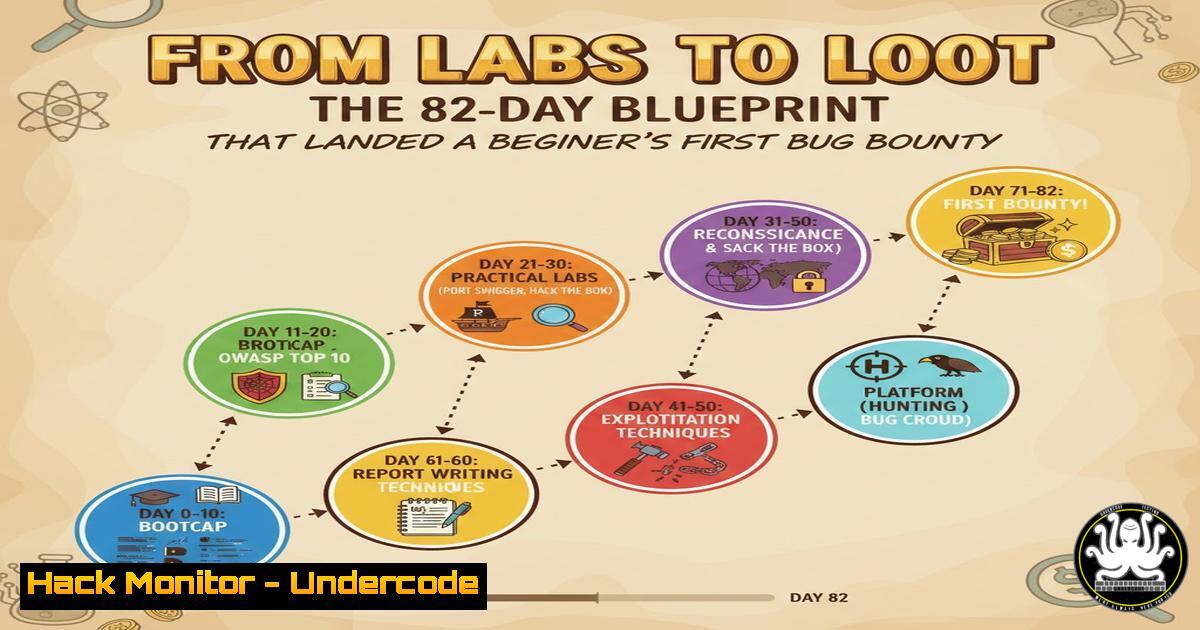
Transitioning from controlled penetration testing labs to the unpredictable terrain of live bug bounty programs is a pivotal moment for any cybersecurity aspirant. This journey, exemplified by a learner’s recent success after an 81-day research streak, underscores the critical blend of structured methodology, relentless persistence, and expert mentorship required to identify legitimate vulnerabilities in real-world applications. Moving beyond theoretical flags to validated rewards marks the evolution from student to practitioner.
Learning Objectives:
- Develop a systematic, repeatable methodology for web application security testing beyond automated scanners.
- Understand the role of mentorship and continuous learning in accelerating bug bounty success.
- Master key reconnaissance and exploitation techniques for common web vulnerability classes.
You Should Know:
1. Building Your Foundational Knowledge Arsenal
Before writing a single scan, a deep understanding of core concepts is non-negotiable. The 81-day research phase mentioned is crucial. This involves moving beyond basic OWASP Top 10 definitions to understanding the underlying technology stacks and their unique flaws.
Step‑by‑step guide:
Phase 1 – Technology-Specific Research: Don’t just learn “Injection”; learn SQLi for MySQL vs. PostgreSQL, NoSQL injection for MongoDB, and OS command injection in Windows (cmd.exe /c whoami) vs. Linux (/bin/sh -c id).
Phase 2 – Framework Deep Dive: As cited, “React logic flaws” and “Java gadget chains” are perfect examples. Study client-side state manipulation in React/Angular/Vue and deserialization vulnerabilities in Java (using tools like ysoserial), .NET (TypeConfuseDelegate), and Python (pickle).
Phase 3 – Tool Familiarization: Install and learn the basic usage of cornerstone tools in a Kali Linux or dedicated VM.
 Update and install core tools
sudo apt update && sudo apt install -y golang git
 Install a popular subdomain enumerator
go install -v github.com/projectdiscovery/subfinder/v2/cmd/subfinder@latest
 Clone a common reconnaissance repository
git clone https://github.com/OWASP/Amass.git
- Crafting a Reconnaissance Methodology That Discovers What Others Miss
Recon is 70% of the game. The goal is to map the target’s attack surface more thoroughly than anyone else.
Step‑by‑step guide:
- Passive Enumeration: Use tools to collect subdomains, IP ranges, and associated technologies without touching the target.
Using subfinder and amass passively
subfinder -d target.com -silent > subdomains.txt
amass enum -passive -d target.com -o amass_passive.txt
sort -u subdomains.txt amass_passive.txt > all_subs.txt
- Active Probing & Resolution: Probe the discovered hosts to see which are alive.
Use httpx to find live web servers
cat all_subs.txt | httpx -silent -title -status-code -tech-detect -o live_targets.txt
- Endpoint Discovery: Uncover hidden paths, APIs, and files.
Use ffuf for directory/content busting
ffuf -w /usr/share/wordlists/dirb/common.txt -u https://target.com/FUZZ -mc 200,302 -t 50
Discover JS files and extract endpoints
cat live_targets.txt | subjs | grep -E "api|v1|admin|internal" > endpoints.txt
-
From Theory to Exploitation: Testing Common Vulnerability Classes
With a target list, apply your researched knowledge systematically.
Step‑by‑step guide for a Logic Flaw (e.g., in a React App):
1. Intercept Traffic: Use Burp Suite or Proxy to map application workflows (e.g., “Add to Cart” -> “Checkout” -> “Apply Coupon” -> “Purchase”).
2. Analyze Client-Side State: Examine React props, state, or API call responses in browser dev tools. Look for client-controlled parameters that influence price, access, or quantity.
3. Manipulate and Replay: If a “finalPrice” is sent from the client, modify it before the final `POST /api/checkout` request.
POST /api/checkout HTTP/1.1
Host: shop.target.com
{"items":[{"id":101,"qty":1}], "finalPrice": 1.00, "couponCode":"ADMIN100"}
4. Test on a Staging Environment: Always test potentially disruptive flaws on staging subdomains or paths first.
4. Weaponizing Automation with Nuclei and Custom Templates
While manual testing finds complex bugs, automation catches low-hanging fruit at scale.
Step‑by‑step guide:
1. Install Nuclei: `go install -v github.com/projectdiscovery/nuclei/v2/cmd/nuclei@latest`
- Run Community Templates: `nuclei -l live_targets.txt -t ~/nuclei-templates/ -severity medium,high,critical -o nuclei_scan.txt`
3. Write a Custom Template for a Specific Tech: If the target uses a specific CMS (e.g., Hubspot), create a template to check for misconfigurations.id: hubspot-api-key-exposure info: name: HubSpot API Key Exposure severity: high http:</li> </ol> - method: GET path: - "{{BaseURL}}/_hcms/api?key=test" matchers-condition: and matchers: - type: word words: - "invalid key" Absence of this means a different response part: body negative: true - type: status status: - 200- The Art of the Report: Turning a Bug into a Bounty
A “Valid” finding requires clear, reproducible proof.
Step‑by‑step guide:
- Structure: , Summary, Severity/CVSS, Affected URL, Steps to Reproduce (numbered, 1-5), Proof of Concept (PoC) with screenshots/video, Impact, Remediation.
- PoC Clarity: Use clear commands or cURL snippets.
curl -X POST 'https://api.target.com/v1/resetPassword' -H 'Content-Type: application/json' --data '{"userId":"attacker_controlled_id"}' - Impact Demonstration: Show how the bug could lead to data loss, financial impact, or system compromise. Avoid hype, stick to facts.
6. Mentorship and Mindset: The Unseen Tools
As highlighted, mentorship provides course correction and prevents burnout.
Step‑by‑step guide to seeking mentorship:
- Engage Authentically: Follow researchers like the mentioned Aashutosh Devkota on platforms like Twitter/LinkedIn. Comment thoughtfully on their technical posts, don’t just ask for help.
- Show Your Work: When you do ask for guidance, present your incomplete methodology. “I found
/api/user?id=1, tested for IDOR up toid=100, but hit a rate limit. What would be your next approach?” - Persistence Loop: Set a daily research goal (e.g., 1 new CVE analysis, 1 hour on a lab). Use tools like `notion.so` or `obsidian.md` to document your learnings. The “streak” mentality builds compounding knowledge.
What Undercode Say:
- Methodology Trumps Tools: Success is not about having the most tools, but about applying a disciplined, depth-first approach to a narrowed target. A single, well-researched attack vector (like Java deserialization on a Jenkins server) is more valuable than 10,000 superficial subdomain scans.
- The Validation Mindset Shift: The psychological leap from lab “solved” flags to real-world “valid” notifications is monumental. It transitions the hunter’s motivation from external validation (points, ranks) to intrinsic problem-solving and contribution to ecosystem security, which is the true marker of a professional.
This case illustrates the democratization of security testing. The barrier to entry is not formal education but dedicated, self-directed learning. The future of bug bounties will see an influx of highly skilled, methodology-driven hunters from non-traditional backgrounds. This will force organizations to adopt more rigorous security development lifecycles (SDL) and shift-left testing, as the crowd-sourced hunter army becomes faster and more sophisticated than internal teams. The “82-day blueprint” will become the new normal, accelerating the overall pace of vulnerability discovery and remediation across the internet.
Prediction:
The normalization of structured, self-taught paths into bug bounty success will rapidly expand the active hunter population, increasing the pressure on organizations to implement real-time vulnerability management and more sophisticated bug bounty program tiers. Simultaneously, we will see a rise in AI-assisted reconnaissance and fuzzing, but the critical, creative “logic flaw” discovery will remain a human-dominated domain, increasing its relative value. Companies without robust vulnerability disclosure programs (VDP) will face increased risk of ad-hoc, public disclosures.
▶️ Related Video (80% Match):
🎯Let’s Practice For Free:
IT/Security Reporter URL:
Reported By: Sanjog Gautam – Hackers Feeds
Extra Hub: Undercode MoN
Basic Verification: Pass ✅🔐JOIN OUR CYBER WORLD [ CVE News • HackMonitor • UndercodeNews ]
📢 Follow UndercodeTesting & Stay Tuned:


