Listen to this Post
Introduction:
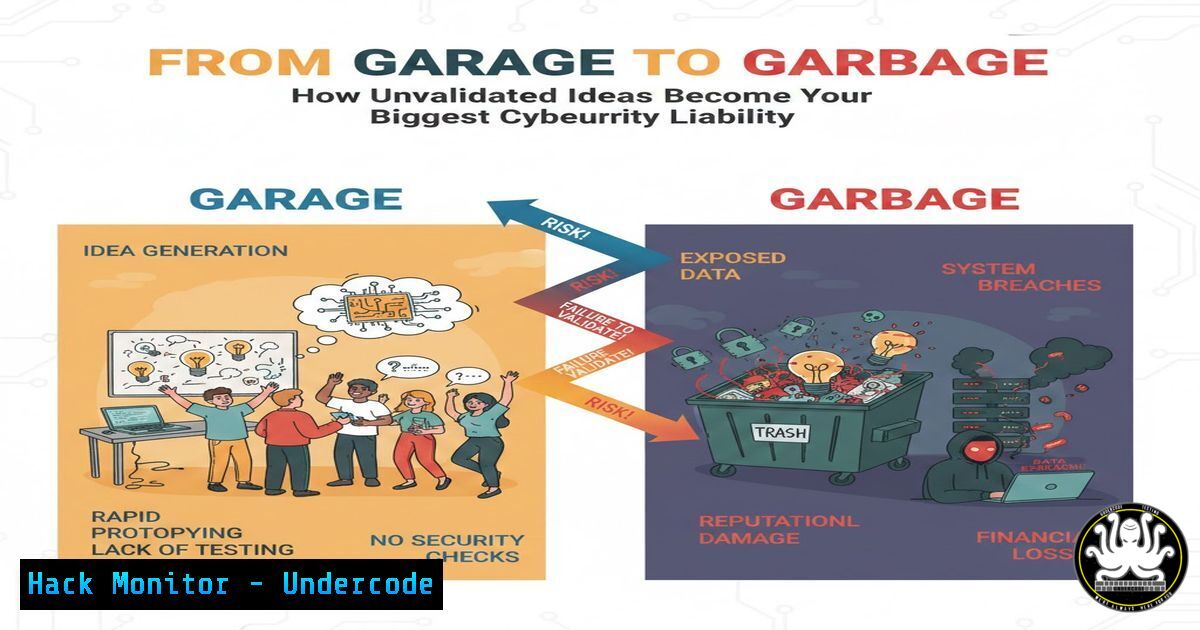
In the high-stakes world of technology and cybersecurity, the line between a groundbreaking idea and a catastrophic vulnerability is often drawn by one critical factor: rigorous, real-world validation. The philosophical debate on LinkedIn about unproven business ideas mirrors a pervasive issue in IT—deploying solutions, architectures, or code based on subjective belief rather than objective, measurable security signals. This article translates that business insight into a mandatory security protocol, detailing how to pressure-test your digital initiatives before they become your attack surface.
Learning Objectives:
- Understand how to apply a validation-first framework to all IT projects, from AI model deployment to network changes.
- Learn practical, command-level steps to enumerate, test, and harden new systems before they go live.
- Develop metrics and signals that replace opinion-based decision-making with evidence-based security posturing.
You Should Know:
1. The Pre-Flight Checklist: Enumeration and Asset Discovery
Before declaring any new digital initiative “good,” you must know exactly what it comprises. An unvalidated idea often leads to shadow IT or poorly documented assets—the primary attack vectors in modern breaches.
Step‑by‑step guide:
- Network Discovery: Use tools like `nmap` to map all devices and services associated with a new project deployment.
Basic SYN scan on a target subnet
nmap -sS -T4 192.168.1.0/24

Service and version detection on discovered hosts
nmap -sV -O <target_IP>
-
Cloud Asset Inventory: For projects in AWS, use the CLI to list all resources.
List all EC2 instances in a region
aws ec2 describe-instances --query 'Reservations[].Instances[].[InstanceId,PrivateIpAddress,State.Name]' --output table

List all S3 buckets
aws s3 ls
- Documentation: Feed all discovered data into a Configuration Management Database (CMDB). The act of documentation alone exposes assumptions and gaps.
2. Stress-Testing the Hypothesis: Vulnerability Assessment
An idea’s potential is irrelevant if its implementation is riddled with known vulnerabilities. Automated scanning provides the “signals from the field” needed for an objective verdict.
Step‑by‑step guide:
- Automated Scanning: Integrate a scanner like Nessus or OpenVAS into your CI/CD pipeline or run it manually against new environments.
Example using OpenVAS CLI (gvm-cli) to start a task
gvm-cli --gmp-username admin --gmp-password <password> socket --socketpath /run/gvmd/gvmd.sock --xml "<create_task><name>Project Validation Scan</name><config id='daba56c8-73ec-11df-a475-002264764cea'/><target id='<target_id>'/></create_task>"
- Dependency Checking: For software projects, use SCA (Software Composition Analysis) tools.
Scan for vulnerabilities in Python dependencies using safety
safety check --json > vulnerability_report.json
- Triage: Treat every High and Critical finding as a veto signal. The project cannot proceed until these are mitigated or risk-accepted with formal approval.
3. Building the Feedback Loop: Implementing Security Telemetry
You cannot judge what you cannot measure. Implement logging and monitoring from day zero to capture real-world interaction with the new system.
Step‑by‑step guide:
- Enable Audit Logging: On a new Windows server, ensure detailed audit policies are enabled.
Enable audit policy for process creation (Command Line logging)
Auditpol /set /subcategory:"Process Creation" /success:enable /failure:enable
- Forward Logs to SIEM: Use an agent like Winlogbeat (Elastic) or the native Azure/AWS agent to stream logs to a central SIEM.
Sample Winlogbeat configuration snippet (winlogbeat.yml)
winlogbeat.event_logs:</li>
</ol>

- name: Security
- name: Microsoft-Windows-Sysmon/Operational
output.elasticsearch:
hosts: ["https://your-siem:9200"]
3. Create Baseline Alerts: Configure alerts for any anomalous activity, such as failed logon bursts or unexpected outbound connections, within the new project’s scope.
- The Controlled Burn: Penetration Testing in a Sandbox
Before full deployment, subject the project to a controlled adversarial simulation. This moves assessment from theoretical to practical.
Step‑by‑step guide:
- Isolate the Environment: Deploy the project in a segmented lab network (e.g., a separate VPC or VLAN).
- Simulate Attacks: Use a framework like the MITRE ATT&CK Navigator to plan and execute TTPs (Tactics, Techniques, and Procedures) relevant to your project.
- Example Exploitation Test: If the project includes a web API, test for common flaws.
Use ffuf to fuzz API endpoints for hidden paths or injection points
ffuf -w /usr/share/wordlists/dirb/common.txt -u https://<target>/api/v1/FUZZ -H "Authorization: Bearer <token>" -fs 42
- Document Findings: Every successful exploitation, no matter how small, is a critical data point that challenges the project’s security hypothesis.
-
The Final Verdict: Security Gates and Go/No-Go Decisions
Establish immutable security gates that function as quality gates. The “signals” collected from previous steps must feed into a binary decision matrix.
Step‑by‑step guide:
- Define Criteria: Set measurable thresholds (e.g., zero Critical vulnerabilities, 100% audit logging coverage, all authentication MFA-enabled).
- Automate Checks: Integrate checks into deployment pipelines (Terraform, Kubernetes, Ansible).
Example Terraform sentinel policy for AWS, denying launch if instance lacks mandatory tags import "tfplan/v2" as tfplan main = rule { all tfplan.resources.aws_instance.primary.applied.tags contains "SecurityTier" } - Convene a Review Board: If the project fails any gate, a formal board (including security, ops, and business) must review. The default action is “No-Go.”
6. Continuous Validation: Shifting Security Left and Right
Validation is not a one-time event. Embed security feedback loops into the entire lifecycle, treating the production environment as the ultimate testing ground.
Step‑by‑step guide:
- Implement RASP/IAST: Use Runtime Application Self-Protection or Interactive Application Security Testing tools within the live application for real-time vulnerability detection.
- Schedule Red Team Exercises: Regularly task your red team to treat the validated project as a target, simulating an advanced persistent threat.
- Review Metrics Weekly: Monitor security KPIs—mean time to detect (MTTD), mean time to respond (MTTR), vulnerability density—as the ultimate report card on your initial “idea.”
What Undercode Say:
- Data Over Doctrine: The security posture of any project cannot be debated in a conference room. It is defined exclusively by data from scans, logs, and test results. Emotional attachment or “belief” in an idea is a liability.
- The Cost of Indecision is Breach: Postponing a hard “garbage” verdict on a flawed project to avoid sunk costs directly translates to accumulating cyber risk. The eventual security incident will be far more expensive than the ego hit of killing a project early.
Analysis: The original post brilliantly identifies the human tendency to avoid decisive judgment on unproven ideas. In cybersecurity, this tendency is the root cause of technical debt, legacy vulnerability, and catastrophic breaches. The methodology outlined here forces a cultural and technical shift from subjective opinion to objective, automated validation. It replaces “I think it’s secure” with “The logs, scans, and tests demonstrate it is resilient to these specific threats.” This is not just best practice; it is the only sustainable model for secure innovation in an adversarial landscape.
Prediction:
Within the next 2-3 years, AI-driven autonomous security validation will become standard. AI agents will continuously hypothesize attack paths against new projects, execute simulated attacks, and provide a real-time, evolving “security viability score.” This will fully automate the verdict process, removing human hesitation and bias. Projects that cannot maintain a score above a dynamic threshold will be automatically quarantined or decommissioned, making the transition from “garage to garbage” instantaneous, unbiased, and unforgiving. The era of debating unvalidated ideas will be over, replaced by continuous, algorithmic judgment based on live threat intelligence.
🎯Let’s Practice For Free:
IT/Security Reporter URL:
Reported By: Factoryd Garage – Hackers Feeds
Extra Hub: Undercode MoN
Basic Verification: Pass ✅🔐JOIN OUR CYBER WORLD [ CVE News • HackMonitor • UndercodeNews ]
📢 Follow UndercodeTesting & Stay Tuned:
- The Controlled Burn: Penetration Testing in a Sandbox


