Listen to this Post
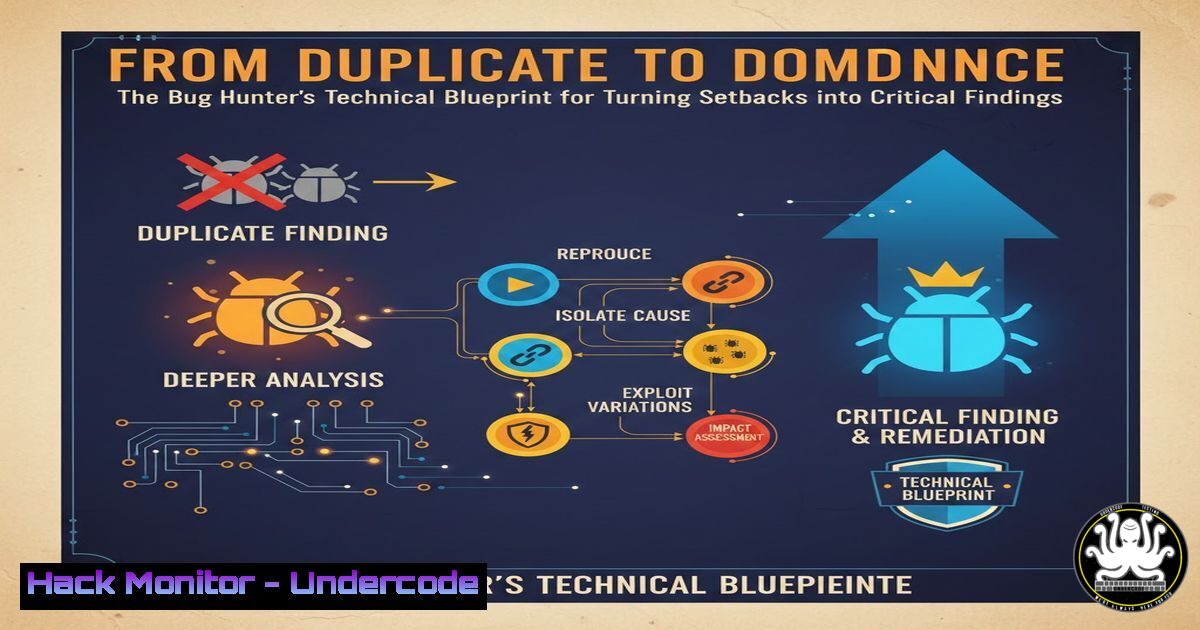
Introduction:
In the high-stakes arena of bug bounty hunting, a report marked “Duplicate” is not a dead end but a validation of your trajectory. It signals that you are navigating the same critical attack surfaces as top-tier researchers. This article deconstructs the mindset and technical grind required to move faster, automate reconnaissance, and ensure your next submission is the first—and critical—one.
Learning Objectives:
- Automate asset discovery and vulnerability scanning to increase operational tempo.
- Master techniques for validating and weaponizing common bug classes for definitive proof-of-concept.
- Develop a systematic approach to triage and reporting that elevates findings from duplicate to high-priority.
You Should Know:
1. Automated Reconnaissance: The Hunter’s Force Multiplier
Speed is the differentiator. Manual recon is obsolete at scale. The professional hunter’s first step is deploying automated pipelines to discover assets, subdomains, and endpoints that others might miss.
Step‑by‑step guide explaining what this does and how to use it.
1. Asset Discovery: Use tools like `amass` and `subfinder` to enumerate subdomains.
amass enum -d target.com -passive -o amass_initial.txt
subfinder -d target.com -o subfinder.txt
sort -u amass_initial.txt subfinder.txt > final_subs.txt
2. Probing for Live Hosts & HTTP Services: Filter the list with `httpx` to identify live web servers and technologies.
cat final_subs.txt | httpx -silent -tech-detect -title -status-code -o live_targets.json
3. Endpoint Discovery: Use `katana` or `gau` to crawl and gather endpoints from the live hosts.
cat live_targets.json | jq -r '.url' | katana -jc -aff -o endpoints.txt
This pipeline, run regularly, ensures you have the most current attack surface map, a foundational advantage.
2. Beyond the Scanner: Validating Common Vulnerabilities
Automated scanners flag potential issues; a researcher proves them. Take a common finding like Cross-Site Scripting (XSS). Moving from a reflected parameter to a working exploit requires context-aware payloads.
Step‑by‑step guide explaining what this does and how to use it.
1. Identify Injection Point: Use `gf` patterns to filter endpoints.
cat endpoints.txt | gf xss | tee potential_xss.txt
2. Craft Context-Specific Payloads: A scanner may report a reflection in an HTML attribute. A manual test uses a payload to break out. The post references web3 and smartcontracts. This realm requires a paradigm shift from HTTP to blockchain logic. Critical bugs here are often in business logic. Step‑by‑step guide explaining what this does and how to use it. 2. Look for Classic Flaws: Reentrancy, improper access control, integer over/underflows. 4. Write a PoC in Hardhat or Truffle: Demonstrate the theft of funds or denial of service in a test environment. Step‑by‑step guide explaining what this does and how to use it. Step‑by‑step guide explaining what this does and how to use it. – Proof of Concept: Screenshots, video (gif), or tool output showing data exfiltration. The emotional resilience highlighted in the original post is the human layer atop a necessary technical stack. The “grind” is not random effort; it is the disciplined iteration of The bug bounty ecosystem will stratify further. AI-assisted reconnaissance and vulnerability prediction will become standard, raising the baseline for entry. However, the highest bounties will go to hunters who combine this automation with profound, creative logical reasoning—especially in novel environments like smart contracts and complex CI/CD pipelines. The “duplicate” of today will evolve into AI-flagged “potential attack paths,” and the hunter’s role will shift towards architecting sophisticated exploit chains that automated systems can only hint at. Success will belong to those who leverage tools to scale their unique human insight. Reported By: Muhammad Hamza – Hackers Feeds
– Input: `” onfocus=”alert(document.domain)” autofocus=”`
– Use a tool like `qsreplace` to test at scale safely: `cat targets.txt | qsreplace ‘”>‘ | httpx -silent -match-string “
1. Static Analysis: Use `slither` or `mythril` on contract source code (Solidity).
slither contract.sol --print human-summary
3. Set Up a Local Testnet: Use `ganache` to fork the mainnet and test exploits without cost.
ganache --fork.url https://mainnet.infura.io/v3/YOUR_KEY
A great hunter thinks like a defender. Understanding how an attack would be logged (e.g., in a SIEM) helps craft stealthier PoCs and demonstrate clearer impact.
1. Simulate and Check Logs: After testing a Server-Side Request Forgery (SSRF), check server logs.
– Linux: `tail -f /var/log/nginx/access.log | grep -i “internal\|localhost”`
– Windows (PowerShell): `Get-WinEvent -LogName “Microsoft-Windows-HttpService/Operational” -MaxEvents 20 | Where-Object {$_.Message -like “127.0.0.1”}`
2. Use Canary Tokens: Place a canary token (like `http://canarytokens.com`) in your SSRF payload. A callback proves the vulnerability can reach external/internal systems.
A “Duplicate” often stems from poor communication. Your report must be a self-contained narrative of risk.1. Structured Report Template:
</li>
</ul>

<ol>
<li>POST /api/webhook HTTP/1.1
Host: api.target.com
Content-Type: application/json
{"url": "http://169.254.169.254/latest/meta-data/"}
– Impact Analysis: Explain what an attacker could achieve (e.g., “This leads to IAM credential theft and full cloud compromise.”).
– Remediation: Suggest a concrete fix (e.g., “Validate and sanitize the `url` parameter against internal IP blocks using a deny list.”).What Undercode Say:
Analysis:
recon → exploit → report. Platforms like HackerOne have created a competitive marketplace where speed and depth are currency. Hunters who treat duplicate flags as feedback for refining their automation and exploitation techniques will inevitably outpace the crowd. The integration of Web3/blockchain targets further expands the battlefield, demanding new skills but also offering less saturated ground for discovery.Prediction:
▶️ Related Video (78% Match):
🎯Let’s Practice For Free:
IT/Security Reporter URL:
Extra Hub: Undercode MoN
Basic Verification: Pass ✅🔐JOIN OUR CYBER WORLD [ CVE News • HackMonitor • UndercodeNews ]
📢 Follow UndercodeTesting & Stay Tuned:


