Listen to this Post
Introduction:
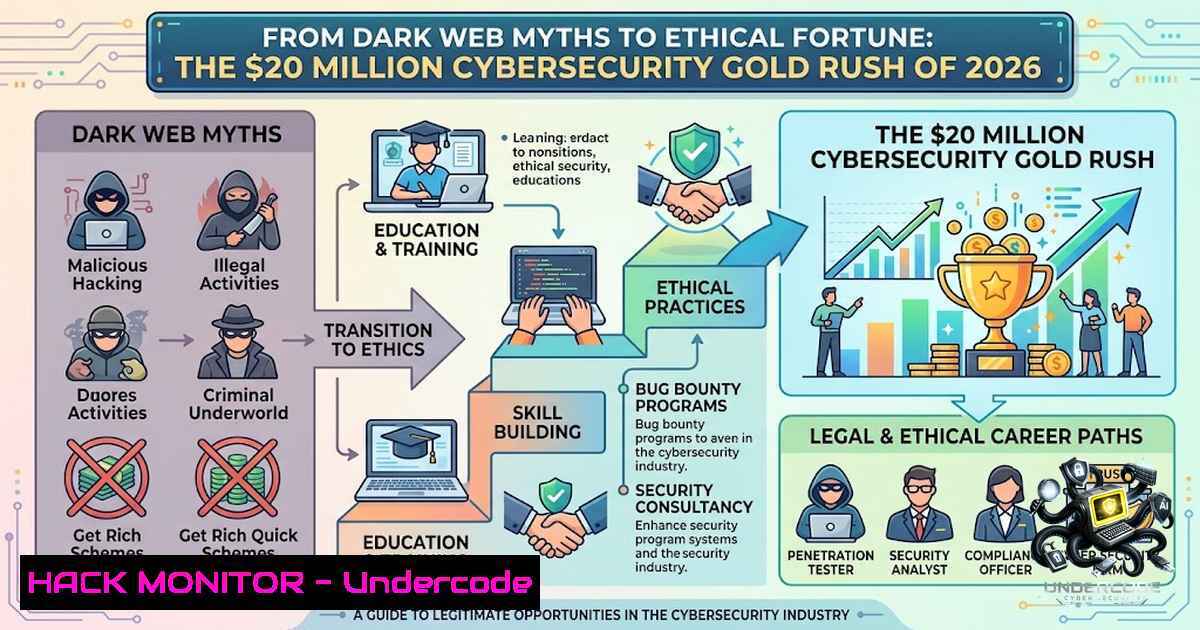
The dark web’s infamous “red rooms” are nothing more than harmful myths—yet the misconception that easy money lurks in illegal corners of the internet persists. In reality, the legitimate cybersecurity economy is experiencing an unprecedented boom: Microsoft paid a record $20 million to 562 ethical hackers between July 2025 and June 2026, while Google’s Vulnerability Reward Programs reached $17.1 million in 2025. For those with skills in Python, cloud platforms like Microsoft Azure, and a curiosity for aerospace cybersecurity, the path from self-taught enthusiast to six-figure bug bounty hunter is not only legal—it is actively encouraged by the very organizations that power our digital world.
Learning Objectives:
- Understand the landscape of legitimate bug bounty programs offered by Microsoft, Google, and NASA, including reward structures and submission requirements
- Master essential penetration testing tools and techniques using Kali Linux 2026.2 for ethical vulnerability discovery
- Learn cloud security hardening practices across AWS, Azure, and GCP to identify and remediate misconfigurations
- Navigate the certification pathways (CompTIA Security+, CEH) that unlock higher-paying cybersecurity roles
- Apply AI-assisted security workflows to accelerate vulnerability research while maintaining quality and reproducibility
You Should Know:
- Bug Bounty Programs: The Legal Path to Six-Figure Earnings
The dark web promises anonymous, unregulated income. Bug bounty programs offer the opposite: transparent, legally protected, and increasingly lucrative rewards for finding security vulnerabilities.
Microsoft’s bounty programs awarded more than $20 million across 2,531 eligible reports to 562 security researchers in 64 countries. The average reward reached approximately $35,000 per researcher, with the largest single reward hitting $200,000 through the Zero Day Quest initiative. Researchers submitted nearly 700 vulnerability reports through this program alone, receiving $2.3 million in rewards.
Google has responded to the AI era by restructuring its Vulnerability Reward Programs. The maximum payout for exploiting the Titan M security chip via a zero-click attack has been raised from $1 million to $1.5 million. Google paid $17.1 million to 747 researchers in 2025, a more than 40% increase from 2024. Total payouts since the program launched in 2010 have exceeded $81.6 million.
NASA also operates a Vulnerability Disclosure Program (VDP), where independent researchers can report security flaws. While NASA does not offer monetary rewards, recognition from the space agency—such as the official letter signed by NASA’s security chief—carries immense professional weight. Turkish researcher Hasan İsmail Gülkaya reported four vulnerabilities through NASA’s VDP, receiving a thank-you letter that “strengthened my career,” he said. Argentine self-taught researcher Franco Andino received similar recognition for discovering a vulnerability that exposed scientist data.
How to get started:
- Visit Microsoft Security Response Center (MSRC) to review program rules and eligible targets
- Register at Google’s Bug Hunters portal (bughunters.google.com) and study the VRP rules
- Review NASA’s VDP policies to understand scope and testing guidelines
- Practice on intentionally vulnerable platforms like HackTheBox, TryHackMe, or OWASP WebGoat before targeting live programs
- Submit reproducible proof-of-concept (PoC) reports—Google now emphasizes concise, reproducible reports with clear PoC and additional consideration for submissions that include suggested fixes
2. Kali Linux 2026.2: The Ethical Hacker’s Arsenal
Kali Linux 2026.2, released in June 2026, is the penetration tester’s operating system of choice, featuring nine new tools and significant performance improvements. Understanding these tools is essential for anyone pursuing bug bounties or ethical hacking careers.
New tools in Kali Linux 2026.2:
| Tool | Purpose |
|||
| arsenal-1g | Go-based command library with 200+ cybersecurity cheat-sheets |
| hydra-gtk | GUI for Hydra, a very fast network logon cracker |
| legba | Multiprotocol credentials bruteforcer, password sprayer, and enumerator |
| oletools | Analyze MS OLE2 files and Office documents for malicious macros |
| penelope | Powerful shell handler for post-exploitation |
| shell-gpt | AI-powered command-line productivity tool |
| tailscale | Secure connectivity platform for encrypted connections |
| tookie-osint | OSINT tool for finding social media accounts |
| uro | Declutter URLs for crawling and penetration testing |
The distribution now runs on Linux kernel 6.19 with GNOME 50 and KDE Plasma 6.6 desktop environments. VM boot time has been cut by approximately 3x—from 200 MB initrd down to 60 MB for VM users.
Step-by-step guide for setting up a penetration testing lab:
 Download and verify Kali Linux 2026.2
wget https://cdimage.kali.org/kali-2026.2/kali-linux-2026.2-installer-amd64.iso
sha256sum kali-linux-2026.2-installer-amd64.iso

Update the system
sudo apt update && sudo apt full-upgrade -y

Install additional tools if needed
sudo apt install metasploit-framework burpsuite zaproxy -y

Start a service and check status (new helper scripts in 2026.2)
sudo systemctl start apache2
sudo systemctl status apache2

Use legba for password spraying (authorized testing only)
legba -t http -u https://target.com/login -U users.txt -P passwords.txt -r "Invalid"

Use shell-gpt for AI-assisted command generation
shell-gpt "Find all open ports on 192.168.1.0/24 using nmap"

Connect securely with Tailscale
tailscale up --auth-key YOUR_AUTH_KEY
Key takeaway: The inclusion of AI tools like shell-gpt and credential-testing tools like legba reflects modern security priorities—identity-based attacks remain the most common entry point. If you aren’t enforcing MFA and monitoring for password-spraying attempts, your infrastructure is “the low-hanging fruit in a credential-stuffing campaign.”
- Cloud Security Hardening: Protecting Azure, AWS, and GCP
For those targeting cloud infrastructure—a priority for Microsoft’s bounty programs—understanding security hardening across major cloud providers is essential. Microsoft expanded its bounty scope to include open-source projects, third-party components, and additional cloud services, producing more than 300 reports that would not have qualified under previous rules.
Cloud hardening checklist across AWS, Azure, and GCP:
- Federate all clouds to a single Identity Provider (IdP) with enforced MFA
- Express core guardrails as policy-as-code, not console settings
3. Require customer-managed encryption keys across every provider
- Scan all Infrastructure as Code (IaC) in one CI step regardless of target cloud
- Implement runtime proof—security controls must be validated continuously, not periodically
Azure-specific hardening commands:
 Azure CLI - Enable Azure Defender for Cloud
az security pricing create -1 VirtualMachines --tier Standard

Enable Just-In-Time VM access
az security jit-policy create -g MyResourceGroup --vm-1ames MyVM --ports "22" "3389"

Audit network security groups
az network nsg rule list -g MyResourceGroup --1sg-1ame MyNSG --output table

Enable Azure AD Conditional Access policies (PowerShell)
Connect-MgGraph -Scopes "Policy.ReadWrite.ConditionalAccess"
New-MgIdentityConditionalAccessPolicy -DisplayName "Require MFA for all users" -...

Check for publicly exposed storage accounts
az storage account list --query "[?publicNetworkAccess=='Enabled']"
AWS hardening commands:
 AWS CLI - Enable AWS Config
aws configservice put-configuration-recorder --configuration-recorder name=default,roleARN=arn:aws:iam::ACCOUNT:role/config-role

Check S3 bucket public access
aws s3api get-bucket-public-access-block --bucket my-bucket

Enable GuardDuty
aws guardduty create-detector --enable

Audit IAM policies for over-privileged roles
aws iam list-roles --query "Roles[?AssumeRolePolicyDocument.Statement[?Effect=='Allow' && Principal=='']]"
GCP hardening commands:
 GCloud CLI - Enable Cloud Security Command Center
gcloud scc settings create --organization=ORG_ID

Audit IAM policies
gcloud projects get-iam-policy PROJECT_ID --format=json

Enable VPC Service Controls
gcloud access-context-manager perimeters create PERIMETER_NAME --title="My Perimeter"

Check for public buckets
gsutil ls -L gs://my-bucket | grep "uniformBucketLevelAccess"
The shared responsibility model remains critical: “AWS, Azure, and GCP secure the platform. Your team still owns IAM.” Misconfigurations in identity and access management remain the leading cause of cloud breaches.
4. AI-Assisted Security: The Double-Edged Sword
Artificial intelligence is transforming vulnerability discovery—and both Microsoft and Google have acknowledged this shift. Microsoft attributed part of its submission growth to researchers using AI tools during vulnerability discovery. However, the increase in AI-assisted reports creates a challenge: “Companies must process more submissions, confirm which reports represent real vulnerabilities, and separate critical findings from low-impact or duplicate reports.”
Google has taken a more aggressive stance: “While AI has made it effortless to produce lengthy, detailed write-ups, our internal tooling has also evolved to help us automatically explain and suggest fixes for bugs.” Google now prioritizes quality and real-world impact over sheer volume, reducing standard rewards for Chrome while increasing rewards for complex vulnerabilities that AI cannot easily detect.
AI-powered security workflow using open-source tools:
 Install shell-gpt for AI-assisted command generation (Kali Linux 2026.2)
sudo apt install shell-gpt

Use shell-gpt to generate nmap scan commands
shell-gpt "Generate an nmap command to scan for open ports and detect service versions on 192.168.1.0/24 with OS detection"

Use AI for log analysis
shell-gpt "Analyze these Apache logs for potential SQL injection attempts: [paste logs]"

Generate custom wordlists with AI assistance
shell-gpt "Generate a list of 100 common passwords used in corporate environments"

Use uro to declutter URLs for more focused crawling
uro -i urls.txt -o clean_urls.txt
Key considerations:
- AI tools lower the barrier to entry but do not replace human reasoning
- Google expects total payouts in 2026 to continue rising despite individual reward reductions for AI-detectable bugs
- Global initiatives like Internet Bug Bounty (IBB) have temporarily paused report submissions due to the volume of AI-generated reports
- The most valuable vulnerabilities remain those that require deep system architecture understanding—areas “where AI remains limited”
5. Certification Pathways: CompTIA Security+ and CEH
For those transitioning from self-study to professional cybersecurity roles, certifications provide structured learning and career validation.
CompTIA Security+ (SY0-701):
- Exam cost: ~$404 (standalone voucher)
- Study time: 8–12 weeks for beginners
- Salary range: $90,000–$105,000 with experience
- Validity: 3 years, requires 50 Continuing Education Units + ~$150 renewal fee
- Best for: Beginners and foundational security knowledge
Certified Ethical Hacker (CEH v13):
- Exam cost: ~$1,199 (exam + materials)
- Study time: 4–6 months
- Total cost with training: $1,500–$3,000
- DoD 8140 compliant
- Best for: Penetration testing and offensive security roles
Study approach:
 Use arsenal-1g for quick command references during study
arsenal-1g --search "nmap stealth scan"
arsenal-1g --search "hydra http form"

Practice with OWASP WebGoat (Docker)
docker pull owasp/webgoat
docker run -p 8080:8080 owasp/webgoat

Use Kali Linux tools for hands-on practice
 Set up a vulnerable VM (Metasploitable, DVWA)
nmap -sV -p- 192.168.1.100
sqlmap -u "http://target.com/page?id=1" --dbs
What Undercode Say:
- Key Takeaway 1: The $20 million Microsoft bounty payout is not an anomaly—it reflects a fundamental shift where organizations actively compete for ethical hacking talent. The cybersecurity skills gap continues to widen, and bug bounty programs are a primary channel for talent acquisition.
-
Key Takeaway 2: AI is democratizing vulnerability discovery but simultaneously raising the bar. The researchers who will thrive are those who combine AI-assisted efficiency with deep architectural understanding—the ability to find vulnerabilities that automated tools miss. Google’s $1.5 million reward for Titan M chip exploits proves that hardware-level and complex vulnerabilities remain the most valued.
Analysis: The convergence of record-breaking bug bounty payouts, AI-powered security tools, and expanding cloud attack surfaces creates an unprecedented opportunity for ethical hackers. Microsoft’s expansion to open-source and third-party components reflects how modern software supply chains have multiplied the attack surface. Meanwhile, NASA’s VDP demonstrates that even government agencies recognize the value of independent security researchers. The dark web myth of “easy money” is a dangerous distraction from a legitimate cybersecurity economy that paid over $37 million to ethical hackers in the past year alone. The path forward is clear: invest in certifications, master penetration testing tools, understand cloud security, and participate in responsible disclosure programs. The skills that once might have been channeled into illegal activity are now the most sought-after—and best-compensated—capabilities in the technology industry.
Prediction:
- +1 Bug bounty programs will continue expanding to include AI model security, with Microsoft and Google expected to launch dedicated AI red-teaming bounties within 12–18 months, mirroring the Zero Day Quest model.
-
+1 The average researcher payout will stabilize around $35,000–$50,000 as participation grows, but top earners will command $200,000+ annually through a combination of bounties, consulting, and full-time security roles.
-
-1 Organizations that fail to adapt their bounty programs to the AI era—by not distinguishing between AI-generated low-quality reports and genuine high-impact vulnerabilities—will face triage backlogs and researcher relations friction, as seen in recent disputes.
-
+1 NASA’s VDP recognition model will be adopted by more government agencies, creating non-monetary but career-defining opportunities for researchers who prioritize responsible disclosure.
-
-1 The lowering of rewards for AI-detectable bugs may discourage entry-level researchers, potentially widening the skills gap unless balanced by increased investment in cybersecurity education and accessible training platforms.
▶️ Related Video (78% Match):
https://www.youtube.com/watch?v=06c8LWH11yA
🎯Let’s Practice For Free:
🎓 Live Courses & Certifications:
Join Undercode Academy for Verified Certifications
🚀 Request a Custom Project:
Secure, high-velocity infrastructure and disruptive technological engineering. Contact our engineering team for high-tier development and proprietary systems:
[email protected]
💎 Smart Architecture | 🛡️ Secure by Design | ⭐ Trusted by Thousands
IT/Security Reporter URL:
Reported By: https://lnkd.in/p/eBGYN5FJ – Hackers Feeds
Extra Hub: Undercode MoN
Basic Verification: Pass ✅


