Listen to this Post
Introduction:
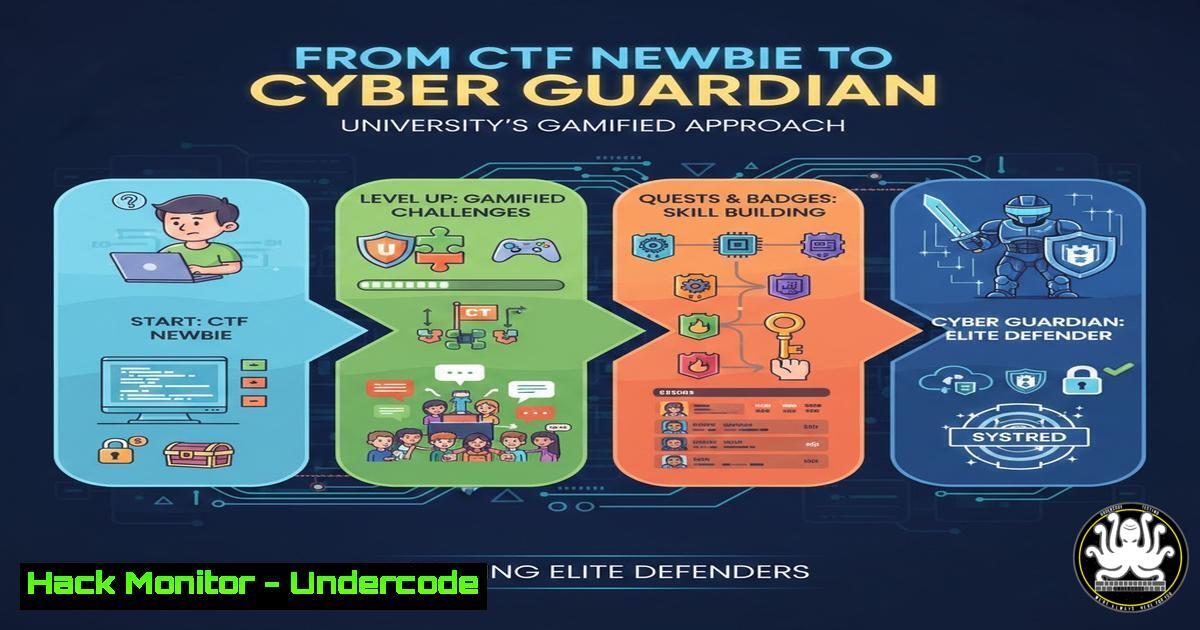
Capture The Flag (CTF) competitions have evolved from niche hacking games into a critical proving ground for the next generation of cybersecurity professionals. By simulating real-world attack scenarios in a controlled environment, platforms like HackTheBox provide unparalleled hands-on experience. The recent success of the Universidad Internacional de La Rioja (UNIR) team, as highlighted by academic director and Offensive Security Engineer Elisa Alises Núñez, underscores the powerful synergy between structured academic curricula and practical, gamified learning in building formidable cyber defenses.
Learning Objectives:
- Understand the core components and strategic value of CTF competitions in professional cybersecurity training.
- Learn fundamental offensive security techniques commonly tested in CTFs, including privilege escalation and web app exploitation.
- Develop a roadmap for integrating CTF practice into a structured learning path to bridge the gap between theory and real-world skills.
You Should Know:
- The Anatomy of a CTF: More Than Just Points
A CTF competition is a structured security contest where participants solve challenges to find hidden “flags” (specific strings of text). These challenges are categorized into domains like Web Exploitation, Binary Reverse Engineering, Cryptography, Forensics, and Open-Source Intelligence (OSINT). Success requires a mindset that blends systematic methodology with creative problem-solving.
Step‑by‑step guide explaining what this does and how to use it.
Step 1: Reconnaissance. Before attacking, you must understand the target. Use tools like `nmap` for network scanning.
Linux Command: `sudo nmap -sV -sC -O
Step 2: Enumeration. Discover services, users, and potential entry points. For a discovered web server, you might use `gobuster` to find hidden directories.
Linux Command: `gobuster dir -u http://
Step 3: Exploitation. Leverage a discovered vulnerability to gain initial access. This could involve exploiting a misconfigured SQL database.
Example SQL Injection Payload: `’ OR ‘1’=’1′ –`
Step 4: Privilege Escalation. The core of many challenges. After gaining a user foothold, seek to become root or Administrator.
Linux Enumeration Script: Run `linpeas.sh` (Linux Privilege Escalation Awesome Script) to automate the search for misconfigurations.
Windows Command: `whoami /priv` to check your current user’s privileges.
- Building Your Home Lab: From Theory to Practice
Academic theory provides the foundation, but muscle memory is built in the lab. Setting up a safe, isolated environment is crucial for practicing techniques learned in a degree program or from CTF walkthroughs.
Step‑by‑step guide explaining what this does and how to use it.
Step 1: Choose a Virtualization Platform. Install VirtualBox or VMware Workstation Player. These allow you to run virtual machines (VMs) isolated from your host system.
Step 2: Deploy a Vulnerable Machine. Download pre-configured vulnerable VMs from platforms like HackTheBox (starting with “Starting Point” machines), VulnHub, or the OWASP Broken Web Applications project.
Step 3: Configure Host-Only Networking. In your virtualization software, set the network adapter for your attack VM (e.g., Kali Linux) and the target VM to a “Host-Only” network. This creates an isolated network between them, preventing accidental attacks on real systems.
Step 4: Install Essential Tools on Your Attack VM. A Kali Linux VM comes pre-loaded, but ensure key suites are updated:
Linux Command: `sudo apt update && sudo apt upgrade -y`
3. Mastering the Privilege Escalation Loop
The most common CTF and real-world post-compromise activity is privilege escalation. This involves a cyclical process of enumeration, hypothesis, testing, and access.
Step‑by‑step guide explaining what this does and how to use it.
Step 1: Automated Enumeration. As mentioned, run scripts like `linpeas` for Linux or `winpeas` for Windows. Analyze the colorful output for high-risk findings (red/yellow).
Step 2: Manual Verification. Don’t trust automation blindly. If a script finds a writable system file, verify it.
Linux Command: `ls -la /path/to/file` to check permissions.
Windows Command: `icacls C:\Windows\System32\file.dll` to view ACLs.
Step 3: Exploit Misconfiguration. A classic Linux example is a SUID binary that allows command injection.
Test: `find / -perm -4000 -type f 2>/dev/null` finds all SUID files.
Exploit: If you find a SUID bash, run `/usr/bin/bash -p` to spawn a shell with preserved privileges (-p).
Step 4: Maintain Access & Pivot. Once you have root, create a new user or SSH key for persistence, then use the compromised host to attack other machines on the network (pivoting).
4. Web Application Exploitation Fundamentals
Web challenges dominate many CTFs. Understanding OWASP Top 10 vulnerabilities is non-negotiable.
Step‑by‑step guide explaining what this does and how to use it.
Step 1: Intercept with a Proxy. Use Burp Suite or OWASP ZAP. Configure your browser to proxy traffic through it (e.g., 127.0.0.1:8080).
Step 2: Test for Injection Flaws.
SQLi: Use `sqlmap` or manual testing with payloads like ' UNION SELECT username, password FROM users--.
Command Injection: Try appending `; whoami` or `| cat /etc/passwd` to URL parameters.
Step 3: Examine Client-Side Code. Always view the page source. Hidden form fields, disabled JavaScript input validation, or comments can reveal clues.
Step 4: Manipulate Sessions. Decode cookies (often Base64) or tamper with JWT tokens if used.
- The Blue Team Perspective: Learning from the Attack
The ultimate goal of offensive training is to build better defenders. Every exploit learned should inform a mitigation strategy.
Step‑by‑step guide explaining what this does and how to use it.
Step 1: From Exploit to Mitigation. If you exploited a vulnerable SMB service (e.g., EternalBlue), the mitigation is to disable SMBv1 or apply patches.
Windows Command (Admin): `Disable-WindowsOptionalFeature -Online -FeatureName SMB1Protocol`
Step 2: Harden System Configurations. Use the findings from privilege escalation scripts to harden systems.
Linux: Remove unnecessary SUID bits: `sudo chmod u-s /path/to/binary`
Windows: Adhere to the Principle of Least Privilege via Group Policy.
Step 3: Implement Logging & Monitoring. If you used a specific technique, ensure logs would catch it.
Linux Audit Command: Configure `auditd` to monitor critical files: `sudo auditctl -w /etc/passwd -p wa -k user_changes`
What Undercode Say:
- The Pedagogue’s Edge: The fusion of academic direction (as provided by experts like Elisa Alises Núñez) with competitive platforms (like HackTheBox) creates a potent educational model. Theory provides the “why,” and CTFs provide the relentless, pressure-filled “how.”
- The Team as a Security Unit: Felix Retamar de Lima’s emphasis on teamwork mirrors modern Security Operations Centers (SOCs). Effective cybersecurity is rarely a solo endeavor; it requires collaboration, diverse skill sets, and clear communication under pressure, all of which are forged in team-based CTFs.
The analysis reveals that modern cybersecurity education is undergoing a necessary revolution. The traditional, purely theoretical model is insufficient against adaptive adversaries. The UNIR case study demonstrates that when academia embraces the tools and culture of the offensive security community—gamifying learning through CTFs—it produces graduates like Felix and Andrei who are not just certified, but combat-ready. They have already performed systematic vulnerability discovery, exploitation, and mitigation in lab environments that closely mimic real networks. This drastically reduces the “time to productivity” in a professional role, whether on a red, blue, or purple team. The emotional driver of competition and public recognition, evident in the LinkedIn posts, further accelerates skill acquisition and professional identity formation.
Prediction:
The integration of gamified, CTF-style training into formal academic and corporate training programs will become the standard within five years. We will see a rise in “Cybersecurity Simulation Platforms” that go beyond standalone challenges to offer entire virtual corporate networks for coordinated red team/blue team exercises, automatically scored and aligned with industry frameworks like NIST or MITRE ATT&CK. This will blur the line between training and work, creating a continuous upskilling loop. Furthermore, the success of national CTF teams, like the Spanish team trained by professionals such as Alises Núñez, will catalyze government and private sector investment in these platforms as a matter of national security and economic competitiveness, formalizing the path from collegiate CTF champion to cyber guardian.
▶️ Related Video (78% Match):
🎯Let’s Practice For Free:
IT/Security Reporter URL:
Reported By: Elisa Alises – Hackers Feeds
Extra Hub: Undercode MoN
Basic Verification: Pass ✅


