
Listen to this Post
Introduction:
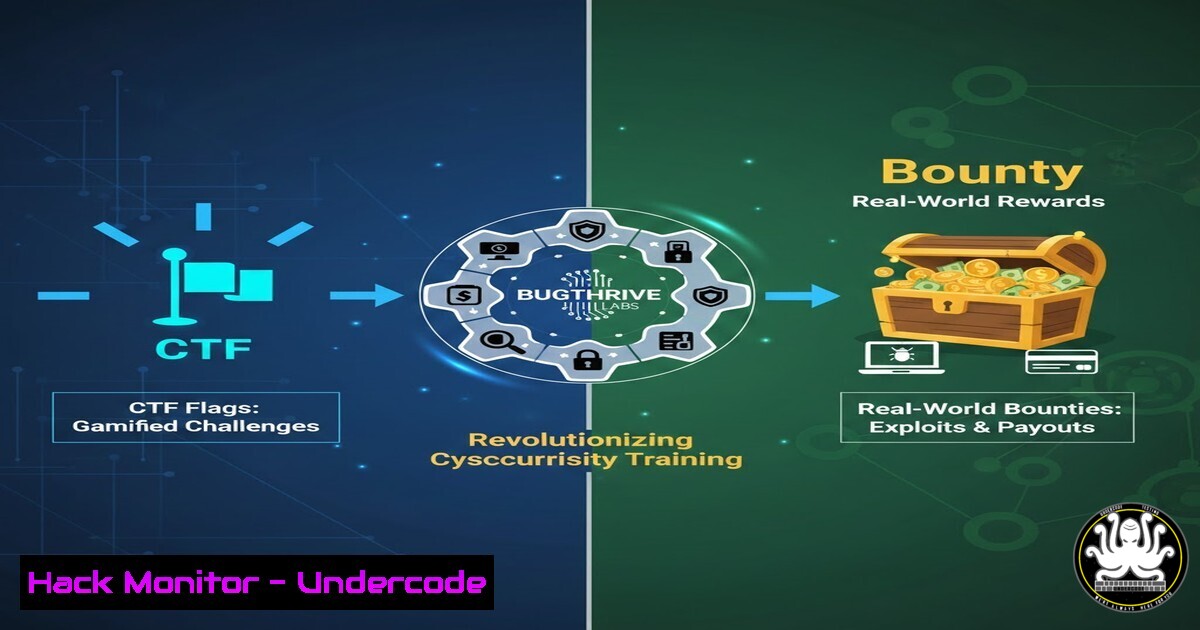
Bugthrive Labs emerges as a transformative platform in cybersecurity education, shifting focus from capture-the-flag (CTF) puzzles to realistic bug bounty and web penetration testing scenarios. Founded by a seasoned penetration tester, it bridges the gap between theoretical knowledge and the nuanced art of discovering high-impact vulnerabilities in live environments, preparing security professionals for actual threat landscapes.
Learning Objectives:
- Understand the critical difference between theoretical vulnerability knowledge and practical exploitation in real-world systems.
- Develop a methodological approach for conducting realistic web application and API penetration tests.
- Learn to configure and use essential security tools within a controlled, scenario-based lab environment.
You Should Know:
1. Building Your Real-World Lab Environment
A proper testing environment is crucial. While platforms like Bugthrive Labs provide hosted scenarios, understanding local setup is key for personal practice.
Step‑by‑step guide explaining what this does and how to use it.
On Linux (Kali):
 Update system and install Docker for containerized vulnerable apps
sudo apt update && sudo apt upgrade -y
sudo apt install docker.io docker-compose -y
sudo systemctl start docker
sudo systemctl enable docker

Clone a vulnerable web app repository (e.g., OWASP Juice Shop)
git clone https://github.com/juice-shop/juice-shop.git
cd juice-shop
sudo docker-compose up -d
On Windows (via PowerShell as Admin):
 Enable Hyper-V for virtual machines
Enable-WindowsOptionalFeature -Online -FeatureName Microsoft-Hyper-V -All

Install and run a pre-built VM from VulnHub using VirtualBox
 Download a VM (e.g., Metasploitable2) and import via VirtualBox GUI.
This sets up a local, isolated network where you can practice attacks without legal concerns. Docker containers or VMs simulate real services with intentional flaws.
2. Reconnaissance: Mapping the Attack Surface
Effective reconnaissance uncovers hidden endpoints, subdomains, and technologies.
Step‑by‑step guide explaining what this does and how to use it.
 Use subdomain enumerators (Linux)
sudo apt install sublist3r amass
sublist3r -d example.com -o subdomains.txt
amass enum -d example.com -o amass_results.txt

Port scanning with Nmap
nmap -sV -sC -O -p- -T4 target_ip -oN full_scan.txt
 -sV: Version detection, -sC: Default scripts, -O: OS detection, -p-: All ports

For API discovery, use tools like katana
go install github.com/projectdiscovery/katana/cmd/katana@latest
katana -u https://target.com -o endpoints.txt
This phase identifies live assets and potential entry points, mimicking the initial stage of a real bug bounty hunt.
3. Exploiting Injection Flaws: SQLi and Command Injection
Injection remains a top risk. Understanding manual exploitation is vital beyond automated tools.
Step‑by‑step guide explaining what this does and how to use it.
SQL Injection (SQLi):
 Manual detection with curl
curl "https://target.com/login?user=admin' OR '1'='1&pass=anything"
 Use sqlmap for automated testing (after authorization)
sqlmap -u "https://target.com/vuln.php?id=1" --batch --risk=3 --level=5
Command Injection (Linux example):
 Testing in a web parameter
curl "https://target.com/ping?ip=127.0.0.1; whoami"
 If vulnerable, you might see server user output.
Always test in authorized environments. This demonstrates how input validation failures lead to data breaches or system compromise.
4. API Security Testing: Beyond RESTful Assumptions
Modern apps rely on APIs (GraphQL, REST) which introduce unique vulnerabilities.
Step‑by‑step guide explaining what this does and how to use it.
 Install and use tools for API testing
sudo apt install ffuf
 Fuzzing API endpoints
ffuf -u https://target.com/api/v1/FUZZ -w /usr/share/wordlists/api_list.txt -recursion

For GraphQL introspection attacks
curl -X POST https://target.com/graphql -H "Content-Type: application/json" \
-d '{"query":"{__schema{types{name fields{name args{name description}description}}}}"}'

Testing for Broken Object Level Authorization (BOLA)
 Change object ID in request: /api/user/12345 -> /api/user/67890 (if unauthorized access, it's a flaw)
This highlights the importance of testing authorization mechanisms and endpoint exposure.
5. Cloud Hardening: Securing Misconfigured Services
Cloud misconfigurations are a leading cause of breaches. Learn to identify and fix them.
Step‑by‑step guide explaining what this does and how to use it.
AWS S3 Bucket Testing:
 Check for publicly readable buckets using awscli
aws s3 ls s3://bucket-name --no-sign-request
 If accessible, it's misconfigured. Harden by:
aws s3api put-bucket-acl --bucket bucket-name --acl private
Azure Storage Enumeration:
 Use tool like MicroBurst to check for blobs
Import-Module .\MicroBurst.psm1
Invoke-EnumerateAzureBlobs -Base companyname
Regular audits using infrastructure-as-code (IaC) scanners like Checkov or Terrascan are recommended for mitigation.
6. Vulnerability Mitigation: Patching and Reporting
Finding flaws is half the job; effective reporting and remediation are critical.
Step‑by‑step guide explaining what this does and how to use it.
Example: Patching a SQLi vulnerability in a PHP app.
// Vulnerable code
$query = "SELECT  FROM users WHERE id = " . $_GET['id'];

// Mitigated using prepared statements (PHP/MySQLi)
$stmt = $conn->prepare("SELECT  FROM users WHERE id = ?");
$stmt->bind_param("i", $_GET['id']);
$stmt->execute();
Writing a bug bounty report:
1. Clear vulnerability description.
2. Impact: CVSS score, data exposure.
3. Steps to Reproduce: Detailed, with screenshots.
4. Suggested Fix: Code snippets or configuration changes.
This ensures clear communication to development teams for swift remediation.
- Advanced Manual Testing: Logic Flaws and Business Workflows
Automated tools miss logic flaws, such as flawed payment processes or privilege escalation.
Step‑by‑step guide explaining what this does and how to use it.
Testing for Improper Access Control:
- Log in as a low-privilege user and capture session cookie.
- Modify parameters in HTTP requests (e.g., `user_id=1001` to
user_id=1000) using Burp Suite. - Replay the request to see if you can access another user’s data.
Business Logic Bypass:
- In an e-commerce lab, add items to cart, intercept “apply discount” request, and change discount code to an expired one or modify total price.
- Use tools like Burp Suite Repeater to manipulate sequences.
This requires understanding application flow, emphasizing the value of platforms like Bugthrive Labs for simulating such scenarios.
What Undercode Say:
- Key Takeaway 1: Real-world cybersecurity proficiency demands exposure to environments where vulnerabilities are embedded in complex, realistic applications—not just isolated challenges. Platforms focusing on scenario-based learning accelerate the development of critical thinking and methodological rigor.
- Key Takeaway 2: The integration of cloud security, API testing, and manual exploitation techniques into training curricula is non-negotiable for modern penetration testers, as the attack surface continues to evolve beyond traditional web apps.
Analysis: The launch of Bugthrive Labs signals a maturation in cybersecurity education, addressing a gap where many practitioners rely on tool automation without understanding underlying vulnerabilities. By simulating actual bug bounty environments, it fosters a deeper comprehension of how flaws like business logic errors or misconfigurations arise in development lifecycles. This hands-on approach not only enhances technical skills but also improves vulnerability reporting and remediation strategies, ultimately contributing to more secure software. However, learners must complement such platforms with foundational knowledge of networking, programming, and ethical guidelines to avoid superficial learning.
Prediction:
The rise of realistic training platforms like Bugthrive Labs will significantly elevate the overall skill level of the cybersecurity workforce, leading to more effective bug bounty programs and reduced time-to-patch for organizations. In the next 3-5 years, we can expect a decline in easily exploitable, common vulnerabilities (e.g., basic SQLi) as testers become adept at finding them, but a concurrent increase in discoveries of complex, chained exploits and logic flaws. This will push developers to adopt secure-by-design principles and advanced code analysis tools, ultimately raising the security baseline across industries. However, it may also lead to more sophisticated attacks as knowledge disseminates, necessitating continuous innovation in defensive technologies and training methodologies.
▶️ Related Video (82% Match):
🎯Let’s Practice For Free:
IT/Security Reporter URL:
Reported By: Akashsuman1 Live – Hackers Feeds
Extra Hub: Undercode MoN
Basic Verification: Pass ✅


