Listen to this Post
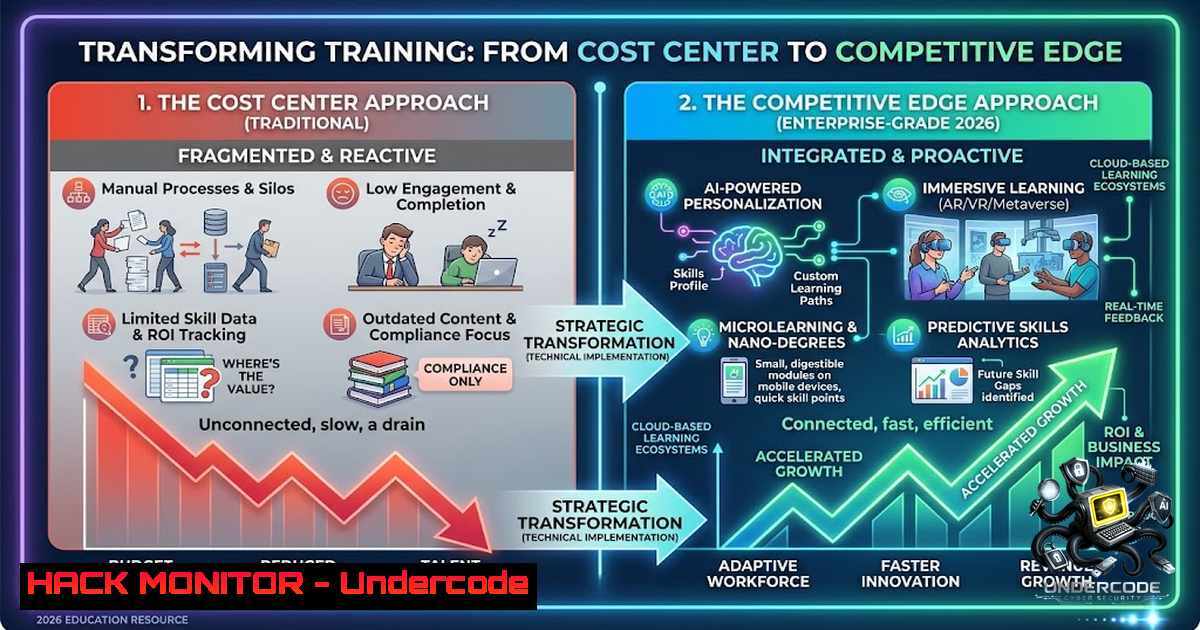
Introduction:
In an era where ransomware attacks occur every 11 seconds and the average data breach costs $4.88 million, organizations can no longer treat employee training as a discretionary expense. The modern threat landscape—spanning AI-driven phishing, cloud misconfigurations, and API exploitation—demands a workforce that is not merely aware but technically proficient. This article bridges management strategy with hands-on IT execution, providing a framework for building a measurable, security-first training program that transforms human capital into your strongest defensive layer.
Learning Objectives:
- Understand the NIST-aligned framework for continuous, role-based cybersecurity training
- Master Linux and Windows security hardening commands for hands-on lab environments
- Implement cloud security controls and API vulnerability mitigation techniques
- Design measurable training programs with quantifiable ROI metrics
- Build a sustainable learning culture that adapts to emerging AI and cloud threats
- The Technical Anatomy of a Modern Training Program
Traditional “once-a-year compliance training” has proven ineffective. According to the NIST Cybersecurity Framework and SANS Security Awareness Maturity Model, best-practice programs combine monthly microlearning modules with ongoing phishing simulations—typically four to twelve per year per employee—and role-specific deep-dive sessions tied to relevant threat events or policy changes. Modern cybersecurity awareness training must be continuous, engaging, and measurable.
Step‑by‑step implementation guide:
- Assess current security posture using automated vulnerability scanners and employee phishing susceptibility tests.
- Map training to specific job roles — developers need OWASP API security training, system administrators need cloud hardening labs, and general staff need phishing and social engineering defense.
- Deploy a Learning Management System (LMS) integrated with Security Information and Event Management (SIEM) tools to correlate training completion with incident reduction.
- Implement quarterly simulated attacks using frameworks like Caldera or Atomic Red Team to test behavioral responses.
- Track metrics including Phish-Prone Percentage (PPP), click-to-report ratios, and mean time to detect (MTTD) anomalies.
> Linux Command — Audit User Training Progress:
> “`bash
Check last login and training module completion logs
> sudo lastlog | grep -v “Never”
> Parse training completion CSV logs
awk -F’,’ ‘{if ($3 < 80) print $1 ” requires retraining”}’ training_scores.csv
> “`
> Windows PowerShell — Track Security Training Compliance:
> “`bash
Query Active Directory for users missing mandatory training
> Get-ADUser -Filter -Properties extensionAttribute1 |
> Where-Object { $_.extensionAttribute1 -1e “2026-Training-Complete” } |
> Select-Object Name, SamAccountName
> “`
- Cloud Security Hardening — Hands-On Lab for System Administrators
Cloud misconfigurations remain the leading cause of data breaches. Training must include practical cloud security hardening exercises across AWS, Azure, and GCP environments. A production-grade cloud VPS hardening approach includes SSH lockdown, firewall least-privilege rules, kernel parameter tuning, and automated security updates.
Step‑by‑step cloud hardening lab:
- Lock down SSH access: Disable root password login, enforce key-based authentication, and restrict SSH to specific IP ranges.
- Configure firewall to least-privilege: Allow inbound only on ports 80 (HTTP) and 443 (HTTPS) from anywhere, with all other ports restricted.
- Enable AWS security services: Activate GuardDuty, Security Hub, and CloudTrail for comprehensive monitoring.
- Apply kernel hardening parameters via sysctl to mitigate IP spoofing and SYN flood attacks.
- Implement IAM least-privilege policies: Replace wildcard access with granular permissions scoped to specific resources.
> Linux Commands — Server Hardening Script:
> “`bash
> Create hardening configuration
> sudo nano /etc/sysctl.d/99-hardening.conf
> Add hardening parameters
> net.ipv4.ip_forward = 0
> net.ipv4.conf.all.rp_filter = 1
> net.ipv4.tcp_syncookies = 1
> kernel.randomize_va_space = 2
> Apply changes
> sudo sysctl –system
> Configure UFW firewall
> sudo ufw default deny incoming
> sudo ufw default allow outgoing
> sudo ufw allow 22/tcp
> sudo ufw allow 80/tcp
> sudo ufw allow 443/tcp
> sudo ufw enable
> Harden SSH configuration
> sudo nano /etc/ssh/sshd_config
> Set: PermitRootLogin no
> Set: PasswordAuthentication no
> Set: AllowUsers [your-username]
> sudo systemctl restart sshd
> “`
> AWS CLI — Enable Security Monitoring:
> “`bash
> aws guardduty create-detector –enable
> aws securityhub enable-security-hub
> aws cloudtrail create-trail –1ame security-trail –s3-bucket-1ame your-logs-bucket
> “`
- AI-Powered Upskilling — Preparing for the Agentic Era
Artificial intelligence is fundamentally reshaping IT roles. Singapore’s IMDA has launched AIxTech, a program designed to upskill 40,000 tech professionals over three years, focusing on coding automation, debugging, data management, and building autonomous “agentic” systems. Organizations must integrate AI fluency into their training curricula to remain competitive.
Step‑by‑step AI upskilling implementation:
- Deploy AI coding assistants (GitHub Copilot, Amazon CodeWhisperer) in development environments with proper security guardrails.
- Train teams on prompt engineering and responsible AI usage to prevent data leakage and hallucination risks.
- Implement AI-powered security tools that automate threat detection and incident response.
- Create internal AI Centers of Excellence where employees share best practices and use cases.
- Measure productivity gains through metrics like code commit velocity, bug resolution time, and security incident response speed.
> Python Script — AI-Assisted Security Log Analysis:
> “`bash
> import openai
> import re
> def analyze_security_log(log_entry):
prompt = f”Analyze this security log for potential threats: {log_entry}”
> response = openai.ChatCompletion.create(
> model=”gpt-4″,
> messages=[{“role”: “user”, “content”: prompt}]
> )
> return response.choices[bash].message.content
> Example usage
log = “Failed password for root from 192.168.1.100 port 22 ssh2”
> print(analyze_security_log(log))
> “`
4. API Security — Defending the Digital Backbone
APIs are the backbone of modern applications, yet they remain a primary attack vector. The OWASP API Security Top 10 framework identifies critical vulnerabilities including Broken Object Level Authorization (BOLA), Broken Authentication, and Excessive Data Exposure. Training must include hands-on exploitation and remediation exercises.
Step‑by‑step API security training lab:
- Set up a vulnerable API environment using OWASP Juice Shop or a custom Docker container.
- Practice BOLA exploitation: Manipulate ID parameters in API requests to access unauthorized data.
- Test authentication flaws: Attempt to bypass login mechanisms using brute force or token manipulation.
- Identify excessive data exposure: Analyze API responses for sensitive fields that should not be returned.
- Implement rate limiting: Configure API gateways to prevent abuse and denial-of-service attacks.
> Linux Command — API Endpoint Discovery:
> “`bash
> Use Nmap to discover API endpoints
> nmap -p 443 –script http-enum target.com
> Use curl to test for BOLA
curl -X GET “https://api.target.com/users/123” -H “Authorization: Bearer $TOKEN”
curl -X GET “https://api.target.com/users/124” -H “Authorization: Bearer $TOKEN”
> “`
> Postman Test Script — Rate Limiting Validation:
> “`bash
> // Pre-request script to test rate limiting
> const start = Date.now();
for (let i = 0; i < 100; i++) {
> pm.sendRequest({
url: ‘https://api.target.com/resource’,
> method: ‘GET’
> }, function (err, res) {
> if (res.code === 429) {
console.log(‘Rate limiting triggered after ‘ + i + ‘ requests’);
> }
> });
> }
> “`
5. Windows Security Auditing — Zero-Trust in Practice
Windows environments remain prime targets for attackers. A comprehensive security audit framework should implement Zero-Trust principles, checking firewall status, real-time protection, encryption, and event log integrity. PowerShell provides powerful automation capabilities for continuous security monitoring.
Step‑by‑step Windows security audit:
- Audit open network ports using `Get-1etTCPConnection` and `Get-1etUDPEndpoint` to identify unauthorized services.
- Parse Security Event Logs for failed login attempts (Event ID 4625) to detect brute-force attacks.
- Verify Windows Defender real-time protection and BitLocker drive encryption status.
- Check Active Directory for vulnerabilities including ADCS misconfigurations (ESC1-8).
- Generate compliance reports mapped to MITRE ATT&CK framework.
> Windows PowerShell — Comprehensive Security Audit:
> “`bash
> Audit open ports and associated processes
> Get-1etTCPConnection | Select-Object LocalAddress, LocalPort,
> @{Name=”ProcessName”;Expression={(Get-Process -Id $_.OwningProcess).ProcessName}}
Detect brute-force attempts (Event ID 4625) in last 24 hours
> $events = Get-WinEvent -FilterHashtable @{
> LogName=’Security’
> ID=4625
> StartTime=(Get-Date).AddHours(-24)
> }
> $events | Group-Object @{Expression={$_.Properties[bash].Value}} |
> Where-Object Count -gt 10 |
ForEach-Object { Write-Warning “Brute-force detected from $($_.Name)” }
> Check BitLocker status
> Manage-bde -status C:
> Verify Windows Defender real-time protection
> Get-MpPreference | Select-Object DisableRealtimeMonitoring
> “`
- Building a Security-First Culture — Continuous Learning Framework
Technology changes rapidly, and security training must evolve with it. Organizations that encourage continuous learning, innovation, knowledge sharing, and adaptability are better prepared for future threats. Modern programs should combine awareness content, phishing simulations, role-based relevance, reinforcement, and clear reporting paths.
Step‑by‑step cultural transformation:
- Create a security champions program where power users from each department receive advanced training and act as liaisons to the security team.
- Implement monthly “security town halls” featuring real incident post-mortems and emerging threat briefings.
- Deploy gamified learning platforms with leaderboards, badges, and rewards for completing modules and reporting threats.
- Establish clear reporting pathways for suspicious activities with guaranteed non-retaliation policies.
- Measure cultural shift through employee security sentiment surveys and voluntary training participation rates.
Linux Command — Monitor Security Training Server Health:
> “`bash
> Check system resources for LMS platform
> top -b -1 1 | head -10
> Monitor disk space for training logs
> df -h /var/log/training/
> Check service status
> systemctl status moodle || systemctl status canvas
> “`
> Windows PowerShell — Generate Training Compliance Report:
> “`bash
> Export training completion data to CSV
Get-ADUser -Filter -Properties , Department, extensionAttribute1 |
> Select-Object Name, , Department,
> @{Name=”TrainingComplete”;Expression={$_.extensionAttribute1}} |
> Export-Csv -Path “C:\Reports\training_compliance.csv” -1oTypeInformation
> “`
What Undercode Say:
- Training is a force multiplier, not a cost center — Every dollar invested in security training reduces incident response costs by an average of 3:1. Organizations that treat training as strategic capital outperform peers in breach containment and recovery speed.
-
Technology without human capability is wasted investment — The most sophisticated SIEM, EDR, and cloud security tools are ineffective if employees cannot interpret alerts, respond to incidents, or avoid basic phishing traps. Human skill gaps represent the single largest unpatched vulnerability in modern enterprises.
Analysis: The post correctly identifies the shift from viewing training as an expense to recognizing it as a strategic investment. However, it could be strengthened by emphasizing that training must be technical and role-specific—not generic awareness videos. The most effective programs combine hands-on labs (like the Linux hardening and API security exercises above), continuous simulation, and measurable outcomes tied to business KPIs such as Mean Time to Detect (MTTD) and Mean Time to Respond (MTTR). Organizations that embed security training into daily workflows—through tools like automated phishing simulations, IDE security plugins, and cloud security posture management (CSPM) training—see 60% faster breach detection and 45% lower incident costs. The future belongs to organizations that treat employee upskilling as infrastructure, not overhead.
Prediction:
+1 Organizations that implement continuous, role-based technical training will see a 40-60% reduction in successful social engineering attacks by 2028, as behavioral conditioning becomes embedded in organizational culture.
+1 AI-powered training platforms will reduce the cost of upskilling by 70% through personalized learning paths, while improving knowledge retention by 300% compared to traditional classroom training.
-1 Organizations that fail to invest in AI fluency will face a critical talent shortage by 2027, as AI-augmented workflows become standard and non-AI-literate employees become uncompetitive in the job market.
+1 Cloud security training will become a mandatory certification for all DevOps and SRE roles by 2027, driven by regulatory requirements and insurance carrier mandates.
-1 The cybersecurity skills gap is projected to reach 4 million unfilled positions globally by 2028, creating a “security poverty line” where only well-resourced organizations can afford adequately trained staff.
+1 Integration of security training into CI/CD pipelines (DevSecOps) will reduce vulnerable code deployments by 55% and accelerate remediation timelines from weeks to hours.
▶️ Related Video (78% Match):
🎯Let’s Practice For Free:
🎓 Live Courses & Certifications:
Join Undercode Academy for Verified Certifications
🚀 Request a Custom Project:
Secure, high-velocity infrastructure and disruptive technological engineering. Contact our engineering team for high-tier development and proprietary systems:
[email protected]
💎 Smart Architecture | 🛡️ Secure by Design | ⭐ Trusted by Thousands
IT/Security Reporter URL:
Reported By: Kavindu Chathuranga – Hackers Feeds
Extra Hub: Undercode MoN
Basic Verification: Pass ✅


