Listen to this Post
Introduction:
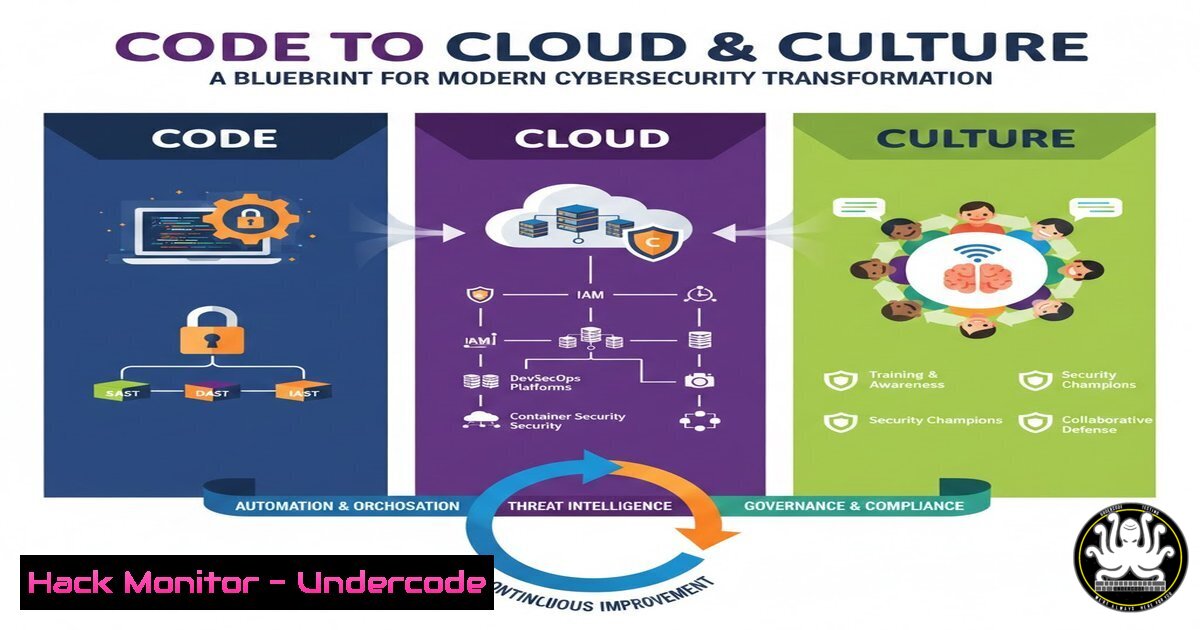
In today’s rapidly evolving threat landscape, cybersecurity success hinges on moving beyond siloed tools to a holistic strategy encompassing technical excellence, empowered teams, and inclusive leadership. The modern CISO must architect a resilient security posture that spans from code development to cloud infrastructure while fostering a culture where security is an enablement function, not a bottleneck. This article deconstructs a real-world leadership journey to extract actionable technical and managerial frameworks for building a world-class cyber defense.
Learning Objectives:
- Implement and leverage Cloud Security Posture Management (CSPM) and “code-to-cloud” visibility tools like Wiz to identify and remediate critical misconfigurations.
- Apply structured decision-making frameworks like the Analytic Hierarchy Process (AHP) to prioritize complex security transformations.
- Build a security enablement model that empowers developer and engineering teams through agency, clear tooling, and career coaching.
You Should Know:
1. Mastering Code-to-Cloud Security with CSPM Tools
The cornerstone of modern cloud security is continuous, automated assessment of your entire environment—from infrastructure as code (IaC) templates to running cloud workloads. Tools like Wiz provide agentless scanning to build a unified risk graph, connecting vulnerabilities, misconfigurations, secrets, and permissions across multi-cloud environments.
Step‑by‑step guide:
Step 1: Onboarding Cloud Accounts: Integrate your cloud providers (AWS, Azure, GCP). For AWS, this typically involves deploying a CloudFormation stack that creates a read-only IAM role for the CSPM tool.
`aws cloudformation create-stack –stack-name WizSecurityReadOnly –template-url https://wiz-templates.s3.amazonaws.com/cloudformation/aws-readonly.json –capabilities CAPABILITY_NAMED_IAM`
Step 2: Configure Scanning Scope: Define which resources are in scope (e.g., all production accounts, excluding specific development or sandbox networks). Establish scanning frequency (continuous for new resources, periodic deep scans).
Step 3: Prioritize Critical Findings: The tool will surface thousands of findings. Focus on critical, exploitable risks. Use the tool’s built-in context (e.g., “Internet-exposed VM with critical vulnerability”) to filter. A common first query is to find all publicly accessible storage buckets or compute instances.
Step 4: Integrate into CI/CD & Ticketing: Automate remediation. Break the build if critical IaC misconfigurations are detected (e.g., an S3 bucket defined as `”PublicAccessBlockConfiguration”` is set to false). Pipe critical runtime findings directly to Jira or ServiceNow for the cloud operations team.
Step 5: Run Internal Capture The Flag (CTF): As highlighted, an internal CTF using the tool’s data model is powerful. Create a sandbox environment with intentional misconfigurations (e.g., a Kubernetes pod with excessive permissions, a database with public access) and have developers and engineers compete to find them. This builds engagement and practical skills.
- Implementing the Analytic Hierarchy Process (AHP) for Security Prioritization
Security leaders are bombarded with competing initiatives: implement zero trust, upgrade SIEM, consolidate tools, train developers. The AHP framework provides a mathematical, pairwise comparison method to weigh conflicting criteria (cost, risk reduction, effort, strategic alignment) and objectively select the highest-impact project.
Step‑by‑step guide:
Step 1: Define Goal & Alternatives: Clearly state the goal (e.g., “Choose our top security initiative for H1”). List alternatives (e.g., Project A: Deploy Runtime Application Self-Protection (RASP); Project B: Roll out organization-wide phishing simulation; Project C: Implement secrets management).
Step 2: Establish Criteria: Select 4-6 decision criteria. Common ones are: Expected Risk Reduction, Implementation Cost (FTE & $), Time to Deploy, Alignment to Business Goals, Team Readiness.
Step 3: Perform Pairwise Comparisons: For each criterion, compare every project pair. Use a scale (1=equal importance, 9=extremely more important). Answer: “For the goal of choosing a top initiative, regarding Expected Risk Reduction, is Project A more important than Project B, and by how much?” Do this for all pairs across all criteria. Software like `ExpertChoice` or even a spreadsheet can manage the matrix math.
Step 4: Calculate Priorities & Check Consistency: The AHP algorithm yields a priority weight for each alternative. It also produces a consistency ratio (CR). A CR > 0.10 suggests your pairwise comparisons were random and should be revisited. This scientific approach depoliticizes decision-making.
3. Shifting Security Left with Enablement, Not Enforcement
A “secure-by-design” culture is achieved when developers have the agency and tools to build securely from the start. This requires security teams to become internal consultants and platform builders.
Step‑by‑step guide:
Step 1: Provide Self-Service Guardrails: Instead of manual security reviews, provide paved-path security tools. Integrate Static Application Security Testing (SAST) and Software Composition Analysis (SCA) directly into pull requests. Use comments from bots like `github-actions` or `GitLab SAST bot` to guide fixes.
Step 2: Distribute Security Champions: Formalize a security champion program in each dev squad. Train them on basic threat modeling and tool use. Give them a lightweight mandate: be the first point of contact for security questions in their team.
Step 3: Co-Create Career Growth Frameworks: Work with HR and engineering leadership to embed security competencies into engineering career ladders. Define what “security proficiency” looks like for a Senior vs. Principal Engineer. This makes security a recognized and rewarded skill.
- Hardening Cloud Workloads: Critical Commands for Immediate Assessment
While CSPM tools automate much of this, understanding the underlying commands is crucial for deep diagnostics and scripted remediation.
Step‑by‑step guide (Linux/Cloud CLI Focus):
Check for Overly Permissive IAM Roles (AWS):
`aws iam get-account-authorization-details –filter “Role”` – Review the attached policies for each role, looking for wildcards ("Action": "" or "Resource": "").
Audit Unencrypted Storage (AWS S3 & EBS):
`aws s3api list-buckets –query “Buckets[].Name”` followed by `aws s3api get-bucket-encryption –bucket-name
For EBS volumes: `aws ec2 describe-volumes –filters Name=encrypted,Values=false –query “Volumes[].{ID:VolumeId,AZ:AvailabilityZone}”`
Scan for Publicly Accessible Resources (Azure):
`az network nsg list –query “[?securityRules[?destinationPortRange==’3389′ || destinationPortRange==’22’] && securityRules[?access==’Allow’ && direction==’Inbound’ && sourceAddressPrefix==”]].{Name:name, ResourceGroup:resourceGroup}”`
5. Building an Inclusive Security Culture: The Neurodiversity Imperative
A diverse team is a more secure team. Neurodivergent individuals (e.g., those with ADHD, Autism) often possess exceptional pattern recognition, deep focus, and systematic thinking—traits invaluable for threat hunting and code review. An inclusive environment unlocks this talent.
Step‑by‑step guide:
Step 1: Foster Psychological Safety: In team meetings, use structured sharing (e.g., “round-robin” style) to ensure all voices are heard. Explicitly state that asking “basic” questions is encouraged.
Step 2: Provide Multiple Communication Channels: Not everyone thrives in live brainstorming. Use asynchronous tools like shared documents (Confluence, Notion) for initial idea gathering before meetings.
Step 3: Standardize and Document Processes: Clear, written runbooks and playbooks (e.g., for incident response) reduce ambiguity and anxiety, allowing neurodivergent team members to excel and contribute predictably.
Step 4: Offer Flexible Work Arrangements: Flexibility in work hours and environment can be crucial for focus and managing sensory inputs, directly impacting productivity and job satisfaction.
What Undercode Say:
- Technical Tooling is Futile Without Cultural Adoption: The most sophisticated Wiz rollout fails if developers see it as a compliance checkbox. True security transformation occurs when tools are introduced through partnership, with clear “what’s in it for me” for engineers—like reducing their on-call pager fatigue from preventable incidents.
- Leadership is an Invisible Attack Surface: The impact of authentic, empathetic leadership on an organization’s security posture is profound but often overlooked. A team that feels psychologically safe is more likely to report near-misses, ask for help on security design, and challenge unsafe practices—creating a robust human layer of defense.
Prediction:
The future of cybersecurity leadership will bifurcate. One path will remain purely technical, focusing on AI-driven threat detection and automated response. The other, more critical path will be the “embedded security advisor” model—exemplified by roles like Telstra’s BISA program. These leaders will sit at the nexus of business, product, and technology, translating risk into business terms and baking security into strategic decisions from inception. Organizations that master this fusion of deep technical practice, data-driven decision-making (AHP), and human-centric leadership will build not just stronger defenses, but faster, more innovative, and inherently resilient businesses. The era of the CISO as a pure “Department of No” is conclusively over.
▶️ Related Video (84% Match):
🎯Let’s Practice For Free:
IT/Security Reporter URL:
Reported By: Activity 7405486537066414080 – Hackers Feeds
Extra Hub: Undercode MoN
Basic Verification: Pass ✅


