
Listen to this Post
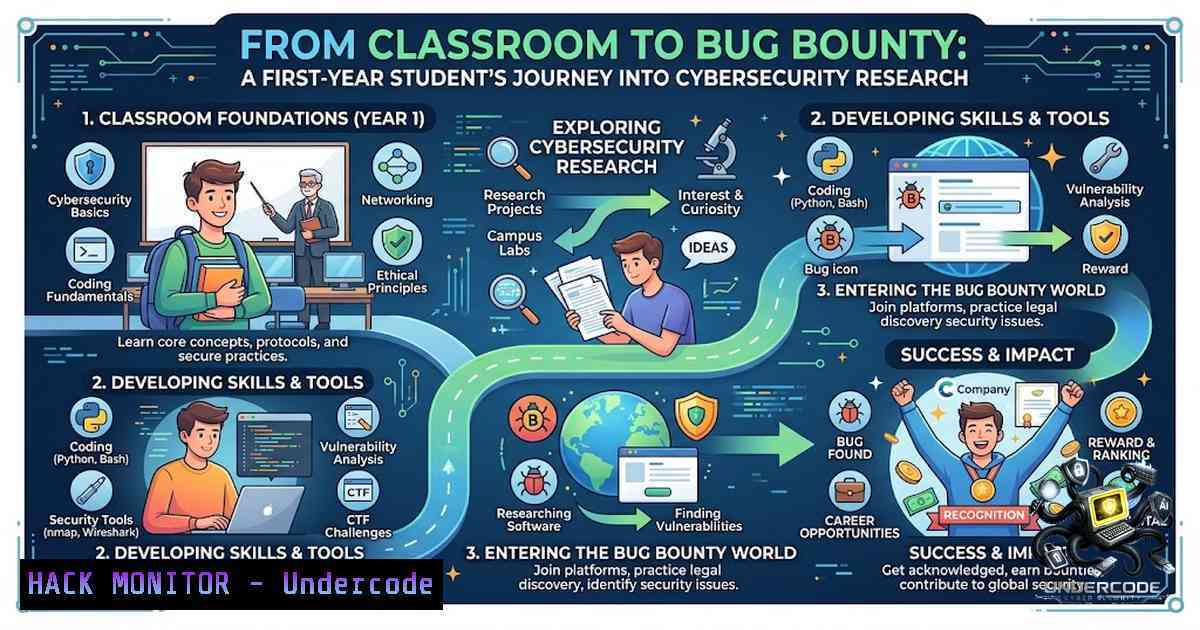
Introduction:
The transition from academic theory to practical cybersecurity application represents one of the most critical junctures in a security professional’s development. Bug bounty hunting—the practice of identifying and reporting security vulnerabilities in exchange for compensation—has emerged as both a legitimate career pathway and an essential component of modern application security programs. For students beginning their journey in technology and cybersecurity, structured workshops that introduce bug bounty methodologies, research frameworks, and practical security thinking provide the foundational bridge between classroom concepts and real-world application. This article explores the core components of bug bounty hunting methodology, essential tooling, and the research mindset required to succeed in this dynamic field.
Learning Objectives & Secrets:
- Objective 1: Master the Reconnaissance Lifecycle — Understand that effective bug bounty hunting begins not with running tools, but with understanding the target’s business logic, analyzing scope carefully, and reviewing previously disclosed vulnerabilities to understand what bug types the program accepts. Successful recon is a structured, phased process—not a checklist of tools to rush through.
-
Objective 2 Secret Tip: Passive Before Active — Professional hunters always gather third-party intelligence first through OSINT (Open Source Intelligence) techniques, then go active only against what passive recon surfaced. This keeps the signal-to-1oise ratio high, reduces detection risk, and ensures you’re not wasting time on out-of-scope assets. Start with certificate transparency logs (crt.sh), DNS records, and GitHub searches before touching the target directly.
-
Objective 3 Secret Tip: Manual Testing Over Blind Automation — While automation is valuable for repetitive tasks, the highest-impact vulnerabilities—particularly Broken Access Control and Business Logic flaws—are often invisible to automated scanners. The most reliable detection comes from manual testing with deep understanding of the application’s authorization model. Practice daily, focus on understanding impact and exploitation, and treat bug bounty as a long-term skill-building exercise rather than a get-rich-quick scheme.
You Should Know:
- Setting Up Your Bug Bounty Hunting Environment (Linux & Windows)
Building a proper hunting environment is the foundation of effective bug bounty work. On Linux (Kali/Ubuntu), install the essential ProjectDiscovery toolchain:
 Install Go (required for most modern recon tools)
sudo apt update && sudo apt install golang-go -y

Install Subfinder - passive subdomain discovery
go install -v github.com/projectdiscovery/subfinder/v2/cmd/subfinder@latest

Install Httpx - HTTP probing and live host detection
go install -v github.com/projectdiscovery/httpx/cmd/httpx@latest

Install Nuclei - vulnerability scanning with 10,000+ templates
go install -v github.com/projectdiscovery/nuclei/v3/cmd/nuclei@latest

Update Nuclei templates (templates change frequently)
nuclei -update-templates

Install additional essential tools
sudo apt install amass ffuf nmap massdns -y
On Windows 11, the modern approach uses WSL2 (Windows Subsystem for Linux). Open PowerShell as administrator:
 Install WSL with Ubuntu
wsl --install -d Ubuntu

After reboot and Ubuntu setup, update the base
sudo apt update && sudo apt upgrade -y
sudo apt install git curl wget build-essential python3 pip jq -y

Install Go for WSL
wget https://go.dev/dl/go1.22.0.linux-amd64.tar.gz
sudo tar -C /usr/local -xzf go1.22.0.linux-amd64.tar.gz
echo 'export PATH=$PATH:/usr/local/go/bin:~/go/bin' >> ~/.bashrc
source ~/.bashrc
Burp Suite Community Edition runs as a native Windows application (not in WSL). Download from PortSwigger, configure your browser proxy to 127.0.0.1:8080, and install the Burp CA certificate to intercept HTTPS traffic. For a lighter alternative, Caido offers a modern UI with a generous free tier.
2. The Reconnaissance Methodology: Phase-by-Phase
Reconnaissance is the most critical phase of bug bounty hunting—it’s where engagements are won or lost. A disciplined, repeatable methodology transforms a single root domain into a complete map of an organization’s external attack surface.
Phase 1: Passive Subdomain Enumeration — Gather intelligence without touching the target directly:
 Subfinder - passive enumeration from 50+ sources
subfinder -d target.com -silent -all -recursive -o subfinder_subs.txt

Amass - passive mode for deeper enumeration
amass enum -passive -d target.com -o amass_passive_subs.txt

crt.sh - certificate transparency logs
curl -s "https://crt.sh/?q=%25.target.com&output=json" | jq -r '.[].name_value' | sed 's/\.//g' | sort -u > crtsh_subs.txt

Combine all results
cat _subs.txt | sort -u > all_subs.txt
Phase 2: Active Subdomain Enumeration — Validate and expand the discovered subdomains:
 MassDNS - fast DNS resolution with a wordlist
massdns -r resolvers.txt -t A -o S -w massdns_results.txt wordlist.txt

Shuffledns - resolve and validate subdomains
shuffledns -d target.com -list all_subs.txt -r resolvers.txt -o active_subs.txt

HTTP probing - check which hosts are live
httpx -l active_subs.txt -o live_hosts.txt -silent

Screenshot live hosts for visual documentation
gowitness file -f live_hosts.txt
Phase 3: Content Discovery and Fuzzing — Find hidden endpoints and directories:
 Waybackurls - discover historical endpoints
waybackurls target.com | sort -u > wayback_urls.txt

FFUF - directory and parameter fuzzing
ffuf -u https://target.com/FUZZ -w /path/to/wordlist.txt -t 50 -mc 200,403 -o ffuf_results.json

Parameter discovery
ffuf -u https://target.com/?FUZZ=test -w /path/to/parameters.txt -t 50
3. Understanding the OWASP Top 10 (2026)
The OWASP Top 10 represents the most critical web application security risks. For bug bounty hunters, understanding these categories is essential:
- A01: Broken Access Control — Users acting outside their intended permissions, such as viewing another user’s data by modifying an ID in a URL. This tops the list because it’s common and often invisible to automated tools.
-
A02: Cryptographic Failures — Weak or missing encryption for sensitive data, hardcoded encryption keys, deprecated algorithms (MD5, SHA-1), and TLS misconfigurations.
-
A03: Injection — SQL, command, LDAP injection—persists because string concatenation remains common in legacy and quickly-shipped code. The fix (parameterized queries, prepared statements) has been understood for years but isn’t always followed.
-
A04: Insecure Design — Risks from missing security controls at the architecture level—problems no amount of clean coding can fix because the design itself doesn’t account for the threat.
-
A05: Security Misconfiguration — Default credentials, verbose error messages, unnecessary features enabled, and publicly accessible cloud storage.
4. AI-Powered Bug Bounty Hunting Tools (2026)
The integration of AI into bug bounty workflows has accelerated significantly. Modern AI-powered toolkits can handle reconnaissance, vulnerability testing, and even report generation:
Agentic Bug Hunter — An AI-powered toolkit that works with or without a subscription. Install and use:
git clone https://github.com/shuvonsec/claude-bug-bounty.git
cd claude-bug-bounty
./install.sh --agent standalone

Basic commands
bughunter setup  Choose AI provider (Ollama is free + offline)
bughunter recon target.com  Map the attack surface
bughunter hunt target.com  Hunt for vulnerabilities
bughunter validate "finding"  Validate findings through a strict gate
bughunter report  Generate submission-ready report
VulneraMCP — An AI-powered MCP (Model Context Protocol) server integrating OWASP ZAP, Burp Suite, and CLI tools for comprehensive reconnaissance and testing. Features include XSS/SQLi/IDOR testing, API and auth misconfiguration checks, cloud bucket scanning, and knowledge-graph analysis.
5. Essential Wordlists and Browser Extensions
Every bug bounty hunter needs comprehensive wordlists and browser tools:
 Clone the standard wordlist repositories
git clone https://github.com/danielmiessler/SecLists
git clone https://github.com/swisskyrepo/PayloadsAllTheThings
Browser Extensions for Bug Bounty (dedicated browser profile recommended):
– Wappalyzer — Technology detection
– FoxyProxy — Quick switching between direct and Burp routing
– HackTools — Quick payload access
– Cookie Editor — Manual session management
6. Windows-Specific Privilege Escalation Tools
For Windows-targeted bug bounty or penetration testing:
- WinPEAS — Automated enumeration tool identifying misconfigurations and vulnerabilities that could lead to privilege escalation on Windows systems
- BlueHammer — A Windows local privilege escalation zero-day exploit (published April 2026)
7. Reporting and Proof of Concept Creation
Professional reporting is what separates successful bug bounty hunters from amateurs. A good report should include:
– Clear description of the vulnerability
– Step-by-step reproduction steps
– Impact analysis
– Screenshots or video proof
– Recommended fix
Modern AI tools can assist with report generation—the Agentic Bug Hunter’s `bughunter report` command writes submission-ready reports for HackerOne, Bugcrowd, Intigriti, and Immunefi.
What Undercode Say:
- Key Takeaway 1: Start with Fundamentals Before Tools — The most common mistake beginners make is jumping straight into running tools without understanding networking, Linux basics, or web application security. Focus heavily on Burp Suite and PortSwigger Web Security Academy. Practice is non-1egotiable—reading without hacking equals no progress.
-
Key Takeaway 2: Consistency Over Talent — Bug bounty is not fast money. You will face duplicates, rejections, invalid reports, and weeks with no findings. This is normal. If you stay disciplined and practice daily, results will come.
Analysis: The workshop attended by this first-year student represents an ideal entry point into cybersecurity—structured exposure to bug bounty methodology and research thinking before diving into tooling. The most valuable takeaway from such workshops isn’t the specific tools taught, but the mindset shift: understanding that real security research is a structured, disciplined process of intelligence gathering, hypothesis testing, and careful validation. As AI-powered tools become more sophisticated, the role of the human hunter shifts toward higher-level reasoning—understanding business logic, identifying complex authorization flaws, and crafting compelling reports. The students who succeed will be those who combine technical proficiency with curiosity, persistence, and ethical responsibility.
Prediction:
- +1 The democratization of AI-powered bug bounty tools will lower the barrier to entry significantly, enabling more students and early-career professionals to participate in security research.
-
+1 University cybersecurity clubs and workshops will increasingly incorporate AI-assisted hunting workflows into their curricula, bridging the gap between academic theory and industry practice.
-
-1 The proliferation of AI-powered automated hunting tools may lead to an increase in low-quality, automated bug submissions, forcing bug bounty programs to implement stricter triage and validation processes.
-
-1 As reconnaissance and scanning become increasingly automated, the most valuable vulnerabilities—complex business logic flaws and authorization bypasses—will become harder to find and require deeper manual expertise.
-
+1 The structured methodology approach taught in workshops (passive before active, business logic first, manual over blind automation) will become even more critical as beginners navigate an increasingly noisy tooling landscape.
-
+1 The demand for security researchers who can think critically about application design and business logic—not just run automated scanners—will continue to grow, creating sustainable career opportunities for those who invest in fundamentals.
▶️ Related Video (82% Match):
https://www.youtube.com/watch?v=1ve-YrLOE7E
🎯Let’s Practice For Free:
🎓 Live Courses & Certifications:
Join Undercode Academy for Verified Certifications
🚀 Request a Custom Project:
Secure, high-velocity infrastructure and disruptive technological engineering. Contact our engineering team for high-tier development and proprietary systems:
[email protected]
💎 Smart Architecture | 🛡️ Secure by Design | ⭐ Trusted by Thousands
IT/Security Reporter URL:
Reported By: https://lnkd.in/p/e8Xtbd-B – Hackers Feeds
Extra Hub: Undercode MoN
Basic Verification: Pass ✅


