
Listen to this Post
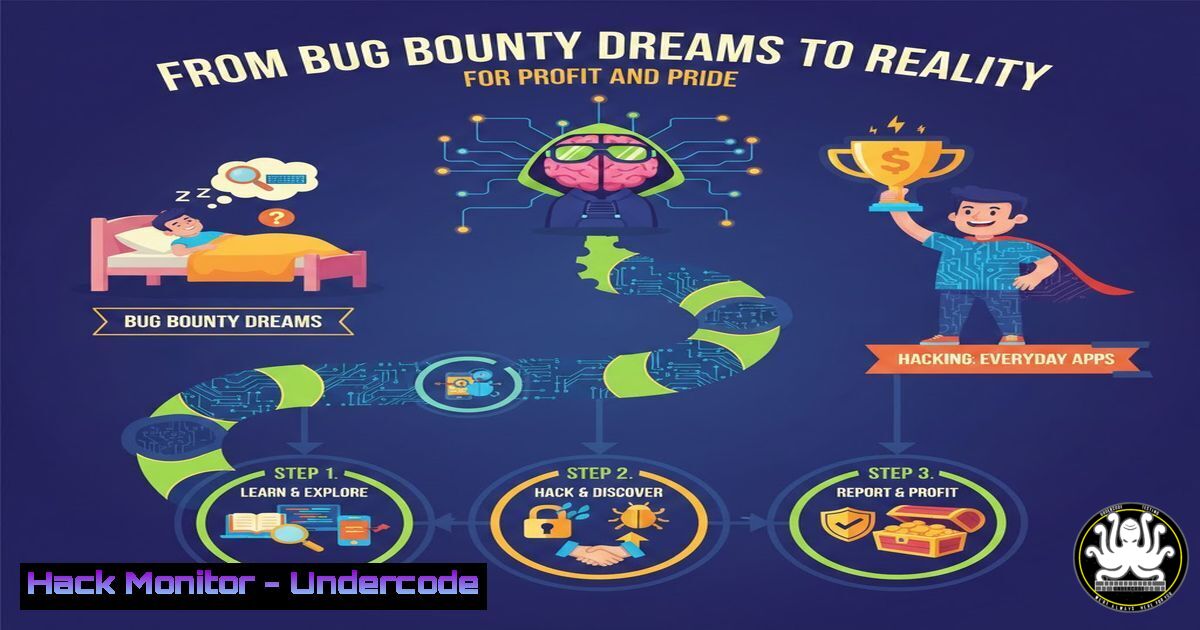
Introduction:
The world of Bug Bounty hunting is often perceived as a relentless chase for the highest payout, targeting massive tech conglomerates for life-changing bounties. However, as highlighted by a recent sentimental victory in the field, the true essence of ethical hacking often lies in the personal connection—finding vulnerabilities in the applications we use daily. This achievement underscores a critical concept in modern cybersecurity: hybrid application security. When mobile apps, thick clients, and web services interact, they create complex state machines that are fertile ground for logic flaws. This article deconstructs the methodology behind such personal hacking victories, providing a technical roadmap for bug hunters looking to find their own “special” vulnerabilities in familiar software.
Learning Objectives:
- Understand how to map the architecture of hybrid applications (mobile/web) to identify trust boundaries.
- Learn to identify and exploit business logic flaws and IDORs (Insecure Direct Object References) that automated scanners miss.
- Master the use of proxy tools to intercept and manipulate traffic between mobile apps and their backend APIs.
You Should Know:
1. Reconnaissance: Mapping the Hybrid Application Landscape
When targeting an application you use regularly, the first step is to understand how it works under the hood. Unlike a standard website, many modern apps are hybrid—they might be a mobile wrapper around a web view, or a thick client communicating with a REST API. Your goal is to map the data flow.
Step‑by‑step guide for initial recon:
- Setup a Proxy: Configure Burp Suite or OWASP ZAP on your machine.
- Mobile Proxy Setup: For Android, set the proxy in the Wi-Fi settings. For iOS, configure the HTTP proxy manually.
- Certificate Pinning Bypass: Modern apps often implement SSL Pinning. If you see “SSL Handshake Failed” errors, you may need to bypass this.
– Android Tool: Use Frida or Objection.
 Install Frida on your PC
pip install frida-tools

Download frida-server on the Android device and run it
adb push frida-server /data/local/tmp/
adb shell "chmod 755 /data/local/tmp/frida-server"
adb shell "/data/local/tmp/frida-server &"

Bypass pinning on the target app (replace with package name)
objection -g com.target.app explore -s "android sslpinning disable"
4. Traffic Analysis: Once the proxy is working, navigate through the application. Log in, change settings, perform transactions. Note every single endpoint.
2. Hunting Logic Flaws: The IDOR Goldmine
While scanners look for SQLi or XSS, the “special” bugs often lie in broken access controls. Since you use the app daily, you understand its features better than an external attacker. You can test the “what if” scenarios.
Step‑by‑step guide for IDOR testing:
- Identify an Object Reference: Look for API calls that include identifiers, such as
/api/v1/user/profile/12345,/invoice/INV-2024-001, ordocument_id=9876. - Create Two Accounts: You need Account A (victim) and Account B (attacker). This is crucial for “forced browsing” tests.
3. Capture the Request:
- From Account A, capture the request for a private object (e.g., their private invoice).
- From Account B, capture a similar request (e.g., a different invoice ID).
4. Manipulate the Identifier:
- Send Account A’s request to Repeater (Burp Suite).
- Replace the identifier with the one from Account B.
- Example: Change `GET /api/v1/invoice/888` to
GET /api/v1/invoice/999.
- Analyze the Response: If the server returns Account B’s data without requiring Account B’s session cookie, you have found a Horizontal IDOR. If you can access admin functions by guessing low numbers (e.g.,
/admin/1), that is a Vertical Privilege Escalation. -
API Deep Dive: Parameter Pollution and Mass Assignment
When a mobile app communicates with an API, developers often trust the mobile client more than a web browser, sometimes leading to Mass Assignment vulnerabilities. This occurs when the API automatically binds incoming JSON parameters to internal objects.
Step‑by‑step guide for API manipulation:
- Intercept an Update Request: Find a function where you update your profile (e.g., changing your name).
2. Analyze the JSON Body: You might see:
POST /api/user/update
{"name": "New Name", "email": "[email protected]"}
3. Add Suspicious Parameters: Modify the request to include fields you shouldn’t be able to change, such as isAdmin, role, account_balance, or premium_expires.
{"name": "New Name", "email": "[email protected]", "isAdmin": true, "role": "admin"}
4. Test on Different Endpoints: Try this on password reset endpoints, sign-up forms, and support ticket creation. If the backend uses a framework like Ruby on Rails (Strong Parameters misconfiguration) or Node.js with Mongoose, it might accept these extra fields.
5. Linux Command for Wordlist Generation: If you need to fuzz for common parameter names, you can generate a quick list.
 Combine common parameter lists
cat /usr/share/wordlists/parameters.txt | grep "admin" > custom_params.txt
echo -e "isAdmin\nrole\naccount_type\npremium\nuser_type" >> custom_params.txt
4. Windows/Linux Client-Side Testing (If Applicable)
If the “everyday app” has a desktop component (like Slack, Discord, or a file sync tool), test the thick client.
– Process Monitoring: Use Process Monitor (ProcMon) on Windows to see registry keys and file writes.
– Command Injection: If the client executes system commands, try fuzzing the input fields.
 Windows PowerShell test for command injection
& "C:\Program Files\TargetApp\tool.exe" --input "valid_input; calc.exe"
– DLL Hijacking: On Windows, use Process Explorer to see which DLLs are loaded and if any are missing from trusted paths.
5. Exploitation and Proof of Concept (PoC)
Once you find the bug, you need to create a clean PoC for the report. The sentimental value of the bug is high, but the report must be professional.
– Clarity: Show the request/response.
– Impact: Don’t just say “I can see other users’ data.” Say “An attacker can enumerate all invoice IDs (sequential) and download the financial records of every user, leading to full financial data exposure.”
– Remediation: Suggest using random GUIDs instead of integers and implementing proper ownership checks on the server side.
What Undercode Say:
- The Human Element: The most satisfying bugs aren’t always the highest paying; they are the ones that break the trust we place in the software we rely on daily. This personal stake drives a deeper, more thorough investigation than any automated scanner could provide.
- Logic Over Signatures: The vulnerability here was likely a logic flaw, not a technical injection. As security stacks improve, the low-hanging fruit disappears, making business logic flaws the new frontier for bug bounty hunters. Understanding the intended functionality is the key to breaking it.
Prediction:
As AI begins to write more backend code, we will likely see a surge in logic-based vulnerabilities. AI is excellent at writing functional code based on patterns, but it struggles with understanding the unique business context and implicit trust boundaries of an application. The coming years will shift focus from memory corruption and XSS to complex state confusion flaws in AI-generated APIs, making the role of the creative, logic-oriented human hacker more critical than ever.
▶️ Related Video (82% Match):
🎯Let’s Practice For Free:
IT/Security Reporter URL:
Reported By: Antonio Rivera – Hackers Feeds
Extra Hub: Undercode MoN
Basic Verification: Pass ✅


