Listen to this Post
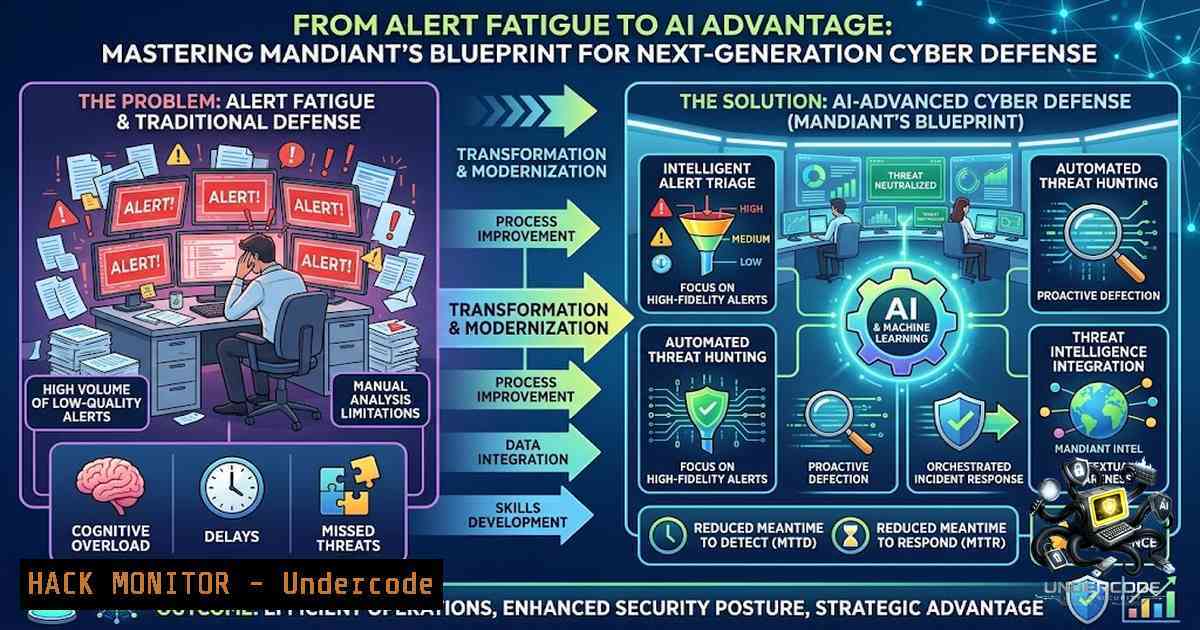
Introduction:
The cybersecurity industry stands at an inflection point where the volume and sophistication of attacks have outpaced the capabilities of traditional, manual defense strategies. In response, Mandiant (part of Google Cloud) has launched the “Artificial Intelligence (AI) Advantage: Elevating Cyber Defense” certification—an intensive program designed to equip defenders with the practical knowledge to harness AI as a force multiplier. As threat actors increasingly leverage AI to automate attacks and generate evasive malware variants at machine speed, this training represents a critical evolution from reactive security to an intelligence-led, AI-augmented defense posture.
Learning Objectives:
- Master the foundational differences between AI, Machine Learning, GenAI, and Large Language Models (LLMs) to effectively select and deploy the right tools.
- Develop advanced prompt engineering skills to optimize AI for threat intelligence gathering, malware analysis, and incident reporting.
- Operationalize Google’s suite of AI tools—Gemini, NotebookLM, and Colab—to automate repetitive tasks and analyze vast datasets for hidden threats.
- Identify and mitigate the inherent risks of using AI and LLMs within organizational security frameworks.
You Should Know:
- Harnessing the Core AI Toolchain: Gemini, NotebookLM, and Colab in Practice
The Mandiant course places significant emphasis on Google’s proprietary AI ecosystem as the cornerstone of modern defense operations. Understanding how to deploy these tools within a Security Operations Center (SOC) or threat intelligence workflow is essential for reducing the “toil” on defenders.
Gemini for Threat Intelligence: Gemini can be utilized to generate complex YARA-L 2.0 detection rules from simple natural language prompts. For instance, an analyst can type, “Create a rule to detect DNS beaconing patterns exceeding 50 queries per minute,” and Gemini will translate this into a deployable detection rule. Additionally, the Gemini CLI offers a powerful interface for managing security skills and automating threat modeling tasks.
NotebookLM as an Intelligence Analyst: NotebookLM serves as an AI-powered research assistant, capable of ingesting threat reports, incident summaries, and raw intelligence feeds. Defenders can use it to rapidly synthesize information, generate concise executive summaries, and uncover correlations between disparate intelligence reports, significantly reducing the manual load associated with intelligence production.
Colab for Custom Security Scripting: Google Colab provides a collaborative, cloud-based Python environment. Security engineers can leverage Colab to prototype and share custom AI-driven scripts for tasks such as IOC (Indicators of Compromise) extraction and preliminary malware analysis. This bridges the gap between data science and frontline defense, allowing for rapid iteration on security automation.
2. Threat Hunting with AI-Powered Linux Command-Line Tools
AI is increasingly being integrated into the Linux command line, transforming how threat hunters interact with their environments. The Mandiant curriculum emphasizes using AI to gain efficiencies in collection and analysis, and the open-source ecosystem now provides tangible tools for this.
AI-1ative Malware Scanning: Tools like `semantics-av-cli` offer free, offline AI-powered malware scanning for Linux. Unlike signature-based tools, it uses structural logic to detect evasive threats. To install and run a basic scan, you can use commands like:
git clone https://github.com/metaforensics-ai/semantics-av-cli
cd semantics-av-cli
./scan.sh /path/to/suspicious/directory
This allows for rapid, offline analysis in air-gapped or sensitive environments.
Autonomous Vulnerability Scanning: The `SScanner` tool performs deep infrastructure scans on Linux and packages the results into optimized prompts for AI agents like Gemini or ChatGPT. This creates a feedback loop where raw scan data (e.g., from `nmap` and nuclei) is converted into actionable, prioritized intelligence. A typical workflow involves running:
./sscanner.sh -t target.com -o scan_results.json
The tool then generates a prompt based on the findings, which can be fed directly into an LLM for expert analysis and remediation recommendations.
Real-Time Server Monitoring: `serverguard` is a Python-based CLI that monitors Linux servers in real-time, detects SSH brute-force attacks, and uses AI to contextualize every threat. Installation is straightforward via pip:
pip install serverguard
serverguard --start --alert-slack "YOUR_WEBHOOK_URL"
- Defending the Endpoint: PowerShell for AI Governance and Detection
On Windows endpoints, AI is creating new attack surfaces, but it is also providing defenders with new capabilities. The Mandiant course highlights how AI can automate repetitive tasks and analyze vast datasets. Security professionals can operationalize this using PowerShell.
Auditing AI Applications: With the proliferation of unauthorized AI tools (Shadow AI), governance is critical. A PowerShell script can query Microsoft Entra ID to find all registered AI applications. Using the Microsoft Graph PowerShell SDK, you can run:
Get-MgServicePrincipal -All | Where-Object { $_.DisplayName -match "AI|GPT|Claude|Gemini" }
This provides security teams with a repeatable audit to identify and govern risky AI application sprawl.
Detecting AI-Generated Malware: Threat actors are now using AI to generate PowerShell payloads for Active Directory enumeration. Defenders must update their detection rules accordingly. Security teams should alert on suspicious PowerShell processes that might indicate AI-generated attacks, such as those launched with hidden windows. A hunting query in your SIEM could target:
Event Log: Windows-PowerShell
Conditions: Process launched with '-WindowStyle Hidden' AND CommandLine contains 'Invoke-Expression' OR 'IEX'
Hardening Against AI Threats: Enforcing PowerShell Constrained Language Mode and using AppLocker or Windows Defender Application Control (WDAC) can prevent the execution of unsigned, internet-sourced AI-generated scripts. This is a proactive measure to mitigate the risk of vibe-coded malware.
4. API Security and Threat Intelligence Integration
The Mandiant approach is “intelligence-led”, and central to this is the integration of threat intelligence feeds directly into security workflows. The Mandiant Threat Intelligence API is a powerful tool for this.
Automated Enrichment: A common use case is to automatically enrich Security Information and Event Management (SIEM) alerts with Mandiant context. For example, using Python to query the API:
import requests
url = "https://api.intelligence.mandiant.com/v4/indicator"
headers = {"X-Api-Key": "YOUR_API_KEY"}
params = {"q": "malicious-domain.com"}
response = requests.get(url, headers=headers, params=params)
print(response.json())
This script automates the process of turning a simple IP or domain into a comprehensive threat profile, complete with actor attribution and known TTPs (Tactics, Techniques, and Procedures).
Correlation with AI: The real power emerges when this intelligence is fed into an AI model. By combining Mandiant’s frontline intelligence with Google’s AI, security teams can automate the correlation of raw alerts into coherent attack timelines, shifting the focus from alert triage to active investigation.
5. Cloud Hardening with Google AI Threat Defense
Google Cloud’s AI Threat Defense platform represents the evolution of automated security. It combines Gemini, Wiz, CodeMender, and Mandiant to create an autonomous defense loop.
Automated Exposure Management: The platform’s first step is to scan all exposed assets and prioritize vulnerabilities based on real-world risk. It moves beyond traditional vulnerability management by using AI to predict attack paths, ensuring that the most critical risks are addressed first.
Agentic Remediation: CodeMender, an AI agent within the platform, can autonomously find vulnerabilities in code and patch them, significantly reducing the window of exposure. Security teams can set policies to automate these remediations in low-risk environments, effectively creating a self-healing cloud infrastructure.
Preventing Prompt Injections: For organizations building their own AI agents, Google Cloud provides tools like Model Armor to enforce content safety and prevent prompt injection attacks, a critical vulnerability in GenAI applications.
What Undercode Say:
- Key Takeaway 1: AI is not a replacement for human intuition but a powerful augmentation tool. The future SOC analyst will be a “force multiplier,” leveraging AI to handle the heavy lifting of data correlation and pattern recognition, allowing them to focus on strategic decision-making and complex threat hunting.
- Key Takeaway 2: The adversary is already using AI, making it a necessity rather than an option for defenders. To stay ahead, organizations must embed AI into every phase of the defense lifecycle—from detection and investigation to response and recovery. The Mandiant certification provides a structured path to achieving this AI advantage.
Analysis (Approx. 10 Lines):
The shift towards AI in cybersecurity marks a fundamental change in the economics of defense. The “AI Advantage” course from Mandiant directly addresses the core challenge of alert fatigue and the talent shortage. By teaching defenders how to effectively use AI tools like Gemini for threat intelligence and Colab for automation, it aims to reduce the manual toil that plagues SOCs. The emphasis on practical, hands-on training with operational case scenarios ensures that skills are immediately transferable to real-world environments. Furthermore, the integration of frontline threat intelligence from Mandiant into these AI workflows creates a “virtuous cycle” where AI models are trained on the most current threat data. This is a strategic differentiator, as it ensures the AI is not just analyzing patterns but is informed by the context of real breaches. Ultimately, this certification represents a vital step in empowering the next generation of defenders to operate at machine speed, turning the tables on attackers who have long enjoyed the advantage of automation.
Prediction:
- +1: The adoption of certified AI-defense frameworks like Mandiant’s will lead to a measurable decrease in average incident response times (MTTR) by over 60% within the next two years, as AI automates the investigation and correlation phases of an attack.
- +1: AI-driven threat hunting will become a standard KPI for SOCs, with teams using generative AI to proactively hunt for adversarial AI-generated malware variants, shifting the industry from reactive to predictive security.
- -1: The democratization of AI tools via platforms like Gemini CLI will inadvertently lower the barrier to entry for cybercriminals, leading to a surge in “vibe-coded” malware and automated zero-day exploitation.
- -1: Organizations that fail to invest in AI literacy and training will experience a widening “defender gap,” as their legacy, manual processes become entirely ineffective against AI-speed adversaries, resulting in more frequent and damaging breaches.
- -1: The reliance on AI for vulnerability patching could introduce new classes of systemic risks if the AI models themselves are poisoned or manipulated, necessitating robust guardrails like those proposed by the Google Secure AI Framework (SAIF).
▶️ Related Video (82% Match):
🎯Let’s Practice For Free:
🎓 Live Courses & Certifications:
Join Undercode Academy for Verified Certifications
🚀 Request a Custom Project:
Secure, high-velocity infrastructure and disruptive technological engineering. Contact our engineering team for high-tier development and proprietary systems:
[email protected]
💎 Smart Architecture | 🛡️ Secure by Design | ⭐ Trusted by Thousands
IT/Security Reporter URL:
Reported By: Lerato Moshoadiba – Hackers Feeds
Extra Hub: Undercode MoN
Basic Verification: Pass ✅


