Listen to this Post
Introduction:
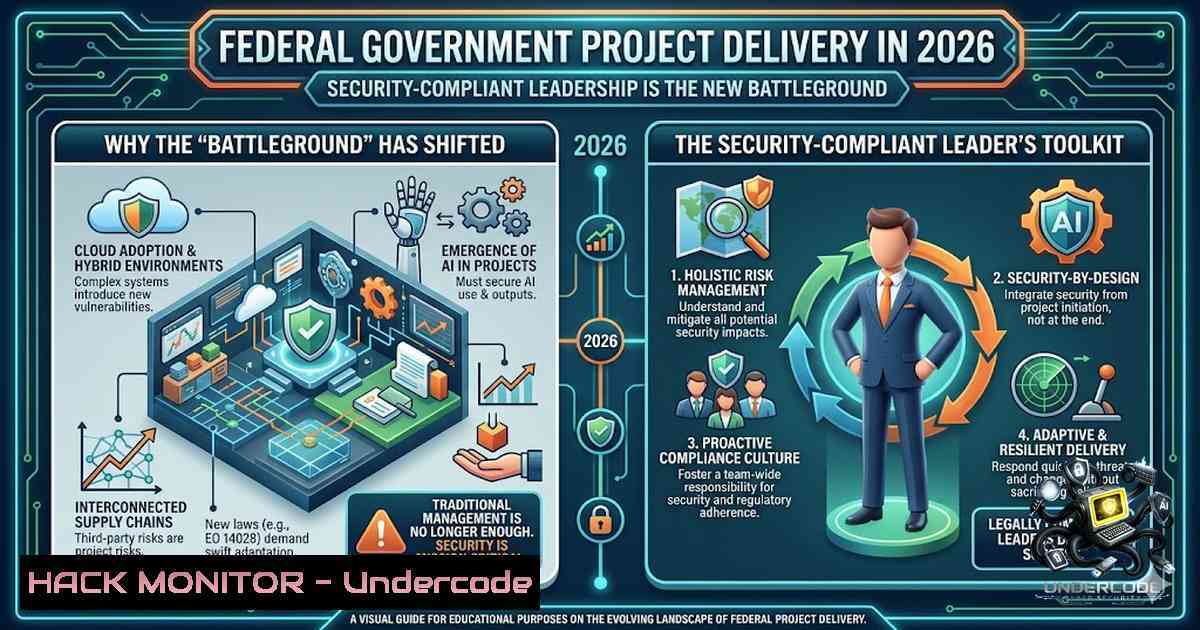
The Australian Federal Government is accelerating its digital transformation agenda, and with it comes an unprecedented demand for delivery leaders who can navigate the complex intersection of project management, cybersecurity compliance, and emerging technologies. The Protective Security Policy Framework (PSPF) 2025 release and the Australian Information Security Manual (ISM) September 2025 update have fundamentally reshaped how government projects must be delivered—embedding Zero Trust principles, mandating IRAP-assessed cloud services, and expanding security domains from four to six core areas. For organisations seeking to secure federal government contracts, the message is clear: technical delivery expertise alone is no longer sufficient. Security compliance is now the baseline.
Learning Objectives:
- Understand the mandatory security frameworks governing Australian Federal Government project delivery (PSPF 2025, ISM, Essential Eight)
- Master the integration of Secure by Design principles across the project gate review lifecycle
- Implement DevSecOps automation for continuous compliance validation in CI/CD pipelines
- Apply system hardening commands and security controls across Linux and Windows environments
- Navigate the PSPF 2025 expanded domains: Governance, Risk, Information, Technology, Personnel, and Physical security
- The New Security Baseline: PSPF 2025 and ISM Mandates
The Department of Home Affairs published the 2025 Annual Release of the Protective Security Policy Framework on 24 July 2025, marking a significant shift in how federal government projects must be governed. This is not merely an annual update—PSPF 2025 embeds Zero Trust principles, increases visibility of technology assets, and integrates ASD collaboration into the core of protective security. It also features expanded coverage of emerging technologies, including Artificial Intelligence (AI), cloud-based gateway capabilities, and post-quantum encryption.
Complementing the PSPF, the Australian Signals Directorate’s Information Security Manual (ISM) September 2025 release provides the cybersecurity framework that organisations must apply using their risk management framework. The ISM’s cybersecurity principles are grouped into five functions: Govern, Identify, Protect, Detect, and Respond. Critically, the ISM adopts a six-step risk management framework drawn from NIST SP 800-37 Rev. 2: define the system, select controls, implement controls, assess controls, authorise the system, and monitor the system.
Step-by-Step Guide: Conducting a PSPF 2025 Gap Analysis
- Map your current security controls against the six PSPF domains: Governance, Risk Management, Information Security, Technology Security, Personnel Security, and Physical Security
- Assess technology asset visibility—PSPF 2025 requires comprehensive Technology Asset Stocktakes
- Evaluate cloud hosting certification—ensure your cloud providers are IRAP-assessed and compliant with the Hosting Certification Framework
- Review procurement and contracting templates to embed PSPF obligations and associated resourcing requirements
- Document findings and remediation plans for submission in the next reporting cycle
-
Secure by Design: Integrating Security Across the Project Lifecycle
The Secure by Design approach aims to help teams deliver effective cyber security from the initial concept through every stage of a project delivering a digital service. For Lead Delivery Managers working on federal government projects, this means embedding security considerations into the gate review process from the very beginning.
At Gates 0 and 1 (discovery phase), project leaders should ask: “Does providing this service create any obvious risks to users or the organisation?” and “Have any similar services been developed that we can take a security steer from?”. As the project progresses through agile phases—discovery, alpha, private beta, and live—security activities must align with business case submissions: Strategic Outline Case (SOC) during discovery, Outline Business Case (OBC) during alpha, and Full Business Case (FBC) at the end of private beta.
Step-by-Step Guide: Integrating Secure by Design into Gate Reviews
- At Gate 0 (Concept): Identify security requirements and resource availability. Document security-related risks in the initial business case
- At Gate 1 (Discovery): Include security considerations in the SOC. Engage cybersecurity professionals early
- At Gate 2 (Alpha): Embed security testing into the development cycle. Update the OBC with security implementation details
- At Gate 3 (Private Beta): Conduct security assessments and penetration testing. Submit the FBC with completed security validation
- At Gate 4 (Live): Implement continuous monitoring. Ensure incident response plans are operational
-
DevSecOps Pipeline Security: Automating Compliance for Federal Projects
For government agencies moving toward continuous deployment, rethinking the software supply chain is essential. Every step from code commit to production release must be automated, secured, and monitored. Fully automated DevSecOps pipelines can cut delivery timelines from months to minutes while improving security and quality.
The NSA and CISA have published specific recommendations for defending CI/CD environments, identifying key vulnerabilities including insecure first-party code, insecure third-party code, poisoned pipeline execution, insufficient pipeline access controls, insecure system configuration, and exposure of secrets.
Step-by-Step Guide: Hardening Your CI/CD Pipeline
- Implement least-privilege policies for CI/CD access—ensure only authorised personnel can modify pipeline configurations
- Integrate security scanning as part of the CI/CD pipeline. Use tools like Checkov, Semgrep, or Anchore for automated vulnerability detection
- Minimise long-term credentials and implement signature verification for CI/CD configurations
- Maintain up-to-date software and operating systems across all build agents and deployment targets
- Implement Software Bill of Materials (SBOM) and Software Composition Analysis (SCA) to track third-party dependencies
- Keep comprehensive audit logs of all pipeline activities and access events
Linux Command Examples for CI/CD Security Hardening:
 Audit system for unnecessary services and packages
systemctl list-units --type=service --state=running
apt list --installed | grep -E "(docker|jenkins|gitlab)"  Debian/Ubuntu
yum list installed | grep -E "(docker|jenkins|gitlab)"  RHEL/CentOS

Implement file integrity monitoring for critical pipeline files
sudo apt install aide  Debian/Ubuntu
sudo yum install aide  RHEL/CentOS
sudo aideinit
sudo aide --check

Secure secrets management - never hardcode credentials
 Use environment variables or secrets managers
export AWS_SECRET_ACCESS_KEY=$(aws secretsmanager get-secret-value \
--secret-id my-pipeline-secret --query SecretString --output text)

Harden SSH access for build agents
sudo sed -i 's/PermitRootLogin yes/PermitRootLogin no/' /etc/ssh/sshd_config
sudo sed -i 's/PasswordAuthentication yes/PasswordAuthentication no/' /etc/ssh/sshd_config
sudo systemctl restart sshd
Windows Command Examples for CI/CD Security Hardening:
 Disable unnecessary Windows services
Get-Service | Where-Object {$_.Status -eq 'Running'} | Select-Object Name, DisplayName
Stop-Service -1ame "UnnecessaryService" -Force
Set-Service -1ame "UnnecessaryService" -StartupType Disabled

Implement Windows Defender real-time protection
Set-MpPreference -DisableRealtimeMonitoring $false
Set-MpPreference -EnableNetworkProtection Enabled

Enforce PowerShell execution policy for build scripts
Set-ExecutionPolicy -ExecutionPolicy RemoteSigned -Scope LocalMachine

Audit Windows Event Logs for suspicious activity
Get-WinEvent -FilterHashtable @{LogName='Security'; StartTime=(Get-Date).AddHours(-24)} |
Where-Object {$_.Id -in (4624,4625,4672)} | Select-Object TimeCreated, Id, Message
- Cloud Security Compliance: IRAP, FedRAMP, and Multi-Cloud Strategies
Federal government projects increasingly rely on cloud infrastructure, making compliance with frameworks like IRAP (Australia) and FedRAMP (US) non-1egotiable. PSPF 2025 requires the use of IRAP-assessed cloud providers and Protective Domain Name System (PDNS) services. For multi-cloud environments, organisations must implement secure connectors that enable on-demand data access without storing information on non-compliant platforms.
Step-by-Step Guide: Cloud Security Compliance Implementation
- Select IRAP-assessed cloud providers—verify the provider’s certification level matches your project’s security classification (OFFICIAL, OFFICIAL:Sensitive, or PROTECTED)
- Implement infrastructure as code (IaC) with security controls embedded. Use Terraform or AWS CloudFormation with security scanning
- Enable comprehensive logging—centralise logs from all cloud services into a SIEM solution for real-time monitoring
- Encrypt data at rest and in transit using ASD-approved cryptographic algorithms
- Conduct regular vulnerability assessments and penetration testing of cloud deployments
- Maintain continuous compliance monitoring—use automated tools to validate cloud configurations against PSPF and ISM requirements
Terraform Example: Secure AWS S3 Bucket with Encryption and Access Controls:
resource "aws_s3_bucket" "secure_bucket" {
bucket = "federal-project-data-${var.environment}"
acl = "private"

versioning {
enabled = true
}

server_side_encryption_configuration {
rule {
apply_server_side_encryption_by_default {
sse_algorithm = "AES256"
}
}
}
}

resource "aws_s3_bucket_public_access_block" "secure_bucket_block" {
bucket = aws_s3_bucket.secure_bucket.id

block_public_acls = true
block_public_policy = true
ignore_public_acls = true
restrict_public_buckets = true
}

resource "aws_s3_bucket_policy" "secure_bucket_policy" {
bucket = aws_s3_bucket.secure_bucket.id
policy = jsonencode({
Version = "2012-10-17"
Statement = [
{
Effect = "Deny"
Principal = ""
Action = "s3:"
Resource = [
aws_s3_bucket.secure_bucket.arn,
"${aws_s3_bucket.secure_bucket.arn}/"
]
Condition = {
Bool = {
"aws:SecureTransport": "false"
}
}
}
]
})
}
5. Personnel Security and Supply Chain Risk Management
PSPF 2025 places renewed emphasis on personnel security, requiring pre-employment screening, security vetting, and ongoing suitability assessments. For Lead Delivery Managers, this means ensuring all project personnel—including contractors and third-party suppliers—meet the required security clearance levels. The ISM also mandates annual cybersecurity awareness training, least privilege access, and robust identity management.
For R&D projects involving defence-related classified material (DRCM), the Lead Delivery Manager must complete a comprehensive security checklist before work commences, covering Security Aspects Letters (SAL), personnel clearances, and Defence Conditions.
Step-by-Step Guide: Personnel Security Compliance
- Verify security clearances for all project personnel—Baseline, Negative Vetting Level 1 (NV1), or Negative Vetting Level 2 (NV2) as required
- Implement least privilege access—grant access only to information and systems necessary for each role
- Conduct annual cybersecurity awareness training for all team members
- Assess foreign ownership, control, or influence (FOCI) risks during procurement and contracting
- Maintain a security incident register and establish clear reporting channels for security breaches
- Ensure all personnel understand the Official Secrets Act 1989 and the National Security Act 2023
6. Essential Eight and System Hardening
The Australian Signals Directorate’s Essential Eight mitigation strategies form a critical component of federal government cybersecurity. These strategies—application control, patch applications, configure Microsoft Office macro settings, user application hardening, restrict administrative privileges, patch operating systems, multi-factor authentication, and daily backups—must be implemented across all systems.
Step-by-Step Guide: Implementing Essential Eight Controls
- Application Control: Implement whitelisting to prevent execution of unapproved applications
- Patch Applications: Automate patching for all third-party applications within 48 hours of release
- Patch Operating Systems: Apply OS patches within 48 hours for critical vulnerabilities
- Restrict Administrative Privileges: Implement just-in-time (JIT) privileged access
- Multi-Factor Authentication: Require MFA for all remote access and privileged accounts
- Daily Backups: Implement automated, tested backup procedures with offline storage
Linux System Hardening Commands:
 Configure automatic security updates
sudo apt install unattended-upgrades  Debian/Ubuntu
sudo dpkg-reconfigure --priority=low unattended-upgrades

Enable and configure firewall (UFW)
sudo ufw enable
sudo ufw default deny incoming
sudo ufw default allow outgoing
sudo ufw allow ssh
sudo ufw status verbose

Harden kernel parameters
echo "net.ipv4.tcp_syncookies = 1" >> /etc/sysctl.conf
echo "net.ipv4.conf.all.rp_filter = 1" >> /etc/sysctl.conf
echo "net.ipv4.conf.default.rp_filter = 1" >> /etc/sysctl.conf
sysctl -p

Implement SELinux/AppArmor
sudo apt install apparmor apparmor-utils  Debian/Ubuntu
sudo aa-enforce /etc/apparmor.d/
sudo systemctl enable apparmor
Windows System Hardening PowerShell Commands:
 Enable Windows Defender Application Guard
Add-WindowsCapability -Online -1ame "Windows.ApplicationGuard.Enterprise"

Configure Windows Firewall rules
New-1etFirewallRule -DisplayName "Block All Inbound" -Direction Inbound -Action Block
New-1etFirewallRule -DisplayName "Allow RDP Only from Trusted IPs" -Direction Inbound `
-Protocol TCP -LocalPort 3389 -Action Allow -RemoteAddress "192.168.1.0/24"

 Enforce password policies
Set-ADDefaultDomainPasswordPolicy -Identity "domain.local" `
-MinPasswordLength 12 -ComplexityEnabled $true -ReversibleEncryptionEnabled $false

Enable BitLocker Drive Encryption
Enable-BitLocker -MountPoint "C:" -EncryptionMethod XtsAes256 `
-TpmProtector -SkipHardwareTest
What Undercode Say:
- Security compliance is now a competitive differentiator—organisations that demonstrate PSPF 2025 and ISM compliance will win federal government contracts; those that don’t will be excluded from procurement processes.
- Automation is the only path to sustainable compliance—manual security checks cannot keep pace with continuous deployment. DevSecOps pipelines with embedded security scanning and automated compliance validation are essential for meeting PSPF 2025 requirements.
- Zero Trust is the new baseline—PSPF 2025 explicitly embeds Zero Trust principles, requiring organisations to move beyond perimeter-based security to verify every access request.
- The security talent gap is widening—the demand for professionals who understand both delivery management and federal security frameworks far exceeds supply, creating significant opportunities for skilled Lead Delivery Managers.
- AI and post-quantum encryption are emerging requirements—PSPF 2025 introduces new material on these technologies, signalling that federal projects must prepare for quantum-resistant cryptography.
- Supply chain security is under unprecedented scrutiny—with expanded FOCI risk assessment requirements, organisations must thoroughly vet all suppliers and third-party providers.
- IRAP assessment is non-1egotiable for cloud projects—any organisation hosting federal government data must use IRAP-assessed cloud providers, making certification a critical capability.
- Continuous monitoring replaces periodic audits—the shift toward real-time security visibility means organisations need SIEM solutions and automated compliance reporting.
- The Essential Eight remains the foundation—despite new frameworks, the Essential Eight mitigation strategies continue to be the most practical starting point for system hardening.
- PSPF 2025 is part of a broader uplift—as part of the Commonwealth Cyber Security Uplift reforms and the 2023-2030 Australian Cyber Security Strategy, further changes are expected, including updates to the Hosting Certification Framework.
Prediction:
+1 Federal government project delivery will increasingly require dual-certification—both project management credentials (e.g., PRINCE2, AgilePM) and security certifications (e.g., CISSP, CISM, IRAP assessor)—making cross-skilled professionals the most valuable assets in the market.
+1 The automation of compliance validation through DevSecOps pipelines will reduce audit preparation time by 70-80%, enabling faster project delivery without compromising security.
-1 Organisations that fail to adapt to PSPF 2025 requirements within the next 12-18 months will be excluded from federal government procurement, potentially losing millions in contract opportunities.
+1 AI-powered security tools will increasingly be integrated into government DevSecOps pipelines, enabling real-time threat detection and automated remediation.
-1 The expanded security domains and reporting obligations under PSPF 2025 will increase compliance costs for smaller suppliers, potentially consolidating the market toward larger, better-resourced organisations.
+1 The adoption of post-quantum encryption in federal projects will create new opportunities for cybersecurity vendors and specialists over the next 3-5 years.
-1 Security clearance delays and personnel vetting bottlenecks will continue to constrain project delivery timelines, requiring better workforce planning and pipeline management.
+1 Organisations that successfully implement PSPF 2025 compliance will gain a significant competitive advantage in adjacent sectors—state government, critical infrastructure, and financial services—as these frameworks become industry benchmarks.
-1 The increasing complexity of federal security frameworks may deter some innovative SMEs from pursuing government contracts, potentially reducing diversity in the government supplier ecosystem.
+1 The integration of Secure by Design principles across the entire project lifecycle will ultimately reduce security incidents and breach costs, delivering long-term value for both government and industry partners.
▶️ Related Video (82% Match):
🎯Let’s Practice For Free:
🎓 Live Courses & Certifications:
Join Undercode Academy for Verified Certifications
🚀 Request a Custom Project:
Secure, high-velocity infrastructure and disruptive technological engineering. Contact our engineering team for high-tier development and proprietary systems:
[email protected]
💎 Smart Architecture | 🛡️ Secure by Design | ⭐ Trusted by Thousands
IT/Security Reporter URL:
Reported By: Leaddeliverymanager Share – Hackers Feeds
Extra Hub: Undercode MoN
Basic Verification: Pass ✅


