
Listen to this Post
Introduction
The cybersecurity landscape has fundamentally shifted from isolated tool proficiency to requiring mastery of interconnected technical domains spanning cloud infrastructure, artificial intelligence, and offensive security methodologies. Modern security practitioners must navigate an increasingly complex ecosystem where traditional perimeter defenses have dissolved, replaced by zero-trust architectures and AI-driven threat detection systems that demand continuous learning and hands-on experimentation across multiple platforms and technologies.
Learning Objectives & Secrets
- Objective 1: Master Integrated Toolchain Deployment – Develop the capability to orchestrate security tools across Linux and Windows environments, understanding how SIEM platforms, endpoint detection systems, and vulnerability scanners interact within a cohesive security architecture rather than operating as isolated point solutions.
-
Objective 2: Leverage AI for Security Automation – Implement machine learning models for anomaly detection, log analysis automation, and predictive threat hunting, utilizing Python scripts and AI frameworks to reduce mean time to detection (MTTD) while maintaining human oversight for critical decision-making.
-
Objective 3: Build Comprehensive OSINT Capabilities – Construct automated intelligence-gathering pipelines that combine geolocation techniques, social media analysis, and dark web monitoring to identify emerging threats before they materialize into active attacks against organizational assets.
You Should Know
1. Building a Complete Security Lab Environment
Creating an effective cybersecurity practice environment requires integrating multiple platforms and tools to simulate real-world attack scenarios. Begin with virtualization infrastructure using either VMware Workstation Pro or VirtualBox, then deploy vulnerable targets including Metasploitable, DVWA, and intentionally vulnerable AWS environments.
Linux Setup Commands:
 Install essential security tools on Kali Linux
sudo apt update && sudo apt upgrade -y
sudo apt install nmap wireshark metasploit-framework burpsuite sqlmap hydra john aircrack-1g
 Configure Python virtual environment for security scripting
python3 -m venv secenv
source secenv/bin/activate
pip install requests beautifulsoup4 scapy paramiko pycryptodome
Windows Setup Commands:
 Install Windows Subsystem for Linux for dual-environment testing
wsl --install -d Ubuntu
 Install Chocolatey package manager for security tools
Set-ExecutionPolicy Bypass -Scope Process -Force
[System.Net.ServicePointManager]::SecurityProtocol = [System.Net.ServicePointManager]::SecurityProtocol -bor 3072
iex ((New-Object System.Net.WebClient).DownloadString('https://chocolatey.org/install.ps1'))
choco install nmap wireshark burp-suite-community sqlmap
Step-by-Step Guide: Configure your lab with isolated network segments using VirtualBox’s internal networking or VMware’s custom VMnet configurations. Create three distinct networks: one for attack machines, one for target systems, and a management network for monitoring and logging infrastructure. Implement pfSense or OPNsense as a virtual firewall to control traffic between segments and practice firewall rule configuration.
2. Implementing Automated OSINT Collection Frameworks
Modern threat intelligence demands automated data collection from diverse sources including social media platforms, public databases, and deep web resources. Build a Python-based framework that aggregates intelligence while respecting rate limits and legal boundaries.
Python Intelligence Collection Script:
import requests
import json
import sqlite3
from datetime import datetime
import time

class OSINTCollector:
def <strong>init</strong>(self, db_path='intel.db'):
self.conn = sqlite3.connect(db_path)
self.create_tables()
self.session = requests.Session()
self.session.headers.update({
'User-Agent': 'Mozilla/5.0 (Windows NT 10.0; Win64; x64) AppleWebKit/537.36'
})

def create_tables(self):
cursor = self.conn.cursor()
cursor.execute('''
CREATE TABLE IF NOT EXISTS intel_data (
id INTEGER PRIMARY KEY AUTOINCREMENT,
source TEXT,
data TEXT,
timestamp DATETIME,
hash TEXT UNIQUE
)
''')
self.conn.commit()

def geolocate_ip(self, ip_address):
response = self.session.get(f'http://ip-api.com/json/{ip_address}')
return response.json() if response.status_code == 200 else None

def query_shodan(self, target, api_key):
headers = {'X-API-Key': api_key}
response = self.session.get(
f'https://api.shodan.io/shodan/host/{target}',
headers=headers
)
return response.json() if response.status_code == 200 else None
Step-by-Step Guide: Implement rate limiting using `time.sleep()` to avoid IP bans, store results in a structured database with deduplication, and integrate multiple APIs including Shodan, Censys, and VirusTotal. Create reporting mechanisms that generate intelligence briefs automatically based on collected data, focusing on actionable indicators of compromise (IOCs) and emerging threat patterns.
3. Cloud Security Hardening and DevSecOps Integration
Modern security professionals must understand cloud-1ative security controls and how to integrate security testing into CI/CD pipelines. Focus on AWS, Azure, and GCP security best practices while implementing automated compliance checking.
AWS Security Configuration Script:
 Install AWS CLI and configure credentials
curl "https://awscli.amazonaws.com/awscli-exe-linux-x86_64.zip" -o "awscliv2.zip"
unzip awscliv2.zip
sudo ./aws/install
aws configure

Implement security group audit script
!/bin/bash
for sg in $(aws ec2 describe-security-groups --query 'SecurityGroups[].GroupId' --output text); do
echo "Checking Security Group: $sg"
aws ec2 describe-security-group-rules --filters Name=group-id,Values=$sg \
--query 'SecurityGroupRules[?CidrIpv4==<code>0.0.0.0/0</code>]' --output table
done

Enable AWS Config for compliance monitoring
aws configservice put-configuration-recorder \
--configuration-recorder name=default,roleARN=arn:aws:iam::${ACCOUNT_ID}:role/config-role
aws configservice start-configuration-recorder --configuration-recorder-1ame=default
Step-by-Step Guide: Implement infrastructure-as-code security scanning using tools like Terrascan or Checkov to identify misconfigurations before deployment. Create automated compliance checks for CIS benchmarks and SOC2 requirements. Configure AWS GuardDuty, Security Hub, and CloudTrail for comprehensive monitoring, and implement automated remediation actions using AWS Lambda for detected security events.
4. Vulnerability Exploitation and Mitigation Techniques
Understanding attack vectors is essential for effective defense. Practice with controlled exploitation while focusing on mitigation strategies that can be implemented in production environments.
Buffer Overflow Demonstration (Educational Use Only):
 Vulnerable C code simulation
def vulnerable_function(input_data):
buffer = bytearray(64)
for i, char in enumerate(input_data):
if i < len(buffer):
buffer[bash] = ord(char)
return buffer

Mitigation: Input validation and bounds checking
def secure_function(input_data):
MAX_SIZE = 64
if len(input_data) > MAX_SIZE:
raise ValueError("Input exceeds maximum allowed size")
buffer = bytearray(MAX_SIZE)
for i, char in enumerate(input_data):
buffer[bash] = ord(char)
return buffer
Step-by-Step Guide: Deploy vulnerable applications in isolated containers for testing. Practice SQL injection using SQLMap, cross-site scripting through Burp Suite, and privilege escalation through Linux kernel exploits. Document each vulnerability with proof of concept, impact assessment, and detailed remediation steps. Implement Web Application Firewalls (WAF) and input validation frameworks to protect against common attack vectors.
5. AI-Powered Threat Detection and Automation
Artificial intelligence transforms cybersecurity through predictive threat detection, automated incident response, and intelligent log analysis. Implement machine learning models for anomaly detection in network traffic and user behavior.
Python ML-Based Anomaly Detection:
import numpy as np
from sklearn.ensemble import IsolationForest
import pandas as pd

class ThreatAnomalyDetector:
def <strong>init</strong>(self, contamination=0.1):
self.model = IsolationForest(contamination=contamination, random_state=42)
self.trained = False

def train_model(self, network_data):
 network_data should be a pandas DataFrame with features
self.model.fit(network_data)
self.trained = True
return self

def detect_anomalies(self, test_data):
if not self.trained:
raise ValueError("Model must be trained before detection")
predictions = self.model.predict(test_data)
 -1 indicates anomaly, 1 indicates normal
return predictions == -1

def analyze_logs(self, log_entries):
 Extract features from logs for anomaly detection
features = pd.DataFrame([
{
'src_port': entry.get('src_port', 0),
'dst_port': entry.get('dst_port', 0),
'packet_size': entry.get('size', 0),
'protocol': entry.get('protocol', 6),
'time_delta': entry.get('time_delta', 0)
}
for entry in log_entries
])
return self.detect_anomalies(features)
Step-by-Step Guide: Set up ELK stack (Elasticsearch, Logstash, Kibana) for log aggregation, then implement AI models to analyze patterns in real-time. Create alerting systems that trigger when anomalies exceed confidence thresholds, and implement automated playbooks using SOAR platforms to handle common incidents without human intervention.
6. Certification Preparation and Career Development
Structured certification paths provide validated expertise across cybersecurity domains. Focus on industry-recognized certifications aligned with career objectives.
Certification Path Recommendations:
- Entry Level: Security+, Network+, CySA+
- Intermediate: CEH, CISSP, CCSP, OSCP
- Advanced: OSCE, GPEN, GXPN, CCISO
Step-by-Step Guide: Create a 90-day study plan for each certification, utilizing practice labs and exam simulation platforms. Build a personal portfolio documenting hands-on experience through Capture The Flag (CTF) participation and real-world vulnerability discoveries. Network through professional communities and security conferences to stay current with evolving threat landscapes.
What Undercode Say
- Key Takeaway 1: The modern cybersecurity landscape demands more than isolated tool knowledge—it requires understanding how technologies integrate within a complete ecosystem, combining offensive and defensive capabilities with automation and artificial intelligence to achieve comprehensive security coverage.
-
Key Takeaway 2: Successful security professionals must embrace continuous learning through structured lab environments, practical experimentation, and exposure to diverse threat scenarios, developing both technical depth across multiple platforms and the strategic perspective needed to protect modern digital assets effectively.
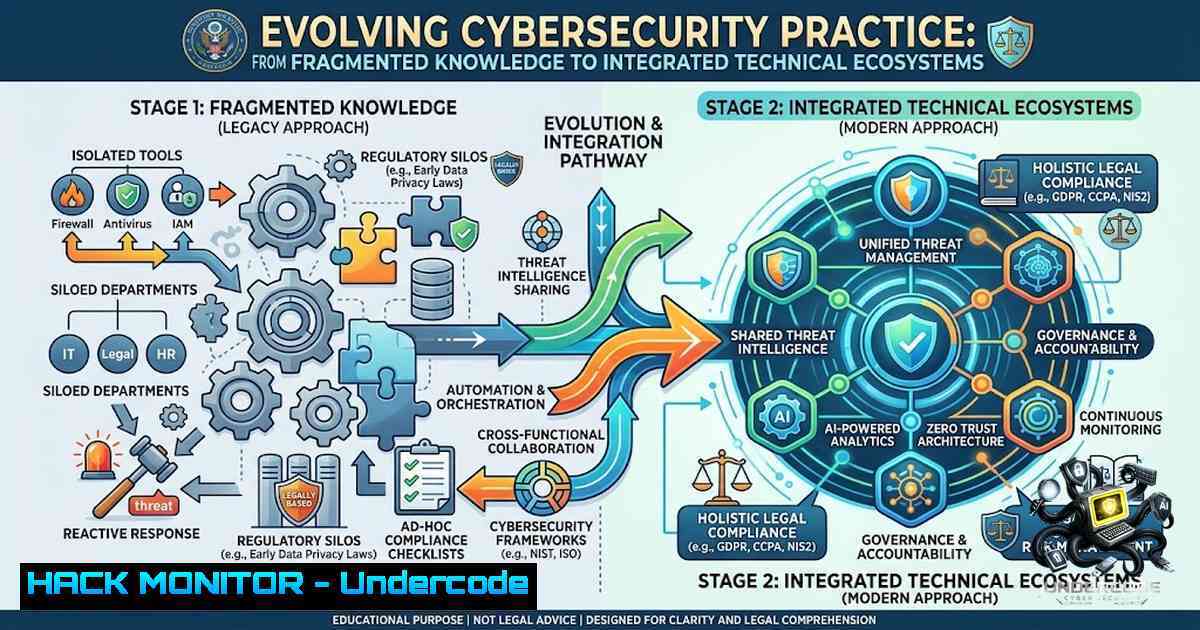
The transformation from fragmented knowledge to integrated expertise represents the fundamental evolution of cybersecurity practice. Organizations now require professionals who can bridge traditional security operations with emerging technologies including AI, cloud infrastructure, and automated threat hunting. The technical ecosystem approach, combining resources across OSINT, penetration testing, cloud security, and development operations, provides the comprehensive foundation needed to address contemporary threats. Security practitioners should focus on building transferable skills that apply across platforms while developing specialization in areas aligned with organizational needs and personal interests.
Prediction
- +1 The integration of AI-driven security automation will create new roles combining machine learning expertise with traditional security operations, with demand increasing by 40-60% over the next three years as organizations seek to reduce response times and improve threat detection accuracy.
-
+1 Cloud-1ative security tools will become the primary defense mechanism for most organizations, with traditional perimeter-based security spending decreasing by 30-40% in favor of distributed, zero-trust architectures that provide granular access controls and continuous verification.
-
-1 The complexity of integrated security ecosystems will create significant skills gaps, leaving organizations vulnerable to sophisticated attacks that exploit the intersection of multiple technologies, requiring substantial investment in training and development to maintain effective defenses.
-
+1 Automated vulnerability detection and remediation will reduce the average time to patch critical vulnerabilities from weeks to hours, significantly decreasing the window of opportunity for attackers and raising the overall security baseline across industries.
-
-1 The rapid evolution of AI-powered attack tools will outpace defensive capabilities in the short term, creating a dangerous period where adversaries leverage machine learning to identify and exploit vulnerabilities faster than organizations can respond, emphasizing the need for proactive threat hunting strategies.
▶️ Related Video (88% Match):
https://www.youtube.com/watch?v=5a2fve1N0-A
🎯Let’s Practice For Free:
🎓 Live Courses & Certifications:
Join Undercode Academy for Verified Certifications
🚀 Request a Custom Project:
Secure, high-velocity infrastructure and disruptive technological engineering. Contact our engineering team for high-tier development and proprietary systems:
[email protected]
💎 Smart Architecture | 🛡️ Secure by Design | ⭐ Trusted by Thousands
IT/Security Reporter URL:
Reported By: https://lnkd.in/p/eskyrcyX – Hackers Feeds
Extra Hub: Undercode MoN
Basic Verification: Pass ✅


