Listen to this Post
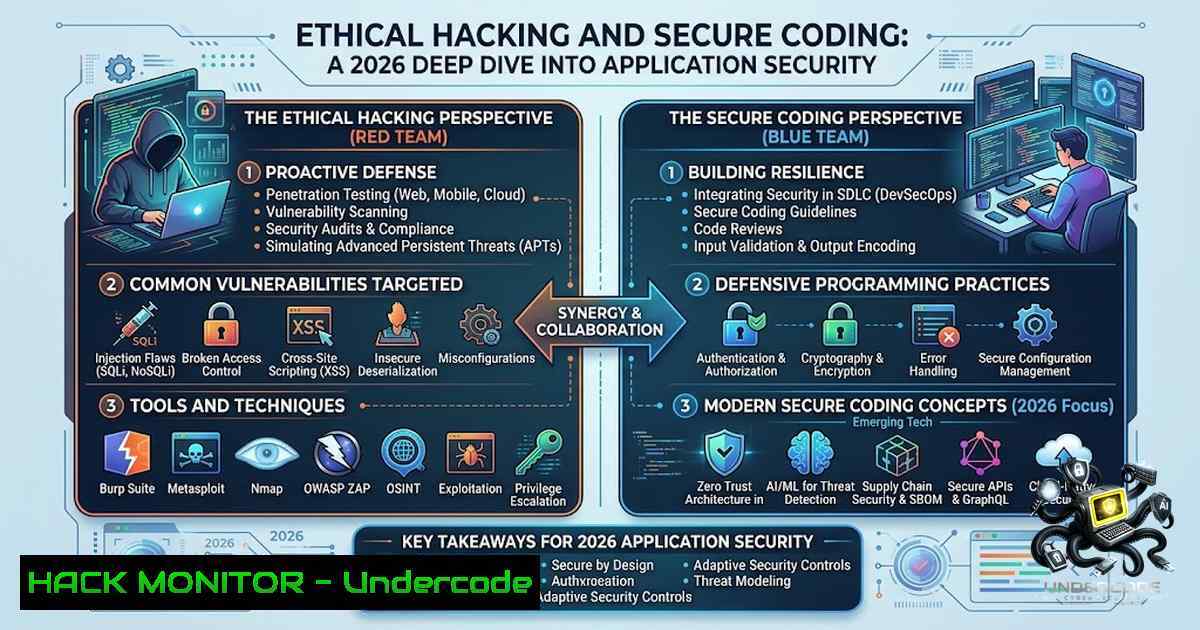
Introduction:
In 2026, the average cost of a data breach has reached new heights, with injection attacks alone accounting for 17% of all confirmed data breaches. As highlighted by StayAhead Training Ltd’s recent webinar on ‘Ethical Hacking and Secure Coding’, understanding and mitigating common vulnerabilities like SQL Injection (SQLi), Cross-Site Scripting (XSS), and Cross-Site Request Forgery (CSRF) is no longer optional—it is a fundamental requirement for any development team. This article expands on the webinar’s core concepts, providing a practical, hands-on guide to identifying and fixing these critical security flaws.
Learning Objectives & Secrets:
- Objective 1: Master the Mechanics of SQL Injection. Learn how unsanitized input can compromise your entire database and why parameterized queries are the non-1egotiable gold standard for prevention.
- Objective 2 Secret Tip: Context-Aware Output Encoding. Defeating XSS isn’t just about filtering input; it’s about encoding output based on where it appears (HTML, JavaScript, CSS, or URL) to ensure attacker-controlled data is never executed as code.
- Objective 3 Secret Tip: Session-Dependent Anti-CSRF Tokens. Implement the Synchronizer Token Pattern with a session-dependent value (like a server-side session ID) to ensure that every state-changing request is genuine and not a forgery.
1. SQL Injection (SQLi): The Unseen Threat
SQL Injection remains a top-tier risk in 2026. It occurs when attacker-controlled input is concatenated directly into a SQL query string. A simple login form can be compromised when an attacker submits a payload like admin' --, commenting out the password check and granting unauthorized access. The threat has evolved; attackers now use AI-driven automation to discover injection points in minutes.
Step‑by‑Step Guide to Identifying and Fixing SQLi:
- Detection (Linux/Kali): Use
sqlmap, an open-source penetration testing tool, to automatically detect and exploit SQL injection flaws.Install SQLMap (on Debian-based systems) sudo apt install sqlmap Test a vulnerable parameter (e.g., 'id') sqlmap -u "http://example.com/page.php?id=1" --dbs
- Mitigation (Parameterized Queries): The only reliable defense is to separate SQL logic from data.
– In Node.js (using mysql2):
// VULNERABLE: String concatenation
const query = <code>SELECT  FROM users WHERE username = '${req.body.username}' AND password = '${req.body.password}'</code>;

// SECURE: Parameterized query
const [bash] = await pool.execute(
'SELECT  FROM users WHERE username = ? AND password = ?',
[req.body.username, req.body.password]
);
This ensures the input is treated as data, not as executable code.
– In Java (JDBC): Use PreparedStatement.
– In PHP (Laravel): Use Eloquent ORM, which parameterizes queries by default.
2. Cross-Site Scripting (XSS): The Client-Side Risk
XSS vulnerabilities allow attackers to inject malicious scripts into web pages viewed by other users. These scripts can hijack sessions, steal sensitive data, or deface websites. Java applications are frequent targets because they often mix raw user input directly into web pages. To prevent this, you must employ context-aware output encoding.
Step‑by‑Step Guide to Preventing XSS:
- Detection: Use your browser’s Developer Tools (F12) to test for reflected XSS by injecting a simple payload into URL parameters, like
?search=<script>alert('XSS')</script>. If an alert box appears, the application is vulnerable.
2. Mitigation (Context-Aware Output Encoding):
- In Java (using JSP): Use the JSTL `
<c:out value="${param.search}" /> - For JavaScript Contexts: Never use user-controlled data to generate JavaScript. Use JSON serialization with proper escaping.
- Use Content Security Policy (CSP): Implement a strong CSP header to restrict the sources from which scripts can be loaded, mitigating the impact of an XSS flaw.
- Adopt Trusted Types: Use the Trusted Types API to lock down DOM injection sinks, ensuring they only accept non-spoofable values.
3. Cross-Site Request Forgery (CSRF): Forging Trust
CSRF attacks trick an authenticated user’s browser into sending an unwanted request to a vulnerable web application. This can lead to unauthorized actions like changing passwords or making purchases. The most common defense is the Synchronizer Token Pattern (STP).
Step‑by‑Step Guide to Implementing CSRF Protection:
- Detection: Check if state-changing endpoints (POST, PUT, DELETE) lack an unpredictable token in the request.
2. Mitigation (Synchronizer Token Pattern):
- Generate a Token: When a user session starts, generate a unique, unpredictable CSRF token and associate it with the user’s session.
- Embed the Token: Include this token as a hidden field in all HTML forms or in the headers of AJAX requests.
- Validate the Token: On the server side, verify that the token submitted with the request matches the one stored in the user’s session.
- Implementation (Pseudo-code for HMAC CSRF Tokens):
On the server, generate the token
import hmac, hashlib, os
secret = os.environ['CSRF_SECRET']  A secret key known only to the server
session_id = request.session.id
random_value = os.urandom(16).hex()
message = f"{len(session_id)}!{session_id}!{len(random_value)}!{random_value}"
hmac_digest = hmac.new(secret.encode(), message.encode(), hashlib.sha256).hexdigest()
csrf_token = f"{hmac_digest}.{random_value}"
The token is then sent to the client and validated on every state-changing request.
4. API Security Hardening
With APIs now handling over 80% of all web traffic, securing them is critical.
- Authentication & Authorization: Use OAuth 2.0 with the Authorization Code + PKCE flow for web apps. For JWTs, use `RS256` (asymmetric) over `HS256` and set strict expiration (e.g., 1 hour max for access tokens).
- Data Protection: Enforce TLS 1.3 and implement HTTP Strict Transport Security (HSTS). Use a secrets manager to store API keys and credentials, never hardcoding them in source code.
- Rate Limiting: Implement rate limiting to mitigate brute-force and credential-stuffing attacks.
5. Cloud and DevSecOps Integration
In 2026, security must be integrated into the development lifecycle (“shift left”).
- CI/CD Pipeline Integration: Incorporate SAST (Static Application Security Testing) and DAST (Dynamic Application Security Testing) tools into your CI/CD pipeline to automatically scan for vulnerabilities in every build.
- Infrastructure as Code (IaC) Scanning: Scan your cloud configuration files (e.g., Terraform, CloudFormation) for misconfigurations that could expose your environment to attacks.
6. Linux and Windows Commands for Security Testing
- Linux (Network Scanning):
Use Nmap to scan for open ports
nmap -sV -p- target.com

Use Nikto for basic web server scanning
nikto -h target.com
-
Windows (PowerShell – Network Testing):
Test network connectivity and port
Test-1etConnection target.com -Port 443

Resolve DNS
Resolve-DnsName target.com
What Undercode Say:
- Key Takeaway 1: Application security is a shared responsibility. Developers must adopt a “security-first” mindset, integrating practices like parameterized queries and output encoding into their daily workflow.
- Key Takeaway 2: The threat landscape is evolving rapidly. With attackers leveraging AI to find vulnerabilities, organizations must adopt automated security testing within their CI/CD pipelines to keep pace.
Analysis: The core message from the StayAhead Training webinar is clear: securing applications is not a one-time event but a continuous process. The technical complexity of modern applications, combined with the increasing sophistication of attacks, demands a proactive and layered defense strategy. Relying on a single security measure is insufficient; a combination of secure coding, robust testing, and runtime protection is essential. The shift towards DevSecOps is not just a trend but a necessity for survival in the 2026 threat landscape.
Prediction:
- +1 The integration of AI into security testing tools will significantly reduce the time and cost associated with finding and fixing vulnerabilities, leading to more secure software releases.
- -1 The use of AI by threat actors will also increase, leading to a surge in automated, sophisticated attacks that exploit zero-day vulnerabilities faster than defenses can be patched.
- -1 As organizations continue to struggle with legacy code and technical debt, SQL Injection and XSS will likely remain in the OWASP Top 10 for the foreseeable future, causing significant data breaches.
- +1 The widespread adoption of modern, secure-by-design frameworks (like React, Angular, and Laravel) that include built-in security features (like automatic output encoding and CSRF protection) will reduce the number of common vulnerabilities introduced by developers.
- -1 The growing complexity of API ecosystems will create new attack surfaces, with API security incidents becoming more common and more severe unless organizations adopt strict API security practices.
▶️ Related Video (84% Match):
🎯Let’s Practice For Free:
🎓 Live Courses & Certifications:
Join Undercode Academy for Verified Certifications
🚀 Request a Custom Project:
Secure, high-velocity infrastructure and disruptive technological engineering. Contact our engineering team for high-tier development and proprietary systems:
[email protected]
💎 Smart Architecture | 🛡️ Secure by Design | ⭐ Trusted by Thousands
IT/Security Reporter URL:
Reported By: https://lnkd.in/p/ek6Bw7Zk – Hackers Feeds
Extra Hub: Undercode MoN
Basic Verification: Pass ✅


