Listen to this Post
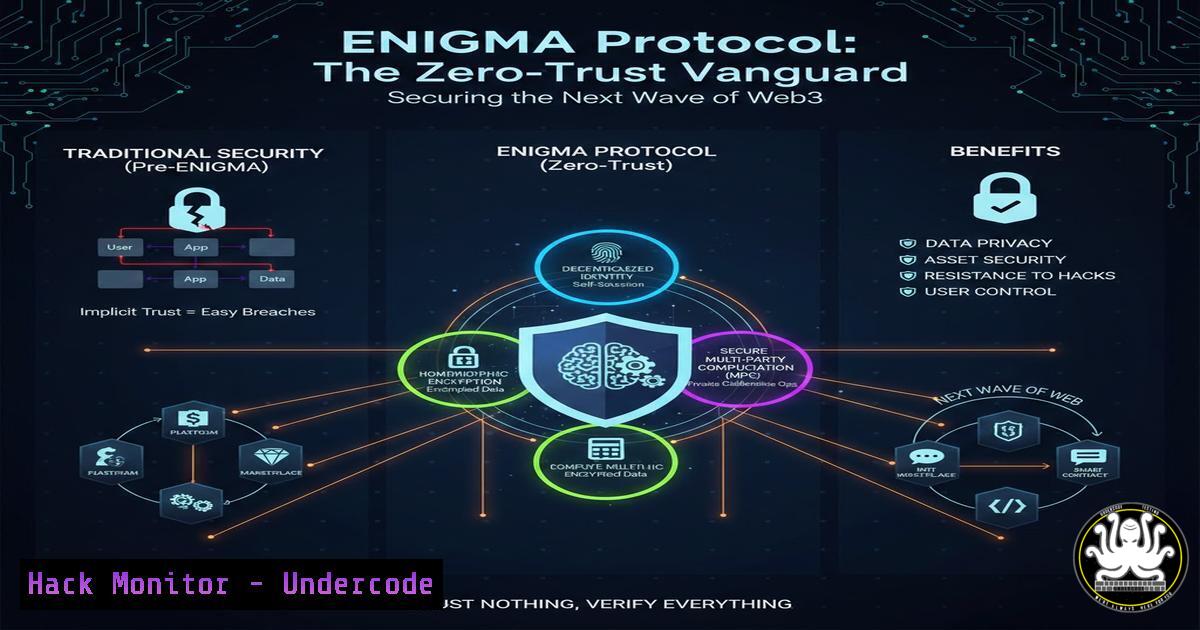
Introduction:
The convergence of elite cybersecurity and decentralized web3 technology marks a critical evolution in the digital landscape. As blockchain adoption surges, the primary threat shifts from market volatility to foundational security, demanding a new paradigm built on zero-trust principles and encrypted architectures. ENIGMA Protocol emerges at this collision point, aiming to create cyber-resilient token ecosystems that are both scalable and unstoppable.
Learning Objectives:
- Understand the critical application of zero-trust security models within web3 and blockchain infrastructures.
- Learn key technical implementations for enhancing API and smart contract security.
- Explore practical command-line and configuration steps for hardening systems against emerging threats.
You Should Know:
1. Implementing Zero-Trust Principles in a Decentralized Environment
The core tenet of zero-trust is “never trust, always verify,” a principle that must be extended beyond traditional network perimeters to smart contracts and decentralized applications (dApps). This involves continuous validation of every transaction and interaction, regardless of its origin.
Step-by-step guide explaining what this does and how to use it:
Step 1: Implement Micro-Segmentation for Smart Contracts. Treat each smart contract function as its own security segment. Use role-based access control (RBAC) rigorously.
Solidity Example:
// Define a role for privileged functions
bytes32 public constant ADMIN_ROLE = keccak256("ADMIN_ROLE");

constructor() {
_setupRole(ADMIN_ROLE, msg.sender);
}

// Use a modifier to restrict function access
modifier onlyAdmin() {
require(hasRole(ADMIN_ROLE, msg.sender), "Caller is not an admin");
_;
}

function criticalFunction() public onlyAdmin {
// Admin-only logic here
}
Step 2: Enforce Mutually Authenticated TLS (mTLS) for all API communications between your dApp’s front-end and back-end services, ensuring both parties are verified.
OpenSSL Command to generate a client certificate:
openssl req -new -newkey rsa:2048 -nodes -keyout client.key -out client.csr
openssl x509 -req -CA ca.crt -CAkey ca.key -in client.csr -out client.crt -days 365 -CAcreateserial
2. Architecting Encrypted Blockchain Data Layers
While blockchain is immutable, sensitive data should not be stored in plain text. Leveraging encryption for on-chain data ensures confidentiality while maintaining the integrity of the ledger.
Step-by-step guide explaining what this does and how to use it:
Step 1: Use Asymmetric Encryption for Data-At-Rest. Before committing data to the chain, encrypt it using a public key. Only the holder of the corresponding private key can decrypt it.
Linux Command using GnuPG for key generation:
gpg --full-generate-key  Choose key type (RSA), key size (4096), and expiry
gpg --output public.pgp --armor --export [bash]  Export public key
gpg --output encrypted_data.gpg --encrypt --recipient [bash] data.txt  Encrypt a file
Step 2: Implement Secure Key Management. Never store private keys on the application server. Use Hardware Security Modules (HSMs) or cloud-based KMS solutions.
AWS CLI command to create a KMS key:
aws kms create-key --description "Key for on-chain data encryption"
3. Hardening API Security for Web3 Ecosystems
APIs are the glue between blockchain networks and applications, making them a prime target. Securing these endpoints is non-negotiable.
Step-by-step guide explaining what this does and how to use it:
Step 1: Implement Robust API Key and Secret Rotation. Automate the process of regularly updating API credentials to minimize the impact of a potential leak.
Example using a Cron job on Linux to trigger a rotation script:
 Edit crontab: crontab -e
 Run rotation script every 30 days at 2 AM
0 2 /30   /path/to/rotate_api_keys.sh
Step 2: Enforce Rate Limiting and Throttling. Protect your API from DDoS and brute-force attacks by limiting the number of requests a user can make in a given timeframe.
Example using NGINX configuration:
http {
limit_req_zone $binary_remote_addr zone=api:10m rate=10r/s;

server {
location /api/ {
limit_req zone=api burst=20 nodelay;
proxy_pass http://api_backend;
}
}
}
4. Vulnerability Exploitation and Mitigation in Smart Contracts
Understanding common vulnerabilities is the first step to mitigating them. The classic reentrancy attack remains a significant threat.
Step-by-step guide explaining what this does and how to use it:
Step 1: Identify a Reentrancy Vulnerability. This occurs when a contract makes an external call to an untrusted contract before resolving its own state.
Vulnerable Solidity Code:
// UNSECURE - Do not use
function withdraw() public {
uint amount = balances[msg.sender];
(bool success, ) = msg.sender.call{value: amount}("");
require(success);
balances[msg.sender] = 0; // State update happens after external call
}
Step 2: Apply the Checks-Effects-Interactions Pattern. This is the standard mitigation for reentrancy attacks.
Secure Solidity Code:
function withdraw() public {
uint amount = balances[msg.sender];
balances[msg.sender] = 0; // Effects: update state FIRST
(bool success, ) = msg.sender.call{value: amount}(""); // Interactions: external call LAST
require(success);
}
5. Cloud Hardening for Node Infrastructure
Nodes validating transactions and hosting services must be secured to the highest standard to prevent network-level attacks.
Step-by-step guide explaining what this does and how to use it:
Step 1: Harden the Operating System. Remove unnecessary packages and services to reduce the attack surface.
Linux Commands for basic hardening:
 Update the system
sudo apt update && sudo apt upgrade -y
 Remove unnecessary services
sudo apt purge --auto-remove telnetd
 Configure firewall (UFW)
sudo ufw enable
sudo ufw default deny incoming
sudo ufw allow ssh
sudo ufw allow 30303  Example for an Ethereum node
Step 2: Configure Security Groups and Network ACLs. In cloud environments, ensure that only essential ports are open.
AWS CLI command to authorize a security group ingress rule:
aws ec2 authorize-security-group-ingress --group-id sg-123abc --protocol tcp --port 22 --cidr 203.0.113.0/24
What Undercode Say:
- The fusion of zero-trust architecture with blockchain is not an optional upgrade but a foundational requirement for the next phase of web3 adoption, moving beyond mere decentralization to assured security.
- Success in this space hinges on a team’s ability to translate deep technical cybersecurity expertise—like that highlighted in ENIGMA’s leadership—into practical, resilient, and trustable systems for both B2B and B2C markets.
The announcement of ENIGMA Protocol signifies a maturation in the web3 space, where security is being prioritized as a core feature rather than an afterthought. The reference to applying “DoD concepts” suggests a focus on threat-informed defense and cyber resilience, which are critical for protecting high-value digital assets and sovereign data. The project’s potential impact will be measured by its ability to deliver these elite security principles in a usable and scalable manner, effectively building a fortified bridge between traditional cybersecurity rigor and the innovative promise of web3.
Prediction:
The proactive integration of military-grade zero-trust and encryption frameworks into web3, as pioneered by entities like ENIGMA, will set a new industry standard within the next 2-3 years. This will drastically reduce the frequency and severity of major exchange hacks and DeFi exploits, shifting attacker focus towards more complex social engineering and supply chain attacks. This evolution will compel regulatory bodies to formalize security requirements for blockchain projects, making advanced cryptographic architectures and verified security postures a baseline for market entry and consumer trust.
🎯Let’s Practice For Free:
IT/Security Reporter URL:
Reported By: Marcuscrockett Im – Hackers Feeds
Extra Hub: Undercode MoN
Basic Verification: Pass ✅


