Listen to this Post
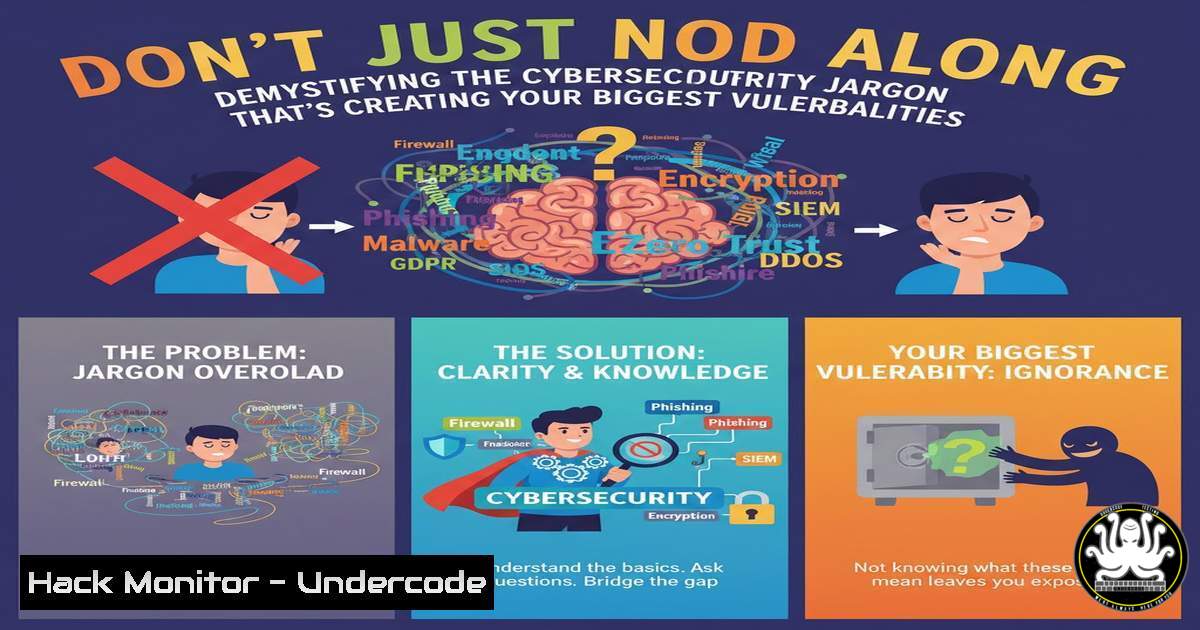
Introduction:
In boardrooms and security briefings worldwide, a silent agreement unfolds: professionals nod at terms like “Zero Trust” and “SOAR” while operational gaps widen unnoticed. This culture of unasked questions, stemming from the perceived complexity of cybersecurity jargon, is a critical vulnerability itself. True security resilience is built not on memorized lexicon but on foundational understanding and the courage to demand clarity.
Learning Objectives:
- Decode three high-impact cybersecurity frameworks by moving from abstract definition to practical implementation.
- Execute basic commands and configurations that bring key security concepts from theory into your tangible environment.
- Cultivate a strategy to identify and bridge knowledge gaps within your team, transforming jargon from a barrier into a tool for shared defense.
You Should Know:
- Zero Trust: It’s More Than a Buzzword; It’s a Configuration
The principle of “Never Trust, Always Verify” is often paraded but rarely broken down into infrastructure. At its core, Zero Trust mandates strict identity verification for every person and device attempting to access resources, regardless of whether they are inside or outside the network perimeter. It dismantles the outdated “castle-and-moat” model.
Step‑by‑step guide explaining what this does and how to use it.
Implementation begins with micro-segmentation and explicit access policies. For a Linux server, you can simulate a Zero Trust approach at the host level using strict firewall rules.
– Step 1: Identify Critical Assets. Pinpoint the server or service (e.g., a database on port 5432).
– Step 2: Define Explicit Allow Rules. Deny all traffic by default, then permit only from specific, authorized source IPs.
 Flush existing iptables rules (use with caution on production systems)
sudo iptables -F
 Set default policy to DROP
sudo iptables -P INPUT DROP
sudo iptables -P FORWARD DROP
 Allow established/related connections
sudo iptables -A INPUT -m state --state ESTABLISHED,RELATED -j ACCEPT
 Allow SSH only from a management jump box (e.g., 10.0.1.5)
sudo iptables -A INPUT -p tcp -s 10.0.1.5 --dport 22 -j ACCEPT
 Allow database traffic only from the application server (e.g., 10.0.2.10)
sudo iptables -A INPUT -p tcp -s 10.0.2.10 --dport 5432 -j ACCEPT
– Step 3: Log and Monitor. Add logging for denied packets to analyze suspicious access attempts: sudo iptables -A INPUT -j LOG --log-prefix "IPTABLES-DENIED: " --log-level 4. This command-level enforcement is a foundational step toward a full Zero Trust architecture.
- SOAR: Security Orchestration, Automation, and Response in Action
SOAR platforms integrate disparate tools to automate incident response workflows. The jargon hides a simple goal: reduce Mean Time to Respond (MTTR) by automating repetitive tasks like alert triage and initial containment.
Step‑by‑step guide explaining what this does and how to use it.
A basic SOAR playbook for a phishing alert can be automated even with open-source tools like Shuffle or a Python script.
– Step 1: Trigger. The playbook initiates upon receiving a “High-Severity Phishing Email” alert from your SIEM.
– Step 2: Enrichment. The script automatically queries the email sender’s IP against threat intelligence feeds (e.g., via AbuseIPDB API).
import requests
def check_ip_abuse(ip_address, api_key):
url = f"https://api.abuseipdb.com/api/v2/check"
headers = {'Key': api_key, 'Accept': 'application/json'}
params = {'ipAddress': ip_address, 'maxAgeInDays': '90'}
response = requests.get(url=url, headers=headers, params=params)
return response.json()
 Example usage
result = check_ip_abuse("192.0.2.1", "YOUR_API_KEY")
if result['data']['abuseConfidenceScore'] > 80:
print(f"[!] Malicious IP detected. Proceeding to containment.")
– Step 3: Automated Containment. If confidence score is high, the playbook executes an API call to your email gateway to quarantine all messages from that sender in the last 24 hours and updates the firewall block list.
3. EDR: Seeing Beyond the Antivirus Label
Endpoint Detection and Response (EDR) provides continuous monitoring and response capabilities on endpoints. The key differentiator from traditional antivirus is behavioral analysis and forensic data retention.
Step‑by‑step guide explaining what this does and how to use it.
To leverage EDR, you must understand its telemetry and response actions. On a Windows system with Microsoft Defender for Endpoint (a leading EDR), you can use PowerShell to investigate.
– Step 1: Check EDR Health and Status.
 Verify the EDR service is running
Get-Service -Name Sense
 Check if real-time protection is enabled
Get-MpComputerStatus | Select-Object RealTimeProtectionEnabled
– Step 2: Initiate a Manual Scan on a Suspicious Directory.
 Start an advanced scan with full remediation on a specific path
Start-MpScan -ScanPath "C:\Users\Public\Downloads" -ScanType FullScan -Force
– Step 3: Collect Forensic Data. Use the EDR’s built-in tools to isolate a device and capture process trees for analysis during an incident, a critical step before containment.
- Threat Intelligence: From Data Feeds to Actionable Indicators
Threat Intelligence (TI) is not just a feed of IPs and hashes; it’s the contextual information that helps you prioritize threats relevant to your industry and tech stack. Effective use turns raw data into proactive defense rules.
Step‑by‑step guide explaining what this does and how to use it.
Operationalize TI by integrating Indicators of Compromise (IoCs) into your security controls.
– Step 1: Source Curated Feeds. Subscribe to industry-specific (e.g., FS-ISAC for finance) or malware-specific feeds.
– Step 2: Convert IoCs to Block Rules. Automate the process. For a malicious domain, update your DNS or network firewall.
 Example: Add a malicious domain to the local hosts file for blocking (Linux/Windows)
echo "0.0.0.0 evil-malware-domain.com" | sudo tee -a /etc/hosts
 For network-wide blocking, update a tool like Pi-hole or firewall rule set
– Step 3: Measure Efficacy. Regularly review logs to confirm blocks and adjust feed subscriptions based on false positive rates and relevance.
- Cloud Security Posture Management (CSPM): Continuous Compliance is Not Optional
CSPM tools automatically identify misconfigurations in cloud environments (AWS, Azure, GCP) that lead to data exposure or breach. Understanding this term means moving from periodic audits to real-time, automated compliance checking.
Step‑by‑step guide explaining what this does and how to use it.
Manually apply a core CSPM rule: ensuring S3 buckets are not publicly readable.
– Step 1: Audit Your AWS S3 Buckets.
 Use AWS CLI to list all buckets and their public access block status
aws s3api list-buckets --query "Buckets[].Name"
aws s3api get-public-access-block --bucket-name YOUR_BUCKET_NAME
– Step 2: Remediate a Misconfiguration. If a bucket is publicly readable, change its ACL and enable block public access.
 Make the bucket private
aws s3api put-bucket-acl --bucket YOUR_BUCKET_NAME --acl private
 Enable block public access
aws s3api put-public-access-block \
--bucket YOUR_BUCKET_NAME \
--public-access-block-configuration "BlockPublicAcls=true,IgnorePublicAcls=true,BlockPublicPolicy=true,RestrictPublicBuckets=true"
– Step 3: Automate with AWS Config. Create a custom rule in AWS Config to continuously monitor and flag non-compliant buckets, which is the essence of CSPM.
What Undercode Say:
- Jargon is a Security Threat. When terminology becomes a substitute for shared understanding, it creates invisible vulnerabilities in communication and implementation. The willingness to ask “Can you explain that simply?” is a primary control mechanism.
- Implementation Demystifies Theory. The leap from nodding in agreement to executing a simple iptables rule or PowerShell command is where real security maturity begins. Knowledge must be operational.
The analysis suggests that the cybersecurity industry’s reliance on complex terminology acts as a social engineering attack on itself, fostering complacency. The comments from industry leaders like Grant Haberkorn and Prasenjit Saha underscore that clarity is the bedrock of resilience, especially for AI adoption. The humorous take on “Zero Trust” by David Ajuzie highlights how relatable, simple explanations are more effective for adoption than textbook definitions. The path forward requires a cultural shift where demystifying concepts is a valued skill, and training focuses on “how” and “why,” not just “what.”
Prediction:
The future of cybersecurity efficacy will bifurcate. Organizations that foster cultures of clarity and continuous, hands-on learning will see a dramatic reduction in incidents caused by misconfiguration and process gaps. Conversely, entities that allow jargon to obscure understanding will face increased breaches, not from advanced exploits, but from fundamental failures to implement basic hygiene. Furthermore, AI-powered security tools will increasingly include “jargon decryption” and guided remediation as a standard feature, forcing a new level of transparency and accountability in how security solutions are marketed and deployed. The era of silent nods is ending.
▶️ Related Video (82% Match):
🎯Let’s Practice For Free:
IT/Security Reporter URL:
Reported By: Mmohanty Cybersecurity – Hackers Feeds
Extra Hub: Undercode MoN
Basic Verification: Pass ✅


