Listen to this Post
Introduction:
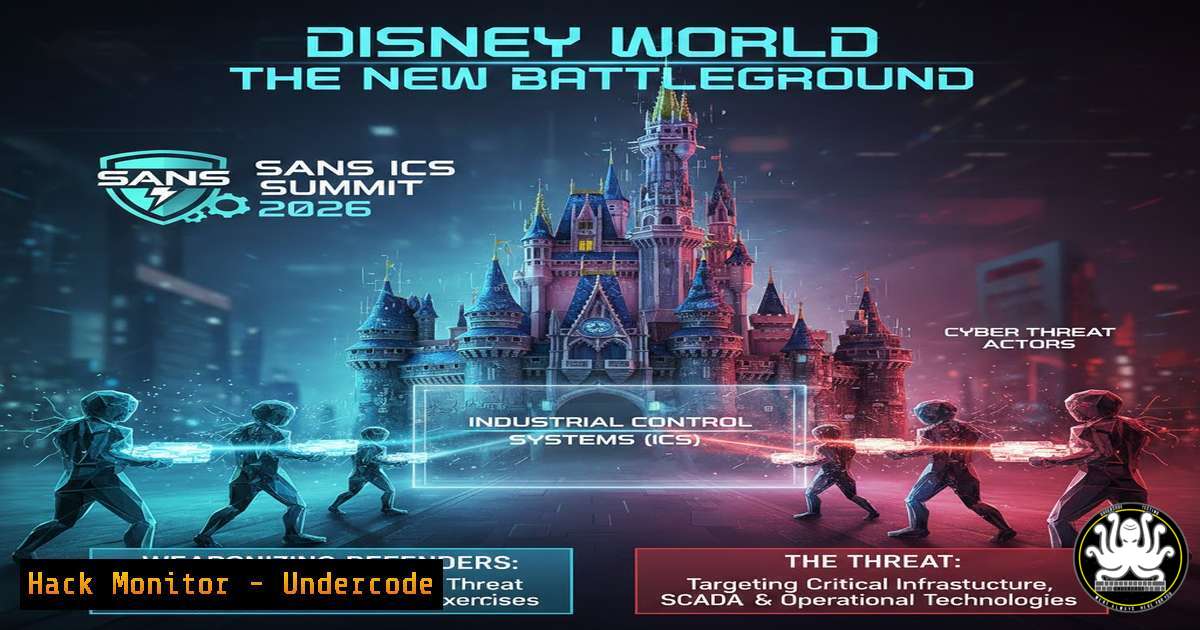
The convergence of IT and Operational Technology (OT) networks has expanded the attack surface for critical infrastructure, making specialized industrial cybersecurity skills non-negotiable. The SANS ICS Security Summit, returning to Orlando in June 2026, is positioned as a crucial tactical nexus for professionals tasked with defending power grids, water systems, and manufacturing plants. This event transcends theory, focusing on hands-on workshops and real-world mitigation strategies directly applicable to securing Industrial Control Systems (ICS) and Supervisory Control and Data Acquisition (SCADA) environments.
Learning Objectives:
- Understand the core offensive and defensive techniques specific to ICS/OT environments demonstrated at the Summit.
- Learn practical steps to implement network segmentation and monitor proprietary industrial protocols.
- Gain insights into integrating summit workshops with advanced follow-on training like the ICS418 course for skill mastery.
You Should Know:
1. Foundational ICS Network Segmentation & Monitoring
The first line of defense in OT is isolating critical process networks from corporate IT. This involves deploying next-generation firewalls with deep packet inspection for industrial protocols and creating robust demilitarized zones (DMZs).
Step‑by‑step guide explaining what this does and how to use it.
Step 1: Map the Process Control Network (PCN). Use passive discovery tools to inventory assets without disrupting operations.
`sudo apt install wireshark` (Linux) or download from wireshark.org (Windows)
Apply a capture filter for common OT protocols: `port 502 or port 20000 or port 44818` (Modbus, DNP3, EtherNet/IP)
Step 2: Design the Segmentation Firewall Rule Set. Policies should be “deny all, allow by exception.” Create rules that only permit specific protocol conversations between engineering workstations and controllers.
Example pfSense/OPNsense rule logic: `Pass IN on opt1 proto tcp from 10.10.5.20 to 10.10.10.50 port 502` (Allow a specific HMI to talk to a PLC).
Step 3: Deploy a Network Tap or SPAN port on the OT network core and connect a network security monitoring (NSM) sensor.
On a Linux sensor, use `zeek` (formerly Bro) with ICS protocol parsers:
git clone https://github.com/zeek/zeek
cd zeek && ./configure && make && sudo make install
echo '@load policy/tuning/json-logs.zeek' >> local.zeek
echo '@load policy/protocols/modbus' >> local.zeek
sudo zeek -i eth0 local.zeek
2. Hands-On Analysis of Industrial Protocol Traffic
Understanding the contents of OT protocols is key to detecting anomalies. Workshops will dive into parsing and inspecting packets for malicious commands.
Step‑by‑step guide explaining what this does and how to use it.
Step 1: Capture Live or Use a PCAP of OT Traffic. Use Wireshark on a mirrored port.
Step 2: Decode Common Protocols. In Wireshark, navigate to Analyze -> Enabled Protocols. Ensure Modbus/TCP, DNP3, S7comm, and `EtherNet/IP` are checked.
Step 3: Hunt for Anomalous Function Codes. A Modbus function code `(0x06) Write Single Register` is normal, but a sudden spike in `(0x10) Write Multiple Registers` could indicate a manipulation attempt. Filter in Wireshark: modbus.func_code == 0x10.
Step 4: Script Basic Analysis with Python. Use the `pyshark` and `scapy` libraries to automate detection.
import pyshark
cap = pyshark.FileCapture('ot_traffic.pcap', display_filter='modbus')
for pkt in cap:
if int(pkt.modbus.func_code) == 16:
print(f"ALERT: Write Multiple Registers from {pkt.ip.src} to {pkt.ip.dst}")
3. Hardening a Windows-based HMI/Engineering Workstation
These stations are high-value targets. Summit labs often guide through locking down these systems beyond standard IT policies.
Step‑by‑step guide explaining what this does and how to use it.
Step 1: Implement Application Whitelisting. Use Windows Defender Application Control (WDAC) to block unauthorized executables.
Open PowerShell as Admin: `Get-CimInstance -ClassName Win32_UserAccount` to identify required user contexts.
Generate a base policy: `New-CIPolicy -Level PcaCertificate -FilePath ‘C:\Policy.xml’ -UserPEs`
Step 2: Disable Unnecessary Services & Ports. Use `services.msc` to disable `W3SVC` (IIS) and `WinRM` if not needed. Block inbound RDP from non-management subnets via Windows Firewall Advanced Security.
Step 3: Configure Enhanced Audit Logging. Enable command-line auditing via Group Policy (Computer Configuration -> Administrative Templates -> System -> Audit Process Creation -> Include command line in process creation events). Logs are critical for forensic investigations.
4. Building a Cheap ICS Threat Intelligence Feed
Leverage open-source tools to gather intelligence on threats targeting your industry vertical.
Step‑by‑step guide explaining what this does and how to use it.
Step 1: Set Up a Collector. Use a Linux VM. Install `MISP` (Malware Information Sharing Platform) or TheHive.
Step 2: Subscribe to OT-Focused Feeds. Add free ICS ISAC feeds or open-source MISP instances to your platform. Use `Cortex` analyzers to automate IOC enrichment.
Step 3: Create Custom Sigma Rules for OT. Write detection rules for TTPs seen in ICS advisories (e.g., INCONTROLLER, PIPEDREAM).
title: Suspicious S7comm Plus Traffic
logsource:
product: zeek
detection:
zeek_s7comm:
function: 0x00  CPU Services
param: 'Start/Stop/Restart'
condition: zeek_s7comm
- Pre-Summit Lab: Simulating a PLC Logic Manipulation & Defense
Get ahead by setting up a safe test environment to understand attack vectors.
Step‑by‑step guide explaining what this does and how to use it.
Step 1: Build a Test Rig. Use `VirtualBox` to run an attacker VM (Kali Linux) and a victim VM (Windows 10).
Step 2: Simulate a Process. Install `ICSSIM` or `CPwK` from Github to simulate a water treatment or bottling plant with virtual PLCs.
Step 3: Launch a Read/Write Attack. From the Kali VM, use `python-nmap` and `modbus-cli` to scan for and interact with the simulated PLC.
sudo nmap -p 502 --script modbus-discover 192.168.1.100
modbus read --host 192.168.1.100 --address 0 --count 5
modbus write --host 192.168.1.100 --address 0 --value 0
Step 4: Detect the Attack. On a separate monitoring host, run `Security Onion` and import the PCAP from the simulation. Write a Suricata rule to alert on the write command to the critical coil address.
What Undercode Say:
- The Value is in the Integration: The summit’s power isn’t in isolated workshops, but in their sequential design—network segmentation principles directly enable the safe deployment of monitoring tools analyzed in later sessions.
- Beyond Passive Learning: The explicit encouragement to connect with instructors like Dean Parsons and Tim Conway turns the event into a live mentorship opportunity, crucial for navigating the nuanced, proprietary world of OT security.
The summit acts as a force multiplier. It takes foundational concepts and, through guided, hands-on repetition in a risk-free environment, transforms them into muscle memory. The post-summit training path (like ICS418: ICS Active Defense & Incident Response) is where skills are weaponized, turning awareness into actionable defense protocols for the plant floor.
Prediction:
The focused, in-person nature of the 2026 summit signals a shift towards depth over breadth in ICS cybersecurity training. As attacks like those on water facilities and energy grids become more sophisticated, the industry is moving beyond awareness campaigns to creating cadres of deeply skilled practitioners. The integration of summit networking with intensive SANS courses will become the benchmark for producing defenders capable of not just understanding threats, but architecting resilient systems and responding to live incidents within complex, legacy-laden industrial environments. This model will likely be adopted by other training bodies, raising the bar for the entire critical infrastructure defense community.
▶️ Related Video (76% Match):
🎯Let’s Practice For Free:
IT/Security Reporter URL:
Reported By: Dean Parsons – Hackers Feeds
Extra Hub: Undercode MoN
Basic Verification: Pass ✅


