Listen to this Post
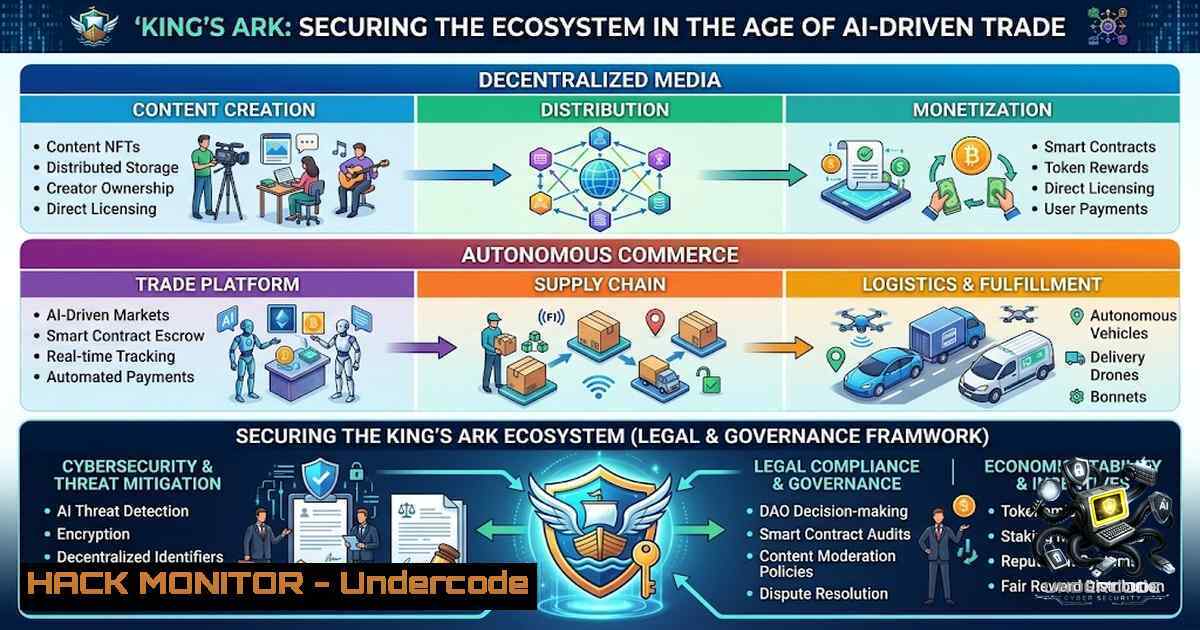
Introduction:
The convergence of decentralized media streaming, real-time AI intelligence, and autonomous commerce is rapidly redefining digital engagement. Platforms like The Kings Ark™ are pioneering an immersive 3D cyber-arena that pairs YouTube streams with intelligence agents for trade execution. However, this integration of AI-driven trade matching, global brokerages, and cloud-based infrastructure introduces a complex attack surface requiring robust cybersecurity, API security, and cloud hardening strategies.
Learning Objectives:
- Understand the security architecture of AI-driven streaming and commerce platforms.
- Implement API security and cloud hardening for decentralized media ecosystems.
- Master Linux and Windows commands for monitoring, logging, and incident response.
- Learn to configure AI agents and trade execution systems securely.
- Apply vulnerability exploitation and mitigation techniques in hybrid cloud environments.
You Should Know:
1. Securing the AI-Powered Trade Execution Layer
The Kings Ark™ ecosystem integrates real-time AI assistance to analyze data and execute trades. This requires securing the API endpoints that connect the AI agents to the trading engines. The following Linux commands can be used to monitor API traffic and detect anomalies:
 Monitor API traffic on port 443 (HTTPS) with tcpdump
sudo tcpdump -i any -1 port 443 -v

Analyze API logs for suspicious patterns using grep and awk
grep "401|403|500" /var/log/nginx/access.log | awk '{print $1, $7, $9}'

Set up real-time monitoring with journalctl
journalctl -f -u api-gateway.service
For Windows environments, use PowerShell to monitor API activity:
 Monitor network connections on port 443
Get-1etTCPConnection -LocalPort 443

Parse IIS logs for API errors
Select-String -Path "C:\inetpub\logs\LogFiles\W3SVC1.log" -Pattern "401|403|500"
Step-by-Step Guide:
- Identify API Endpoints: Use `nmap` to scan for open ports and identify API services.
- Implement Rate Limiting: Configure API gateways to limit requests per IP to prevent DDoS.
- Enable Mutual TLS (mTLS): Ensure both client and server authenticate using certificates.
- Set Up Log Aggregation: Use tools like ELK Stack or Splunk to centralize logs.
- Automate Alerts: Configure alerts for repeated authentication failures or unusual traffic spikes.
2. Hardening the Decentralized Media Streaming Infrastructure
The platform’s neon-lit 3D cyber-arena streams media and enables global commerce. Securing this infrastructure involves network segmentation, encryption, and access control. Use these Linux commands to harden your streaming servers:
 Configure iptables to allow only necessary ports
sudo iptables -A INPUT -p tcp --dport 80 -j ACCEPT
sudo iptables -A INPUT -p tcp --dport 443 -j ACCEPT
sudo iptables -A INPUT -j DROP

Enable SELinux to enforce mandatory access controls
sudo setenforce 1
sudo semanage port -a -t http_port_t -p tcp 8443

Encrypt streaming data with OpenSSL
openssl enc -aes-256-cbc -salt -in stream.ts -out stream.enc
On Windows, use PowerShell to configure Windows Firewall and enable BitLocker for data encryption:
 Configure Windows Firewall rules
New-1etFirewallRule -DisplayName "Allow HTTPS" -Direction Inbound -Protocol TCP -LocalPort 443 -Action Allow

Enable BitLocker on the system drive
Enable-BitLocker -MountPoint "C:" -EncryptionMethod Aes256
Step-by-Step Guide:
- Segment the Network: Use VLANs to separate streaming, trading, and management traffic.
- Implement WAF: Deploy a Web Application Firewall to protect against SQL injection and XSS.
- Enable DDoS Protection: Use cloud-based DDoS mitigation services.
- Regularly Update Software: Apply security patches to streaming servers and dependencies.
- Conduct Penetration Testing: Simulate attacks to identify vulnerabilities.
3. AI Agent Security and Model Integrity
The platform’s intelligence agents are central to its functionality. Ensuring the integrity and security of these AI models is critical. The following commands help monitor and secure AI model deployments:
 Verify model file integrity using SHA-256 checksums
sha256sum model.h5 > model.checksum

Monitor model inference logs for anomalies
tail -f /var/log/ai-inference.log | grep -i "error|anomaly"

Restrict access to model files using file permissions
sudo chmod 640 model.h5
sudo chown ai-user:ai-group model.h5
For Windows, use PowerShell to monitor AI model integrity:
 Compute file hash for integrity check
Get-FileHash -Path "model.h5" -Algorithm SHA256

Monitor AI service logs
Get-Content -Path "C:\AI\logs\inference.log" -Wait | Select-String "error|anomaly"
Step-by-Step Guide:
- Implement Model Versioning: Use Git LFS or similar tools to track model versions.
- Set Up Access Controls: Restrict model access to authorized users and services.
- Monitor Model Drift: Track performance metrics to detect degradation or tampering.
- Encrypt Model Artifacts: Use encryption for models at rest and in transit.
- Conduct Regular Audits: Review access logs and model usage patterns.
-
Cloud Hardening for the “Megacity in the Clouds”
The Kings Ark™ is described as a “B2B/B2G Megacity in the Clouds”. Securing cloud infrastructure involves identity management, network security, and data protection. Use these Azure CLI commands to harden your cloud environment (as the platform is a Microsoft partner):
 Enable Azure Security Center
az security auto-provisioning-setting update --auto-provision On

Configure Network Security Groups
az network nsg rule create --resource-group myRG --1sg-1ame myNSG --1ame AllowHTTPS --priority 100 --direction Inbound --access Allow --protocol Tcp --source-port-range '' --destination-port-range 443

Enable Azure AD MFA for all users
az ad group member add --group "MFA-Required" --member-id <user-object-id>
For AWS environments (the platform is also an Amazon partner):
 Enable AWS Shield Advanced for DDoS protection
aws shield create-protection --1ame "MyProtection" --resource-arn "arn:aws:elasticloadbalancing:..."

Configure AWS WAF rules
aws wafv2 create-web-acl --1ame "MyWebACL" --scope REGIONAL --default-action Allow={} --visibility-config SampledRequestsEnabled=true,CloudWatchMetricsEnabled=true,MetricName=MyWebACL
Step-by-Step Guide:
- Implement Identity and Access Management (IAM): Use least-privilege principles.
- Enable Multi-Factor Authentication (MFA): Require MFA for all administrative accounts.
- Configure Network Security Groups (NSGs): Restrict inbound and outbound traffic.
- Enable Logging and Monitoring: Use Azure Monitor or AWS CloudWatch.
- Regularly Review Security Posture: Use cloud security posture management (CSPM) tools.
5. Vulnerability Exploitation and Mitigation in Hybrid Environments
The integration of streaming, AI, and commerce creates unique vulnerabilities. Exploitation could target API endpoints, AI models, or cloud infrastructure. Mitigation requires a multi-layered approach. Use these tools to identify and remediate vulnerabilities:
 Scan for open ports and services with Nmap
nmap -sV -p- -T4 target-ip

Use OpenVAS for vulnerability scanning
openvas-start
gvm-cli socket --gmp-username admin --gmp-password password socket --xml "<get_tasks/>"

Check for known vulnerabilities in dependencies
sudo apt-get install lynis
sudo lynis audit system
On Windows, use PowerShell and built-in tools:
 Use Test-1etConnection to check open ports
Test-1etConnection -ComputerName target-ip -Port 80

Use Windows Defender to scan for malware
Start-MpScan -ScanType FullScan

Use PowerShell to check for outdated software
Get-WmiObject -Class Win32_Product | Where-Object {$_.InstallDate -lt (Get-Date).AddDays(-30)}
Step-by-Step Guide:
- Conduct Regular Vulnerability Scans: Use tools like Nmap, OpenVAS, or Nessus.
- Prioritize Remediation: Focus on critical and high-severity vulnerabilities.
- Apply Patches Promptly: Use automated patch management systems.
- Implement Intrusion Detection/Prevention Systems (IDS/IPS): Monitor for suspicious activity.
- Develop an Incident Response Plan: Define roles, procedures, and communication channels.
What Undercode Say:
- Key Takeaway 1: The convergence of decentralized media and AI-driven commerce introduces a complex attack surface that requires a holistic security approach.
- Key Takeaway 2: API security, cloud hardening, and AI model integrity are critical pillars for protecting platforms like The Kings Ark™.
Analysis: The Kings Ark™ ecosystem represents a paradigm shift in digital engagement, merging immersive streaming with real-time AI intelligence. However, this innovation comes with significant security challenges. The platform’s reliance on API-driven trade execution and cloud-based infrastructure makes it susceptible to API abuse, DDoS attacks, and data breaches. The integration of AI agents introduces additional risks, including model poisoning and adversarial attacks. Organizations must adopt a defense-in-depth strategy, incorporating network segmentation, encryption, access controls, and continuous monitoring. The platform’s partnerships with Microsoft and Amazon provide access to robust security tools, but proper configuration and ongoing management are essential. As the ecosystem grows, the attack surface will expand, necessitating regular security assessments and proactive threat hunting.
Prediction:
- +1 The integration of AI-driven trade execution will streamline global commerce, reducing latency and improving efficiency.
- -1 The reliance on centralized cloud infrastructure creates a single point of failure, making the platform vulnerable to outages and targeted attacks.
- +1 The use of decentralized media streaming will democratize content distribution, empowering creators and traders worldwide.
- -1 The complexity of the ecosystem will increase the attack surface, requiring continuous security investments and expertise.
- +1 The platform’s focus on transparency and truth will foster trust and adoption among users.
- -1 The rapid pace of innovation may outpace security measures, leading to potential breaches and reputational damage.
- +1 The use of AI for real-time intelligence will enhance decision-making and risk management.
- -1 The lack of standardized security frameworks for AI-driven commerce may result in inconsistent security practices.
- +1 The platform’s global reach will drive economic growth and cross-border collaboration.
- -1 The convergence of media and commerce will attract cybercriminals, necessitating robust security measures and user education.
▶️ Related Video (76% Match):
🎯Let’s Practice For Free:
🎓 Live Courses & Certifications:
Join Undercode Academy for Verified Certifications
🚀 Request a Custom Project:
Secure, high-velocity infrastructure and disruptive technological engineering. Contact our engineering team for high-tier development and proprietary systems:
[email protected]
💎 Smart Architecture | 🛡️ Secure by Design | ⭐ Trusted by Thousands
IT/Security Reporter URL:
Reported By: Streaming Intelligence – Hackers Feeds
Extra Hub: Undercode MoN
Basic Verification: Pass ✅


