Listen to this Post
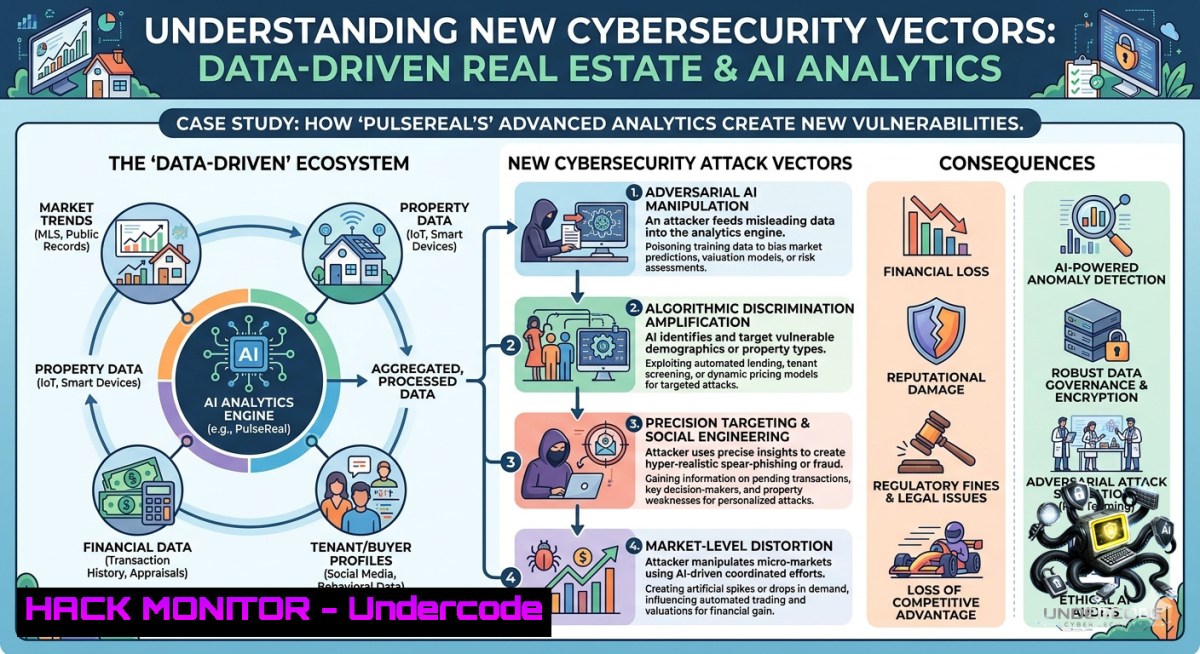
Introduction:
The shift toward data-driven real estate investing, powered by platforms like PulseReal (www.pulsereal.com), introduces AI-driven market intelligence and property analytics. However, aggregating sensitive financial, property, and investor data creates a lucrative attack surface for cybercriminals targeting API endpoints, cloud storage, and AI model pipelines. This article explores how to secure real-time analytics platforms, harden cloud infrastructure, and mitigate exploitation vectors specific to PropTech AI systems.
Learning Objectives:
- Identify security gaps in API-driven real estate intelligence feeds and implement rate limiting, authentication, and input validation.
- Apply Linux and Windows commands to detect unauthorized data exfiltration from property databases and analytics logs.
- Harden AI model integrity against poisoning attacks that could distort investment insights or market predictions.
You Should Know:
- Securing API Endpoints for Real Estate Data Feeds
PulseReal and similar platforms expose APIs to deliver market intelligence. Unsecured APIs can leak property valuations, investor strategies, or personally identifiable information (PII). Below is a step‑by‑step guide to audit and harden an API using common Linux tools and configuration examples.
Step‑by‑step guide:
- Test API response for sensitive data exposure – Use `curl` to check for verbose error messages or unauthenticated access:
`curl -X GET “https://api.pulsereal.com/v1/property/12345” -H “Accept: application/json”`
If a 200 OK returns data without an API key, immediate remediation is required. - Implement API key rotation – Generate a new key and enforce expiration:
`openssl rand -hex 32` (Linux) or `certutil -rand 32` (Windows). - Rate limiting with Nginx – Add to
/etc/nginx/nginx.conf:limit_req_zone $binary_remote_addr zone=realestate:10m rate=10r/m; location /api/ { limit_req zone=realestate burst=5 nodelay; } - Validate input to prevent injection – Use `jq` to sanitize JSON payloads:
`echo ‘{“address”:”Main St; DROP TABLE properties;–“}’ | jq -c .` - Log API access – Monitor with `tail -f /var/log/nginx/access.log | grep “POST /api”` on Linux or `Get-Content C:\logs\api.log -Wait | Select-String “401”` in PowerShell.
2. Hardening Cloud Infrastructure for AI Analytics
Cloud environments (AWS, Azure, GCP) hosting PulseReal’s analytics pipelines need strict IAM controls. Misconfigured S3 buckets or Azure blobs can expose entire property databases.
Step‑by‑step guide:
- Audit public bucket access (AWS CLI) – Run:
`aws s3api get-bucket-acl –bucket pulsereal-data`
If `URI` shows `http://acs.amazonaws.com/groups/global/AllUsers`, remediate:
`aws s3api put-bucket-acl –bucket pulsereal-data –acl private</h2>
- Enable VPC flow logs for anomaly detection – AWS:
`aws ec2 create-flow-logs --resource-type VPC --resource-ids vpc-xxxxx --traffic-type ALL --log-group-1ame pulsereal-flow-logs`
- Windows Azure CLI: block public blob access –
<h2 style="color: yellow;">az storage account update –1ame pulserealstorage –allow-blob-public-access false</h2>
- Set up CloudTrail to monitor API calls –
<h2 style="color: yellow;">aws cloudtrail create-trail –1ame pulsereal-trail –s3-bucket-1ame pulsereal-logs –is-multi-region-trail</h2>
- Review IAM policies for least privilege – Use `aws iam list-policies --scope Local` and `aws iam get-policy-version --policy-arn arn:aws:iam::xxx:policy/DataAnalyst --version-id v1` to remove wildcard actions (“Action”: “s3:”→“s3:GetObject”`).
3. Detecting Data Exfiltration from Property Databases
- Enable VPC flow logs for anomaly detection – AWS:
`aws ec2 create-flow-logs --resource-type VPC --resource-ids vpc-xxxxx --traffic-type ALL --log-group-1ame pulsereal-flow-logs`
- Windows Azure CLI: block public blob access –
<h2 style="color: yellow;">
- Set up CloudTrail to monitor API calls –
<h2 style="color: yellow;">
- Review IAM policies for least privilege – Use `aws iam list-policies --scope Local` and `aws iam get-policy-version --policy-arn arn:aws:iam::xxx:policy/DataAnalyst --version-id v1` to remove wildcard actions (
Attackers who compromise an investor’s dashboard may try to bulk extract property records, valuation models, or client lists. Use built‑in OS commands to spot unusual data transfers.
Step‑by‑step guide (Linux):
- Monitor outbound network connections – `sudo netstat -tunap | grep ESTABLISHED | grep -E “:(80|443|3306)”`
- Track large file reads on database dumps – `sudo auditctl -w /var/lib/postgresql/data/ -p r -k property_db`
Then search: `sudo ausearch -k property_db -ts recent`
- Detect unusual rsync or scp activity – `grep “rsync\|scp” /var/log/auth.log`
Step‑by‑step guide (Windows PowerShell):
- List recent file copies – `Get-WinEvent -FilterHashtable @{LogName=’Security’; ID=4663} | Where-Object {$_.Message -like “Copy”}`
- Monitor outbound traffic per process – `Get-1etTCPConnection | Where-Object {$_.State -eq “Established”} | Group-Object -Property OwningProcess`
- Set up Sysmon for file creation events – Install Sysmon, then `sysmon -accepteula -i config.xml` (with rule for
.sql,.csv, `.json` writes).
- AI Model Integrity: Preventing Poisoning of Property Insights
PulseReal’s “AI property insights” could be sabotaged by injecting manipulated real estate data (e.g., false comps or inflated valuations). Secure the training pipeline.
Step‑by‑step guide:
- Generate checksums for training datasets – `sha256sum property_data.csv > checksums.txt` and verify before each retraining: `sha256sum -c checksums.txt`
- Use digital signing for model files – Linux: `openssl dgst -sha256 -sign private.pem -out model.sig model.pkl`
- Audit data lineage with MLflow – Install:
pip install mlflow. Run: `mlflow run . –experiment-id 1` and review `mlflow ui` for unexpected data source changes. - Windows: enforce code integrity for Python scripts – Use `Set-AuthenticodeSignature -FilePath train.py -Certificate $cert`
- Monitor real‑time input drift – Deploy `alibi-detect` (Linux:
pip install alibi-detect) and run drift detector on incoming property features:python drift_detector.py --reference reference_data.npy.
- Vulnerability Mitigation: SQL Injection in Real Estate Portals
Legacy property search forms connected to PulseReal’s backend may be vulnerable. Exploitation can dump entire investment databases.
Step‑by‑step guide (penetration testing & fixing):
- Test with sqlmap (Linux) – `sqlmap -u “https://pulsereal.com/property?address=123” –dbs –batch`
- Identify vulnerable parameters – Append `’ OR ‘1’=’1` to address field; if results bypass authentication, patch immediately.
- Remediate with parameterized queries (PostgreSQL example) –
cursor.execute("SELECT FROM properties WHERE address = %s", (user_input,)) - Windows: Use .NET SqlCommand –
using (SqlCommand cmd = new SqlCommand("SELECT FROM properties WHERE address = @addr", conn)) { cmd.Parameters.AddWithValue("@addr", address); } - Deploy Web Application Firewall (WAF) rule – ModSecurity: `SecRule ARGS “@detectSQLi” “id:100,phase:2,deny,status:403″`
6. Training Course Recommendations for Cybersecurity in PropTech
To secure platforms like PulseReal, IT teams need specialized training. Recommended free/low‑cost resources:
– API Security – OWASP API Security Top 10 (owasp.org) + PortSwigger’s API labs.
– Cloud Hardening – AWS Security Hub workshop (aws.amazon.com/security/workshops) and Azure Security Center’s “Secure Score” tutorials.
– AI Model Security – MITRE ATLAS (atlas.mitre.org) with hands‑on labs on adversarial ML.
– Linux/Windows forensics – SANS SEC504 (paid) or free: “13Cubed” YouTube windows forensics, Linux “The Art of Memory Forensics” (Volatility).
– Certifications – CompTIA Security+, CEH, or GIAC Cloud Security Automation (GCSA).
What Undercode Say:
- Key Takeaway 1: Data‑driven real estate platforms are not just financial tools—they are high‑value cyber targets because aggregated property intelligence can fuel investment fraud, ransomware, or market manipulation.
- Key Takeaway 2: Defending these systems requires a blend of classic web/API security (SQLi, rate limiting) and emerging AI‑specific controls (model signing, drift detection), plus continuous log monitoring using both Linux and Windows native commands.
- Analysis: The PulseReal post highlights the industry’s embrace of AI analytics, but rarely do these promotions mention security. Attackers are already scanning PropTech APIs for misconfigurations; we’ve seen similar breaches in CoStar and Zillow API leaks. Investors assume the platform is hardened—yet most startups prioritize features over security. The convergence of real‑time market data and AI creates a new threat: an adversary doesn’t need to steal money directly; they can poison the AI to suggest overvalued properties, then short those assets. Without proactive API auditing, cloud IAM enforcement, and training dataset integrity checks, “smart investing” becomes “blind trusting.”
Prediction:
- -1: Over the next 18 months, we will see at least three major data breaches involving AI‑driven real estate analytics platforms, leading to stolen property valuation models and insider trading based on leaked pre‑market intelligence.
- -1: Cyber insurance premiums for PropTech companies will rise by 40% as underwriters identify API misconfigurations and lack of model integrity controls as critical risk factors.
- +1: Conversely, the demand for cybersecurity training specific to PropTech and AI pipelines will surge, creating a new specialization with salaries exceeding $180k for engineers who can secure both the cloud and the ML lifecycle.
- +1: Open‑source security tools for auditing real estate APIs (e.g., pulsereal-scanner on GitHub) will emerge, helping smaller investors self‑validate their data sources before making million‑dollar decisions.
▶️ Related Video (82% Match):
🎯Let’s Practice For Free:
🎓 Live Courses & Certifications:
Join Undercode Academy for Verified Certifications
🚀 Request a Custom Project:
Secure, high-velocity infrastructure and disruptive technological engineering. Contact our engineering team for high-tier development and proprietary systems:
[email protected]
💎 Smart Architecture | 🛡️ Secure by Design | ⭐ Trusted by Thousands
IT/Security Reporter URL:
Reported By: Pulsereal Smartinvesting – Hackers Feeds
Extra Hub: Undercode MoN
Basic Verification: Pass ✅


