Listen to this Post
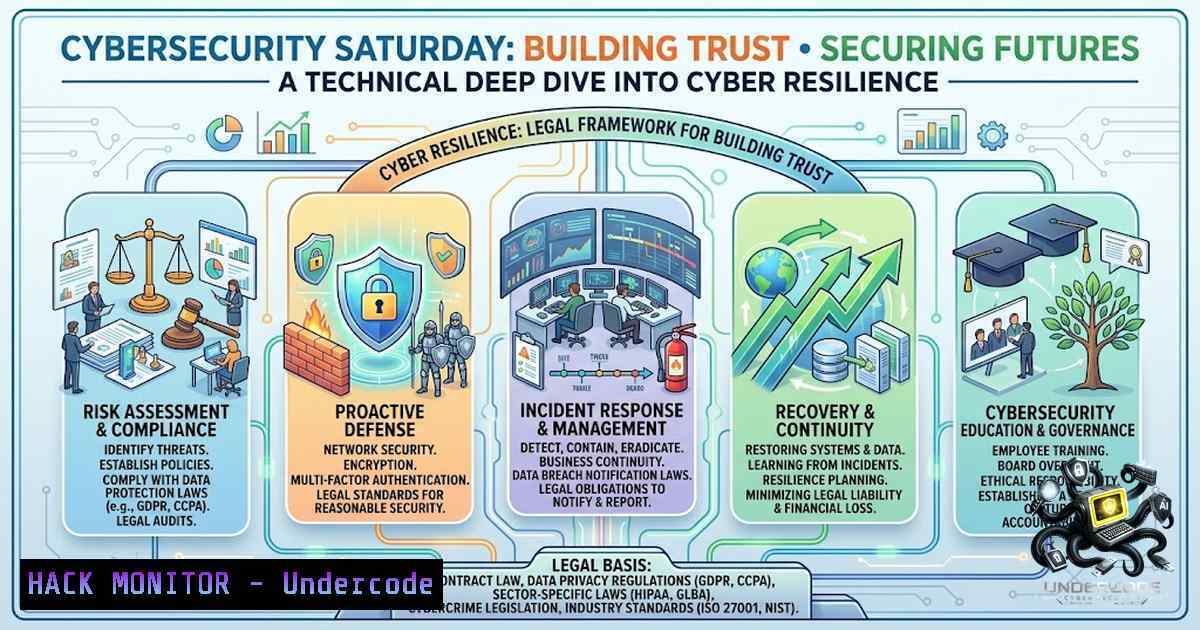
Introduction:
Cybersecurity has transcended its traditional role as an IT concern to become a cornerstone of business strategy, directly influencing customer trust, revenue continuity, and regulatory compliance. In today’s digital landscape, a single phishing email, compromised account, or ransomware attack can erode years of built reputation and stall enterprise sales cycles, as security reviews increasingly determine whether deals close rather than serving as a final formality. This article bridges the gap between high-level business strategy and technical implementation, providing actionable insights and commands to align people, processes, and technology for true cyber resilience.
Learning Objectives:
- Understand the strategic business impact of cybersecurity and why it demands cross-functional ownership beyond the IT department.
- Master practical Linux and Windows hardening commands to secure critical infrastructure.
- Implement API security controls and cloud hardening techniques to protect modern digital assets.
- Develop a cyber resilience framework that prioritizes rapid recovery and business continuity.
You Should Know:
1. Hardening Linux Systems: Essential Commands for Defense
Securing a Linux server is the foundation of any cyber resilience strategy. The following step‑by‑step guide covers critical hardening measures that align with CIS benchmarks and MITRE ATT&CK recommendations.
Step 1: Update and Patch Systems
Regular updates close known vulnerabilities that attackers frequently exploit.
sudo apt update && sudo apt upgrade -y
For automated security updates, reconfigure unattended-upgrades:
sudo dpkg-reconfigure -plow unattended-upgrades
Step 2: Configure the Firewall (UFW)
Restrict inbound and outbound traffic to only necessary services.
sudo ufw default deny incoming
sudo ufw default allow outgoing
sudo ufw allow ssh
sudo ufw enable
sudo ufw status verbose
Step 3: Harden SSH Access
Disable root login and enforce key-based authentication to prevent brute-force attacks.
sudo nano /etc/ssh/sshd_config
 Set: PermitRootLogin no
 Set: PasswordAuthentication no
 Set: AllowUsers your_username
sudo systemctl restart sshd
Step 4: Restrict File Permissions
Protect sensitive configuration files by limiting access.
sudo chmod 750 /etc/sensitive.conf
sudo chown root:admin /etc/sensitive.conf
Apply strict permissions to system binaries and sensitive directories using `chmod` and chown.
Step 5: Enable and Configure Auditd
Monitor system calls and file access for suspicious activity.
sudo apt install auditd -y
sudo auditctl -e 1
sudo auditctl -w /etc/passwd -p wa -k identity
2. Windows Server Hardening: PowerShell for Enterprise Defense
Windows environments require equally rigorous hardening. The following PowerShell script implements critical security controls.
Step 1: Enable Windows Defender and Real-Time Protection
Set-MpPreference -DisableRealtimeMonitoring $false
Set-MpPreference -DisableBehaviorMonitoring $false
Set-MpPreference -DisableBlockAtFirstSeen $false
Step 2: Configure Windows Firewall
Restrict inbound connections and enable logging.
Set-1etFirewallProfile -Profile Domain,Public,Private -DefaultInboundAction Block
Set-1etFirewallProfile -Profile Domain,Public,Private -DefaultOutboundAction Allow
Set-1etFirewallProfile -Profile Domain,Public,Private -LogFileName "C:\Windows\System32\LogFiles\Firewall\pfirewall.log"
Step 3: Harden Local Security Policies
Enforce password complexity and account lockout policies.
 Password policy
secedit /export /cfg C:\SecConfig.inf
 Edit C:\SecConfig.inf to set:
 PasswordComplexity = 1
 MinimumPasswordLength = 12
 LockoutBadCount = 5
secedit /configure /db C:\Windows\security\local.sdb /cfg C:\SecConfig.inf /areas SECURITYPOLICY
Step 4: Disable Unnecessary Services
Reduce the attack surface by stopping non-essential services.
Stop-Service -1ame "PrintSpooler" -Force
Set-Service -1ame "PrintSpooler" -StartupType Disabled
Step 5: Enable Advanced Audit Policy
Log critical events for threat detection.
auditpol /set /subcategory:"Logon" /success:enable /failure:enable
auditpol /set /subcategory:"Privilege Use" /success:enable /failure:enable
3. API Security: Protecting the Digital Backbone
As organizations increasingly rely on APIs for business workflows, securing them is paramount. The NIST guidelines for API protection recommend both pre-runtime and runtime controls.
Step 1: Implement an API Gateway
Place all external APIs behind a gateway to centralize authentication, rate limiting, and logging.
Step 2: Enforce Authentication and Authorization on Every Request
Adopt zero trust principles: verify every request, scope every identity, and never trust network location alone.
Step 3: Apply Schema Validation
Validate request payloads against a strict schema to prevent injection attacks.
{
"$schema": "http://json-schema.org/draft-07/schema",
"type": "object",
"properties": {
"username": {"type": "string", "minLength": 3},
"password": {"type": "string", "minLength": 8}
},
"required": ["username", "password"],
"additionalProperties": false
}
Step 4: Implement Rate Limiting
Protect sensitive endpoints from brute-force and DDoS attacks by limiting requests per IP or token. A typical baseline is 10–50 requests per second with sliding window enforcement.
Step 5: Log and Monitor API Activity
Correlate API activity with workload context to detect threats that traffic inspection alone would miss.
4. Cloud Hardening: Securing Workloads in Multi-Cloud Environments
Cloud security operates on a shared responsibility model. Organizations must implement layered defenses.
Step 1: Deploy a Tiered Network Architecture
Restrict internet-facing services to designated public segments and implement security groups.
Step 2: Use Web Application Firewalls (WAF) and DDoS Protection
Block common attack patterns before they reach your cloud workloads.
Step 3: Implement Zero Trust for Cloud Access
Apply the principle of least privilege to all identities and resources. Use tools like Azure AD Conditional Access or AWS IAM with fine-grained policies.
Step 4: Encrypt Data at Rest and in Transit
Enable encryption for storage services and enforce TLS 1.2+ for all communications.
Step 5: Regular Security Audits and Compliance Checks
Use tools like AWS Security Hub, Azure Security Center, or third-party solutions to continuously assess your cloud posture.
5. Cyber Resilience: From Prevention to Continuous Recovery
Modern cyber resilience shifts focus from solely preventing attacks to ensuring rapid recovery and business continuity. Gartner’s framework emphasizes four pillars: Anticipate, Withstand, Recover, and Adapt.
Step 1: Define Your Minimum Viable Organization (MVO)
Identify critical business functions and allocate resources to protect them.
Step 2: Test Incident Response Plans Regularly
Run tabletop exercises and simulations to validate your response capabilities.
Step 3: Align Security Controls with Business Continuity
Protect the systems and processes that matter most to your operations.
Step 4: Adopt an “Always-On” Resilience Model
Use hybrid cloud and AI-led security to manage risks proactively.
Step 5: Measure Resilience as a Business KPI
Treat cyber risk as a business metric, not just a security metric.
What Undercode Say:
- Cybersecurity is a business enabler, not just an IT cost center. When people, processes, and technology are aligned, security builds trust and drives sustainable growth.
- Cyber resilience is the ultimate goal. Protection alone is insufficient; organizations must also ensure they can recover quickly and maintain customer confidence during and after an incident.
Analysis: The post correctly identifies that cybersecurity’s commercial impact extends far beyond technology. The emphasis on cross-functional understanding—sales, leadership, finance, and marketing—is critical because security reviews now influence enterprise deal closure. The shift from prevention to resilience aligns with industry trends where continuous recovery and business continuity are prioritized. However, the post could benefit from more specific technical guidance, which this article provides. The integration of AI and FinTech in cybersecurity is a growing area, with AI runtime security and API protection becoming essential. Organizations that treat cybersecurity as a strategic enabler rather than a reactive measure will build lasting digital trust and gain a competitive advantage.
Prediction:
+1 Cyber resilience will become a standard boardroom metric by 2027, with organizations publicly reporting recovery time objectives (RTOs) and mean time to recover (MTTR) as key performance indicators.
+1 The convergence of AI, FinTech, and cybersecurity will drive a new wave of specialized security solutions, particularly for agentic AI and LLM deployments.
-1 Organizations that fail to embed cybersecurity into their business strategy will face increasing regulatory fines, reputational damage, and loss of customer trust, potentially leading to significant revenue declines.
-1 The skills gap in cybersecurity will widen, with demand for professionals who understand both technical security and business strategy outpacing supply.
+1 Cross-functional cybersecurity training for sales, finance, and marketing teams will become a standard corporate investment, reducing human error and strengthening the overall security posture.
▶️ Related Video (80% Match):
🎯Let’s Practice For Free:
🎓 Live Courses & Certifications:
Join Undercode Academy for Verified Certifications
🚀 Request a Custom Project:
Secure, high-velocity infrastructure and disruptive technological engineering. Contact our engineering team for high-tier development and proprietary systems:
[email protected]
💎 Smart Architecture | 🛡️ Secure by Design | ⭐ Trusted by Thousands
IT/Security Reporter URL:
Reported By: Alamgirahmed Cybersecuritysaturday – Hackers Feeds
Extra Hub: Undercode MoN
Basic Verification: Pass ✅


